












Infrared vs Traditional vs Hybrid Saunas: Which Should You Buy?
Choose traditional if you want authentic Finnish high-heat sessions (150–194°F) with steam capability and have 240V power available. Choose infrared for gentle radiant heat (110–130°F), fast 10–20 minute heat-up, and compatibility with standard 120V outlets. Choose hybrid if you want both experiences in one room and can accommodate higher costs and 240V requirements.
- Traditional saunas require 240V circuits, take 30–60 minutes to heat, offer authentic löyly steam experience, and cost ~$1–2/hour to operate (SolarTech Online, 2025)
- Infrared saunas often run on 120V, heat in 10–20 minutes, provide dry radiant warmth, and cost ~$0.25–0.65/hour to operate (Sauna World, 2025)
- Hybrid saunas combine both systems in one room but typically cannot run both modes simultaneously (Sauna Supply Co, 2025)
- Electrical capacity is the #1 constraint—verify voltage and amperage before choosing
- Operating costs for infrared are 3–5× lower than traditional electric saunas for comparable use (SolarTech Online, 2025; Epic Hot Tubs, 2025)
Table of Contents
- Quick Answer: Which Sauna Type is Right for You?
- Understanding the Three Sauna Types
- Head-to-Head Comparison: What Really Matters
- Decision Framework: How to Choose Your Sauna Type
- Electrical Requirements: What You Need to Know
- Installation and Space Requirements
- Cost Breakdown: Initial Investment and Operating Costs
- Maintenance Requirements by Sauna Type
- Common Sauna Buyer Mistakes (And How to Avoid Them)
- Pre-Purchase Verification Checklist
- The Simplest Safe Choice (If You're Still Unsure)
- Frequently Asked Questions
Quick Answer: Which Sauna Type is Right for You?
The right sauna type depends on five core constraints: electrical capacity, available space, budget, heat experience preference, and intended usage pattern.
5 Quick Decision Rules:
- If you only have 120V outlets and cannot add 240V → Choose modular infrared sauna (plugs into standard outlet with dedicated 20A circuit)
- If you want authentic löyly steam experience → Choose traditional or hybrid only (infrared cannot provide this)
- If you need heat-up under 20 minutes → Choose infrared or hybrid (infrared mode)
- If you plan social sessions with 3+ people regularly → Choose traditional or hybrid
- If budget is under $10,000 installed → Choose infrared modular units
Traditional saunas deliver high-heat sessions at 150–194°F, require 240V dedicated circuits rated at 30A or higher, and typically need 30–60 minutes to reach full temperature (Sunray Saunas, Manual; Helo, 2020). Infrared units operate at lower air temperatures of 110–130°F, with many 1–2 person models running on 120V 15–20A dedicated circuits and heating in 10–20 minutes (SolarTech Online, 2025; Sauna World, 2025). Hybrid saunas incorporate both a traditional rock heater and infrared panels in one room, usually requiring 240V power and higher installation complexity, but generally cannot operate both modes at once (Sauna Supply Co, 2025; Finnleo, 2020).
For the complete decision framework with 12 detailed rules and a step-by-step decision tree, jump to the Decision Framework section.
Understanding the Three Sauna Types
Traditional Finnish Sauna
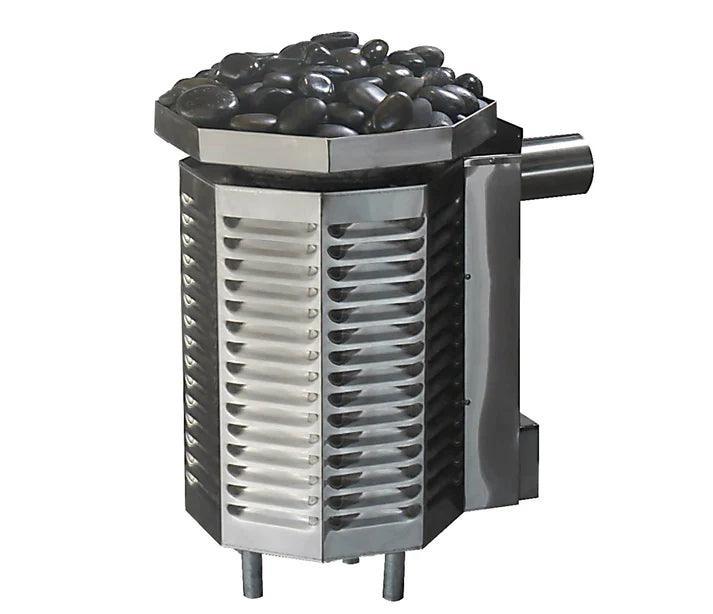
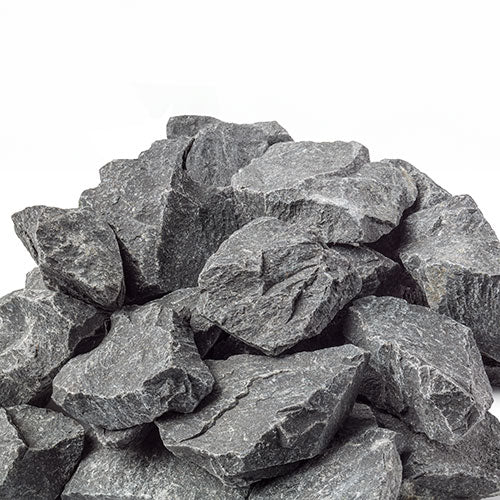
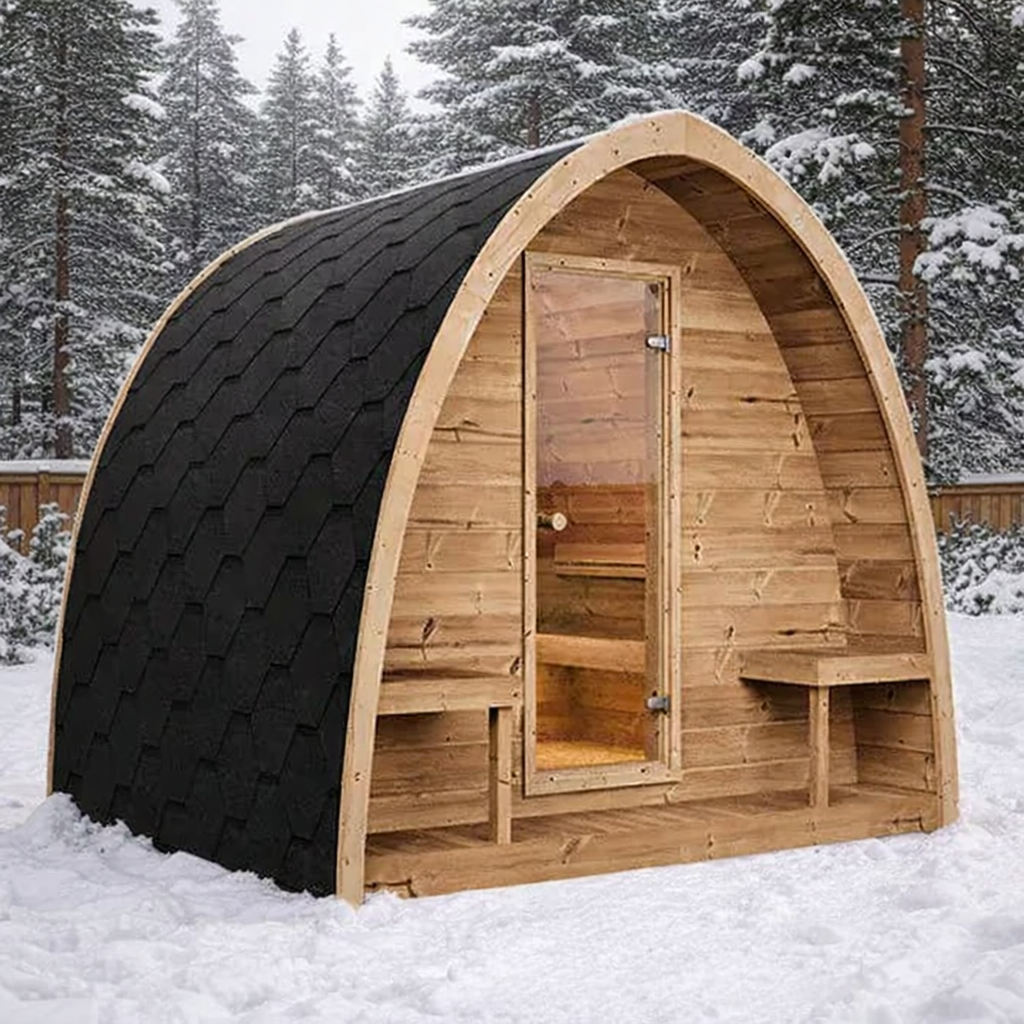
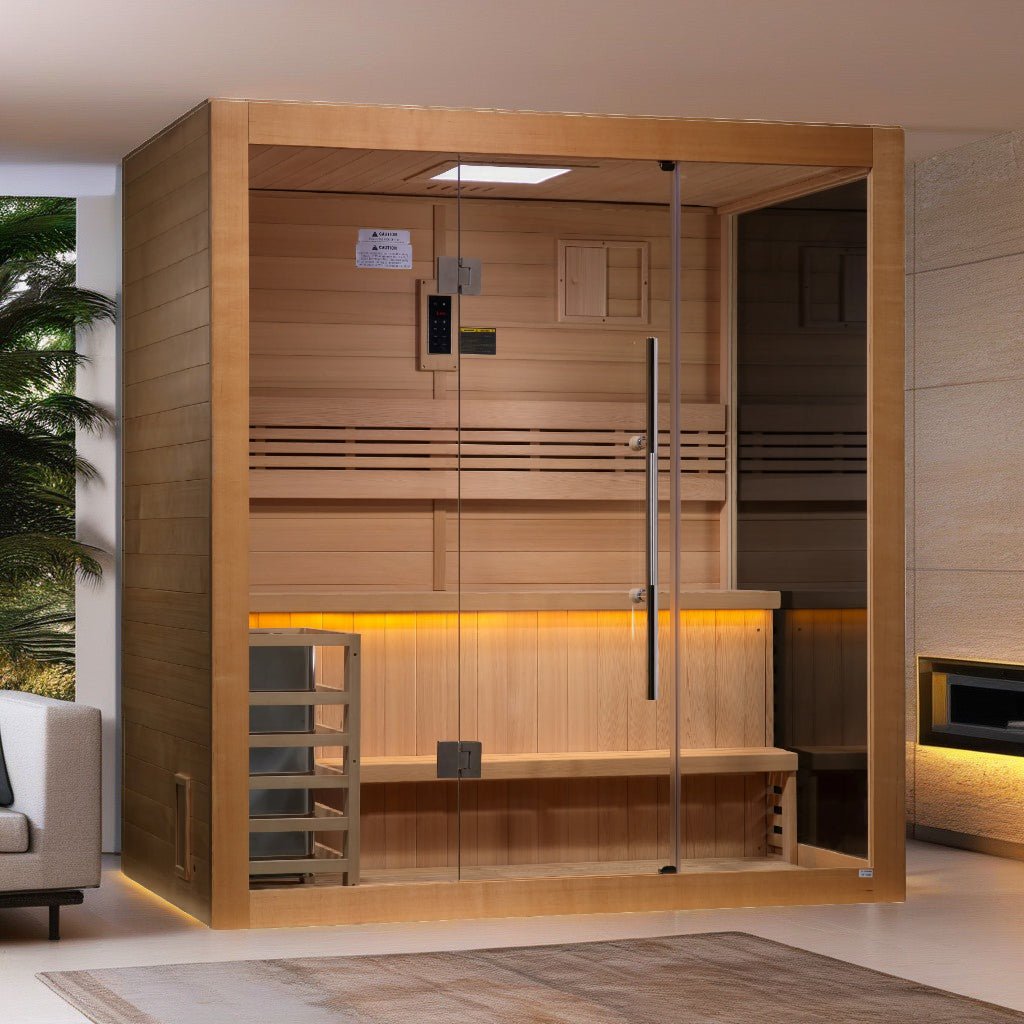
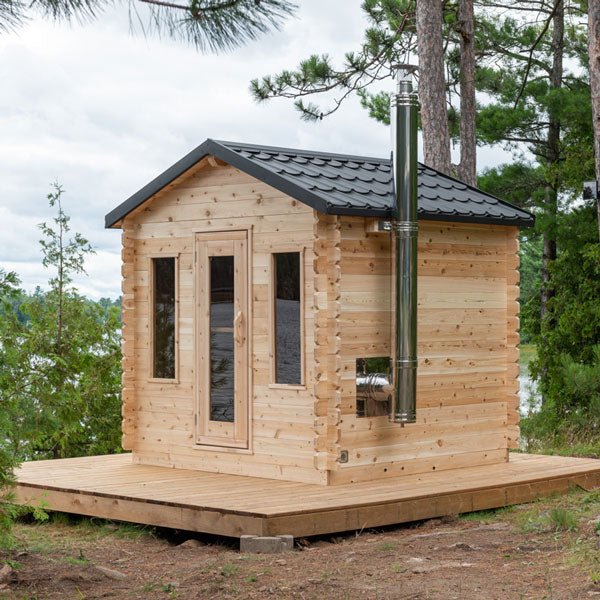
A traditional Finnish sauna uses an electric or wood-burning heater to warm rocks and air, producing high dry heat typically between 150–194°F with relatively low humidity compared to steam rooms (Creative Energy, 2025; Sunray Saunas, Manual). Users can pour water onto the hot rocks to create löyly—a burst of heat and steam that defines the authentic Finnish sauna experience (Sauna Supply Co, 2025; Creative Energy, 2025).
Traditional electric saunas fall under UL 875 / UL 60335-2-53 standards for electric dry-bath heaters, which define requirements for dry heat environment, humidity range, overheating protection, and control systems (SaunaTimes, 2025; UL, 2024). Typical operating ranges span 65–90°C (149–194°F), with some manuals listing 0–80°C adjustable settings aligning with Finnish practice (Sunray Saunas, Manual; Helo, 2020).
What traditional saunas cannot do: Operate on standard 120V household outlets; most require 240V dedicated circuits. They also cannot heat quickly—expect 30–60 minutes of preheat time.
Infrared Sauna
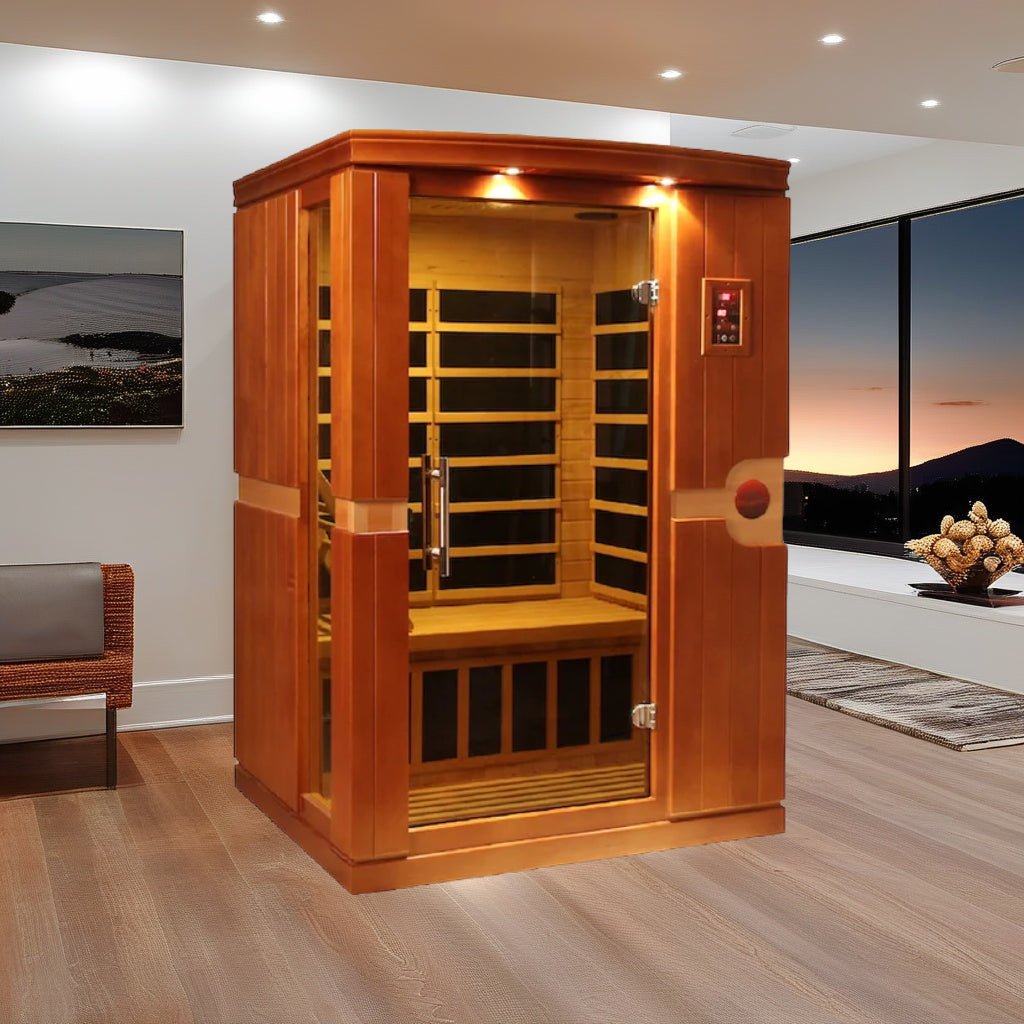
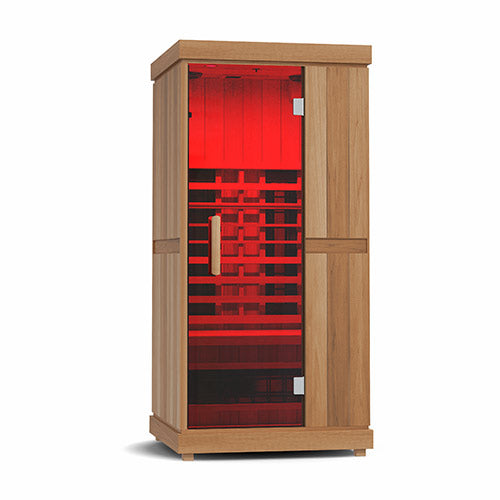
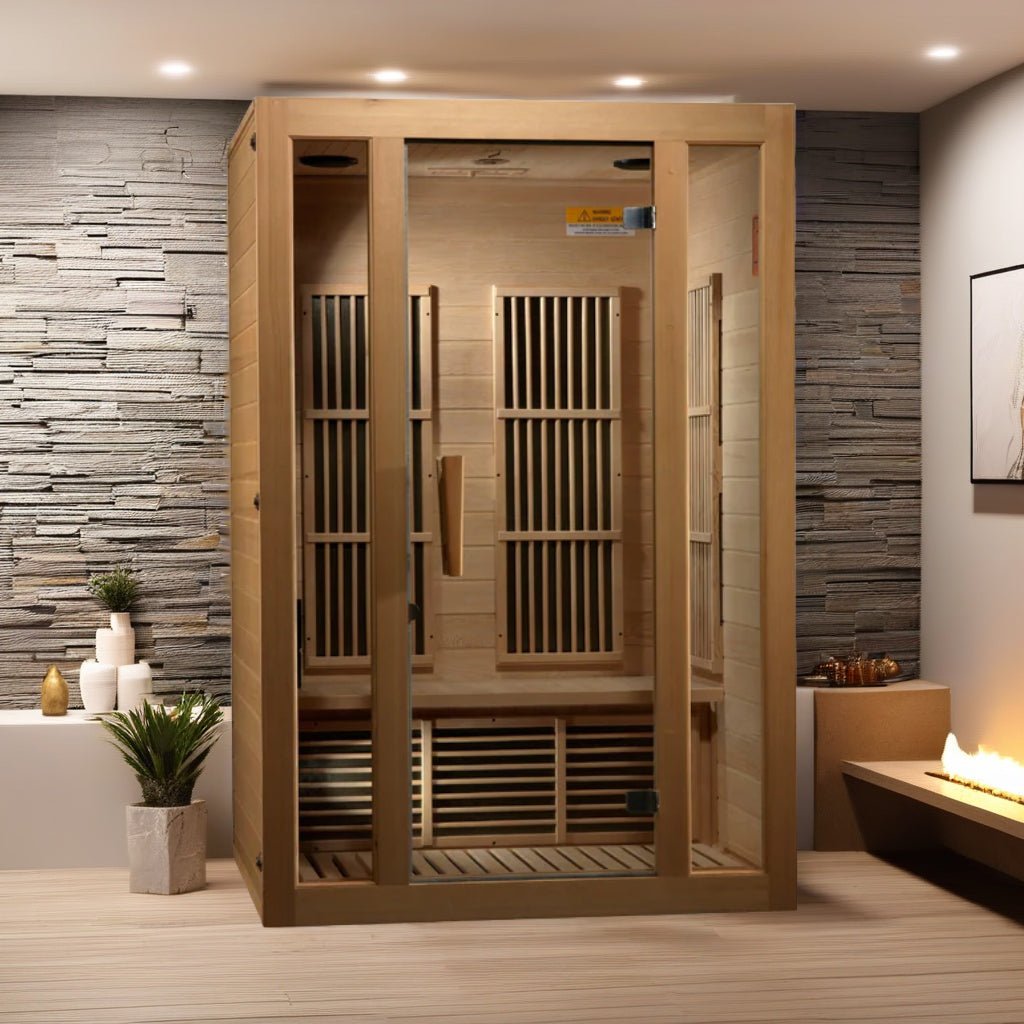
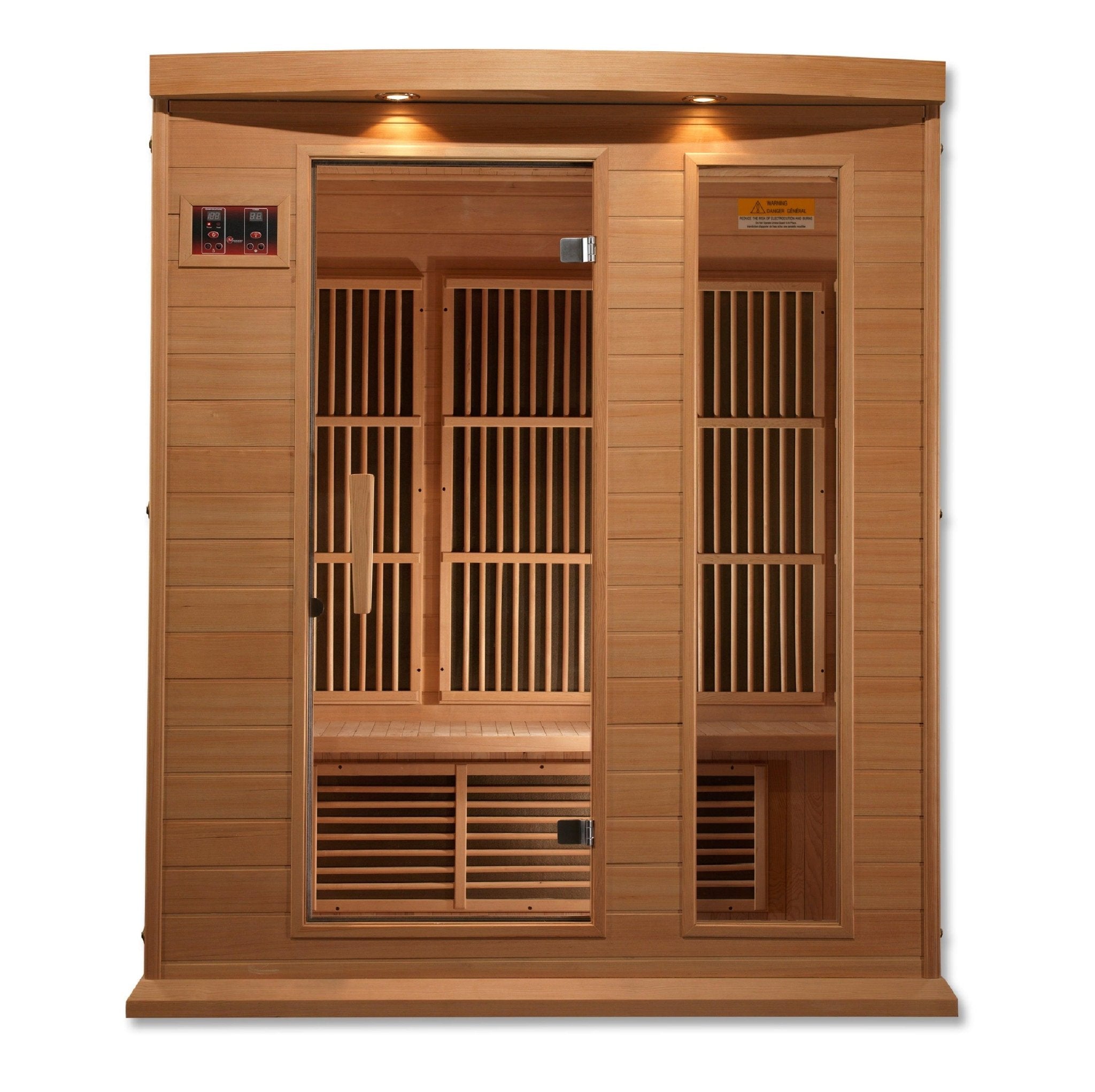
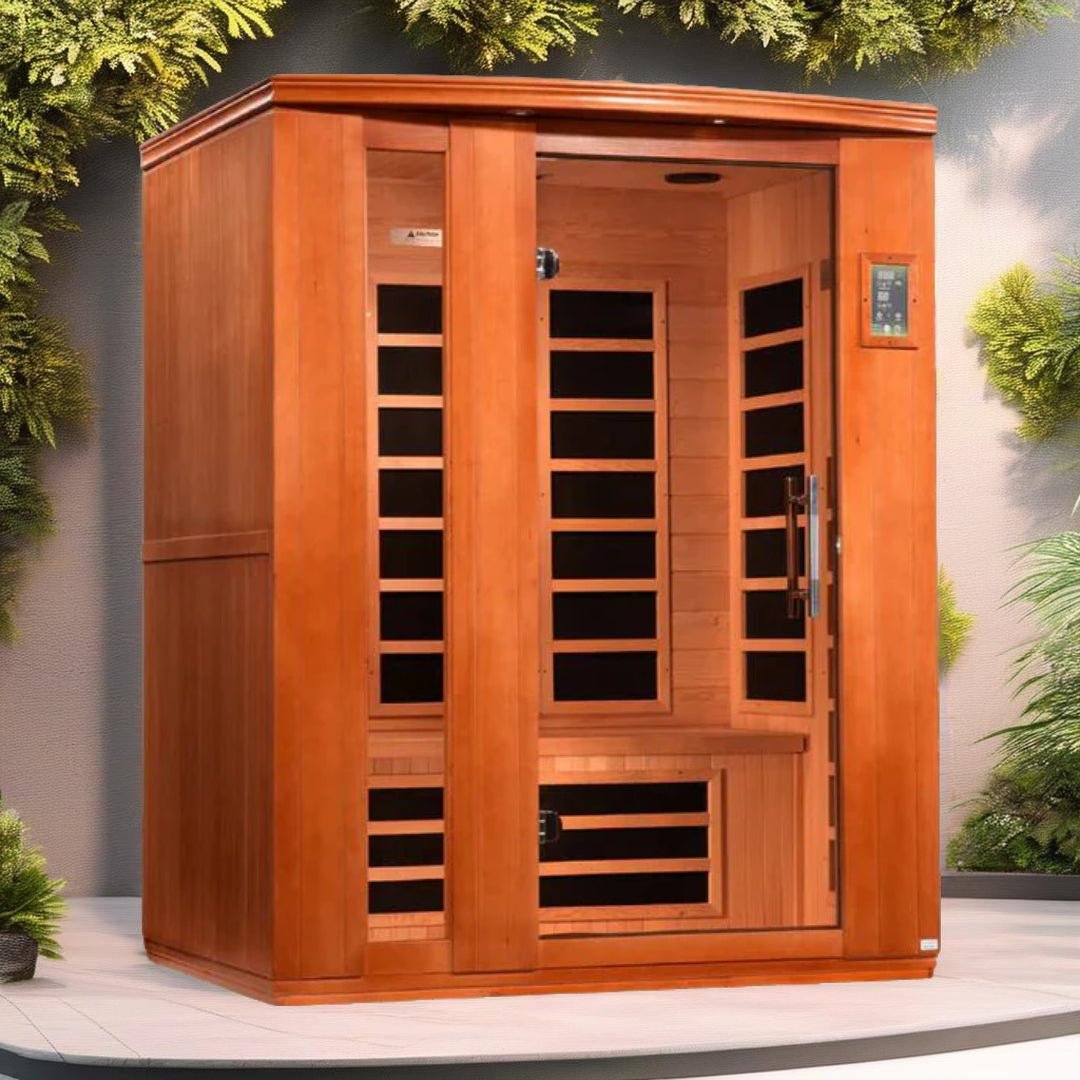
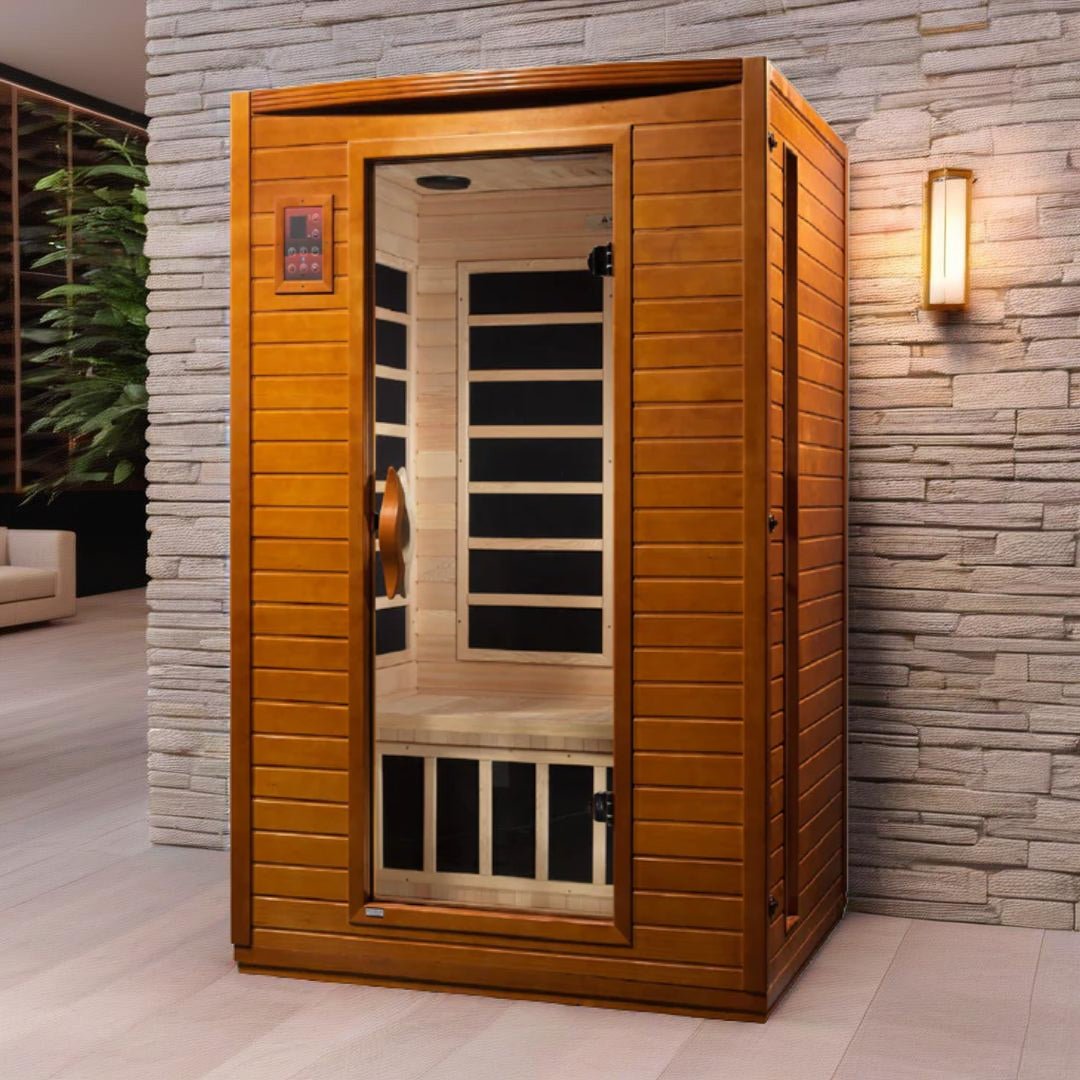
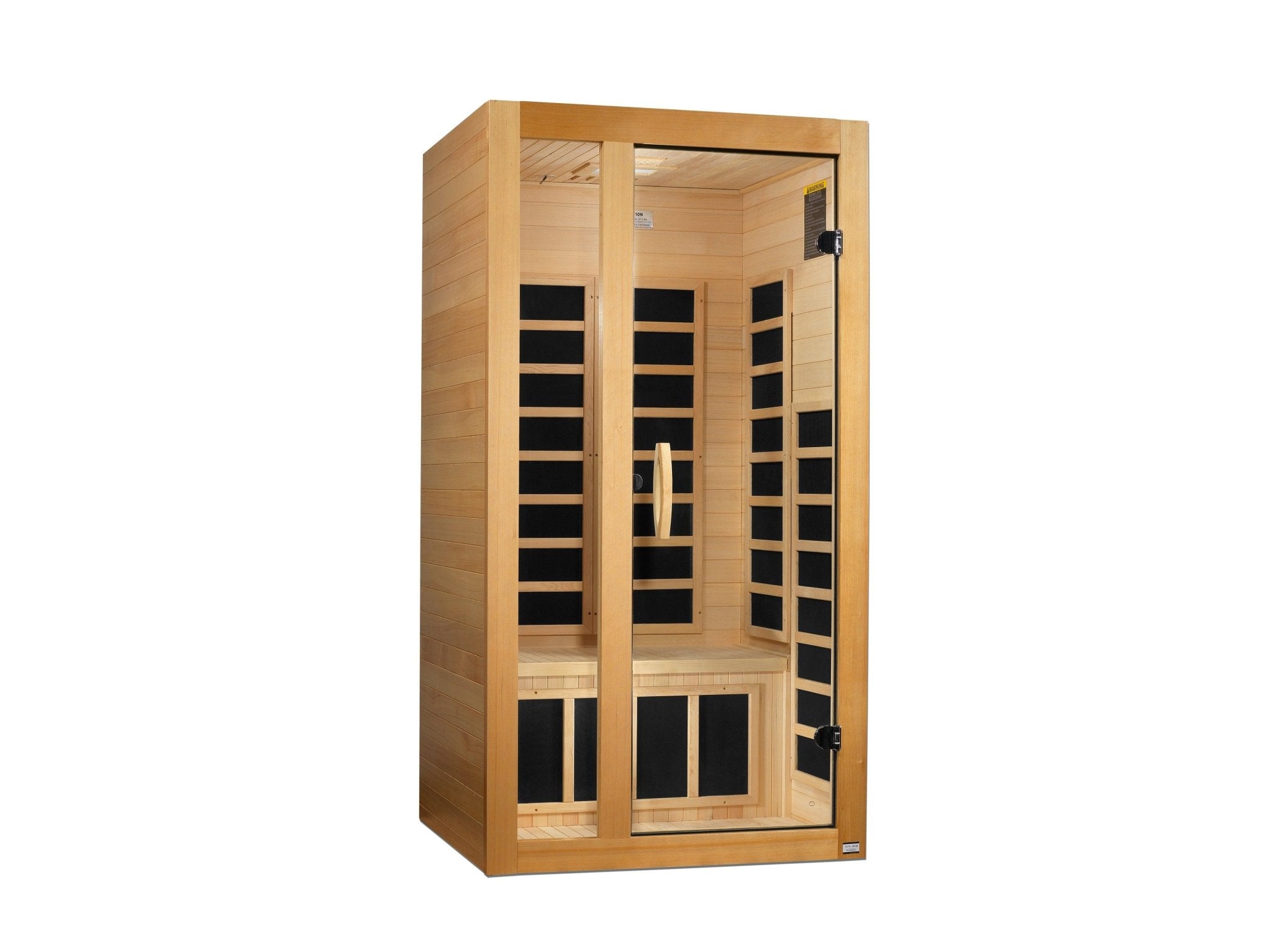
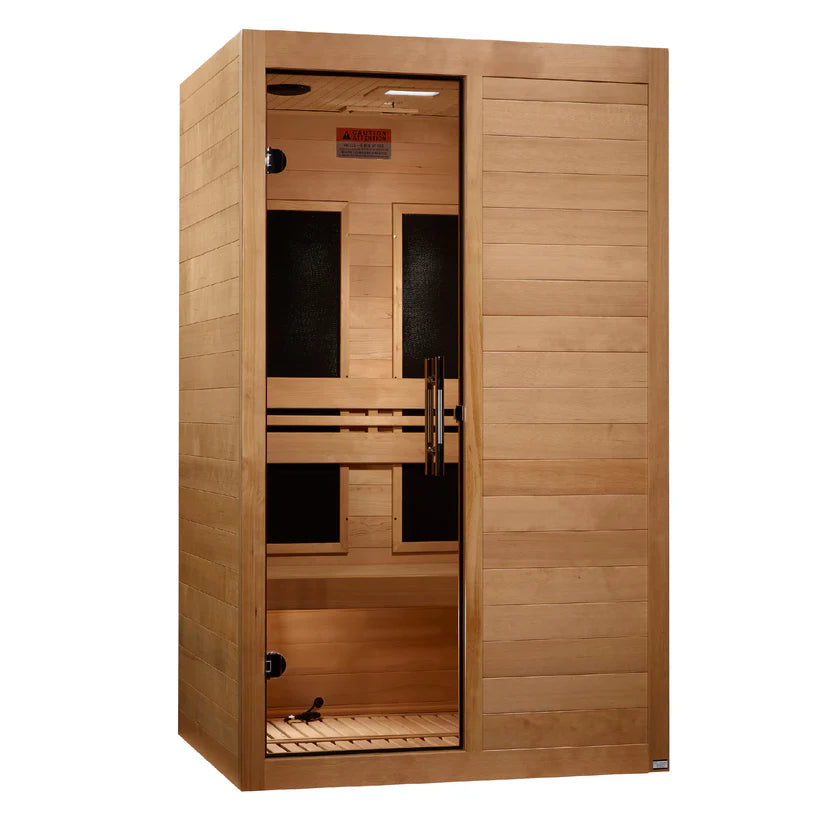
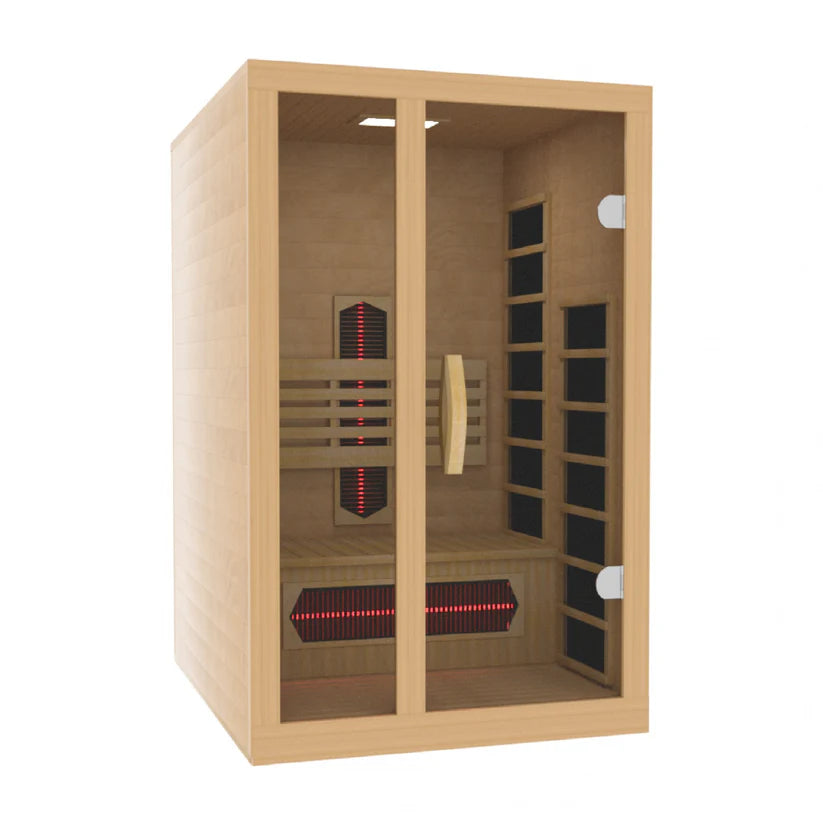
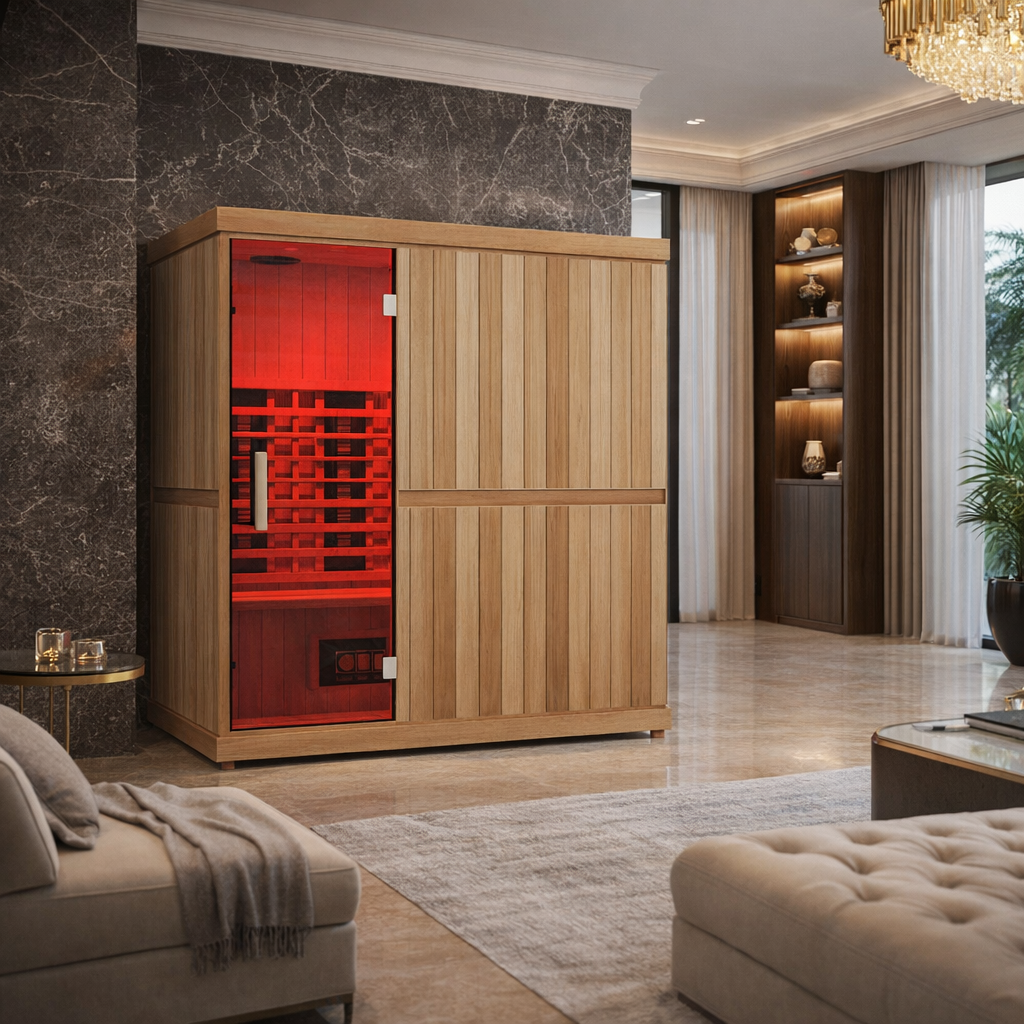
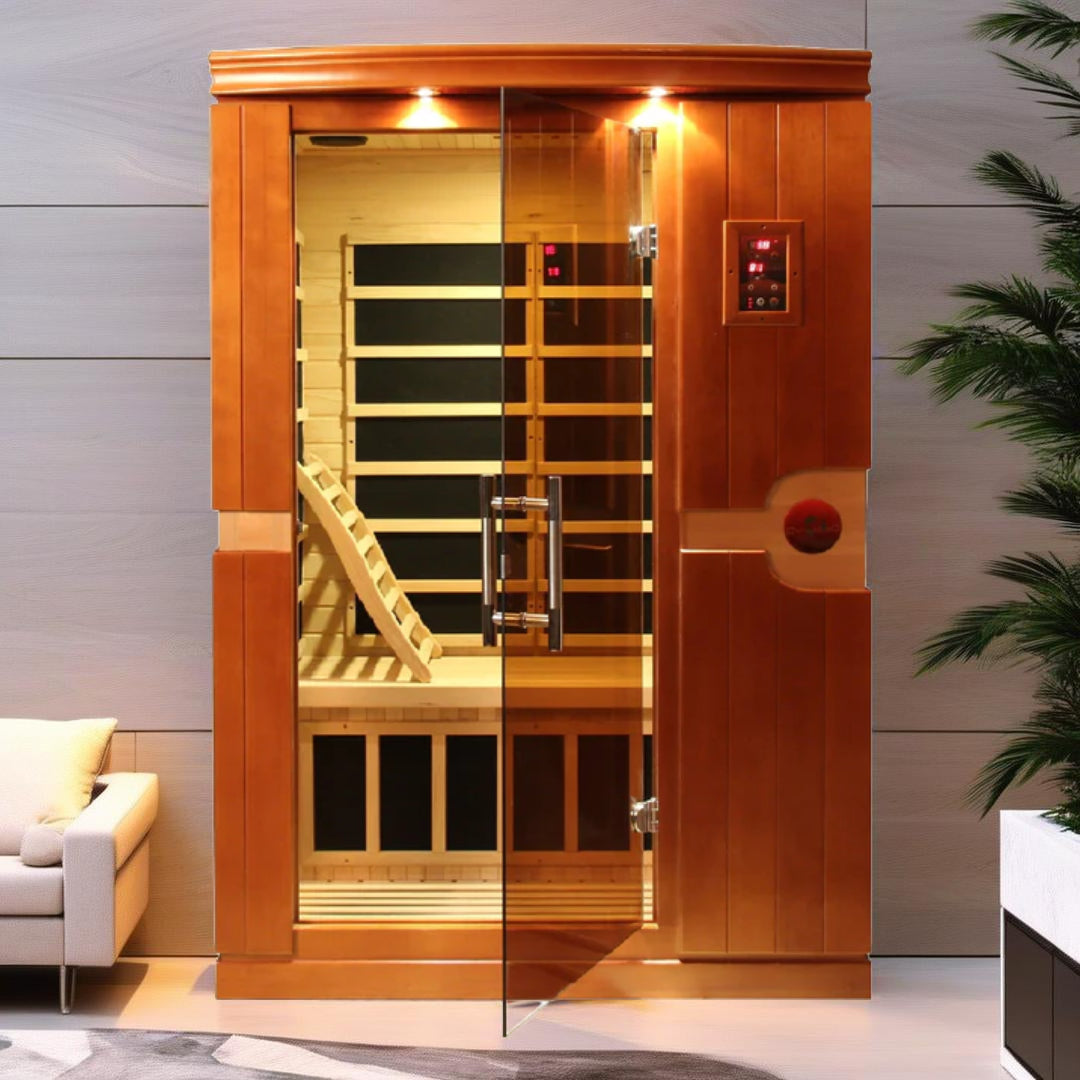
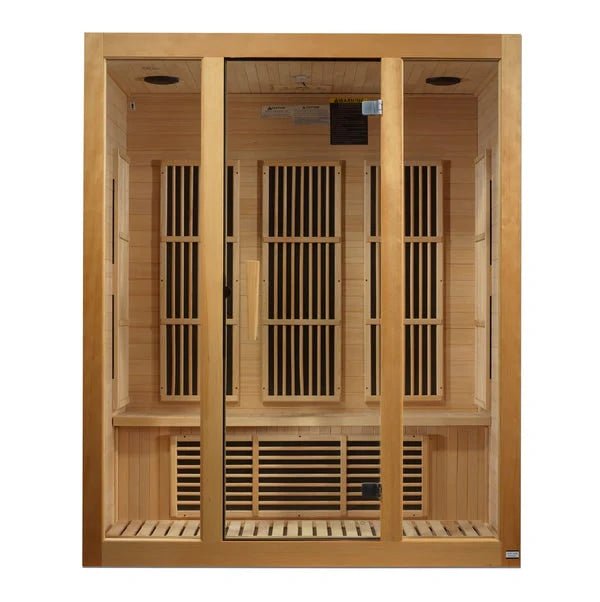
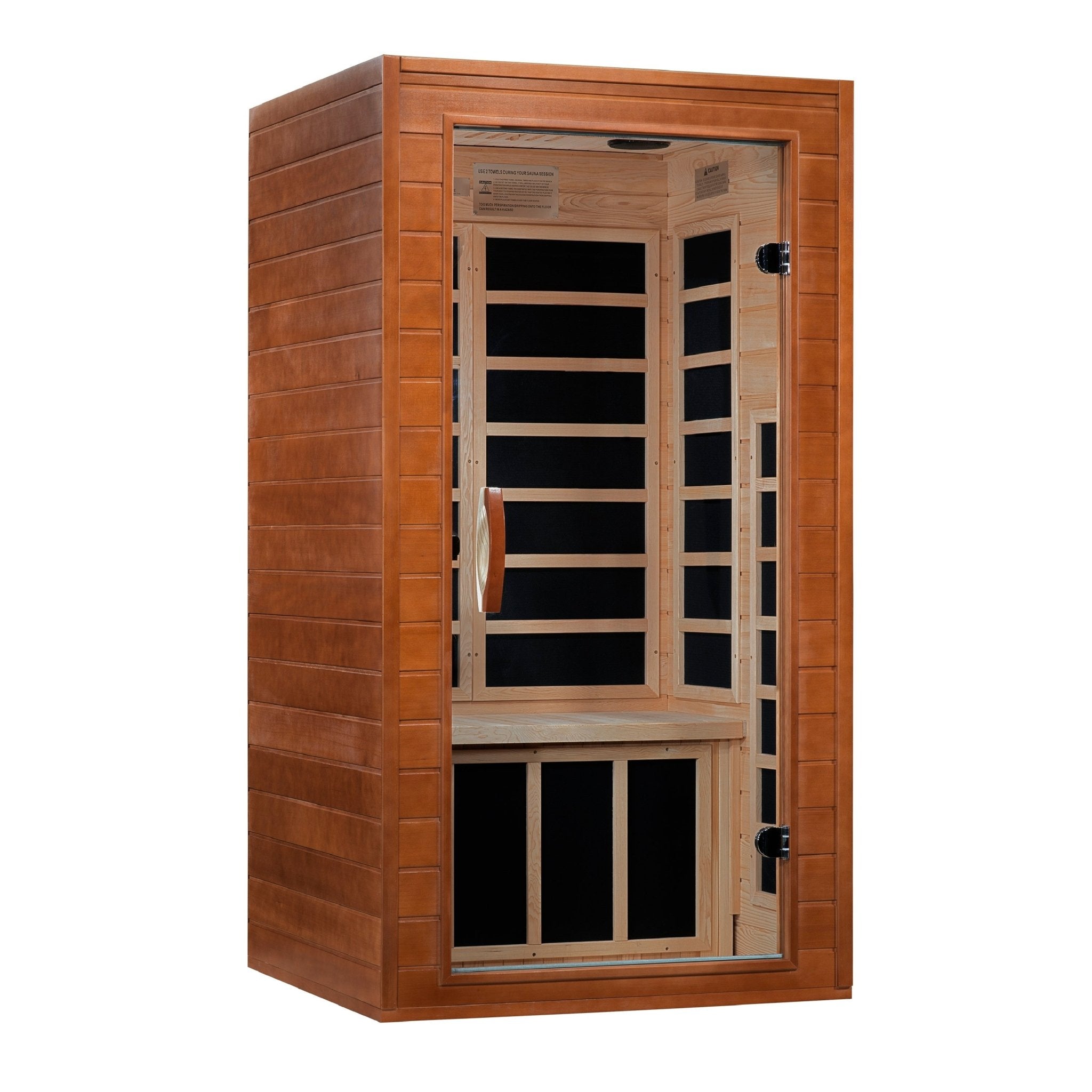
An infrared sauna uses carbon or ceramic infrared panels to radiate heat directly to the body at lower ambient air temperatures around 110–130°F with little to no added humidity (Sauna Supply Co, 2025; SolarTech Online, 2025). The environment remains dry per dry-heat equipment standards (Heavenly Heat Saunas, 2025).
Infrared units typically consume 1.6–2.4 kW for 2-person models and 2–3.8 kW for 3–4 person cabins, with warmup times of 10–20 minutes for comfortable use (Epic Hot Tubs, 2025; SolarTech Online, 2025; Sauna World, 2025). Many smaller modular units are designed for 120V operation with dedicated 15–20A circuits (Fun Outdoor Living, 2025; Indoor 120V Sauna Manual).
What infrared saunas cannot do: Provide the traditional Finnish löyly steam experience. Water must never be poured on infrared emitters—only traditional rock heaters are designed for this (Sauna Supply Co, 2025; Sunray Saunas, Manual).
Hybrid Sauna
A hybrid sauna incorporates both a traditional rock heater and infrared panels in one room, allowing users to choose between conventional high-heat sessions and lower-temperature infrared sessions (Saunafin, Rough-In Guide; Finnleo, 2020). The systems share controls but generally cannot operate both modes simultaneously according to manufacturers and community discussions (Sauna Supply Co, 2025; Reddit r/Sauna, 2025).
Hybrid designs must satisfy clearances and ventilation requirements for the traditional heater while placing infrared panels at appropriate user height and protecting them from steam, often requiring at least 5 inches of vertical clearance between heaters (Saunafin, Installation Manual; Finnleo, 2020). Most hybrids require 240V power with complex wiring for both heating systems (Sauna Supply Co, 2025; Finnleo, 2020).
What hybrid saunas cannot do: Run both heating modes at the same time in most mainstream designs. They also don't eliminate the need for proper ventilation—the traditional heating mode still requires intake and exhaust vents.
Explore our full collection of infrared saunas, traditional barrel saunas, and hybrid saunas to see available options.
Head-to-Head Comparison: What Really Matters
Core Comparison Table
| Factor | Traditional Sauna | Infrared Sauna | Hybrid Sauna |
|---|---|---|---|
| Typical temperature range | ~150–194°F air temp with optional steam from rocks (Sauna Supply Co, 2025; Creative Energy, 2025; Sunray Saunas, Manual) | ~110–130°F air temp with direct radiant heat to body; low humidity (Sauna Supply Co, 2025; SolarTech Online, 2025; Creative Energy, 2025) | ~110–194°F depending on whether IR or traditional mode is used (Sauna Supply Co, 2025; Finnleo, 2020) |
| Heat-up time | About 30–60 minutes to reach full temperature, depending on size and insulation (Sauna World, 2025; Sauna Supply Co, 2025; SolarTech Online, 2025) | Roughly 10–20 minutes to comfortable operating temperature (Sauna Supply Co, 2025; SolarTech Online, 2025; Epic Hot Tubs, 2025) | IR mode heats in ~10–20 minutes; traditional mode similar to traditional saunas (Sauna Supply Co, 2025; Finnleo, 2020) |
| Electrical requirement | Usually 240V hardwired circuit, ~30–60A depending on kW (Sunray Saunas, Manual; Helo, 2020; Saunafin, 2016) | Many 1–2 person models are 120V plug-in on 15–20A dedicated circuits; larger/custom units may be 240V (Fun Outdoor Living, 2025; Good Health Saunas, 2025; Indoor 120V Manual) | Typically 240V for traditional heater plus IR panel wiring; often higher total load and more complex wiring (Sauna Supply Co, 2025; Finnleo, 2020; Saunafin, Rough-In Guide) |
| Installation complexity | Requires ventilation planning and often licensed electrician; may be custom room or modular kit (Finnleo, 2020; Sunray Saunas, Manual; Helo, 2020) | Modular plug-and-play units are usually DIY-friendly; electrical still must meet dedicated-circuit guidance (Fun Outdoor Living, 2025; Good Health Saunas, 2025; Indoor 120V Manual) | Most complex: must satisfy both traditional and IR layout/clearance, often needs pro design and install (Sauna Supply Co, 2025; Finnleo, 2020; Saunafin, Rough-In Guide) |
| Operating cost | Highest electricity use: about 6–9 kW leading to ~$1–2 per hour in typical examples (Sauna World, 2025; SolarTech Online, 2025; Epic Hot Tubs, 2025) | Lower electricity use: about 1–3 kW leading to ~$0.25–0.65 per hour (Sauna World, 2025; SolarTech Online, 2025; Epic Hot Tubs, 2025) | Varies by mode; IR mode similar to standard IR, traditional mode similar to traditional heaters (Sauna Supply Co, 2025; SolarTech Online, 2025) |
| Capacity and social use | Scales well for 3+ people; common choice for families and social sessions (Sauna Supply Co, 2025; SolarTech Online, 2025) | Often optimized for 1–3 users; larger multi-person IR units exist but at higher cost (SolarTech Online, 2025; Epic Hot Tubs, 2025; My Sauna World, 2025) | Can host social sessions in traditional mode and smaller IR sessions, depending on size (Sauna Supply Co, 2025; Finnleo, 2020) |
| Maintenance level | Moderate to high: cleaning, ventilation, rock checks, moisture management (Sunray Saunas, Manual; SaunaTimes, 2022; TheSaunaHeater.com, 2024) | Low to moderate: mainly surface cleaning and occasional inspections (Sauna Supply Co, 2025; Good Health Saunas, 2025) | Highest: combines tasks from both traditional and IR systems (Sauna Supply Co, 2025; Finnleo, 2020; Saunafin, Rough-In Guide) |
| Experience profile | Authentic Finnish heat with steam and strong temperature contrast (Sauna Supply Co, 2025; Creative Energy, 2025) | Gentle, deep-feeling heat at lower air temps; no löyly (Sauna Supply Co, 2025; SolarTech Online, 2025; Creative Energy, 2025) | Flexible; can offer both styles but not usually at the same time (Sauna Supply Co, 2025; Reddit r/Sauna, 2025; Finnleo, 2020) |
What Really Matters: Top 6 Differentiators Explained
1. Temperature Range and Experience
Traditional saunas deliver the highest air temperatures and allow steam creation, while infrared provides lower air temperatures but strong perceived radiant heat directly on the body (Creative Energy, 2025; Sauna Supply Co, 2025). Hybrid units offer both experiences by mode selection (Sauna Supply Co, 2025).
2. Heat-Up Time
Infrared saunas reach comfortable temperatures in 10–20 minutes, while traditional saunas often require 30–60 minutes to heat fully, especially for larger rooms (SaunaTimes, 2022; Epic Hot Tubs, 2025; Sauna World, 2025). This difference significantly affects real-world usage patterns—traditional saunas require planning ahead, while infrared units support spontaneous sessions.
3. Power and Electrical Requirements
Traditional and most hybrid heaters require 240V dedicated circuits rated at 30–60A depending on kW output, while many small infrared units operate on 120V 15–20A dedicated circuits (Indoor 120V Manual; Heavenly Heat Saunas, 2025; Fun Outdoor Living, 2025; Helo, 2020; Saunafin, 2016; Sunray Saunas, Manual). This is often the primary determining factor for renters or homes without easy access to 240V power.
4. Installation Complexity
Infrared modular units are often DIY-friendly for assembly, though electrical connections may require professional verification. Traditional and hybrid saunas usually require licensed electricians for hardwired installations and must adhere to NEC and UL standards (Heavenly Heat Saunas, 2025; Safe-Way Electric; Fun Outdoor Living, 2025; Helo, 2020; UL, 2024; Sunray Saunas, Manual).
5. Operating Cost
Per-hour and monthly operating costs are substantially lower for infrared compared to traditional electric for comparable usage. A traditional 6 kW unit running approximately 2 hours per session consumes about 12 kWh, costing roughly $1.92 per session and approximately $30 per month at 16 uses, while infrared sessions at 1.6–2.4 kW for 0.5–1 hour cost around $0.25–0.48 per session, leading to roughly $4–$8 per month (Sauna World, 2025). Other analyses show 2-person infrared at approximately 2 kW costs about $0.34 per hour at $0.17/kWh versus 2-person traditional at 6 kW costing approximately $1.02 per hour, demonstrating about a 3× difference (SolarTech Online, 2025; Epic Hot Tubs, 2025; Heavenly Heat Saunas, 2025).
6. Capacity
Traditional and hybrid saunas scale more economically for 3+ users and are the common choice for families and social sessions (My Sauna World, 2025; Sauna Supply Co, 2025; SolarTech Online, 2025). Infrared units are often optimized for 1–3 users, though larger multi-person models exist at higher cost (SolarTech Online, 2025; Epic Hot Tubs, 2025).
For detailed electrical specifications on popular models, see our guides on sauna heaters and electric sauna heaters.
<a name="decision-framework"></a>
Decision Framework: How to Choose Your Sauna Type
Decision Tree
START: Which sauna type should I buy?
Q1: Do you have 240V electrical available (or budget to install it)?
- NO → Go to Q2 (Infrared path)
- YES → Go to Q3 (All options open)
Q2: [Infrared Path] Is your primary use solo or with 1 other person?
- YES (solo/duo) → OUTCOME A: Modular Infrared Sauna
- NO (need 3+ capacity) → OUTCOME B: Custom Infrared (240V) or reconsider electrical upgrade for Traditional
Q3: [All Options] Do you want the authentic Finnish löyly (steam) experience?
- YES → Go to Q4 (Traditional/Hybrid path)
- NO → Go to Q5 (Infrared/Hybrid path)
Q4: [Traditional/Hybrid Path] Will multiple household members use it with different heat preferences?
- YES → OUTCOME C: Hybrid Sauna (flexibility for all users)
- NO → OUTCOME D: Traditional Sauna (authentic, proven, lower cost than hybrid)
Q5: [Infrared/Hybrid Path] Is fast heat-up (10-20 min) essential for your routine?
- YES → OUTCOME A: Infrared Sauna
- NO (flexibility valued) → OUTCOME C: Hybrid Sauna (if budget allows) or OUTCOME A: Infrared
OUTCOMES:
A) Modular Infrared Sauna Best for: Solo/duo users, 120V limitation, fast heat-up priority, budget-conscious, minimal maintenance preference
B) Custom Infrared Sauna Best for: Larger infrared capacity needs, specific space constraints, 240V available
C) Hybrid Sauna Best for: Households with mixed preferences, want maximum flexibility, higher budget ($15,000-40,000)
D) Traditional Sauna Best for: Authentic Finnish experience seekers, social use, have 240V and proper ventilation, comfortable with 45-60 min heat-up
12 Decision Rules
Electrical Constraint Rules:
- If you only have 120V outlets and cannot add 240V circuit → Choose modular infrared sauna that plugs into standard outlet with dedicated 20A circuit (Fun Outdoor Living, 2025; Indoor 120V Manual)
- If you have 240V available or budget $800-2,000 for electrical upgrade → All options open (traditional, custom infrared, hybrid) (Heavenly Heat Saunas, 2025; Safe-Way Electric)
- If you're renting or cannot modify electrical → Choose 120V infrared only (Indoor 120V Manual; Fun Outdoor Living, 2025)
Space & Installation Rules:
- If installing indoors with limited ventilation → Choose infrared (no humidity/ventilation requirements) or ensure traditional has proper inlet/outlet vents (Sauna Supply Co, 2025; Finnish Sauna Builders, 2025; TheSaunaHeater.com, 2024; Fun Outdoor Living, 2025)
- If installing outdoors → Choose traditional or hybrid (infrared typically indoor-only) (Good Health Saunas, 2025; Sauna Supply Co, 2025; Fun Outdoor Living, 2025; Sunray Saunas, Manual)
- If you can dedicate 45-60 minutes for heat-up before each use → Traditional acceptable (Sauna World, 2025; Sauna Supply Co, 2025; SolarTech Online, 2025; Epic Hot Tubs, 2025)
- If you need ready-to-use in 10-20 minutes → Choose infrared or hybrid (infrared mode) (Sauna Supply Co, 2025; SolarTech Online, 2025; Epic Hot Tubs, 2025)
Usage Pattern Rules:
- If you plan solo sessions primarily → Infrared (compact, efficient) or small traditional (SolarTech Online, 2025; Sauna Supply Co, 2025)
- If you want social sauna sessions (3+ people) → Choose traditional or hybrid with larger footprint (Sauna Supply Co, 2025; SolarTech Online, 2025; Finnleo, 2020)
- If you want authentic Finnish löyly (steam on rocks) experience → Choose traditional or hybrid only (infrared cannot provide this) (Sauna Supply Co, 2025; Creative Energy, 2025; Sunray Saunas, Manual)
Budget & Maintenance Rules:
- If total budget under $10,000 including installation → Choose modular infrared ($6,000-10,000 installed) or DIY traditional kit (Epic Hot Tubs, 2025; Heavenly Heat Saunas, 2025; Safe-Way Electric; Sauna Supply Co, 2025)
- If you want lowest ongoing operating cost → Choose infrared (approximately $6/month daily use vs approximately $22/month traditional) (Sauna World, 2025; SolarTech Online, 2025; Epic Hot Tubs, 2025)
Core decision branches involve electrical capacity (120V vs 240V, panel capacity, GFCI requirements), space and ventilation considerations (indoor vs outdoor, vent options), intended use (solo vs group, heat-up tolerance), budget constraints, and preference for löyly versus dry radiant heat (Finnish Sauna Builders, 2025; TheSaunaHeater.com, 2024; Sauna Supply Co, 2025; Creative Energy, 2025; Finnleo, 2020; Fun Outdoor Living, 2025; Heavenly Heat Saunas, 2025).
Households limited to 120V or renters without electrical upgrade capability typically select infrared modular units sized for 1–2 people (Indoor 120V Manual; Fun Outdoor Living, 2025). Households with 240V capacity and good ventilation have all types available and should choose traditional or hybrid for authentic or social use, or infrared for low operating cost and quick sessions (Helo, 2020; Sauna Supply Co, 2025; Sunray Saunas, Manual; Heavenly Heat Saunas, 2025). Hybrid systems are reserved for users who actively want both experiences and accept higher cost and complexity (Reddit r/Sauna, 2025; Sauna Supply Co, 2025; Saunafin, Rough-In Guide; Finnleo, 2020).
Learn more about selecting the right sauna in our comprehensive sauna buying guide.
<a name="electrical-requirements"></a>
Electrical Requirements: What You Need to Know
Identifying voltage and amperage requirements for each type and size, then verifying panel capacity and available breaker spaces, is essential before purchase (Saunafin, 2016; Fun Outdoor Living, 2025; Sunray Saunas, Manual; Helo, 2020; Indoor 120V Manual; Heavenly Heat Saunas, 2025).
Traditional and Hybrid Requirements
Traditional and hybrid saunas usually require 240V hardwired circuits with specific amp ratings tied to heater kW and distance, and must follow UL/ETL listing instructions and NEC (SaunaTimes, 2025; Sunray Saunas, Manual; Helo, 2020; Saunafin, 2016; UL, 2024). Example specifications show 240V, 30A main supply for traditional household sauna heaters (Sunray Saunas, Manual). Rough-in and hybrid installation guides specify requirements like 5 inches of vertical clearance between infrared assembly and traditional heater and reference UL 875 ventilation opening requirements (Saunafin, Rough-In Guide; Finnleo, 2020; Saunafin, 2016; UL, 2024).
Infrared Requirements
Smaller infrared units are typically 120V plug-in models requiring 15–20A dedicated circuits, while larger or custom units may require 240V (Good Health Saunas, 2025; Fun Outdoor Living, 2025; Indoor 120V Manual). The indoor 120V sauna manual explicitly requires a dedicated 120V/20A outlet, warns against adapters, and emphasizes matching voltage and frequency (Indoor 120V Manual).
Dedicated Circuit and GFCI Protection
Many manufacturers and codes call for dedicated circuits and GFCI protection due to heat and moisture (Safe-Way Electric; Helo, 2020; Indoor 120V Manual; Heavenly Heat Saunas, 2025). NEC and UL requirements push toward dedicated circuits sized for heater kW output, with typical electric sauna heaters using 240V at 30–60A and infrared cabins often using 120V at 15–20A for small models (UL, 2024; Sunray Saunas, Manual; Helo, 2020; Indoor 120V Manual; Heavenly Heat Saunas, 2025). GFCI is often required for sauna circuits, particularly in damp areas, though some local codes vary but trend toward GFCI on 240V as well (Safe-Way Electric; Heavenly Heat Saunas, 2025).
Standards highlight dry-heat environment and automatic temperature regulation, implying electrical protections are built into certified equipment (Intertek, 2018; SaunaTimes, 2025; UL, 2024).
Professional Installation Recommendation
Licensed electricians are recommended for new circuits, panel upgrades, and any hardwired installation (Fun Outdoor Living, 2025; Helo, 2020; Heavenly Heat Saunas, 2025; Safe-Way Electric). Electrical installation for traditional and hybrid heaters should be performed by a licensed electrician following the National Electrical Code and local regulations (UL, 2024; Heavenly Heat Saunas, 2025; Safe-Way Electric; Helo, 2020). Sauna heaters must be supplied from circuits that match specified voltage and amperage, with copper conductors rated for high temperatures where required (UL, 2024; Finnleo, 2020; Helo, 2020; Sunray Saunas, Manual).
Electrical Requirements by Sauna Type
| Sauna Type | Voltage | Typical Amperage | Installation Notes | DIY Feasible? |
|---|---|---|---|---|
| Traditional (small 2-person) | 240V | 30A | Hardwired, dedicated circuit, licensed electrician recommended | No |
| Traditional (large 4+ person) | 240V | 40-60A | Hardwired, may require panel upgrade | No |
| Infrared (modular 1-2 person) | 120V | 15-20A | Dedicated circuit, plug-in, verify outlet capacity | Assembly yes, electrical verify with pro |
| Infrared (custom/large) | 240V | 20-30A | Hardwired installation | No |
| Hybrid | 240V | 40-60A+ | Complex dual-system wiring, professional required | No |
For more details on electrical specifications, see our sauna electrical requirements guide and explore our selection of electric sauna heaters.
<a name="installation-space"></a>
Installation and Space Requirements
Verifying floor load, dimensions, and clearances to walls and ceiling for each heater is essential, as many heaters require minimum distances to combustibles and specific sensor placement (Helo, 2020; Saunafin, 2016; Finnleo, 2020; Sunray Saunas, Manual).
Ventilation: Traditional and Hybrid
Traditional and hybrid saunas require intake and exhaust vents, with guidelines recommending intake near the floor by the heater and exhaust high on the opposite wall, targeting approximately 6 air changes per hour (TheSaunaHeater.com, 2024; Finnish Sauna Builders, 2025; Finnleo, 2020; Helo, 2020). Finnleo and Helo manuals require vents sized per UL 875 and placed below heater and above benches for airflow (Finnleo, 2020; Helo, 2020). Finnish sauna builders and trade guides recommend 4×8 inch or similar vent openings with passive or active ventilation and approximately 30 CFM per person or 6–8 air changes per hour (SaunaTimes, 2022; Finnish Sauna Builders, 2025; TheSaunaHeater.com, 2024). Some codes specify minimum intake and exhaust sizes and forbid closing all vents during use to avoid stagnant air (Finnish Sauna Builders, 2025; TheSaunaHeater.com, 2024).
Ventilation guidance emphasizes that intake should be low near the heater and exhaust high on the opposite wall, targeting around 6 air changes per hour, as inadequate ventilation causes uneven heating and moisture issues (TheSaunaHeater.com, 2024; Finnish Sauna Builders, 2025; Finnleo, 2020; Helo, 2020). Traditional and hybrid saunas require proper ventilation with intake and exhaust vents to maintain safe temperatures and air quality, and vents should not be fully closed during use (Finnleo, 2020; Helo, 2020; TheSaunaHeater.com, 2024; Finnish Sauna Builders, 2025).
Infrared Ventilation
Infrared saunas typically produce no steam, resulting in less stringent humidity concerns, but still benefit from airflow and manufacturer-specified clearances (Sauna Supply Co, 2025; Finnish Sauna Builders, 2025; TheSaunaHeater.com, 2024; Fun Outdoor Living, 2025).
Indoor vs Outdoor Placement
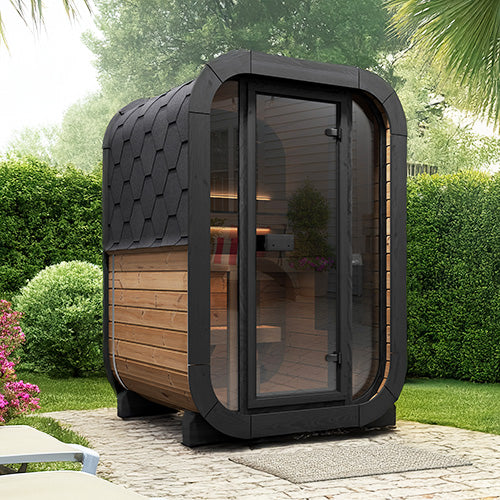
Infrared units are generally rated for indoor use only, while traditional and hybrid saunas can be placed in dedicated outdoor enclosures if properly rated and ventilated (Good Health Saunas, 2025; Sauna Supply Co, 2025; Fun Outdoor Living, 2025; Sunray Saunas, Manual). Using indoor-only units outdoors can damage equipment and void warranty, so checking the manual for indoor-only designation versus outdoor approval and enclosure requirements is critical (Sauna Supply Co, 2025; Fun Outdoor Living, 2025; Sunray Saunas, Manual).
Manuals specify minimum ceiling heights, clearances, and vent positions that must be checked against the actual room (Sunray Saunas, Manual; Helo, 2020; Finnleo, 2020). Users must maintain safe clearances between the heater and combustible materials, including minimum distances set in heater manuals (Saunafin, 2016; Helo, 2020; Finnleo, 2020; Sunray Saunas, Manual).
Browse our collection of outdoor saunas and barrel saunas designed for outdoor installation.
Cost Breakdown: Initial Investment and Operating Costs
Upfront Costs
Infrared modular cabins are often less expensive than custom traditional or hybrid rooms, with hybrids typically most expensive due to dual heating systems (My Sauna World, 2025; SolarTech Online, 2025; Epic Hot Tubs, 2025; Sauna Supply Co, 2025).
Electrical Installation Costs
New 240V circuits, running wire, and panel upgrades can add hundreds to several thousand dollars depending on distance and panel capacity, with ranges commonly quoted in trade articles varying widely by location and existing infrastructure (Heavenly Heat Saunas, 2025; Safe-Way Electric; Fun Outdoor Living, 2025). GFCI breakers and wiring in wet or damp locations cost more but are required for safety, and NEC proximity rules around water add cost for spa and sauna circuits, especially near pools and hot tubs (Safe-Way Electric; Heavenly Heat Saunas, 2025).
Operating Costs: The Big Difference
Infrared saunas have substantially lower per-session and monthly operating costs versus traditional for comparable usage patterns (SolarTech Online, 2025; Epic Hot Tubs, 2025; Heavenly Heat Saunas, 2025; Sauna World, 2025).
Example calculation for traditional: A 6 kW unit running approximately 2 hours per session consumes about 12 kWh per session, costing roughly $1.92 per session and approximately $30 per month at 16 uses (Sauna World, 2025).
Example calculation for infrared: A 1.6–2.4 kW unit running 0.5–1 hour consumes significantly less energy, costing approximately $0.25–0.48 per session and roughly $4–$8 per month at similar frequency (Sauna World, 2025).
Another analysis shows a 2-person infrared unit at approximately 2 kW costs about $0.34 per hour at $0.17/kWh, while a 2-person traditional at 6 kW costs approximately $1.02 per hour, demonstrating about a 3× difference (SolarTech Online, 2025). Retail and trade estimates suggest electric saunas may cost roughly $14–$27 per month with daily 30–40 minute use depending on size and local electricity rates (Epic Hot Tubs, 2025; Heavenly Heat Saunas, 2025).
Cost Comparison Table
| Cost Category | Traditional | Infrared | Hybrid |
|---|---|---|---|
| Unit price range | $8,000-25,000+ | $2,000-10,000 | $12,000-40,000+ |
| Electrical install | $800-3,000+ (240V circuit + potential panel upgrade) | $0-500 (if 120V outlet exists) to $800-2,000 (240V for large units) | $1,500-4,000+ (complex dual-system wiring) |
| Cost per hour (2-person) | ~$1.02 (6 kW at $0.17/kWh) | ~$0.34 (2 kW at $0.17/kWh) | ~$0.34-1.02 depending on mode |
| Monthly cost (daily 45-min use) | ~$23-30 | ~$6-8 | ~$6-30 depending on mode preference |
| Annual operating cost | ~$270-360 | ~$70-95 | ~$70-360 |
For guidance on sauna costs and value, read our article on investing in luxury wellness equipment.
Maintenance Requirements by Sauna Type
Traditional Sauna Maintenance
Traditional saunas require periodic washing of benches and walls, managing humidity to avoid mold, checking and occasionally replacing sauna rocks and heater elements, and ensuring vents stay clear (TheSaunaHeater.com, 2024; Sunray Saunas, Manual; SaunaTimes, 2022). Ventilation guides stress keeping vents unobstructed and avoiding sealing them to trap heat, as this harms air quality and durability (Finnish Sauna Builders, 2025; SaunaTimes, 2022; TheSaunaHeater.com, 2024).
Infrared Sauna Maintenance
Infrared saunas mainly require wiping surfaces, checking panel faces and controls, and occasional wood care, with no rocks and less moisture resulting in fewer moisture-related tasks (My Sauna World, 2025; Sauna Supply Co, 2025; Fun Outdoor Living, 2025; Good Health Saunas, 2025). Manuals provide cleaning instructions recommending no harsh cleaners, wiping with mild water and soap, and ensuring power is off before cleaning (Sunray Saunas, Manual; Good Health Saunas, 2025; Indoor 120V Manual).
Hybrid Sauna Maintenance
Hybrid saunas have both moisture and electronics and must follow maintenance routines for both traditional and infrared components (Saunafin, Rough-In Guide; Sauna Supply Co, 2025; Finnleo, 2020).
All saunas still require regular cleaning, periodic checks, and adherence to safety warnings (Sauna Supply Co, 2025; Sunray Saunas, Manual; SaunaTimes, 2022; Good Health Saunas, 2025; Indoor 120V Manual).
<a name="mistakes"></a>
Common Sauna Buyer Mistakes (And How to Avoid Them)
Mistake 1: Assuming Existing Circuits Are Adequate
The Problem: Buyers assume any 240V outlet will work or that shared circuits can handle sauna loads without checking amperage, dedicated status, and GFCI requirements (Helo, 2020; Indoor 120V Manual; Heavenly Heat Saunas, 2025; Safe-Way Electric; Sunray Saunas, Manual).
Consequence: Undersized or shared circuits risk nuisance tripping and fire hazards. Manuals mandate dedicated circuits to handle heater load (Heavenly Heat Saunas, 2025; Sunray Saunas, Manual; Helo, 2020; Indoor 120V Manual).
Prevention: Verify circuit voltage and amp rating, confirm dedicated status, check GFCI needs, and assess panel capacity before purchase. Electrical requirement documents emphasize dedicated circuits and matching circuit breaker ampacity to heater load (Indoor 120V Manual; Heavenly Heat Saunas, 2025; Helo, 2020; Sunray Saunas, Manual). Consult a licensed electrician to verify compatibility.
Mistake 2: Underestimating Ventilation Requirements
The Problem: Buyers installing traditional or hybrid saunas skip or inadequately plan ventilation, leading to poor performance and moisture issues (TheSaunaHeater.com, 2024; Finnleo, 2020; Finnish Sauna Builders, 2025; SaunaTimes, 2022; Helo, 2020).
Consequence: Inadequate ventilation causes uneven heating, moisture damage, and shortened equipment lifespan (TheSaunaHeater.com, 2024; Finnish Sauna Builders, 2025; Finnleo, 2020; Helo, 2020).
Prevention: Install inlet vent below heater and outlet vent high on opposite wall, sized to provide approximately 6 air changes per hour. Common vent sizes include intake and exhaust in the 4–8 inch range, and vents should remain at least partially open during use (Finnish Sauna Builders, 2025; TheSaunaHeater.com, 2024; Helo, 2020; Finnleo, 2020). Follow manufacturer specifications in manuals that require vents sized per UL 875 standards (Finnleo, 2020; Helo, 2020).
Mistake 3: Buying Hybrid Without Testing Preferences
The Problem: Buyers purchase hybrid saunas for flexibility without verifying whether both modes can run together—most cannot—and without testing their actual preferences first (Reddit r/Sauna, 2025; Sauna Supply Co, 2025; Saunafin, Rough-In Guide; Finnleo, 2020).
Consequence: Spending $15,000-40,000 on a hybrid system but only using one mode regularly. Hybrid product descriptions and user discussions indicate shared controls with mode selection and state that infrared and traditional elements are not operated together (Sauna Supply Co, 2025; Reddit r/Sauna, 2025; Finnleo, 2020; Saunafin, Rough-In Guide).
Prevention: Try both traditional and infrared saunas separately at gyms, spas, or showrooms before committing to a hybrid. Reddit and community discussions show skepticism about hybrids and infrared benefits, indicating preference and actual experience matter as much as marketing claims (Reddit r/Sauna, 2025).
Mistake 4: Overlooking Heat-Up Time and Daily Schedule Fit
The Problem: Buyers don't consider how 30-60 minute traditional sauna preheat times fit into their actual daily routines (Sauna Supply Co, 2025; Epic Hot Tubs, 2025; Sauna World, 2025; SolarTech Online, 2025).
Consequence: The sauna sits unused because spontaneous use isn't practical with long heat-up requirements.
Prevention: Honestly assess your routine. If spontaneous sessions after workouts or work are important, choose infrared with its 10-20 minute heat-up time. Traditional saunas work well when you can plan ahead and dedicate time to the full experience (Sauna Supply Co, 2025; SolarTech Online, 2025; Epic Hot Tubs, 2025).
Mistake 5: Choosing Uncertified or Low-Quality Units
The Problem: Relying on low-cost, poorly certified units with questionable safety records, such as recalled infrared saunas and overheating sauna blankets (CPSC, 2008; CPSC, 2025; VictimAid, 2025).
Consequence: CPSC recalls document infrared sauna rooms and sauna blankets that overheated, causing fires and burns, showing real fire and burn risks from faulty products (CPSC, 2025; CPSC, 2008; VictimAid, 2025). These recalls emphasize the need for certification and recall checks (VictimAid, 2025; CPSC, 2008; CPSC, 2025).
Prevention: Verify UL/ETL marks and recall status before purchase. UL and ETL approvals in manuals and heater documents indicate compliance with safety and temperature-related requirements (SaunaTimes, 2025; UL, 2024; Intertek, 2018; Helo, 2020). Search the CPSC database and manufacturer site for recalls. Certified products are tested against safety standards; recalls show actual failures like overheating or fire (CPSC, 2025; CPSC, 2008; Intertek, 2018; UL, 2024).
Certified sauna heaters must meet UL/ETL standards governing temperature limits, controls, and construction. UL 875 and successor UL 60335-2-53 define dry-bath heater requirements like temperature regulation, humidity range, and protection devices (Helo, 2020; SaunaTimes, 2025; UL, 2024; Intertek, 2018). Not all imported or low-cost units are properly listed—buyers should verify markings.
Learn about safe sauna use in our guide to sauna health benefits.
Pre-Purchase Verification Checklist
Before purchasing any sauna, verify these critical factors:
Electrical Verification
☐ Circuit voltage and amperage confirmed
- Why it matters: Ensures your electrical system can safely power the heater without overload
- How to verify: Check panel labels and breaker ratings; compare to sauna manual; consult electrician if unsure (Sunray Saunas, Manual; Helo, 2020; Indoor 120V Manual; Heavenly Heat Saunas, 2025)
- Sources: Sunray Saunas, Manual; Helo, 2020; Indoor 120V Manual; Heavenly Heat Saunas, 2025; UL, 2024
☐ Dedicated circuit availability confirmed
- Why it matters: Shared circuits can cause nuisance trips or overheating
- How to verify: Confirm that the chosen circuit serves only the sauna and is sized for the full load (Helo, 2020; Indoor 120V Manual; Heavenly Heat Saunas, 2025)
- Sources: Helo, 2020; Indoor 120V Manual; Heavenly Heat Saunas, 2025
☐ GFCI requirements checked
- Why it matters: Reduces shock risk in damp environments, often required by code
- How to verify: Ask electrician about local code; install GFCI breaker or outlet if required or recommended (Heavenly Heat Saunas, 2025; Safe-Way Electric)
- Sources: Heavenly Heat Saunas, 2025; Safe-Way Electric
☐ Panel capacity and available breaker spaces assessed
- Why it matters: Adding a 30–60A sauna circuit may require panel upgrades, affecting total project cost
- How to verify: Have electrician inspect panel for available capacity and spaces (Safe-Way Electric; Heavenly Heat Saunas, 2025)
- Sources: Safe-Way Electric; Heavenly Heat Saunas, 2025
Space and Ventilation Verification
☐ Room dimensions and ceiling height measured
- Why it matters: Determines viable sauna size and heater kW, affecting performance and safety clearances
- How to verify: Measure installation area and ceiling; match to manufacturer's sizing tables and clearances (Finnleo, 2020; Sunray Saunas, Manual; Helo, 2020)
- Sources: Finnleo, 2020; Sunray Saunas, Manual; Helo, 2020
☐ Ventilation path identified (traditional/hybrid only)
- Why it matters: Prevents stuffy air and moisture damage and supports even heating
- How to verify: Identify intake and exhaust locations; confirm vent sizes meet manual and code guidance (Finnleo, 2020; Finnish Sauna Builders, 2025; Helo, 2020; TheSaunaHeater.com, 2024)
- Sources: Finnleo, 2020; Finnish Sauna Builders, 2025; Helo, 2020; TheSaunaHeater.com, 2024
☐ Floor load capacity verified
- Why it matters: Heavier traditional rooms require robust flooring
- How to verify: Check manufacturer weight specifications and compare to floor rating (Sunray Saunas, Manual; Good Health Saunas, 2025; Indoor 120V Manual)
- Sources: Sunray Saunas, Manual; Good Health Saunas, 2025; Indoor 120V Manual
Location and Access Verification
☐ Indoor vs outdoor rating confirmed
- Why it matters: Using indoor-only units outdoors can damage equipment and void warranty
- How to verify: Check manual for indoor-only designation versus outdoor approval and enclosure requirements (Sauna Supply Co, 2025; Fun Outdoor Living, 2025; Sunray Saunas, Manual)
- Sources: Sauna Supply Co, 2025; Fun Outdoor Living, 2025; Sunray Saunas, Manual
☐ Delivery and assembly path verified
- Why it matters: Door swing and access path must accommodate large panels or assembled units
- How to verify: Measure doorways, hallways, and stairs; compare to sauna dimensions (Good Health Saunas, 2025; Indoor 120V Manual; Sunray Saunas, Manual)
- Sources: Good Health Saunas, 2025; Indoor 120V Manual; Sunray Saunas, Manual
Safety and Certification Verification
☐ Certification marks (UL/ETL) verified
- Why it matters: Indicates testing to safety standards like UL 875 or UL 60335-2-53
- How to verify: Inspect product labels and documentation for UL/ETL/Intertek marks (Helo, 2020; SaunaTimes, 2025; UL, 2024; Intertek, 2018)
- Sources: Helo, 2020; SaunaTimes, 2025; UL, 2024; Intertek, 2018
☐ Recall and safety history checked
- Why it matters: Avoids products with known defects like overheating or fire hazards
- How to verify: Search CPSC database and manufacturer site for recalls before purchase (CPSC, 2008; CPSC, 2025; VictimAid, 2025)
- Sources: CPSC, 2008; CPSC, 2025; VictimAid, 2025
☐ Clear installation and operating manuals reviewed
- Why it matters: Proper installation and use prevent safety issues and equipment damage
- How to verify: Request and review manuals before purchase; ensure they're comprehensive (Indoor 120V Manual; Sunray Saunas, Manual)
- Sources: Indoor 120V Manual; Sunray Saunas, Manual
<a name="simplest-choice"></a>
The Simplest Safe Choice (If You're Still Unsure)
For many first-time buyers with standard 120V circuits, limited space, and primarily solo or duo use, a certified plug-and-play 1–2 person infrared sauna is often the simplest path forward (Epic Hot Tubs, 2025; Fun Outdoor Living, 2025; Sauna Supply Co, 2025; SolarTech Online, 2025; Indoor 120V Manual).
Why this is the safe default:
- Minimal construction required: Modular assembly without major renovations (Good Health Saunas, 2025; Indoor 120V Manual)
- Lower operating costs: Approximately $6 per month for daily use versus approximately $22 per month for traditional (Sauna World, 2025; SolarTech Online, 2025; Epic Hot Tubs, 2025)
- 120V compatibility: Works with existing electrical in most homes (Fun Outdoor Living, 2025; Indoor 120V Manual)
- Fast heat-up: Ready in 10–20 minutes supports spontaneous use (SolarTech Online, 2025; Epic Hot Tubs, 2025)
Critical requirements even for this "simple" choice:
You must still ensure a dedicated 15–20A circuit (not shared with other appliances), compliance with manufacturer clearance specifications, and purchase from reputable certified manufacturers to avoid safety issues (Intertek, 2018; UL, 2024; Helo, 2020; Indoor 120V Manual; Heavenly Heat Saunas, 2025). The 120V/20A indoor infrared manuals show straightforward assembly and plug-in use but still warn against adapters and non-dedicated circuits (Good Health Saunas, 2025; Indoor 120V Manual).
Operating cost calculators highlight low monthly operating costs, which fits the safe, low-commitment framing for uncertain buyers (Sauna World, 2025; SolarTech Online, 2025; Epic Hot Tubs, 2025).
Browse our selection of 2-person infrared saunas and low-EMF infrared saunas to see certified options.
<a name="faq"></a>
Frequently Asked Questions
Which sauna type should I choose for a typical U.S. home?
Choose infrared if you have only 120V and want fast, low-cost sessions; choose traditional if you have 240V and want high heat and steam; choose hybrid if you want both experiences and accept higher cost (Creative Energy, 2025; Fun Outdoor Living, 2025; Sauna Supply Co, 2025; SolarTech Online, 2025; Sunray Saunas, Manual).
- Verify your electrical service (voltage and amp) before deciding (Helo, 2020; Indoor 120V Manual; Sunray Saunas, Manual)
- Consider heat-up time: 10–20 minutes for infrared versus 30–60 minutes for traditional (Sauna Supply Co, 2025; SolarTech Online, 2025; Sauna World, 2025)
- Think about usage: solo or duo versus family or social sessions (SolarTech Online, 2025; Sauna Supply Co, 2025)
What's the main difference between infrared and traditional saunas?
Traditional saunas heat the room air and allow steam via rocks, while infrared saunas use radiant panels to heat your body at lower air temperatures without steam (Heavenly Heat Saunas, 2025; Creative Energy, 2025; Sauna Supply Co, 2025).
- Traditional air temperatures: approximately 150–194°F (UL, 2024; Sunray Saunas, Manual; Sauna Supply Co, 2025)
- Infrared air temperatures: approximately 110–130°F (Heavenly Heat Saunas, 2025; Sauna Supply Co, 2025; SolarTech Online, 2025)
- Infrared uses less power for similar session lengths (Epic Hot Tubs, 2025; Sauna World, 2025; SolarTech Online, 2025)
Are hybrid saunas worth the extra cost?
Hybrid saunas can be worth it if multiple household members want both authentic traditional sessions and gentler infrared sessions in one room, and you have the budget and 240V power (Saunafin, Rough-In Guide; Finnleo, 2020; Sauna Supply Co, 2025).
- Hybrids typically cannot run both modes at once (Reddit r/Sauna, 2025; Finnleo, 2020; Sauna Supply Co, 2025)
- Installation is more complex than single-type saunas (Saunafin, Rough-In Guide; Finnleo, 2020; Sauna Supply Co, 2025)
Can I plug an infrared sauna into a regular outlet?
Many 1–2 person infrared saunas are designed for 120V outlets but still require a dedicated 15–20A circuit (Good Health Saunas, 2025; Fun Outdoor Living, 2025; Indoor 120V Manual).
- Manuals warn against adapters and overloaded circuits (Indoor 120V Manual)
- Larger infrared units may need 240V (Fun Outdoor Living, 2025; Indoor 120V Manual)
Do I need 240V for a sauna?
You need 240V for most traditional and hybrid saunas and for larger infrared rooms, but many small modular infrared cabins run on 120V (Fun Outdoor Living, 2025; Sunray Saunas, Manual; Helo, 2020; Indoor 120V Manual).
- Traditional heater manuals show 240V, 30A supplies (Sunray Saunas, Manual; Helo, 2020)
- Check your panel and consult an electrician before purchasing (Safe-Way Electric; Heavenly Heat Saunas, 2025)
How do I know if my electrical system can handle a sauna?
Check panel capacity, available breaker spaces, and existing circuit loads, then compare to the sauna's voltage and amp requirements and consult an electrician (Heavenly Heat Saunas, 2025; Helo, 2020; Indoor 120V Manual; Sunray Saunas, Manual).
- Heaters list kW and required breaker size (Helo, 2020; UL, 2024; Sunray Saunas, Manual)
- GFCI may be required in your jurisdiction (Safe-Way Electric; Heavenly Heat Saunas, 2025)
What ventilation do I need for a traditional sauna?
You need at least one low intake vent near the heater and one high exhaust vent on the opposite wall, sized to provide roughly six air changes per hour (TheSaunaHeater.com, 2024; Finnleo, 2020; Finnish Sauna Builders, 2025; Helo, 2020).
- Common vent sizes include intake and exhaust in the 4–8 inch range (Finnish Sauna Builders, 2025)
- Vents should remain at least partially open during use (TheSaunaHeater.com, 2024; Finnish Sauna Builders, 2025)
How much space do I need for a home sauna?
Space needs depend on capacity, but even compact 1–2 person units require floor area roughly 3×4 feet or more plus clearances around the heater and ceiling height per manual (CPSC, 2008; Good Health Saunas, 2025; Indoor 120V Manual; Sunray Saunas, Manual).
- Heavier traditional rooms require robust flooring (Sunray Saunas, Manual)
- Door swing and access path must also be considered (Good Health Saunas, 2025; Indoor 120V Manual)
Which is cheaper to run: infrared or traditional?
Infrared saunas are much cheaper to run, often costing a third or less per hour compared with traditional electric saunas of similar capacity (Epic Hot Tubs, 2025; Heavenly Heat Saunas, 2025; Sauna World, 2025; SolarTech Online, 2025).
- Example: approximately $0.34 per hour for 2 kW infrared versus approximately $1.02 per hour for 6 kW traditional (SolarTech Online, 2025)
- Monthly savings accumulate with frequent use (Sauna World, 2025; SolarTech Online, 2025)
How long does each sauna type take to heat up?
Traditional saunas often need 30–60 minutes to reach 150–194°F, while infrared units typically reach comfortable temperatures in 10–20 minutes (Sauna Supply Co, 2025; Epic Hot Tubs, 2025; Sauna World, 2025; SolarTech Online, 2025).
- Larger rooms and colder spaces increase heat-up time (Sauna World, 2025; SolarTech Online, 2025)
- Hybrids behave like infrared or traditional depending on mode (Finnleo, 2020; Sauna Supply Co, 2025)
Sources
- Sauna Supply Co – "Different Types of Saunas: Traditional vs Infrared vs Hybrid", 2025-09-18, https://saunasupplyco.com/types-of-saunas/
- Creative Energy – "Infrared Sauna vs Traditional Sauna: What's the Difference?", 2025-03-19, https://www.creativeenergy.com/infrared-sauna-vs-traditional-sauna/
- Finnleo – "IS System with SL2 Control" (Hybrid installation manual PDF), 2020-02-11, https://www.finnleo.com/hubfs/Finnleo%20Downloads/72-0120%20IS%20System%20with%20SL2%20Control%20Rev%20C%2002-12-2020.pdf
- Finnish Sauna Builders – "How to get sauna ventilation requirements right", 2025-08-14, https://finnishsaunabuilders.com/blogs/sauna-news/how-to-get-sauna-ventilation-requirements-right-and-why-it-matters-essential-guidelines-for-safety-and-performance
- Helo – "Himalaya SL2 Heater Manual" (PDF), 2020-01-27, https://helosauna.com/hubfs/Helo%20US%20Downloads/72-0132%20314%20SKLT%2076%20D%20Himalaya%20SL2%20Heater%2001-27-2020.pdf
- TheSaunaHeater.com – "Basic Guide on Sauna Ventilation", 2024-02-06, https://thesaunaheater.com/blogs/sauna-academy/complete-guide-on-sauna-ventilation
- Heavenly Heat Saunas – "Sauna Electrical Requirements: What You Need to Know", 2025-07-11, https://heavenlyheatsaunas.com/blogs/wellness-insights/sauna-electrical-requirements-what-you-need-to-know
- UL – "Electric Dry-Bath Heaters - UL 875", 2024-07-07, https://www.shopulstandards.com/ProductDetail.aspx?UniqueKey=46790
- Safe-Way Electric – "Pool, Spa, and Sauna Electrical", https://www.safewayelectricco.com/pools-spas-and-saunas/
- Fun Outdoor Living – "Your Guide to Infrared Sauna Home Installation", 2025-09-02, https://funoutdoorliving.com/installation/infrared-sauna-home-installation/
- SaunaTimes – "Electric sauna heaters: UL 60335-2-53 set to 'replace' UL 875", 2025-07-09, https://www.saunatimes.com/types-of-saunas/electric-saunas/electric-sauna-heaters-ul-60335-2-53-set-to-replace-ul-875/
- Intertek – "UL 875, Electric Dry-Bath Heaters", 2018-01-16, https://www.intertek.com/standards-updates/ul-875-electric-dry-bath-heaters/
- CPSC – "Sauna By Airwall Recalls Infra-Red Sauna Rooms Due to Fire Hazard", 2008-06-11, https://www.cpsc.gov/Recalls/2008/sauna-by-airwall-recalls-infra-red-sauna-rooms-due-to-fire-hazard
- CPSC – "Lifepro Fitness Recalls Bioremedy Infrared Sauna Blankets Due to Risk of Burn Injuries", 2025-10-22, https://www.cpsc.gov/Recalls/2026/Lifepro-Fitness-Recalls-Bioremedy-Infrared-Sauna-Blankets-Due-to-Risk-of-Burn-Injuries
- VictimAid – "Lifepro Bioremedy Sauna Blanket Lawsuit – Burn Injury Lawyers", 2025-11-02, https://www.victimaid.com/practice-areas/product-liability/consumer-product-liability/heated-blanket-and-sauna-blanket-injuries/lifepro-sauna-blanket-lawsuit/
- Sunray Saunas – "Traditional Sauna Manual" (PDF), https://sunraysaunas.com/image/catalog/pdf/d72bd73a592d6c168de123eede59b716-Traditional%20Sauna%20Manual.pdf
- SolarTech Online – "How Much Electricity Does An Infrared Sauna Use? 2025 Guide", 2025-09-07, https://solartechonline.com/blog/how-much-electricity-does-infrared-sauna-use/
- Epic Hot Tubs – "How Much Does a Sauna Cost to Run?", 2025-10-06, https://epichottubs.com/blog/how-much-does-a-sauna-cost-to-run/
- Indoor 120 V Sauna Manual (PDF) – "SAUNA ROOM FOR INDOOR USE ONLY 120VAC 20 AMP…", https://images.thdstatic.com/catalog/pdfImages/2e/2e63176c-1b66-4cf0-8720-ee0c1a6cadfd.pdf
- Saunafin – "IS-IR Sauna Rough-In Guide" (PDF), https://www.saunafin.com/uploads/documents/ee8f759f2bb9b896ce2c85eb5475103248433f32.pdf
- Saunafin – "IS-240 Volt Installation Manual" (PDF), 2016-07-17, https://www.saunafin.com/uploads/documents/1e5316a7c0b7f933d58c7ad1af938cf8c3b2e791.pdf
- Sauna World – "Infrared Sauna Cost Calculator | Save Energy & Relax", 2025-06-14, https://mysaunaworld.com/blogs/sauna-tips/infrared-sauna-calculator-how-much-does-it-cost-to-run-an-infrared-sauna
- Heavenly Heat Saunas – "How Much Electricity Does a Sauna Use? All You Need to Know", 2025-03-25, https://heavenlyheatsaunas.com/en-ca/blogs/wellness-insights/how-much-electricity-does-a-sauna-use-comparing-energy-consumption-of-infrared-and-traditional-saunas-with-efficiency-tips
- Reddit r/Sauna – "Hybrid Saunas", 2025-02-15, https://www.reddit.com/r/Sauna/comments/1iq6n0w/hybrid_saunas/
- SaunaTimes – "Your Guide to Venting a Sauna", 2022-04-16, https://www.saunatimes.com/building-a-sauna/your-guide-to-venting-a-sauna/
- My Sauna World – "Buyer's Guide | Best Infrared Sauna | Features & Benefits", 2025-04-10, https://mysaunaworld.com/blogs/sauna-tips/guide-best-infrared-sauna
- Good Health Saunas – "How To Setup & Install Your Infrared Sauna", 2025-02-10, https://www.goodhealthsaunas.com/knowledge-center/infrared-sauna-installation/
What We Still Don't Know
While research and manufacturer specifications provide clear guidance on electrical requirements, operating costs, and installation standards, some areas remain subject to mixed evidence or evolving understanding:
EMF health effects: Low-EMF infrared panels are marketed with third-party testing showing milligauss levels, but EMF health standards continue to evolve and evidence remains mixed regarding health impacts at typical sauna exposure levels (SaunaTimes, 2025; Intertek, 2018; Sauna Supply Co, 2025). Buyers prioritizing this factor should look for third-party EMF test reports rather than relying solely on marketing claims (SaunaTimes, 2025; Sauna Supply Co, 2025).
Hybrid sauna user satisfaction: Community discussions on Reddit show skepticism about whether hybrid saunas genuinely deliver value or represent unnecessary complexity, with some experienced users finding infrared less satisfying than well-designed traditional saunas (Reddit r/Sauna, 2025). These perspectives are anecdotal rather than systematically studied, and individual preferences vary significantly (Reddit r/Sauna, 2025).
Optimal ventilation configurations: While guidance exists for approximately 6 air changes per hour with intake low and exhaust high, some newer standards allow more flexible vent locations, and exact requirements depend on local codes and room volume (Finnish Sauna Builders, 2025; TheSaunaHeater.com, 2024; Helo, 2020; Finnleo, 2020).
GFCI requirements by jurisdiction: While many codes and safety guidelines call for GFCI protection on sauna circuits due to proximity to moisture, exact NEC articles and local amendments vary, with some jurisdictions treating dry saunas differently from wet areas (Heavenly Heat Saunas, 2025; Safe-Way Electric).
These uncertainties don't prevent making informed decisions but underscore the importance of verifying local code requirements, checking certifications, and testing sauna types when possible before major purchases.
What Is an Infrared Sauna? Benefits, Risks, and Evidence-Based Buying Guide
Full Breaker Panel? Here's How to Choose a Sauna Without Major Electrical Work
Related Posts

Are Infrared Saunas Safe? A Science-Based Guide to Benefits, Risks & Smart Use

The 8 Best 2 Person Saunas of 2026: A Buyer's Guide to Size, Type, and Cost

The Truth About Costco Saunas: Are They Worth the Price and Hassle?

Arcadia Barrel Sauna: The Complete Buyer's Guide & Assembly Blueprint

Low EMF vs Near-Zero EMF Infrared Saunas: What Actually Matters Before You Buy

Chromotherapy vs No Chromotherapy: Who Benefits From It (Practically)? The Buyer's Decision Guide

The Science of Heat: How Saunas Improve Circulation and Cardiovascular Health
