








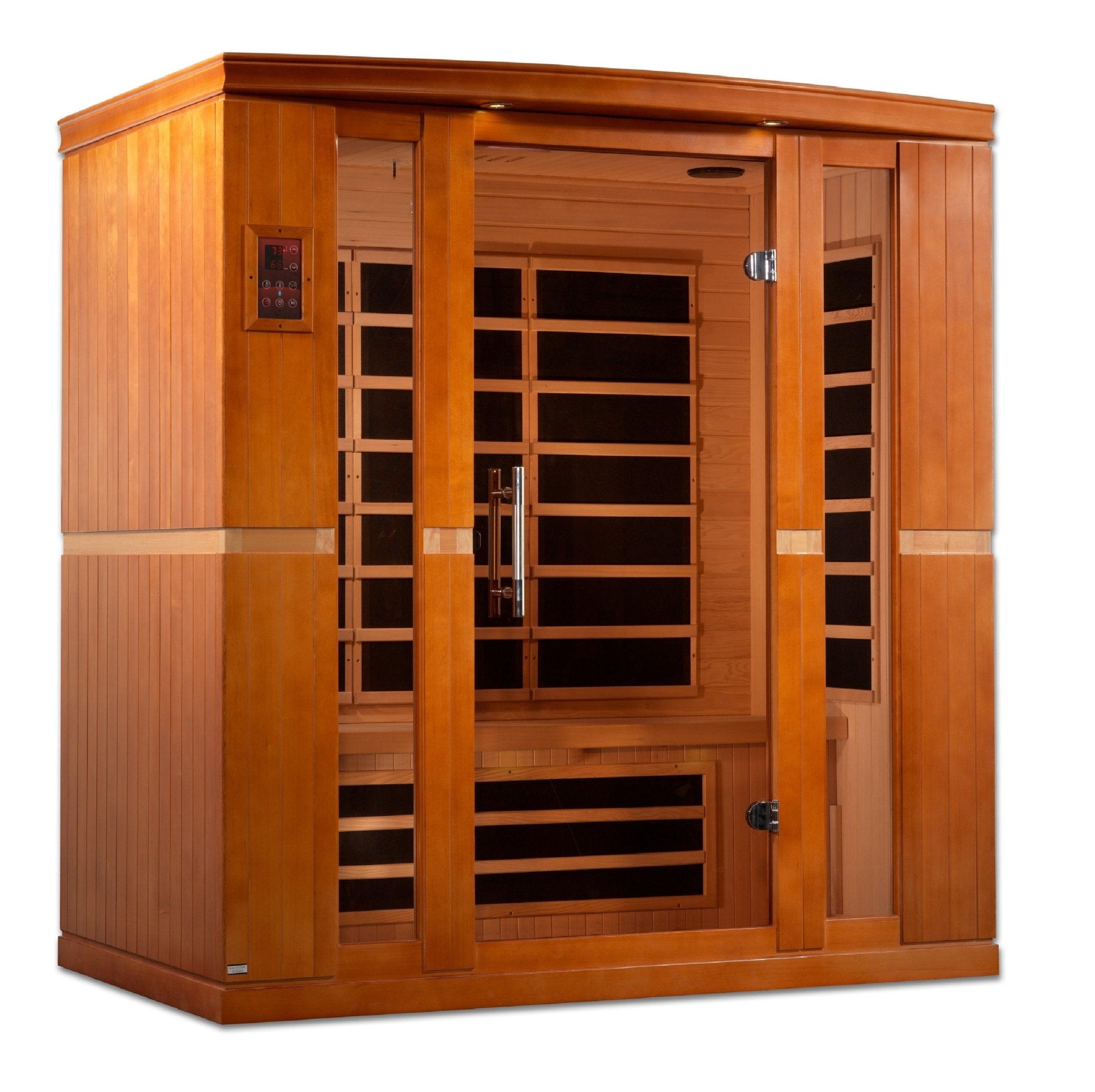
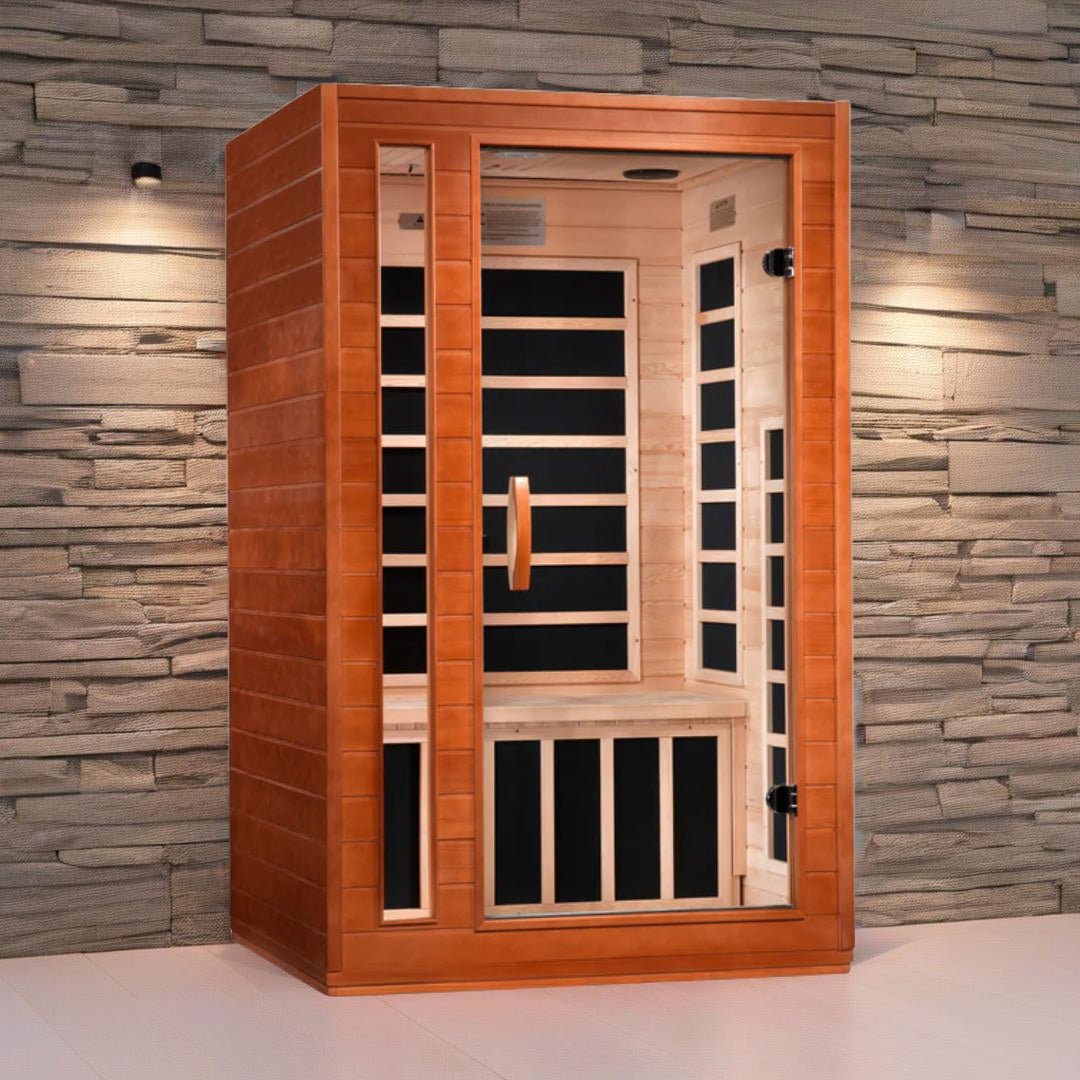

Full Breaker Panel? Here's How to Choose a Sauna Without Major Electrical Work
What Works When Your Panel Is Full
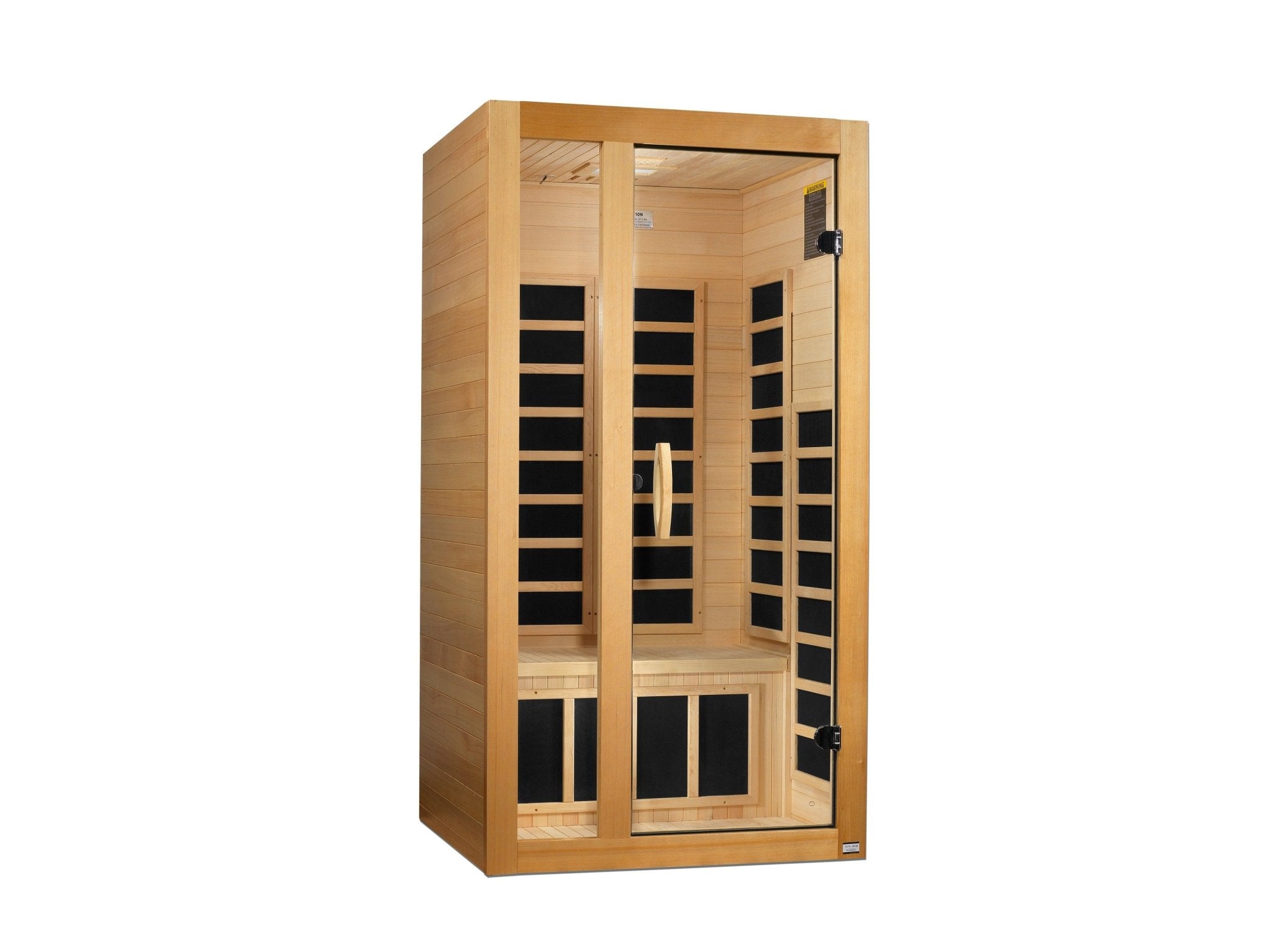
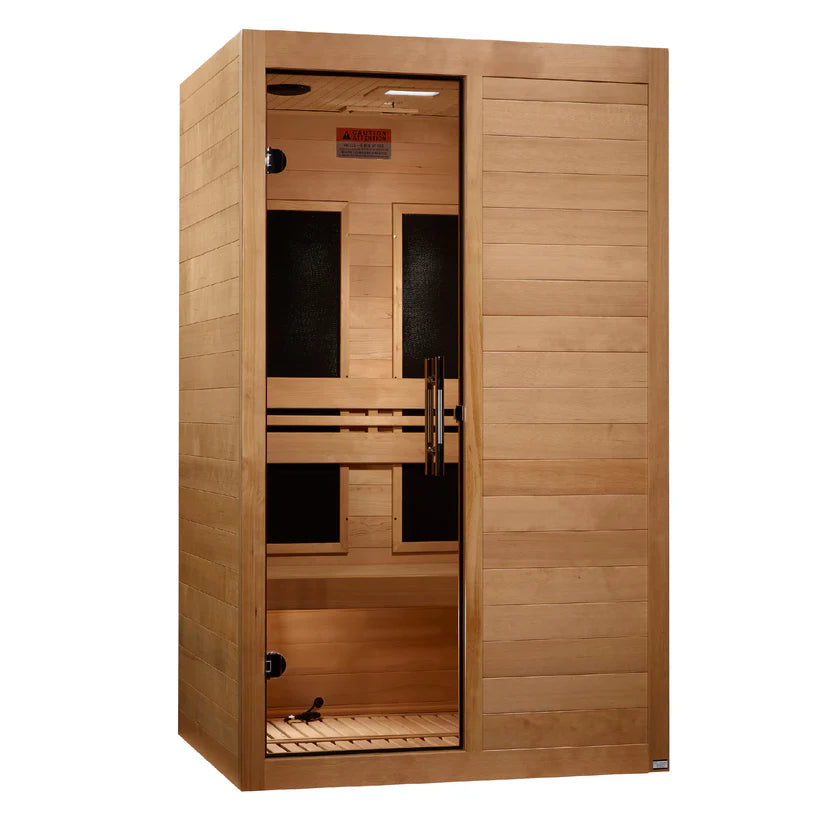
With a full breaker panel and no appetite for new 240V circuits, you have two realistic paths: small 120V plug-in infrared saunas that fit your existing circuit capacity, or wood-fired saunas that bypass electric heating entirely. Traditional 240V electric saunas are not viable without adding circuits.
Key thresholds and cautions:
- 120V infrared saunas rated ≤1500W (roughly 12.5A) can work on existing 15A circuits, but only if that circuit is dedicated or very lightly loaded
- Larger 120V models drawing 1800–2400W require 20A circuits with properly matched wiring and receptacles
- Extension cords and shared circuits are unsafe for continuous sauna loads and void most warranties
- Traditional electric sauna heaters (3–9 kW) require 240V dedicated circuits with 20–50A breakers—incompatible with a full panel scenario
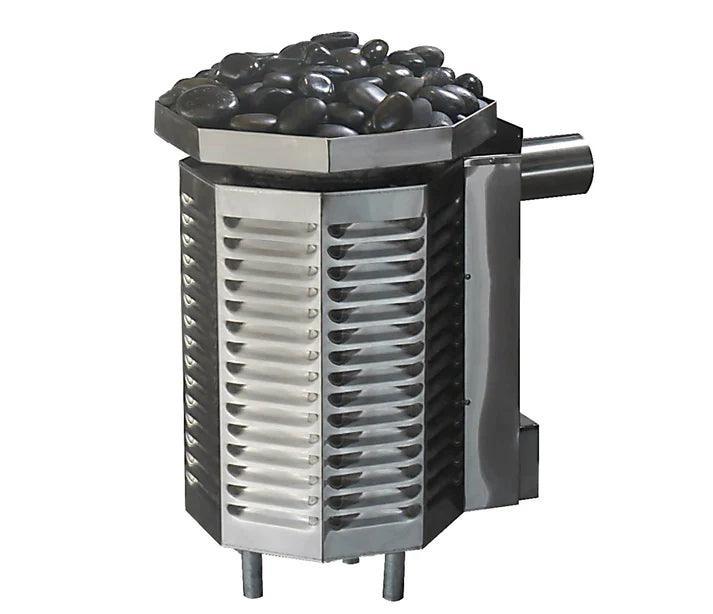
- Wood-fired saunas eliminate the heater circuit but demand code-compliant chimney systems and clearances
Table of Contents
- What a Full Breaker Panel Means for Sauna Selection
- Why the Electrical Constraint Matters
- Option 1: 120V Plug-and-Play Infrared Saunas
- Performance Trade-Offs: Will 120V Get Hot Enough?
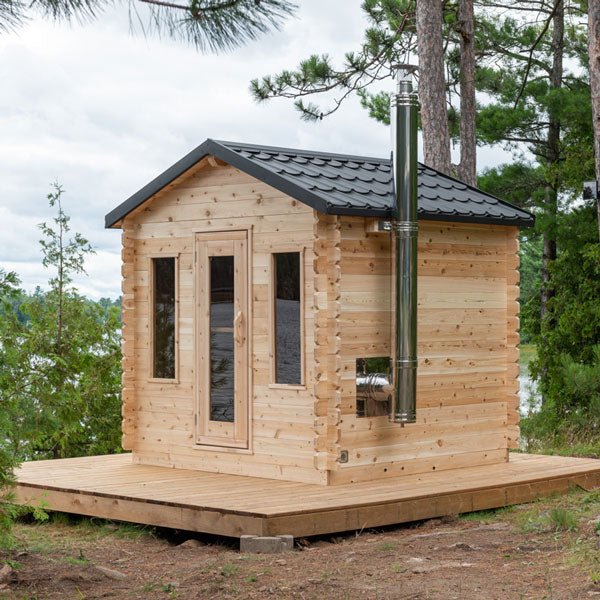
- Option 2: Wood-Fired Saunas
- What Doesn't Work: Safety-First Exclusion Checklist
- Decision Framework: Your 3-Step Feasibility Check
- Comparing Your Options Under Constraint
- Real-World Numbers That Matter
- Myths and Misconceptions
- Common Experience Patterns
- Frequently Asked Questions
- Sources
- What We Still Don't Know

What a Full Breaker Panel Means for Sauna Selection
A full breaker panel means every circuit breaker slot is occupied. Adding a new 240V circuit for a traditional electric sauna would require either removing an existing circuit, installing a sub-panel, or upgrading your main service—all of which count as major electrical work involving permits, licensed electricians, and costs that can rival or exceed the sauna's purchase price.
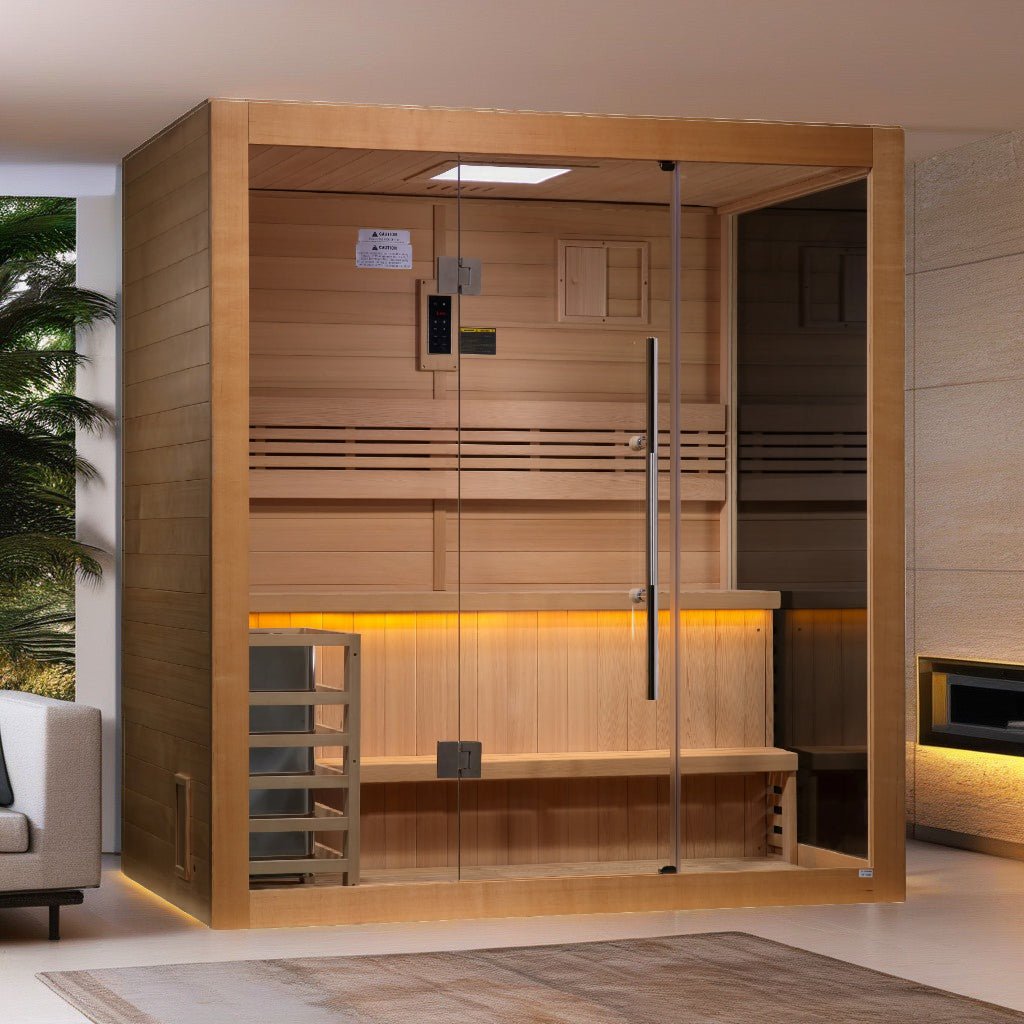
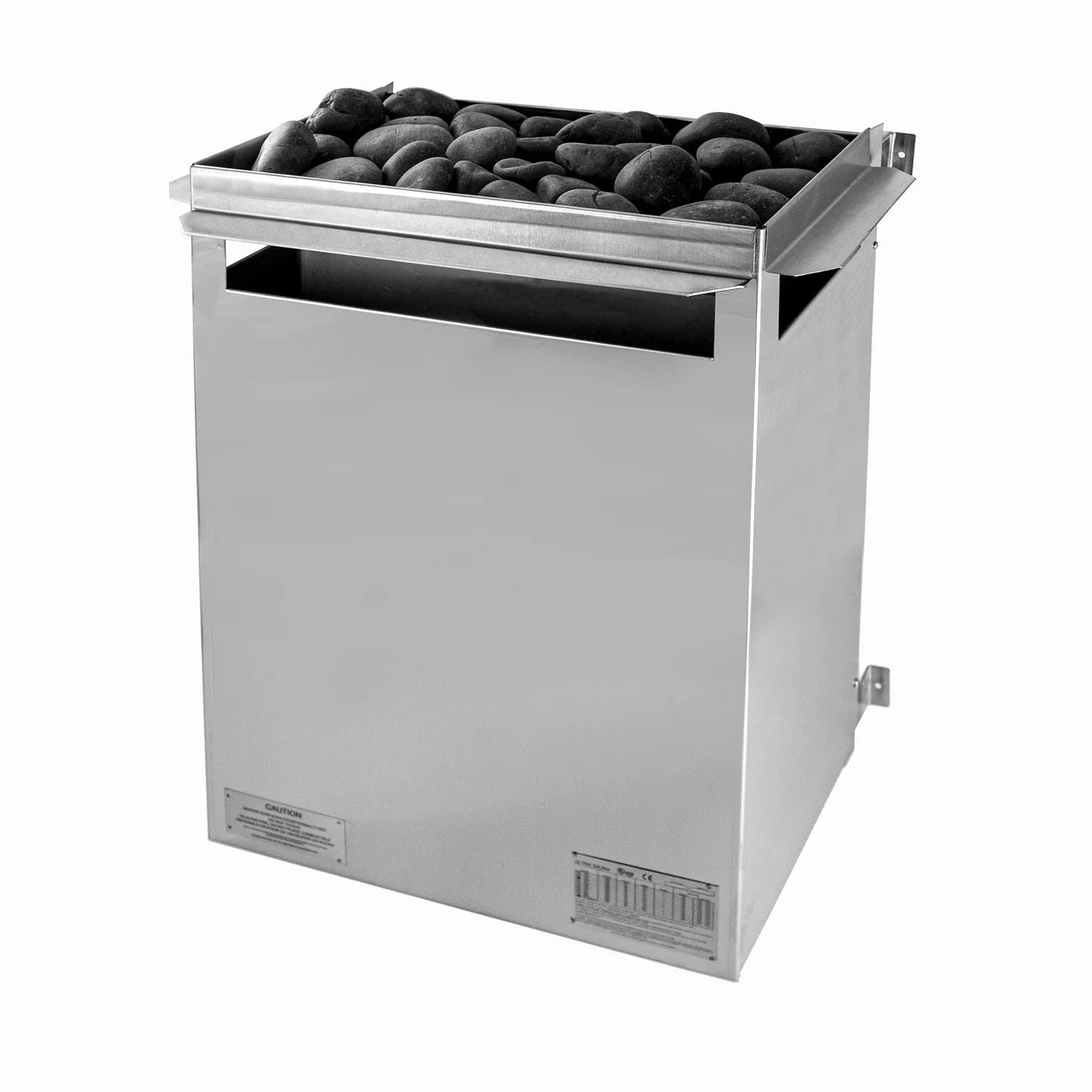
Most traditional electric sauna heaters are sized between 3 and 9 kilowatts and require dedicated 240V circuits protected by 20–50 amp breakers. Without spare panel capacity, these installations are effectively off the table unless you're willing to authorize substantial electrical modifications.
Key terms:
- Dedicated circuit: A branch circuit serving only one appliance, with no other outlets or devices sharing the load. Required for most fixed heating equipment to prevent overload.
- Continuous load: Any load expected to run at maximum current for three hours or more. The National Electrical Code (NEC) requires circuits supplying continuous loads to be sized at 125% of that load, which is why saunas typically need dedicated circuits even when their amperage seems to "fit" a standard branch circuit.
- 120V vs 240V: Standard US household outlets provide 120 volts; higher-power appliances like electric dryers and most traditional sauna heaters use 240-volt circuits, which deliver four times the power at the same amperage.
Small infrared saunas are specifically engineered for 120V operation and marketed as "plug-and-play," but that label can be misleading. Even these units must respect circuit ampacity limits and continuous-load derating rules. The constraint is real: if your existing 15A or 20A circuits are already serving other devices, adding a high-draw sauna can push you over safe thresholds.
Why the Electrical Constraint Matters: Safety, Performance, and the NEC
Electrical capacity isn't arbitrary—it's governed by fire safety, code compliance, and the physics of heat dissipation in conductors.
Continuous-load sizing rules:
The NEC defines continuous loads as those running at maximum current for three hours or longer and requires overcurrent protection rated at least 125% of that load. In practical terms, this means safe continuous current should not exceed about 80% of a breaker's rating. A 15A breaker should carry no more than roughly 12A continuously; a 20A breaker, no more than 16A.
Electric saunas qualify as continuous or near-continuous loads. Even if a 1500W infrared sauna technically draws only 12.5A at 120V, sharing that circuit with bedroom outlets, lamps, or other devices quickly erodes the safety margin. When total circuit load approaches or exceeds the breaker rating, several risks materialize:
- Nuisance tripping: Breakers designed to interrupt at rated current will trip frequently, cutting sauna sessions short.
- Conductor overheating: Wiring buried in walls heats up under sustained high current. Over time, insulation can degrade, increasing fire risk.
- Receptacle and plug damage: Loose connections or undersized extension cords can melt under continuous high current, a common failure mode reported in user forums.
- Code violations: Installations that ignore continuous-load rules or manufacturer instructions can create inspection failures, insurance issues, and liability in the event of fire.
Why extension cords are prohibited:
Manufacturer manuals and electrician consensus uniformly warn against extension cords for saunas. Extension cords introduce additional resistance, voltage drop, and points of failure. Under continuous 15–20A loads, even heavy-duty cords can overheat, especially if wound or coiled. Melted plugs and burned receptacles are frequently reported outcomes. Most sauna warranties explicitly void coverage if extension cords are used.
If your sauna location is far from an outlet, the correct solution is relocating the sauna or having an electrician install a new receptacle on a dedicated circuit—not running cords.
Option 1: 120V Plug-and-Play Infrared Saunas
Best fit if: You have an existing 15A or 20A circuit that is either dedicated or very lightly loaded, and you accept that infrared saunas operate at lower air temperatures than traditional Finnish saunas.
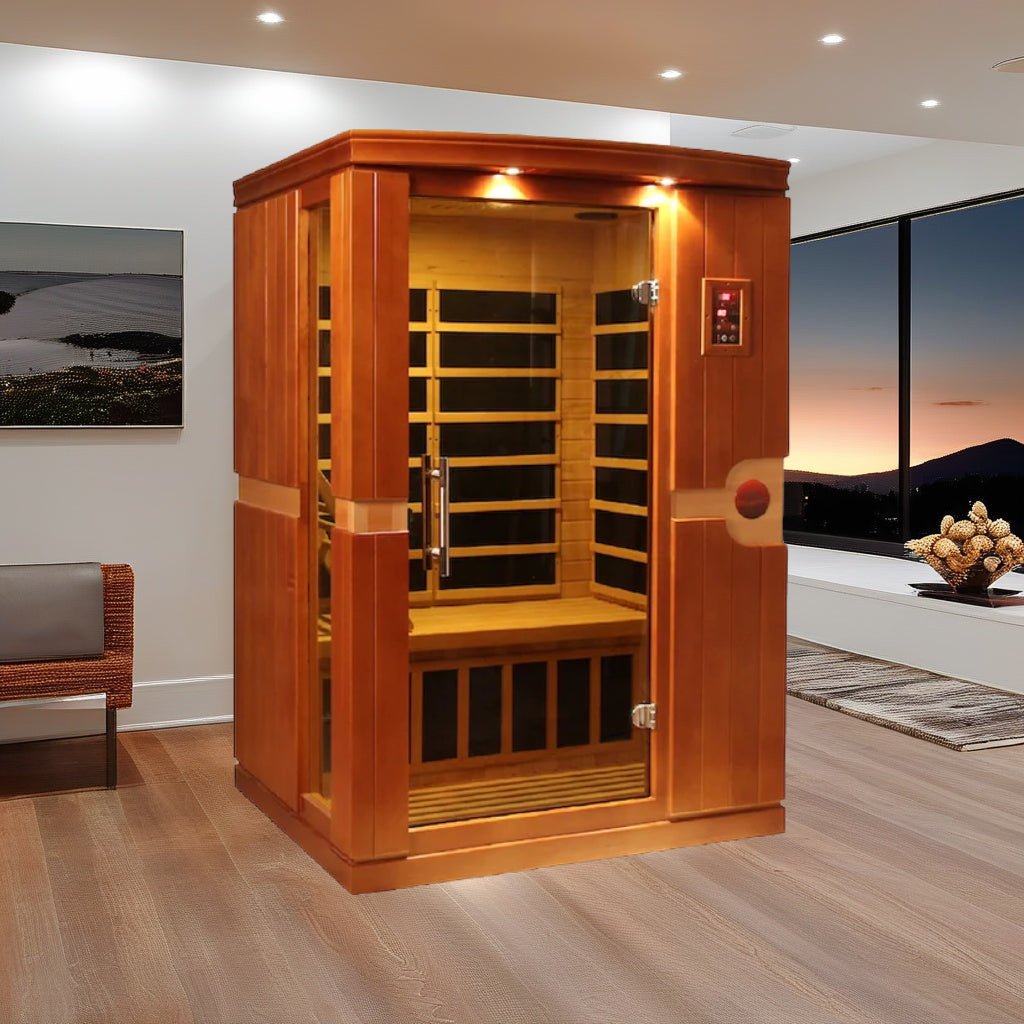
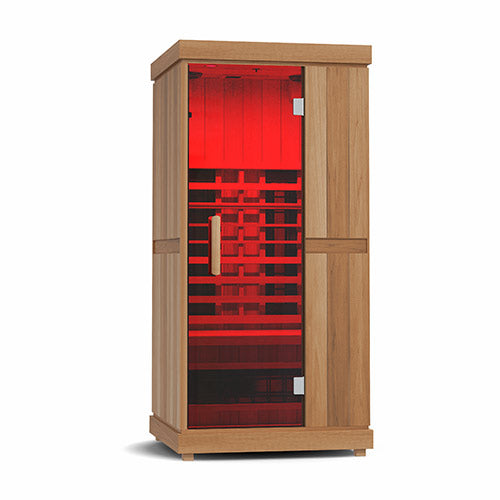
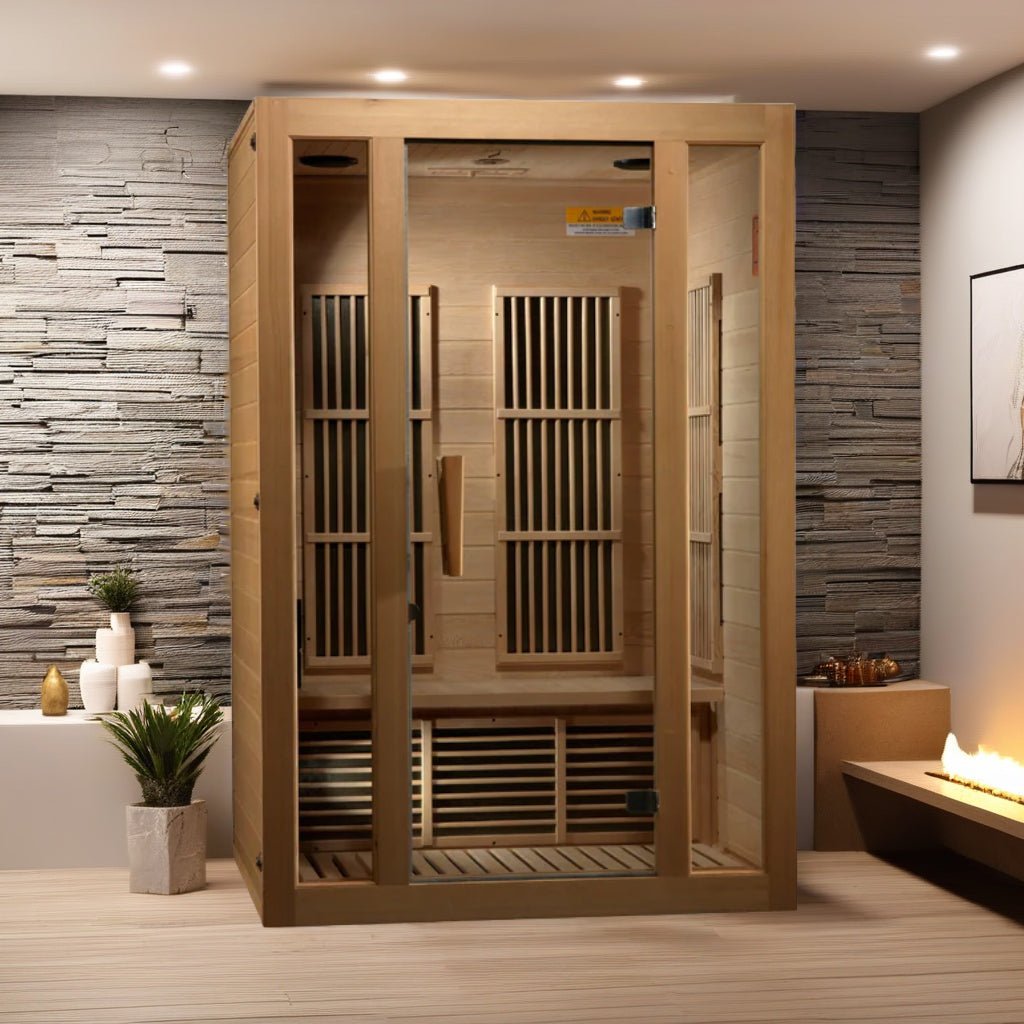
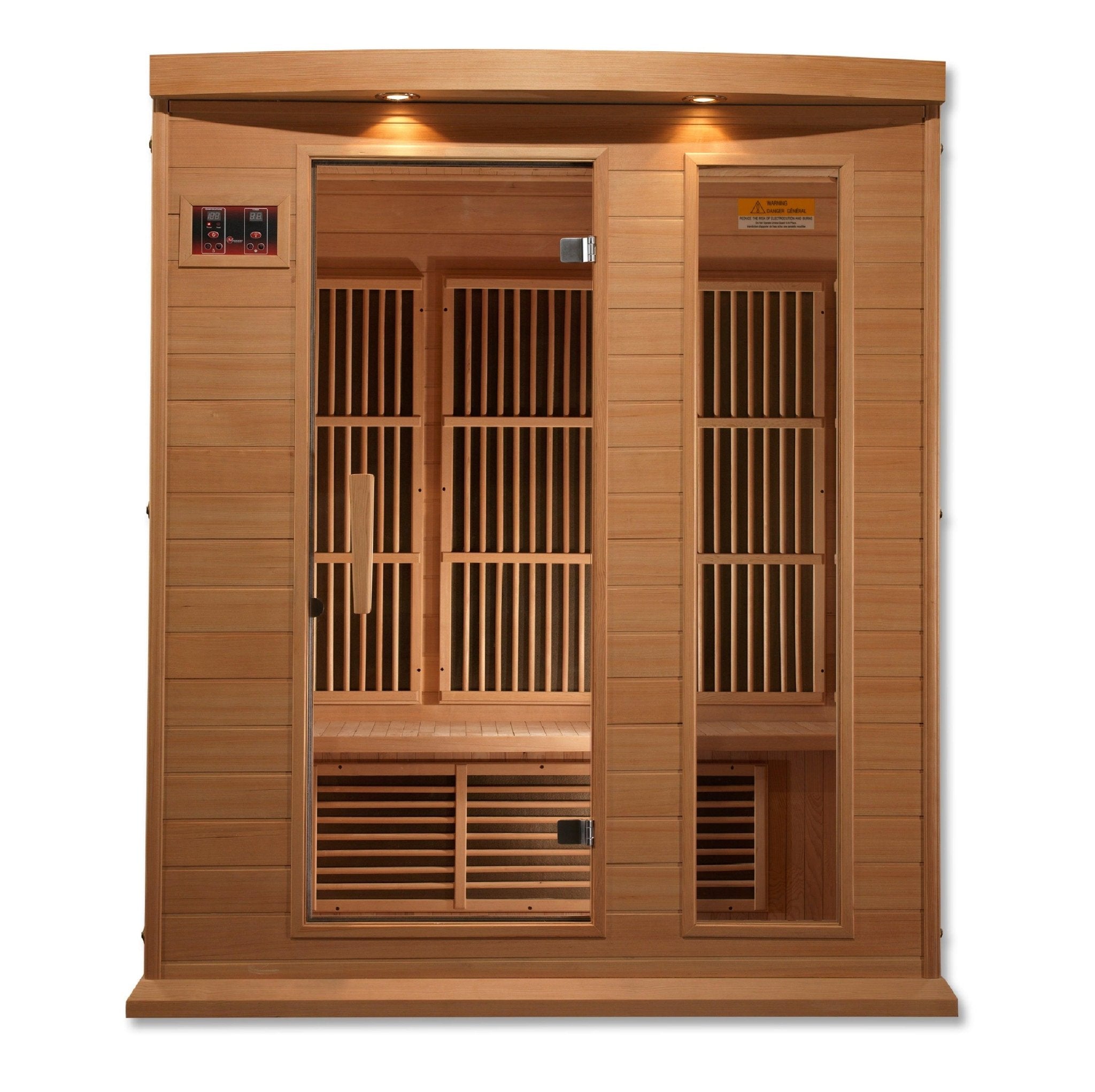
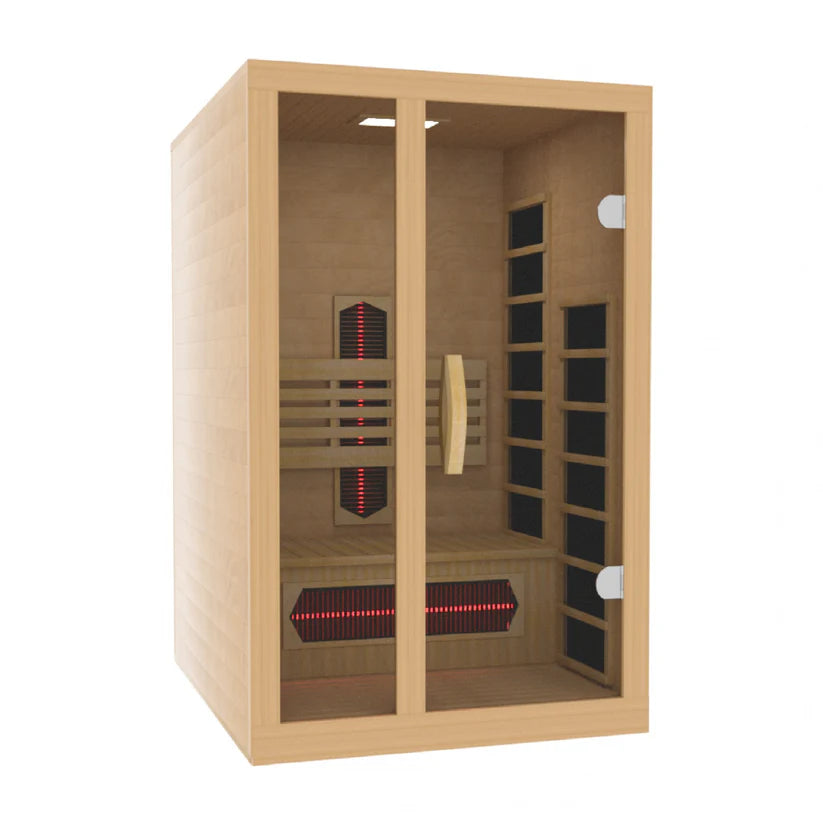
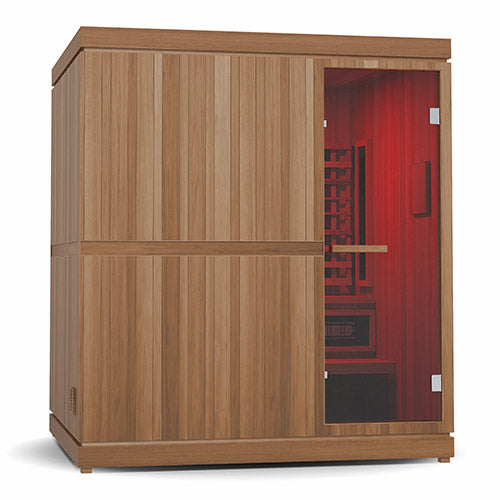
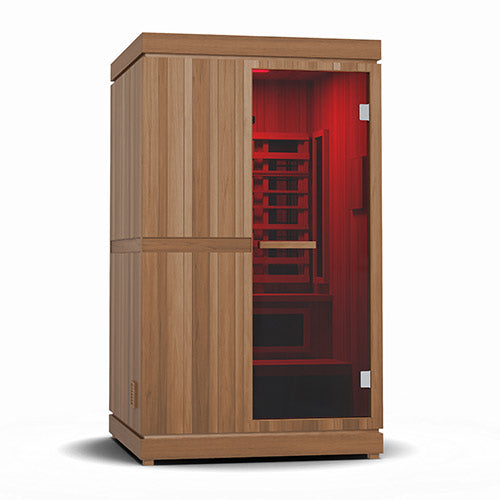
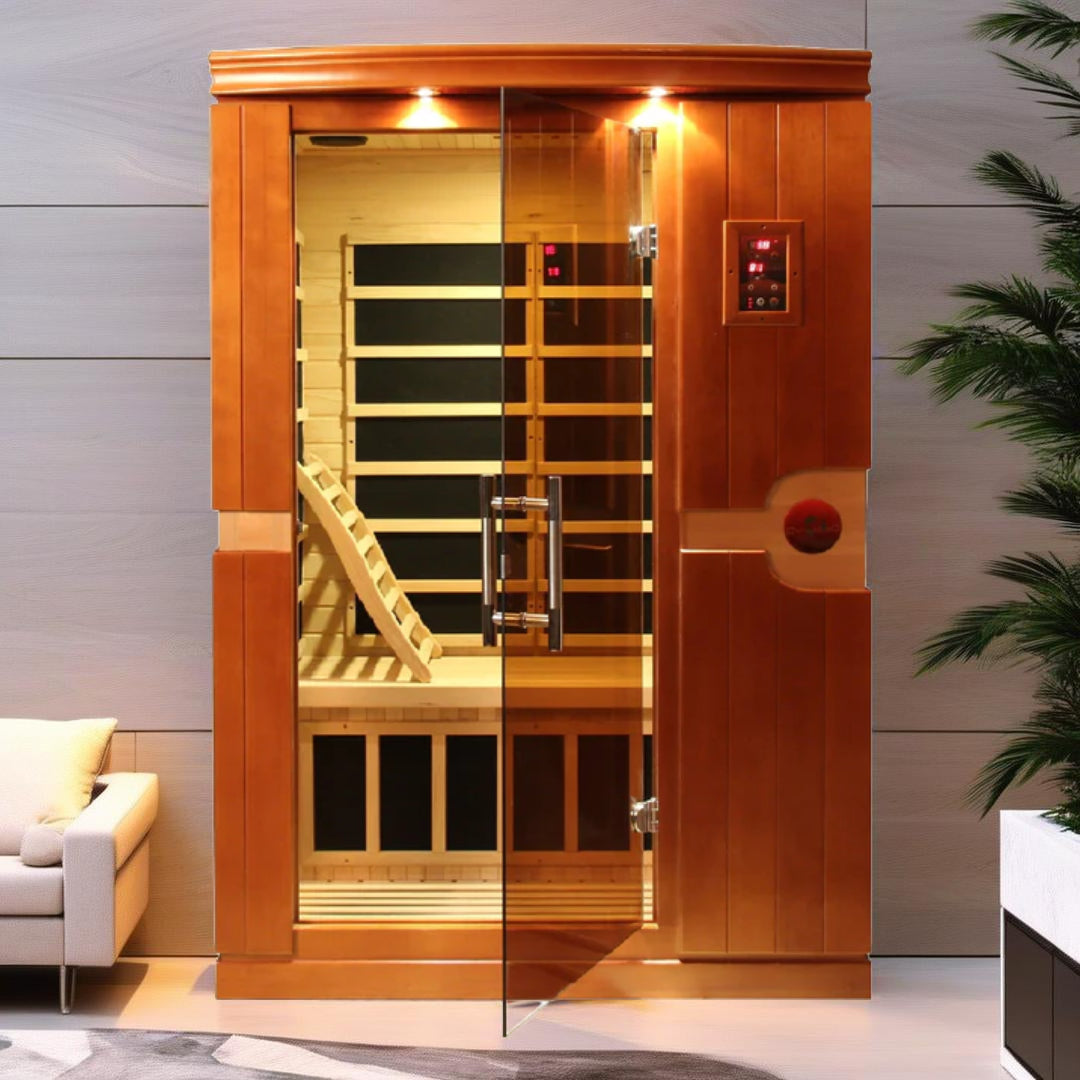
Small infrared cabins are engineered to stay within 120V circuit limits. They use carbon or ceramic infrared emitters to heat the body directly, rather than raising air temperature to 180–195°F like traditional saunas. This allows them to function safely at lower power levels.
What works on a 15A circuit:
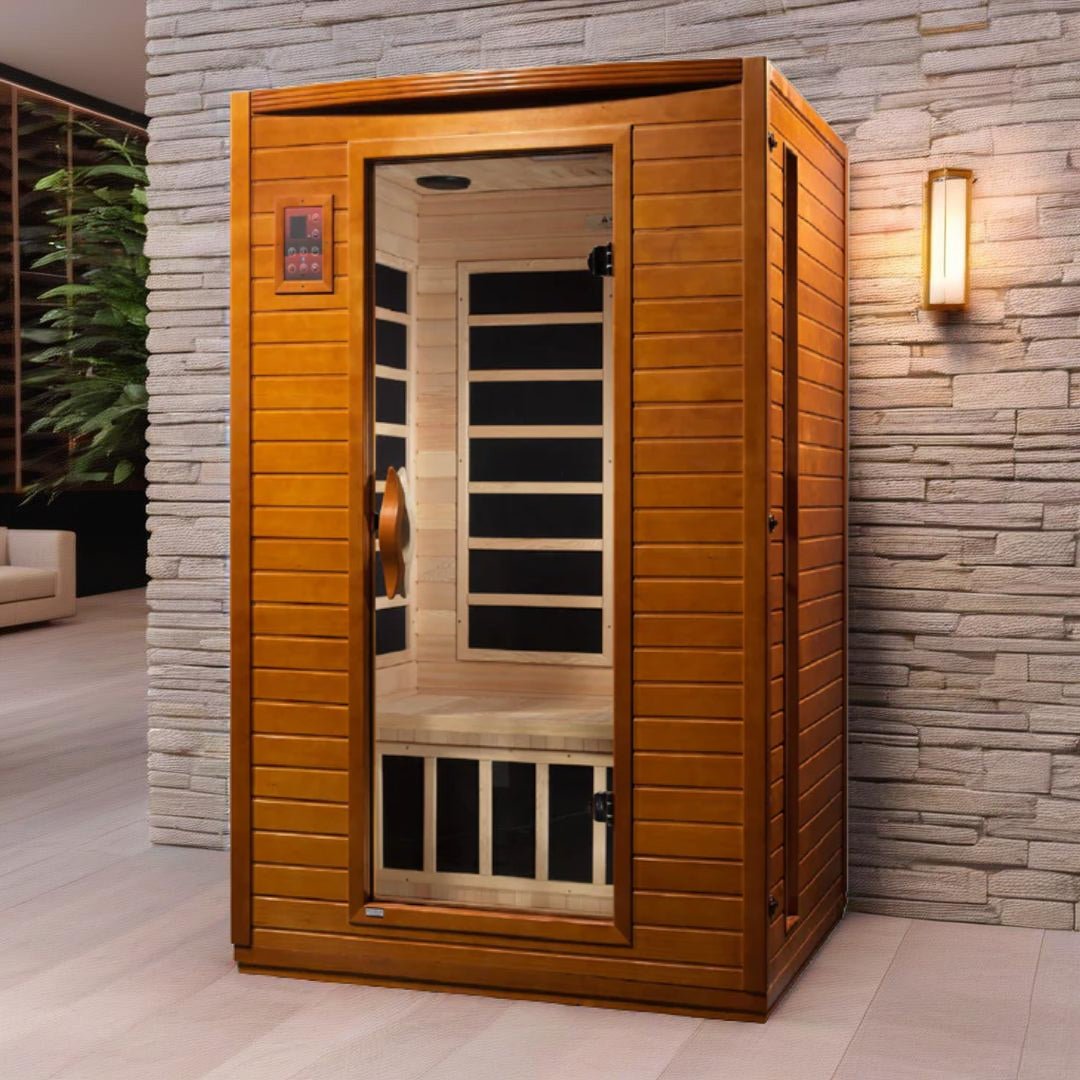
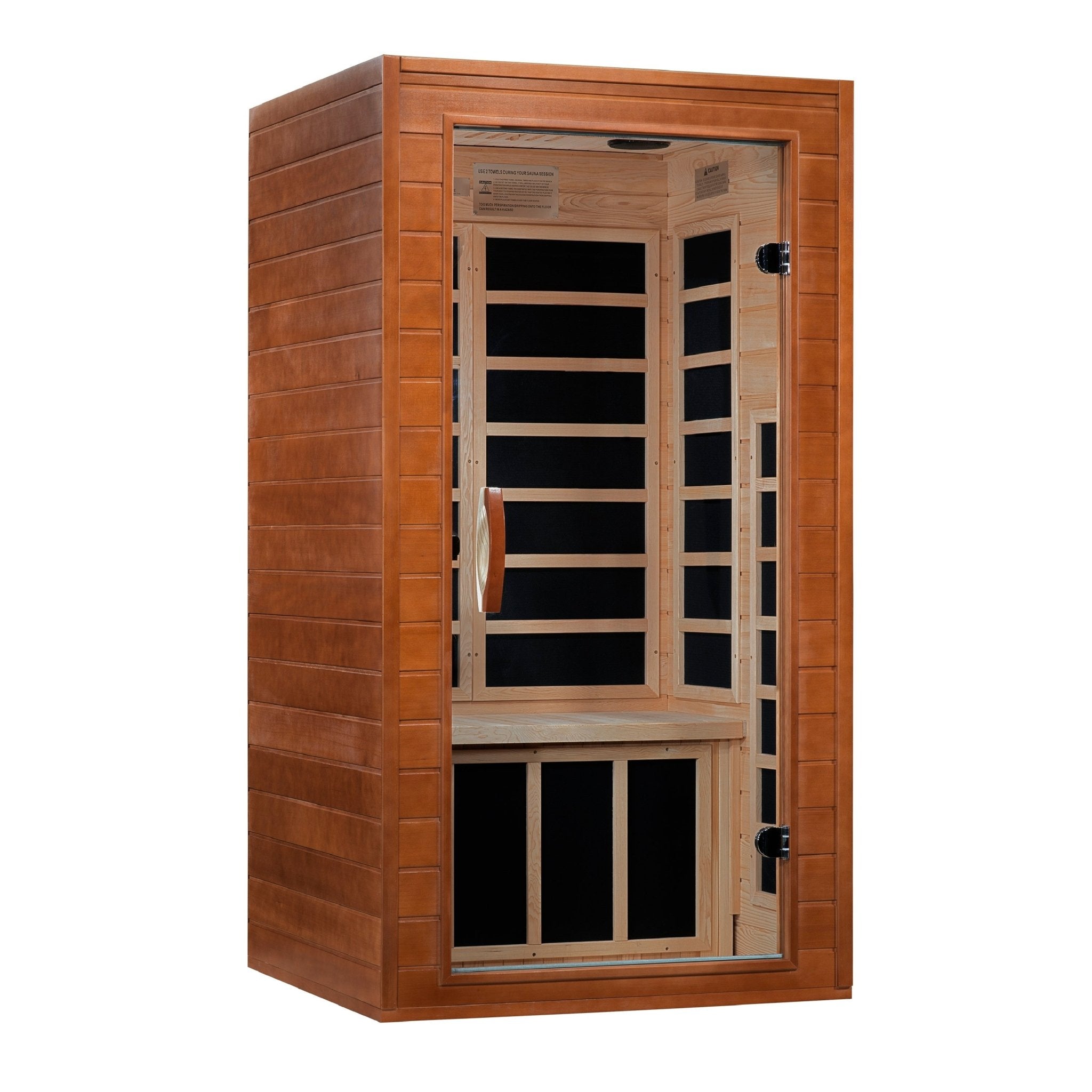
1–2 person infrared saunas rated at approximately 1500W or less can operate on a 15A / 120V circuit. At 120V, 1500W draws about 12.5 amps—near the 80% continuous-load guideline. Manufacturer manuals for these units specify "120V AC, 15A dedicated circuit" and include standard NEMA 5-15P plugs that fit typical household outlets.
If the intended circuit already serves other devices—such as bedroom outlets, lights, or small electronics—you must account for their combined load. A lamp drawing 1A and a phone charger drawing 0.5A might seem trivial, but added to the sauna's 12.5A, you're at the breaker's limit. Many homeowners who ignore this find their breakers tripping 10–20 minutes into a sauna session.
What requires a 20A circuit:
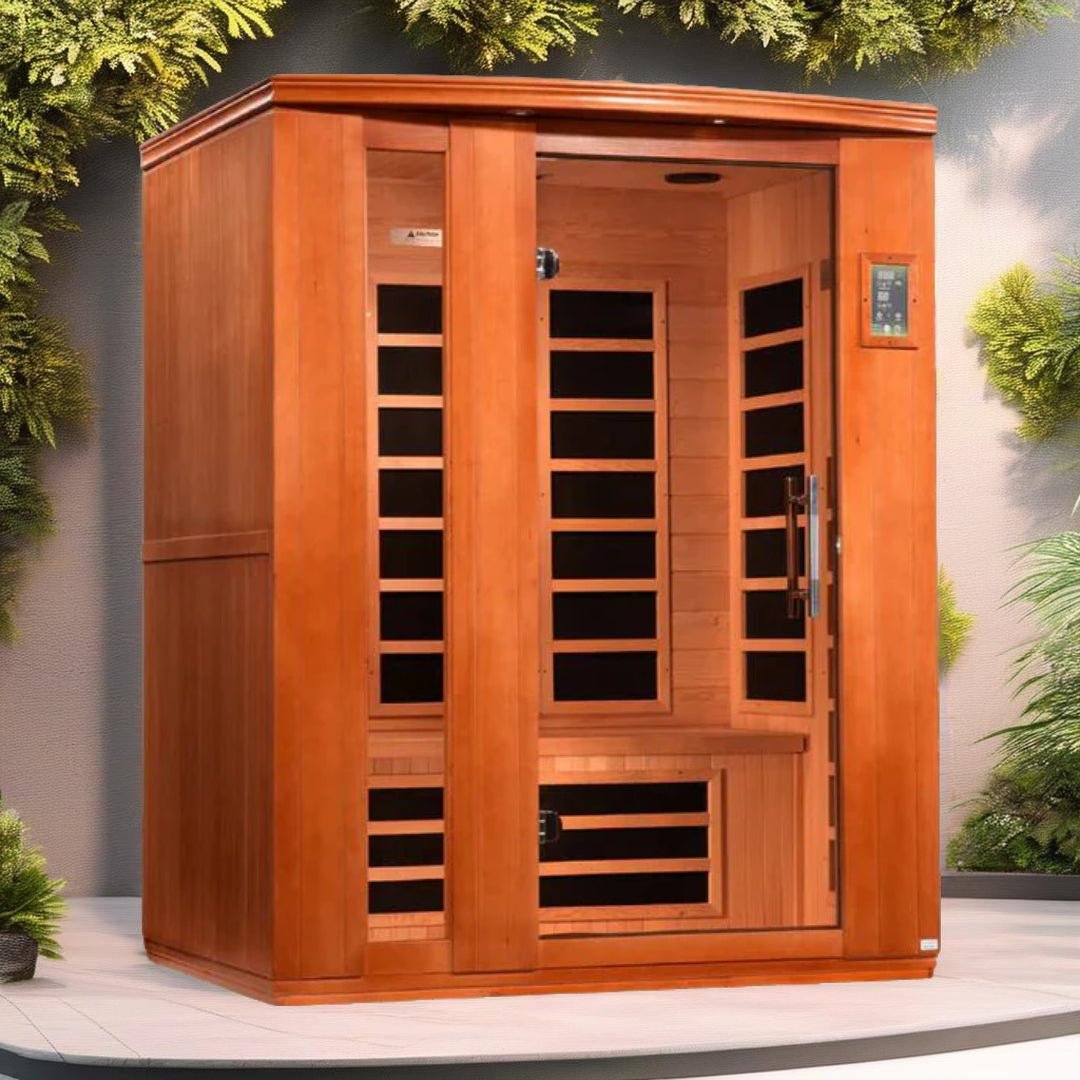
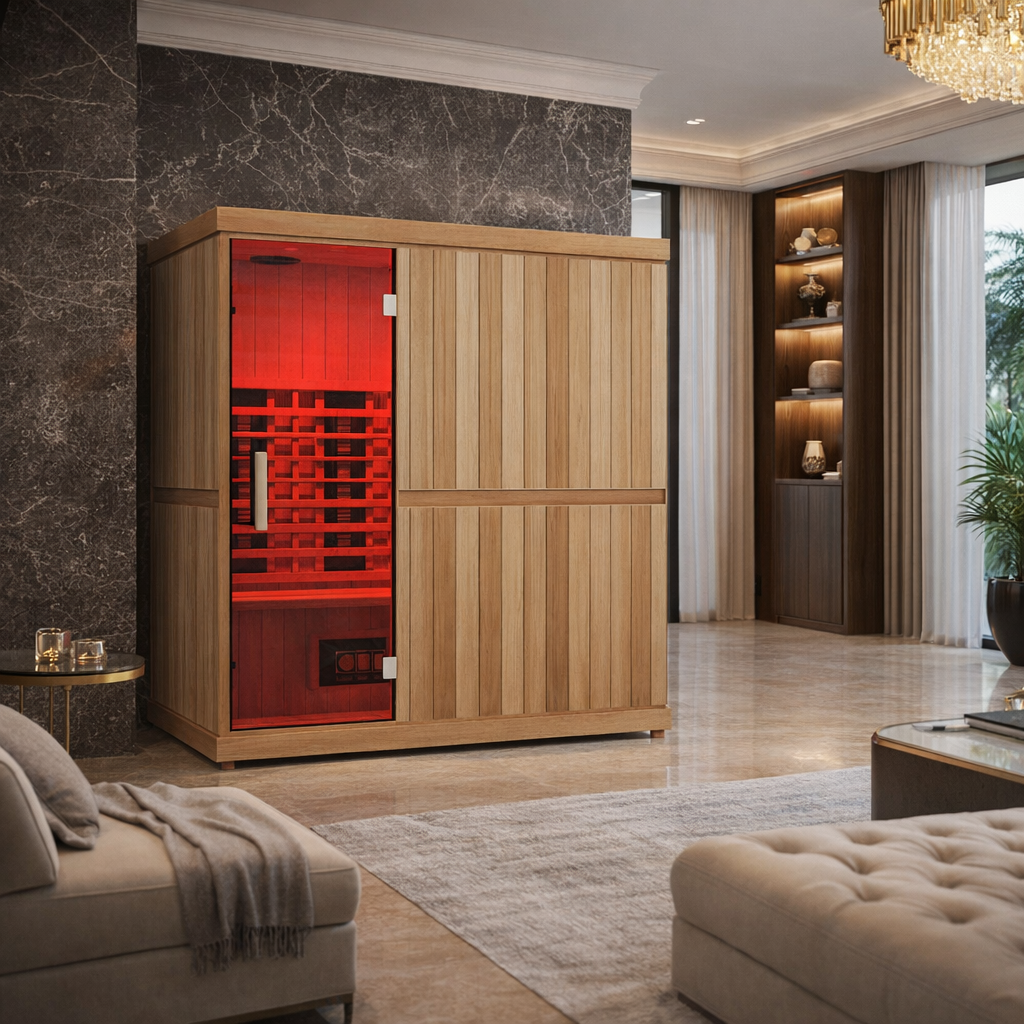
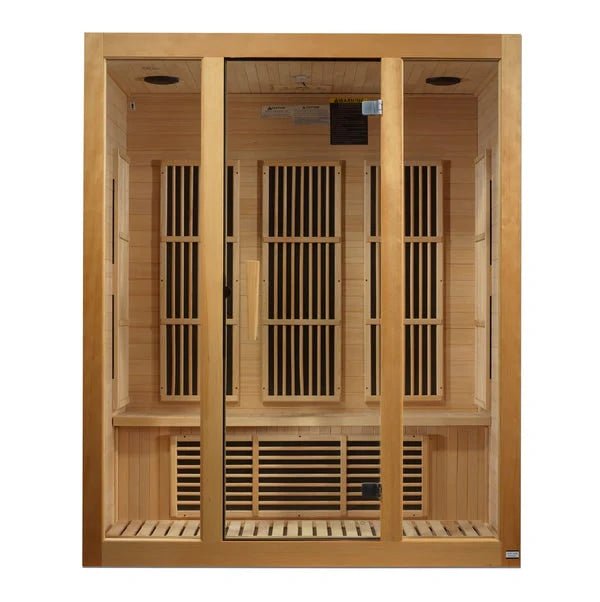
Larger infrared models for 3–4 people typically draw 1800–2400W, translating to 15–20 amps at 120V. These units come with NEMA 5-20P plugs, which have a horizontal blade that prevents insertion into 15A receptacles. Installing one of these saunas requires:
- Verification that the circuit breaker is rated 20A
- Confirmation that the circuit wiring is appropriate gauge (typically 12 AWG for 20A circuits vs 14 AWG for 15A)
- A NEMA 5-20R receptacle (recognizable by a T-shaped neutral slot)
If your home has a 20A laundry circuit or a 20A kitchen small-appliance circuit that is underutilized, that may be a candidate—but only if it can be dedicated to the sauna and is not shared with washing machines, microwaves, or other high-draw devices.
Installation checklist:
Before purchasing a 120V infrared sauna:
- Identify the circuit you intend to use by checking your breaker panel's directory
- Map what else is on that circuit by turning the breaker off and noting what loses power
- Confirm the sauna's nameplate wattage and calculate amperage: Amps = Watts ÷ 120
- Compare calculated amps × 1.25 to the breaker rating; if that product exceeds the breaker's rating, the circuit is undersized
- Verify plug type matches available receptacle
If any step reveals a mismatch, do not proceed without consulting a licensed electrician.
Performance Trade-Offs: Will a 120V Sauna Get Hot Enough?
Answer-first: A 120V infrared sauna delivers enough heat for most users to sweat and relax, but air temperatures are lower than traditional Finnish saunas and heat-up is slower.
Traditional Finnish saunas operate around 150–195°F air temperature. Infrared saunas typically run at 120–150°F, relying on radiant energy to warm the body directly rather than heating the surrounding air to extreme levels. This is not a defect—it's an intentional design difference rooted in how infrared works.
Health outcomes at lower temperatures:
Clinical studies show cardiovascular benefits from both traditional and infrared saunas. Research on patients with congestive heart failure found that repeated sauna therapy at moderate temperatures improved ejection fraction from 24±7% to 31±9% over four weeks. Waon therapy, a form of low-temperature sauna treatment used in Japan, operates around 140°F and has demonstrated benefits in controlled medical settings.
Temperature, session duration, and frequency all contribute to physiological effects. While some cardiovascular studies focus on high-temperature traditional saunas, benefits have been observed across a range of protocols. If your goal is general relaxation and mild cardiovascular conditioning rather than extreme heat tolerance, a 120V infrared unit can be adequate.
Where expectations misalign:
If you are accustomed to traditional sauna culture—throwing water on hot stones, tolerating 180°F+ air for short bursts—then a 120V infrared cabin will feel under-powered. Users expecting "spa-level" heat from plug-in models often describe them as "warm, not hot." Lower wattage also means slower warm-up times: a 1.5 kW heater may take 20–30 minutes to reach target temperature in a poorly insulated room, compared with 10–15 minutes for higher-power units.
When 120V infrared is appropriate:
- You prioritize convenience and minimal installation work over peak performance
- 1–2 person capacity meets your household needs
- You are comfortable with 120–140°F sessions and understand this is not a traditional Finnish experience
- You have realistic expectations about warm-up time and maintenance of temperature in larger spaces
When it is not:
- You want rapid heat-up and 180–195°F air temperatures
- You plan to use the sauna with 3+ people simultaneously and expect consistent performance
- Your existing circuits are already heavily loaded, making a dedicated circuit impractical without new wiring
Option 2: Wood-Fired Saunas—The Non-Electric Solution
Best fit if: You have an outdoor space or detached structure where you can install a wood-burning stove with code-compliant venting and clearances, and you accept the operational work of firing and maintaining the stove.
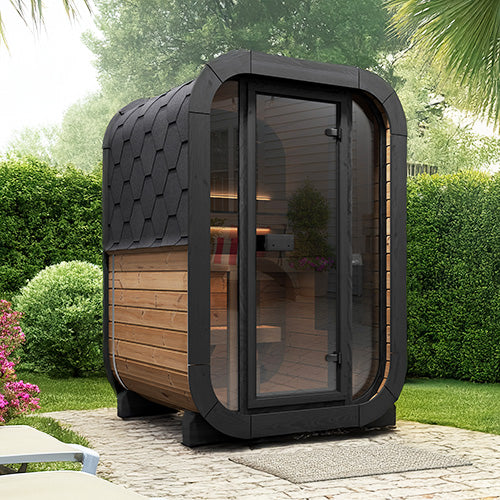
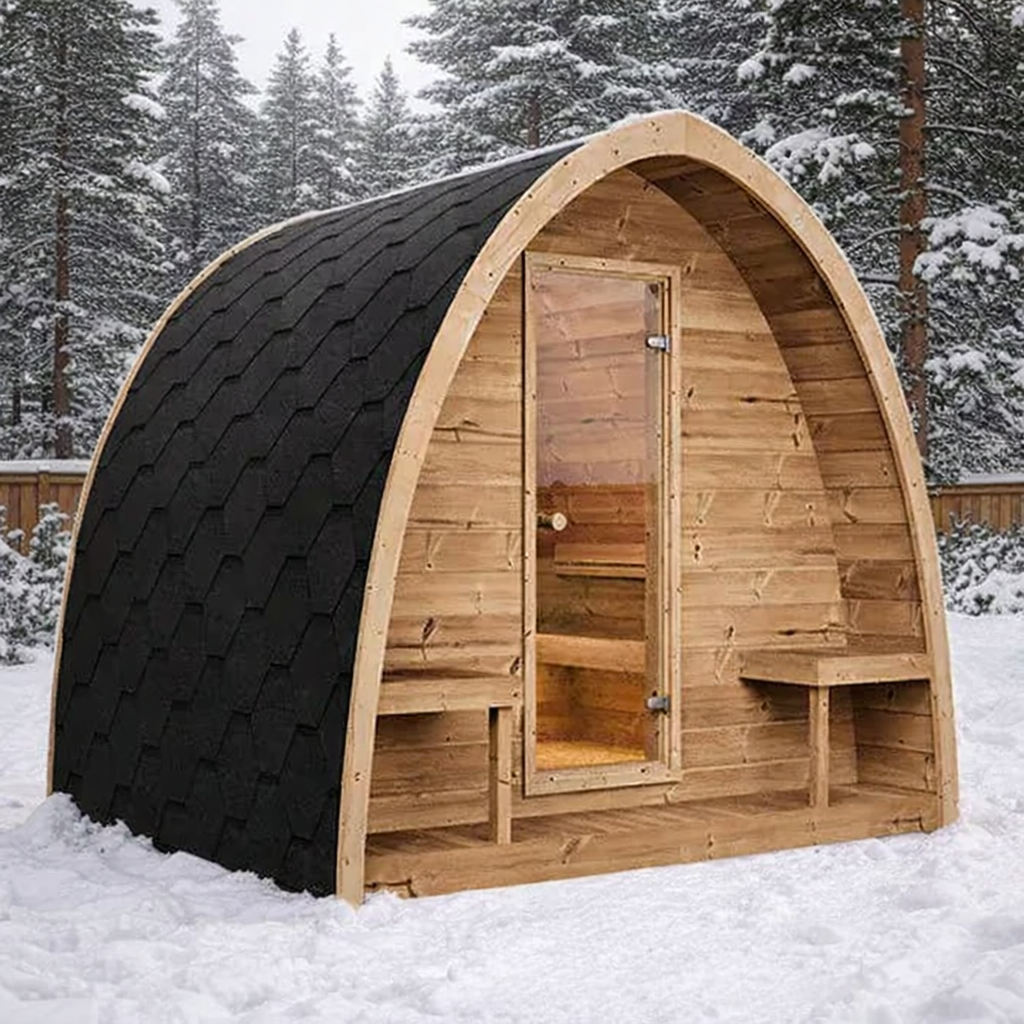
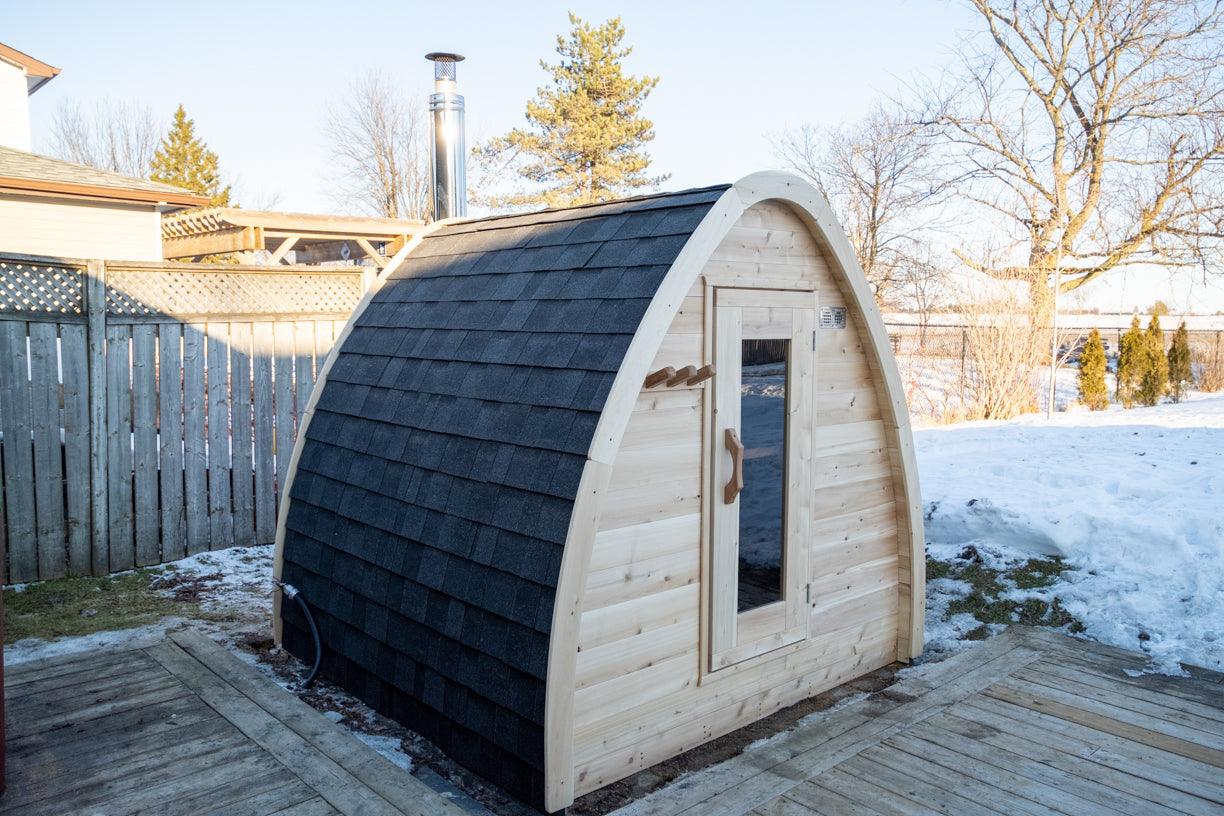
Wood-fired saunas bypass the electric heater circuit entirely. A properly sized wood-burning stove can reach and sustain traditional sauna temperatures (170–195°F) without drawing any significant electrical load. Small 120V circuits may still be needed for lighting or controls, but these are minor compared with heater loads.
What wood-fired requires:
- Proper chimney system: Wood-fired heaters require listed chimney assemblies rated for the temperatures and conditions of sauna use. Installation must follow solid-fuel appliance codes similar to wood stoves and fireplaces.
- Clearances to combustibles: Manufacturer manuals specify minimum distances from the stove to walls, benches, and other flammable materials—often measured in feet, not inches. Protective shielding or non-combustible wall treatments may be required.
- Combustion air and ventilation: Indoor installations must provide adequate air for combustion and exhaust. Outdoor or detached saunas simplify this, as they can draw air from outside and exhaust directly through the roof.
- Building and fire code compliance: Local jurisdictions may impose stricter rules on solid-fuel appliances, particularly in urban areas or multi-family dwellings. Some locales prohibit or heavily restrict indoor wood-burning due to air quality or fire risk.
When wood-fired makes sense:
- You have a detached building, backyard cabin, or rural property where venting and clearances are straightforward
- You value the ritual and authenticity of tending a fire and are willing to manage firewood, ash, and chimney maintenance
- You want traditional high-heat sauna performance independent of your home's electrical service
- Building codes in your area permit solid-fuel heating appliances
When it does not:
- You plan to install the sauna in a finished basement or interior room without proper venting infrastructure
- Local codes or homeowners' association rules prohibit wood-burning appliances
- You want a low-maintenance, push-button sauna experience
- Fire insurance or liability concerns make solid-fuel heating impractical
Wood-fired saunas can deliver the most authentic traditional experience without electrical constraints, but they trade electrical complexity for mechanical and building code complexity. Both paths require careful planning and adherence to safety standards.
<a name="exclusion-checklist"></a>
What Doesn't Work: The Safety-First Exclusion Checklist
Certain "shortcut" approaches are unsafe, violate code or manufacturer guidance, and should be ruled out immediately.
Do not:
- Use extension cords or power strips for sauna power. High continuous current causes overheating, melted plugs, and fire risk. Manufacturer manuals explicitly prohibit this, and many void warranties if cords are used. If the sauna is far from an outlet, relocate the sauna or have an electrician install a new receptacle—do not run cords.
- Share a 15A or 20A circuit with other large appliances. Plugging a sauna into a circuit that also serves space heaters, hair dryers, microwaves, or other high-draw devices will exceed safe capacity. Breaker tripping and overheated wiring are predictable outcomes.
- Use adapters to fit a 20A plug into a 15A receptacle. NEMA 5-20P plugs are keyed to prevent insertion into 15A outlets for a reason—attempting to bypass this with adapters overloads undersized wiring and increases fire risk.
- Wire a 120V heater to a 240V circuit or vice versa. Mis-voltage connections can cause immediate equipment damage and severe overheating. Electrician forums document cases of 120V saunas wired to 240V circuits producing four times their rated power until breakers trip or components fail.
- Install electrical receptacles inside the sauna room. Sauna manuals explicitly state that no electrical outlet should be located within the hot, humid enclosure. Heat and moisture degrade receptacles and increase shock hazards.
- Increase breaker size without verifying conductor ampacity. Simply replacing a 15A breaker with a 20A breaker to stop tripping is unsafe if the circuit wiring is undersized. Breakers must match conductor capacity; oversizing a breaker on inadequate wire removes overcurrent protection and invites fire.
When in doubt:
If you are uncertain about circuit capacity, wiring gauge, or any aspect of electrical compatibility, consult a licensed electrician before purchasing or installing a sauna. The cost of a consultation is negligible compared with the risk of fire, equipment damage, or code violations.
Decision Framework: Your 3-Step Feasibility Check
Use this structured approach to determine what sauna options are realistic given your electrical constraint.
Step 1: Calculate load vs. circuit capacity
Determine the sauna's electrical requirement and compare it to available circuits.
- Formula: Amps = Watts ÷ Volts
- For continuous loads, multiply amps by 1.25 and compare to breaker rating
- Example: A 1500W sauna at 120V draws 12.5A; 12.5 × 1.25 = 15.6A, which exceeds a 15A breaker's safe continuous capacity
If the sauna's derated amperage exceeds any available circuit, that option is excluded unless you add a new circuit.
Step 2: Assess panel space and willingness for electrical work
If your panel is full:
- Can you authorize a sub-panel installation? (Major work, typically $1,000–$3,000+ depending on complexity)
- Can an electrician consolidate circuits or install tandem breakers? (Moderate work, requires inspection and may not be viable depending on panel type)
- Are you willing to remove an existing circuit to make space? (Requires evaluating what you're willing to lose)
If the answer to all of the above is "no," then only 120V plug-in or non-electric options remain viable.
Step 3: Match sauna type to outcome
Given the constraints identified in Steps 1 and 2:
- If you have an adequately rated, lightly loaded 15A or 20A circuit: A small 120V infrared sauna matched to that circuit's capacity is your best electric option.
- If you have no adequate circuits and refuse new wiring: A wood-fired sauna is the only path to a traditional high-heat experience, assuming you have appropriate space and venting.
- If neither is feasible: Acknowledge that a home sauna may not be realistic under your current constraints and revisit the decision if panel capacity changes in the future.

Comparing Your Options Under Constraint
| Option | Electrical Requirement | Performance Profile | Best Fit | Not Suitable If |
|---|---|---|---|---|
| 120V 1–2 person infrared on 15A circuit | ~120V, ≤1500W, 15A breaker, NEMA 5-15P, dedicated circuit strongly preferred | Air temp ~120–140°F; slower warm-up, direct radiant heat | Small spaces, 1–2 users, realistic expectations for lower air temps, existing spare 15A circuit | Expectation of 180–195°F air, shared circuits already heavily loaded |
| 120V 3–4 person infrared on 20A circuit | 120V, ~1800–2400W, 20A breaker, NEMA 5-20P, dedicated circuit | Slightly larger volume; still lower air temps and slower heating than 240V traditional | User has an under-utilized 20A circuit and wants larger IR cabin without new panel spaces | Only 15A circuits available; user refuses circuit evaluation; high expectations for Finnish temperatures |
| 240V traditional electric sauna | 240V, 3–9 kW, 20–50A breaker, dedicated circuit, often permit required | Classic 150–195°F air, faster warm-up, good for families or high-intensity use | Home has spare panel capacity and user accepts new circuit/panel work | Panel is full and user refuses major work; attempting to back-feed existing circuits |
| Wood-fired sauna (detached/outdoor) | No electric heater circuit; may use small 120V circuits for lights only | High air temps and authentic Finnish experience; independent of electrical service | Rural or exurban properties, outdoor cabins, users okay with firing and maintaining stove | Tight urban indoor spaces, poor venting options, occupants sensitive to smoke or combustion risk |
<a name="real-world-numbers"></a>
Real-World Numbers That Matter
- 1500W at 120V ≈ 12.5A: Typical upper bound for 1–2 person plug-in infrared saunas on 15A circuits
- 20A 120V continuous load limit ≈ 16A: 80% of breaker rating for continuous loads per NEC guidance
- Traditional sauna temperature: 150–195°F (65–90°C): Commonly recommended range for Finnish-style saunas
- Infrared sauna temperature: 120–150°F (49–65°C): Typical operating air temperature; body heated directly by infrared
- Electric sauna heater sizes: 3–9 kW on 240V: Manufacturer sizing tables for traditional indoor rooms
- Continuous-load sizing: OCPD ≥ 125% of continuous load current: NEC 210.20(A) requirement driving dedicated circuit recommendations
- Heart failure study improvement: ejection fraction from 24±7% to 31±9%: Demonstrates potential cardiovascular benefits of repeated sauna therapy in supervised settings
<a name="myths-misconceptions"></a>
Myths and Misconceptions
Myth: "If a sauna has a standard plug, it's safe on any outlet."
Reality: High continuous loads must still respect circuit ampacity and existing loads. Many plug-in saunas should have dedicated circuits even though they fit standard receptacles. Marketing emphasizes "plug-and-play" without clarifying that "play" requires appropriate circuit capacity.
Myth: "Infrared saunas are so low power that extension cords are fine."
Reality: Infrared saunas often draw 15–20 amps. Extension cords can overheat under continuous high loads and are widely discouraged by manufacturers and electricians. People equate them with small space heaters or electronics, but the continuous-load profile is entirely different.
Myth: "Any sauna can run on a shared 15A bedroom circuit."
Reality: Continuous load sizing and the presence of other devices on the circuit make this unsafe for many units. Limited understanding of NEC derating rules perpetuates this misconception.
Myth: "All saunas need 240V, so a full panel means 'no sauna.'"
Reality: Small 120V infrared cabins are designed for standard circuits, and wood-fired options bypass heater circuits entirely. Traditional electric saunas dominate older guidance, leading people to assume all saunas have the same requirements.
Myth: "Infrared saunas don't get hot enough to provide real health benefits."
Reality: Clinical data show cardiovascular and other benefits from lower-temperature saunas and Waon therapy. The focus on high air temperature rather than body heat load and session time obscures the evidence.
Myth: "If a breaker doesn't trip right away, the sauna setup is safe."
Reality: Breakers and wiring can overheat over time. NEC sizing aims to prevent long-term overheating, not just instantaneous trips. Users see absence of trips as proof of safety, but damage accumulates invisibly.
Myth: "Wood-fired saunas are automatically safer because they avoid electricity."
Reality: Solid-fuel appliances carry fire and carbon monoxide risks if not installed and vented correctly. Romanticized views of "traditional" setups overlook serious code requirements.
Myth: "Healthy people don't need to think about medical risk before sauna use."
Reality: Although safe for most, saunas stress the cardiovascular system. Certain conditions require caution or are contraindicated. Wellness marketing underplays medical nuance.
Myth: "You can just upsize the breaker if it trips when the sauna runs."
Reality: Increasing breaker size without matching conductor ampacity violates code and can lead to overheated wiring. Misunderstanding that breaker size alone defines safety is common and dangerous.
Myth: "If a sauna is UL-listed, any installation method is acceptable."
Reality: Listings assume installation per instructions and code. Deviations such as using extension cords or wrong circuits void those assumptions. Overconfidence in labels without reading manuals is risky.
Common Experience Patterns
Users who plug infrared saunas into shared circuits often report breakers tripping after 10–20 minutes. Many discover that the circuit also feeds lights or outlets in nearby rooms. Moving to a dedicated circuit typically resolves the issue.
Some buyers expect spa-level 180+ degree environments from 120V plug-in units and report disappointment, describing the cabin as "warm, not hot." Others find relaxation and adequate sweating at lower temperatures once expectations align with the technology.
People who used extension cords to reach distant outlets frequently report melted plugs or discolored receptacles. Electricians warn them to remove the cords and relocate the outlet, explaining that fire risk increases dramatically with continuous high-amperage loads on cords.
Homeowners who attempted DIY sauna wiring sometimes report immediate breaker trips or odd behavior. Electrician inspections later reveal mis-wired 240V circuits or incorrect neutral/ground connections.
Several users describe the overall install cost of a new 240V circuit or sub-panel as unexpectedly high compared with the sauna unit price. This realization leads some to pivot to plug-in infrared models instead.
Users with cardiovascular concerns sometimes report feeling better with shorter, lower-temperature sessions but emphasize they consulted clinicians or followed medical protocols rather than self-prescribing.
Wood-fired sauna owners emphasize the enjoyable ritual and high heat but also mention extra work—firewood management, chimney cleaning, smoke handling—compared with electric options.
A subset of users report that inexpensive online saunas lack clear electrical documentation, leading to confusion and the need to contact manufacturers or return units.
Frequently Asked Questions
Q: Can I run a sauna from a standard 120V outlet if my panel is full?
Possibly, but only if the sauna is a small 120V infrared model that fits within the circuit's ampacity and ideally uses a dedicated circuit. Most 1–2 person infrared units are designed for 120V and around 15 amps, often with standard plugs. Traditional electric heaters usually need 240V and higher-amp dedicated circuits. Continuous load rules limit safe current to about 80% of breaker rating. If existing circuits are already heavily loaded, even small infrared units may be unsafe without changes.
Q: What is the largest sauna I can run on a 15A circuit?
Typically a 1–2 person infrared cabin of about 1500W or less is the practical upper limit on a 15A circuit. At 120V, 1500W draws roughly 12.5 amps, near the 80% continuous-load guideline. Manufacturers design small infrared models to stay within this range, often specifying dedicated 15A circuits. Larger cabins or traditional heaters generally exceed 15A requirements and need 20–50A circuits.
Q: Do I really need a dedicated circuit for a plug-in infrared sauna?
A dedicated circuit is strongly recommended, even for plug-in models, to prevent overloads and nuisance trips. Industry sources and manuals state that saunas should be on dedicated circuits. NEC rules treat these as continuous or near-continuous loads requiring careful sizing. Sharing circuits with other devices is a common cause of breaker tripping in user reports.
Q: Will a 120V infrared sauna get hot enough to feel like a "real" sauna?
It will get warm enough for many users to sweat and relax, but air temperatures are usually lower than traditional Finnish saunas. Infrared cabins generally operate around 120–150°F, compared with 150–195°F for traditional saunas. Health studies show benefits at moderate sauna temperatures when used consistently. Users expecting very high air temperatures may perceive 120V infrared as under-powered.
Q: Is it safe to use an extension cord with a plug-in sauna?
No. Extension cords are widely discouraged because they can overheat and pose a fire risk under high continuous loads. Manufacturer and expert articles warn against using extension cords with infrared saunas. Electrician discussions highlight melted plugs and cords when sauna loads exceed cord ratings. Relocating the outlet or the sauna is usually recommended instead.
Q: Can I use a 20A sauna on a 15A outlet with an adapter?
No. Doing so bypasses safety features and overloads the circuit. NEMA 5-20P plugs are designed not to fit 15A receptacles to prevent this misuse. Running a 20A load on 15A wiring violates ampacity limits and continuous load rules. Misuse increases risks of overheating and fire.
Q: If my panel is full, is adding a sub-panel considered "major electrical work"?
Yes. Installing a sub-panel or new 240V circuit counts as significant work requiring a licensed electrician and usually a permit. Industry guidance notes that new sauna circuits typically involve permits and professional installation. Adding a sub-panel can require reconfiguring feeders and load calculations per NEC. Costs can approach or exceed the sauna's purchase price in some cases.
Q: Do wood-fired saunas really avoid electrical constraints?
They avoid the heater circuit but still require compliant chimney, venting, and building construction, and may still need small circuits for lights. UL standards and manuals emphasize installation per fire and building codes for sauna heaters. Solid-fuel appliances require clearances to combustibles and proper flue systems. Electrical loads for lights or controls are minor compared with heater loads.
Q: Is a 120V infrared sauna more energy-efficient than a traditional sauna?
Infrared units usually have lower power ratings and run at lower air temperatures, so they use less instantaneous power. Typical infrared units are 1.5–2.4 kW versus 3–9 kW for many traditional heaters. Lower air temperatures and radiant heating can allow comfortable sessions at lower power. However, comparative long-term energy data are limited, so precise efficiency claims remain uncertain.
Q: How hot should a sauna be to get cardiovascular benefits?
Traditional sauna studies often use 150–195°F, but some benefits have been observed at lower temperatures with repeated, supervised sessions. Medical reviews describe benefits from Finnish saunas in typical temperature ranges. Waon therapy uses lower temperatures and longer durations in clinical contexts. Temperature, frequency, and duration all contribute to cardiovascular response.
Q: Who should avoid using a sauna at home without medical advice?
People with unstable angina, recent heart attack, severe aortic stenosis, or significant uncontrolled cardiovascular disease should seek medical guidance first. Reviews list these conditions as contraindications. Saunas increase heart rate and cause vasodilation, stressing the cardiovascular system. Alcohol or drug use further increases risk and should be avoided.
Q: Why do sauna manuals say not to install outlets inside the sauna room?
Heat and moisture can degrade outlets and increase shock and fire risk, so manufacturers prohibit them. Finnleo manuals insist that no electrical receptacle be installed in the sauna. UL and code frameworks assume moisture-appropriate wiring, not standard receptacles, inside hot rooms. Removing or relocating such outlets is a common corrective recommendation.
Q: How do I know if my circuit can handle a sauna before I buy one?
Check breaker size, identify what else is on the circuit, then compare the sauna's nameplate amps multiplied by 1.25 to the breaker rating. NEC requires overcurrent protection rating at least 125% of continuous load. Sauna spec sheets list current and breaker requirements. Simple on/off testing can reveal what else shares the circuit.
Q: Are infrared saunas safer than traditional electric saunas from an electrical standpoint?
They typically draw less power, but both must follow the same circuit, breaker, and installation rules to be safe. Infrared models for 120V may integrate with existing circuits more easily. Traditional heaters have higher power and stricter dedicated-circuit needs. Safety depends more on correct installation than on technology type alone.
Q: Can I upgrade just the breaker size to stop my sauna from tripping it?
No. The breaker must match conductor ampacity and load calculations, so simply upsizing it is unsafe. NEC requires conductor ampacity to align with breaker rating for continuous loads. Electricians warn against putting larger breakers on undersized wire. The proper fix is load reduction, dedicated circuit, or wiring upgrade.
Q: What should I do if my sauna trips the breaker even on a dedicated circuit?
First verify that the circuit is actually dedicated and properly sized. Check that the breaker rating matches the sauna's requirements and that no other devices share the circuit. If everything appears correct but tripping persists, consult a licensed electrician—there may be wiring issues, a faulty breaker, or loose connections that require professional diagnosis.
Q: Can I use my sauna if I have high blood pressure or heart disease?
People with stable cardiovascular disease may use saunas with caution, ideally after consulting a physician. Those with unstable conditions, recent cardiac events, or severe disease should seek explicit medical clearance. Saunas cause cardiovascular stress that can be beneficial for some but dangerous for others. Individual medical history determines appropriateness.
Q: How long does it take a 120V infrared sauna to heat up?
Typical 120V infrared units take 15–30 minutes to reach operating temperature, depending on cabin size, insulation quality, and ambient conditions. This is slower than higher-power traditional units. Preheating the sauna before use is standard practice.
Q: Will a sauna affect my home's resale value?
A properly installed sauna can be a selling feature for health-conscious buyers, but improperly installed equipment or code violations can be liabilities during inspection. Work done without permits may need to be removed or brought to code before sale. If considering resale impact, ensure all installations meet code and are documented.
Q: Can I build my own sauna to save money if my panel is full?
Building a sauna enclosure is feasible for experienced DIYers, but all electrical and wood-fired heating work should involve licensed professionals to ensure code compliance and safety. A custom-built sauna room paired with a properly installed 120V infrared heater or permitted wood-fired stove can work, but cutting corners on electrical or venting creates serious risks.
Q: What happens if I ignore the dedicated circuit recommendation?
Shared circuits increase the likelihood of breaker tripping, overheated wiring, and fire risk. Many users initially ignore this guidance and later experience problems. In addition to safety risks, installations that violate manufacturer instructions typically void warranties, leaving you without recourse if equipment fails.
Q: Are there battery-powered or DC saunas that avoid AC circuit issues?
Some portable infrared blankets and small heating pads use low-voltage DC power, but full-size sauna cabins require AC power at levels that make battery operation impractical. Technology in this area remains limited.
Q: If I rent my home, can I install a plug-in sauna without landlord permission?
Review your lease agreement. Most leases require landlord approval for any modifications or high-draw appliances. Even plug-in equipment can create liability if it causes electrical issues or violates lease terms. Always obtain written permission before proceeding.
<a name="sources"></a>
Sources
This analysis draws from manufacturer installation manuals (Finnleo), UL safety standards (UL 875, UL 60335-2-53), National Electrical Code guidance on continuous loads and circuit sizing, medical literature on sauna benefits and contraindications (PubMed, PMC), industry articles on sauna electrical requirements (Heavenly Heat, Norse, Sunflare Saunas), electrician forums (Reddit r/askanelectrician, r/AskElectricians), and code-interpretation articles from trade publications (Electrical Contractor Magazine, Consulting-Specifying Engineer).
Key clinical references include cardiovascular studies showing ejection fraction improvements in heart failure patients and safety reviews documenting contraindications for unstable cardiac conditions. Electrical code interpretation is based on NEC 210.20(A) continuous-load provisions and conductor ampacity requirements.
Human experience patterns are drawn from electrician and user forums covering breaker trips, extension cord failures, mis-wired installations, and performance expectations. These sources provide real-world failure modes but are anecdotal and not treated as primary evidence.
Older code-explanation articles (2008–2011) are flagged as potentially out of date with respect to the latest NEC edition, but core continuous-load concepts have remained consistent across code cycles.
<a name="what-we-dont-know"></a>
What We Still Don't Know
Evidence remains limited or mixed in several areas:
Comparative long-term energy costs: While instantaneous power draw is well-documented, real-world energy consumption across different sauna types and usage patterns lacks comprehensive data. Session length, frequency, and preheating habits vary widely, making precise efficiency comparisons difficult.
Sub-panel and circuit installation costs: Industry sources provide rough ranges ($1,000–$3,000+), but actual costs vary dramatically based on location, existing infrastructure, permit requirements, and contractor rates. Homeowners should obtain multiple quotes rather than relying on generic estimates.
Temperature-dependent health outcomes: While cardiovascular benefits are documented at both traditional and lower infrared temperatures, the dose-response relationship between temperature, duration, and specific health outcomes remains incompletely characterized. Some benefits may be temperature-sensitive; others may depend more on time and frequency.
Long-term reliability of plug-in infrared units: User reports and warranty claims data on the durability of consumer-grade 120V infrared saunas are not systematically published. Failure rates, component longevity, and maintenance needs vary by manufacturer and are difficult to assess from available sources.
Local code enforcement variability: While NEC provides national standards, local jurisdictions (authorities having jurisdiction, or AHJs) interpret and enforce code with significant variation. Permit requirements, inspection rigor, and acceptable practices differ by location in ways that generic guidance cannot capture.
Medical screening protocols: Consensus on which cardiovascular conditions require physician clearance versus which can safely use saunas with general caution remains incomplete. Guidelines exist for severe conditions, but gray areas persist for individuals with multiple risk factors or borderline disease states.
These gaps do not invalidate the core guidance—dedicated circuits, continuous-load sizing, and contraindication awareness remain well-established—but they limit precision in cost forecasting, efficiency claims, and individualized medical recommendations.
Infrared vs Traditional vs Hybrid Saunas: Which Should You Buy?
Renter Sauna Guide: Realistic & Removable Options for Apartments
Related Posts

Are Infrared Saunas Safe? A Science-Based Guide to Benefits, Risks & Smart Use

The 8 Best 2 Person Saunas of 2026: A Buyer's Guide to Size, Type, and Cost

The Truth About Costco Saunas: Are They Worth the Price and Hassle?

Arcadia Barrel Sauna: The Complete Buyer's Guide & Assembly Blueprint

Low EMF vs Near-Zero EMF Infrared Saunas: What Actually Matters Before You Buy

Chromotherapy vs No Chromotherapy: Who Benefits From It (Practically)? The Buyer's Decision Guide

The Science of Heat: How Saunas Improve Circulation and Cardiovascular Health
