









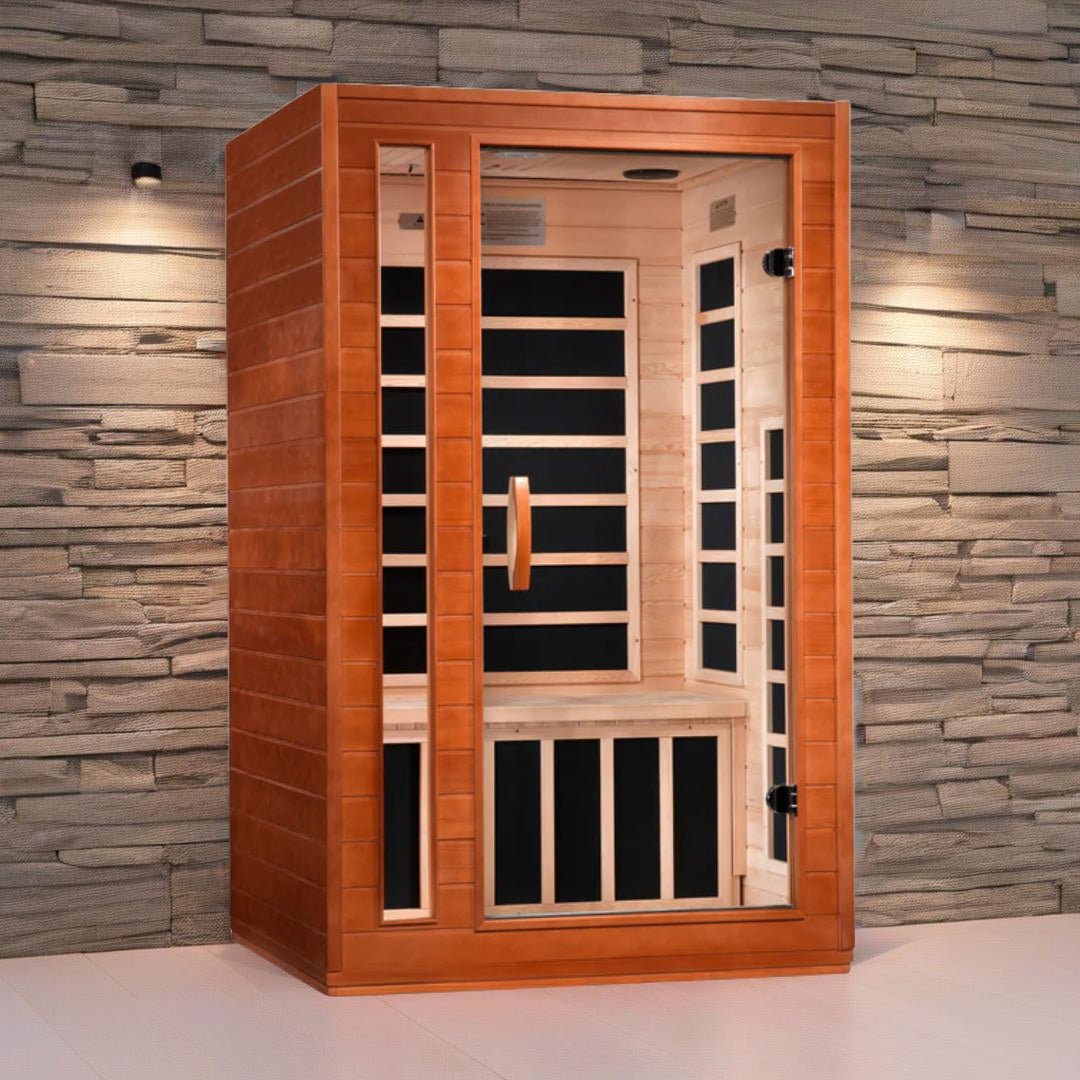

Renter Sauna Guide: Realistic & Removable Options for Apartments
If you rent, your only realistic indoor sauna options are a UL-listed 120-volt plug-in infrared cabin on a dedicated circuit or a portable infrared sauna blanket—both dry, removable, and lease-friendlier than traditional or steam saunas, which usually fail on power, moisture, or liability.
Key constraints for renters:
- Electrical: Must operate on standard 120V household circuits—no 240V hardwiring allowed
- Removability: Fully disassemblable with no structural modifications or permanent fixtures
- Moisture control: Dry heat only—steam and humidity create mold risks that violate most leases
- Safety certification: UL or ETL listing required to address landlord fire and liability concerns
- Space: Must fit in non-dedicated rooms without blocking egress or requiring ventilation work
- Medical clearance: Not appropriate during pregnancy or with unstable cardiac conditions
Table of Contents
- The Non-Negotiable Rental Constraint: Power, Moisture, and Liability
- Decision Framework: Your Only Two Viable Options as a Renter
- Option 1: The 110V Plug-In Infrared Cabin (Best Performance)
- Option 2: The Infrared Sauna Blanket (Best Removability/Space)
- CRITICAL WARNING: The Electrical Constraint (110V/15A)
- The Landlord Liability Problem: How to Get Approval Without Asking for a "Sauna"
- What Doesn't Work: Why Traditional and Cheap Steam Tents Are Excluded
- Rental Sauna Feasibility Checklist (Before You Buy)
- FAQ
- Sources
- What We Still Don't Know
What "Realistic and Removable Sauna for Renters" Actually Means
A realistic sauna for renters meets three simultaneous conditions: it operates on circuits you already control, leaves no trace when you move, and stays within the risk tolerance of typical lease agreements.
Infrared sauna refers to dry-heat units using infrared emitters to warm the body directly, typically at lower ambient air temperatures than traditional saunas. These come in two renter-appropriate formats: freestanding plug-in cabins and portable blankets or domes.
Dedicated circuit means an electrical branch that serves only one major appliance, with no other receptacles or loads sharing the same breaker. Many infrared cabins specify this requirement explicitly in their manuals.
UL 60335-2-53 is the safety standard governing electric sauna heating appliances and infrared units for household use, covering construction, electrical safety, and marking requirements to reduce fire and shock risk.
The threshold between "portable appliance" and "permanent fixture" determines whether landlords treat your sauna as a toaster or a renovation. Anything requiring new wiring, ventilation work, or combustion crosses into territory renters cannot authorize alone.

The Non-Negotiable Rental Constraint: Power, Moisture, and Liability
Most traditional sauna options fail immediately in rental settings because they demand resources renters don't control.
Traditional electric saunas typically require 240-volt dedicated circuits—the same heavy-duty wiring that powers electric dryers and ranges. Installing or modifying these circuits requires licensed electrical work and landlord authorization, placing them outside renter decision-making authority. Many one- and two-person infrared cabins, by contrast, are engineered for standard 120-volt household power and ship as freestanding, modular units designed for plug-and-play installation.
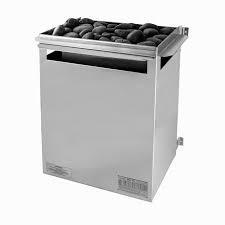
Wood-burning saunas introduce combustion, smoke, and carbon monoxide concerns that conflict with both lease terms and building codes. These units fall under standards like UL 60335-2-53 that assume fixed outdoor installations with proper clearances and venting—conditions apartment dwellers cannot meet.
Moisture is the silent lease-killer. Steam saunas and humid tent setups release significant water vapor into indoor air. When that moisture hits cooler surfaces like walls, windows, and ceilings, it condenses. ASHRAE's position documents on indoor mold link persistent dampness and elevated dew points above roughly 60°F with increased mold growth. Most rental units lack the robust ventilation systems needed to handle regular steam sessions, and mold damage often triggers deposit forfeiture or lease violations.
Landlords and insurers focus on three liability areas: electrical fire risk from high-wattage appliances, water damage from humidity or leaks, and unauthorized structural modifications. A freestanding infrared cabin that plugs into an existing outlet, produces dry heat, and can be disassembled addresses these concerns more cleanly than any option requiring installation.
Best fit if: You have a spare room with normal ceiling height, can identify an appropriate 120V circuit, and are willing to document the setup for your landlord.
Also valid if: You need maximum portability, have limited space, or face strict appliance policies—conditions where portable infrared sauna options for small spaces become more appropriate.
Not recommended if: You cannot verify circuit capacity, live in a space prone to moisture issues, or have medical contraindications to heat stress.
Decision Framework: Your Only Two Viable Options as a Renter
Once you exclude options that require wiring, produce combustion, or add problematic moisture, rental-appropriate saunas collapse into two distinct paths.
Path A: Plug-In Infrared Cabin (Performance Priority)
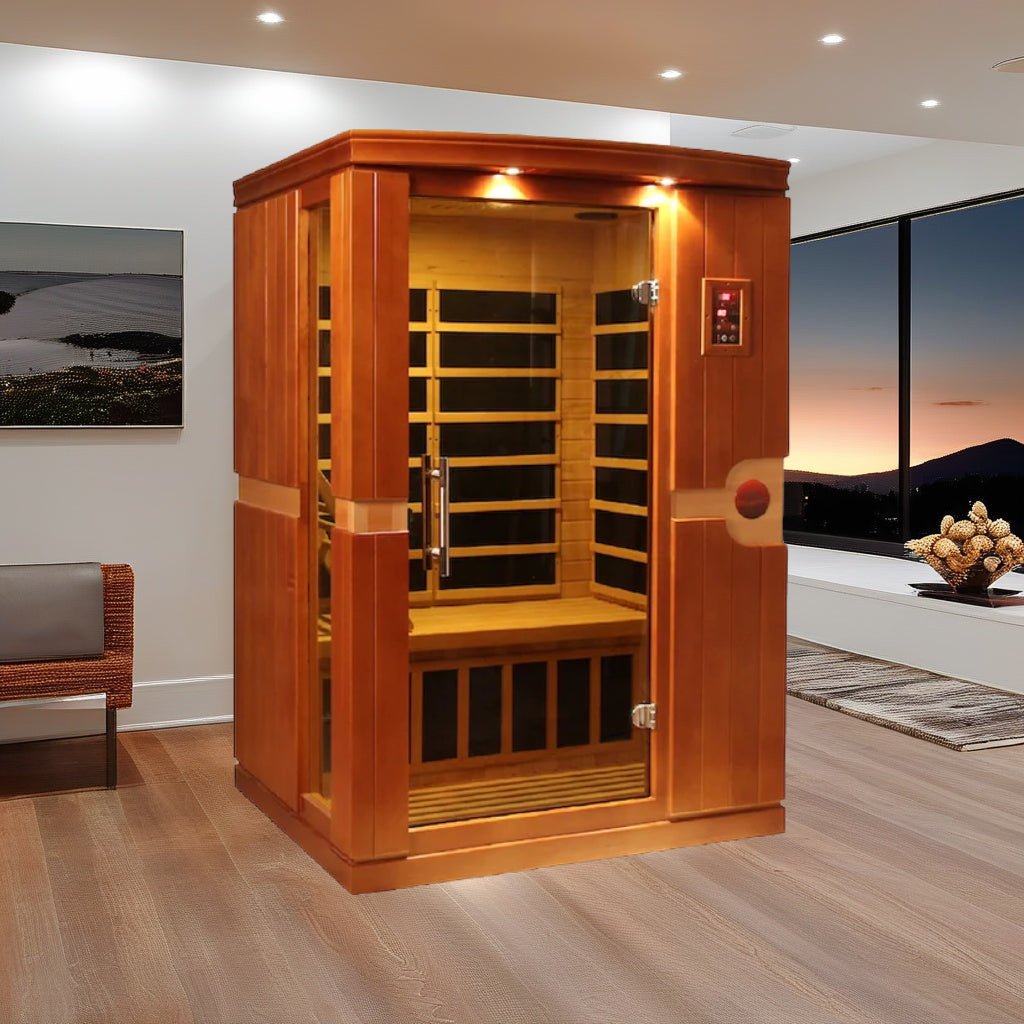
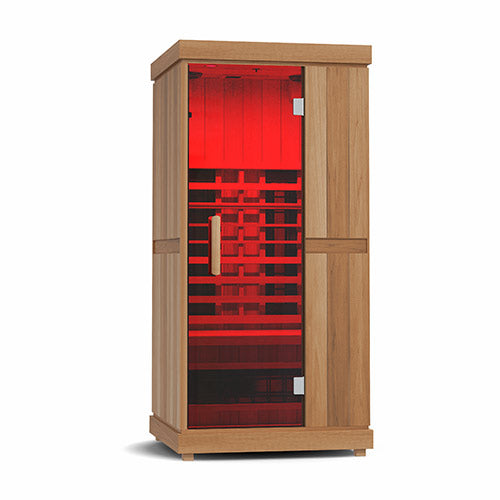
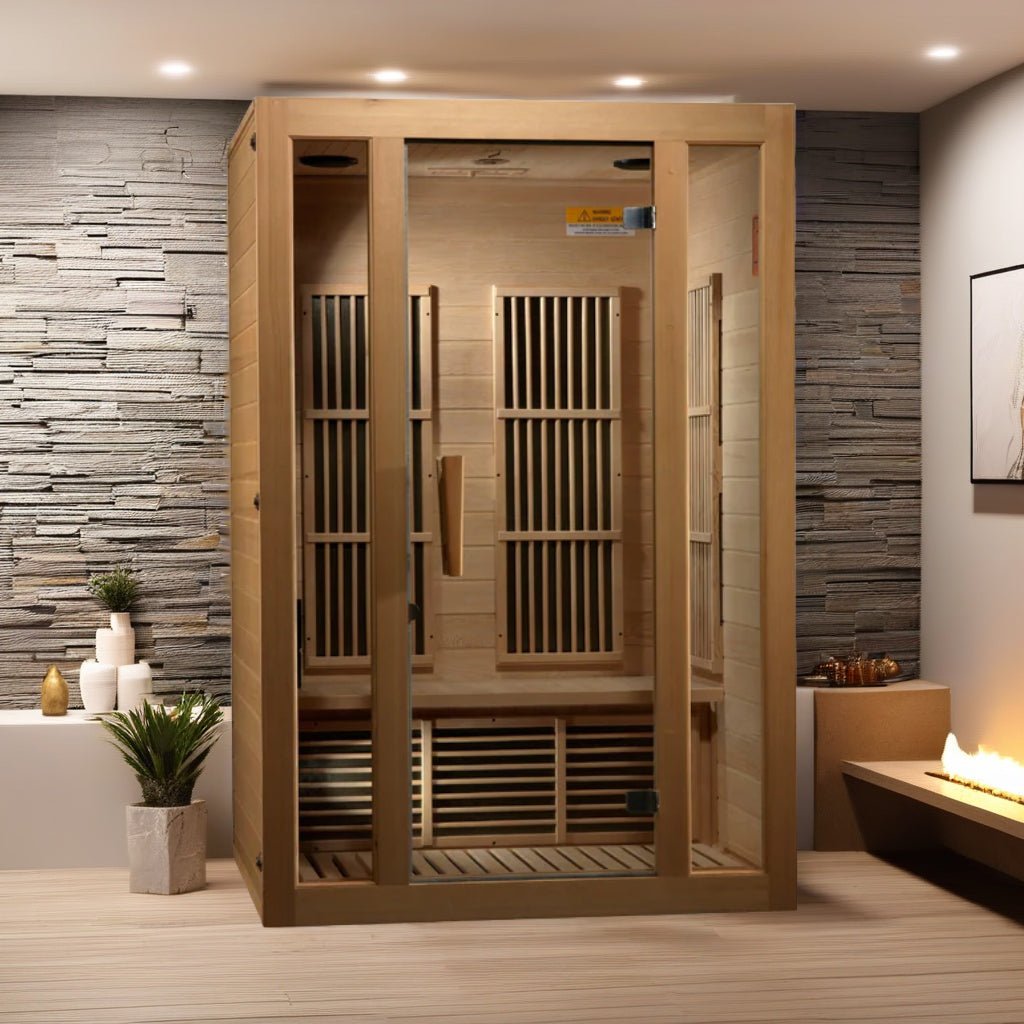
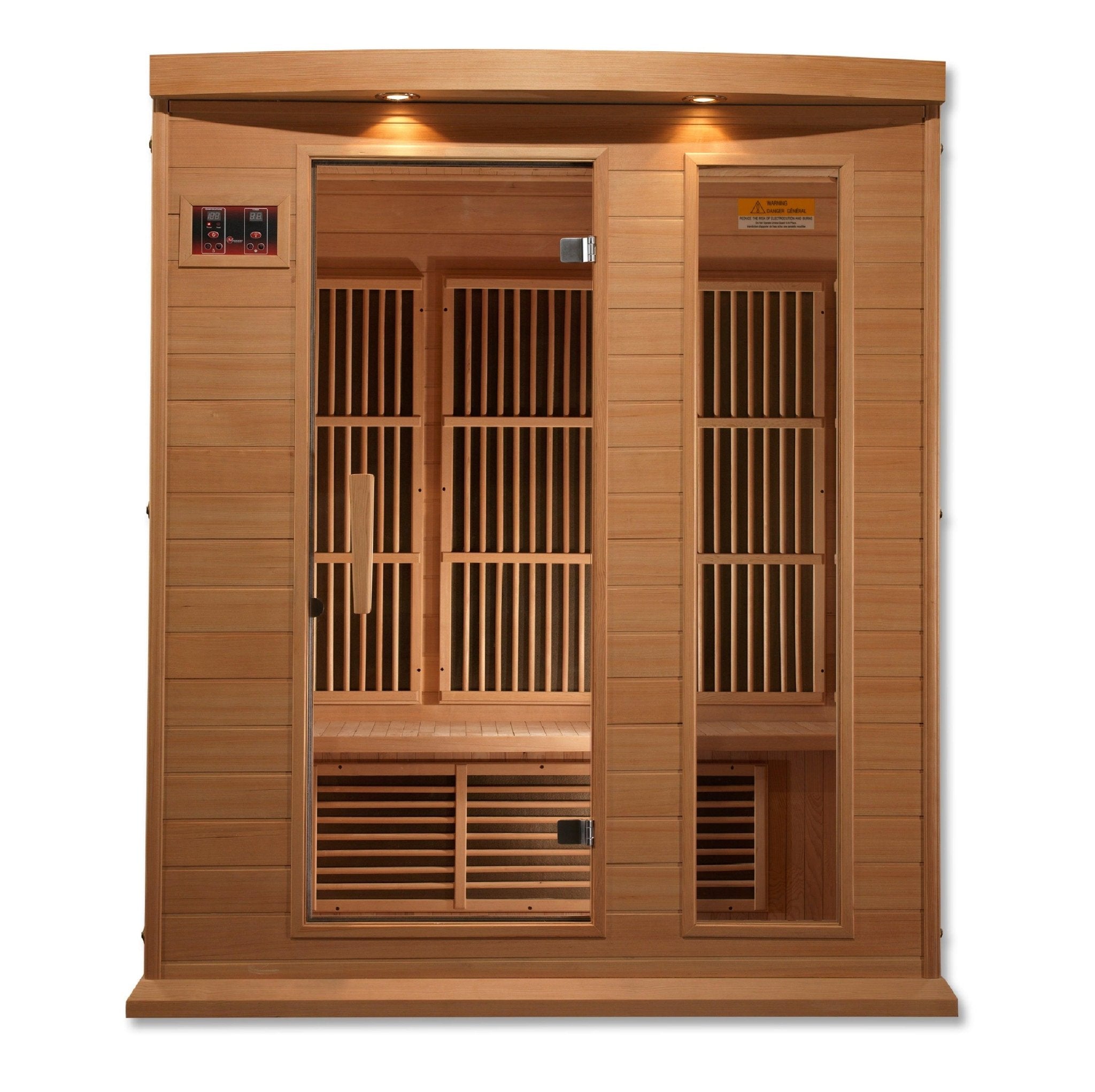
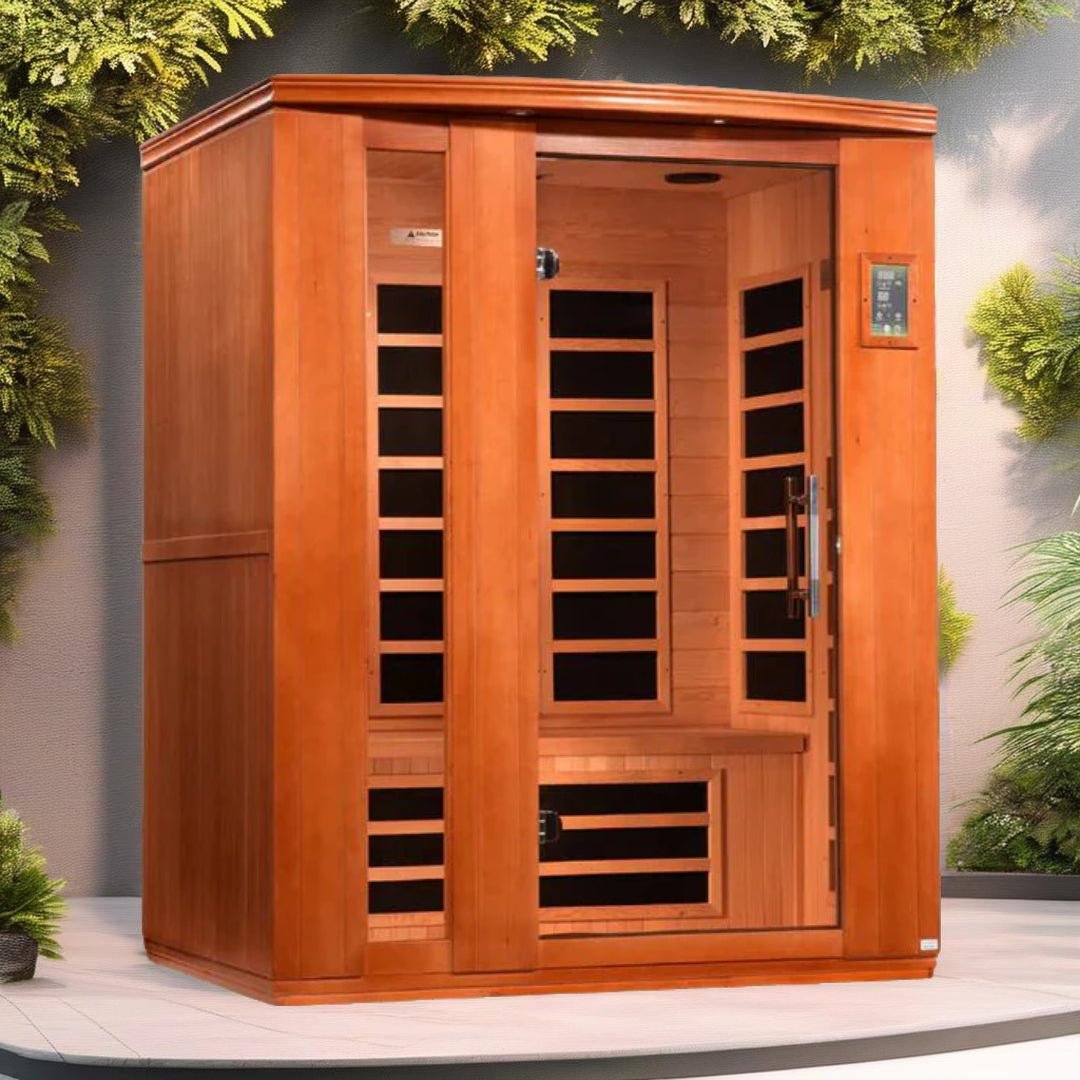
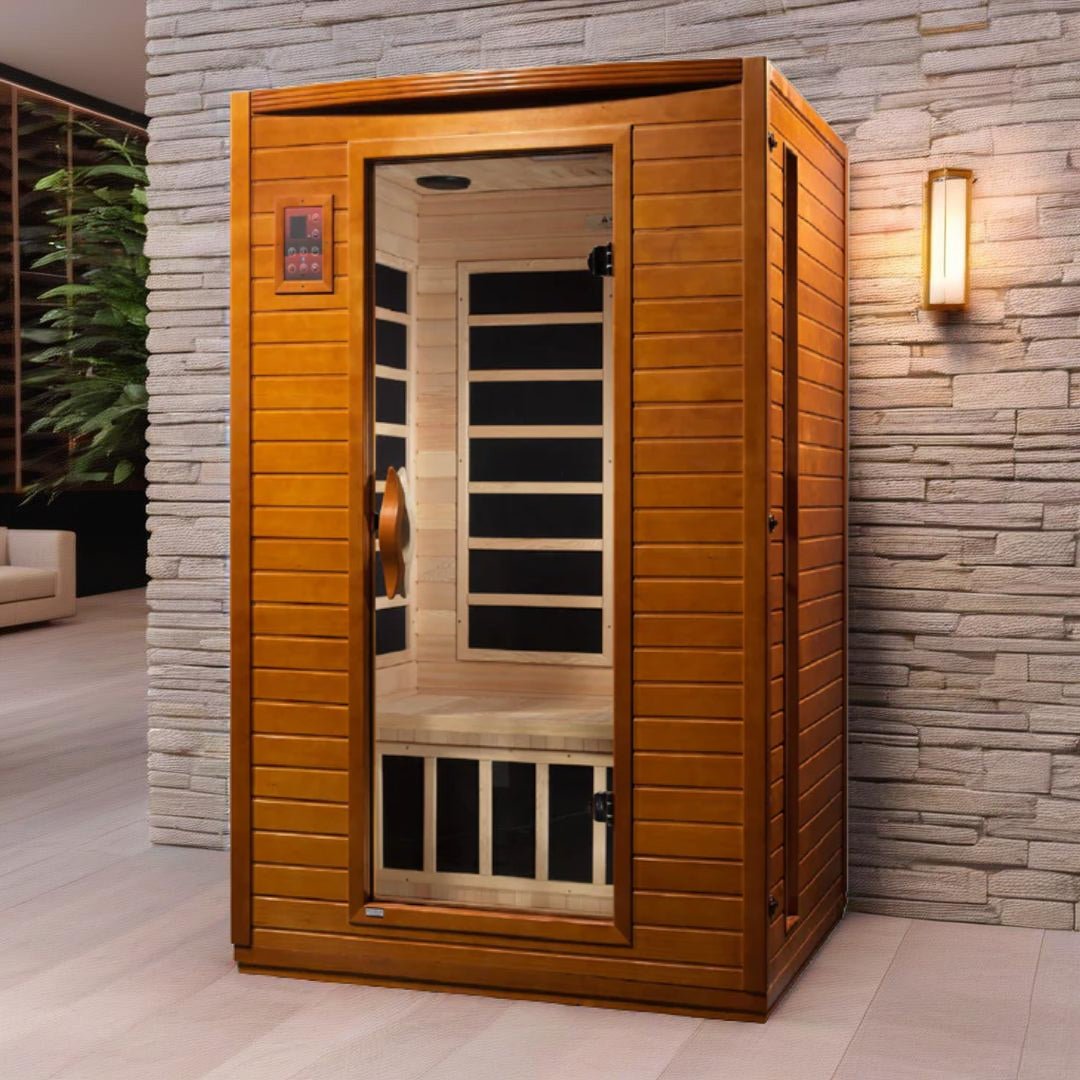
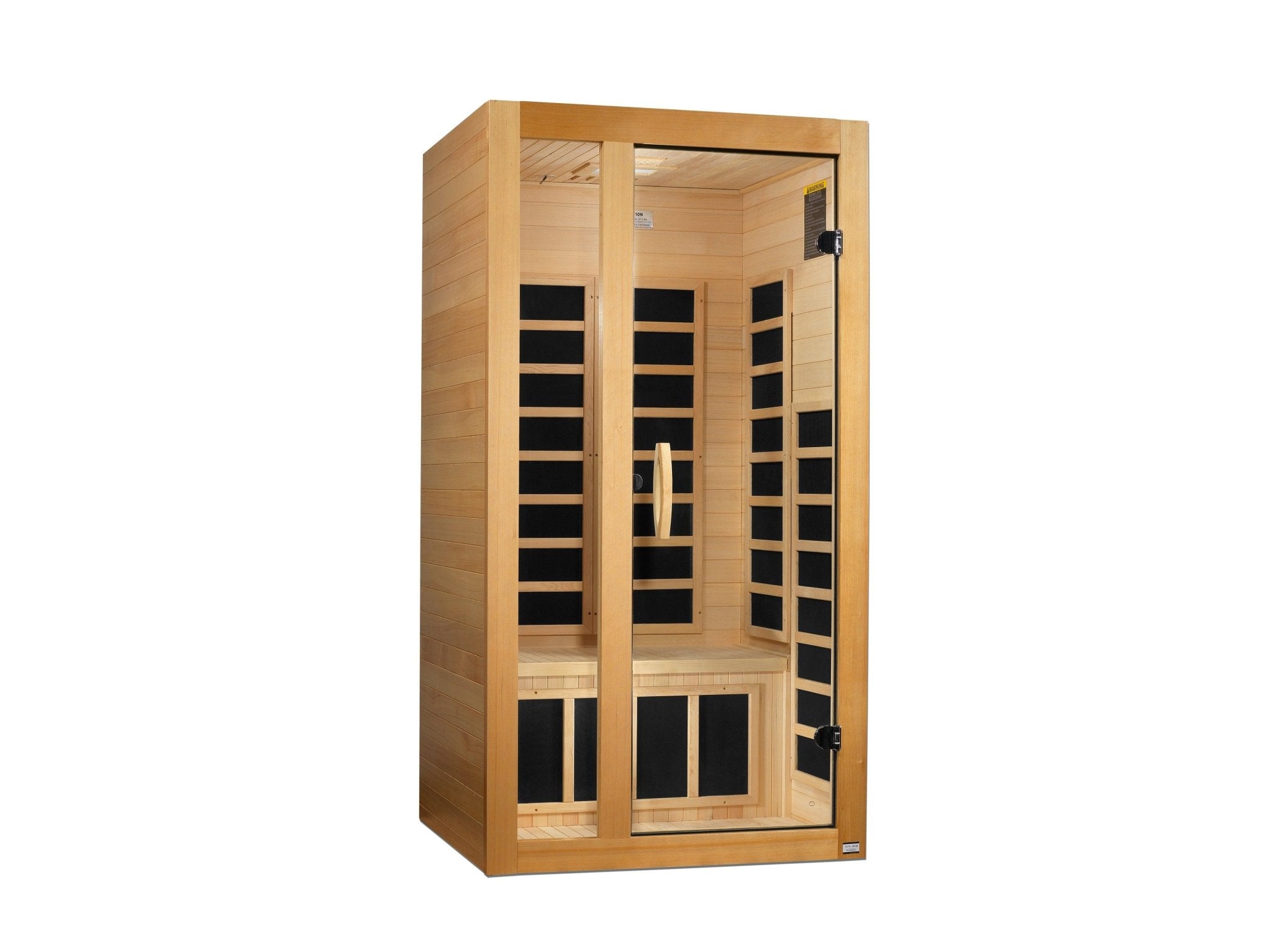
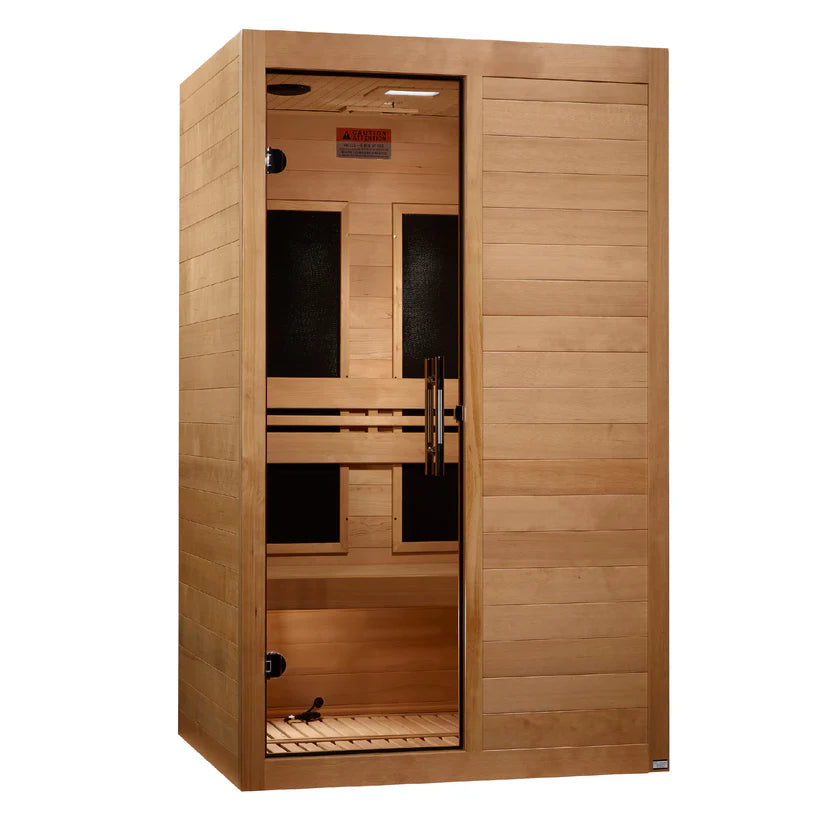
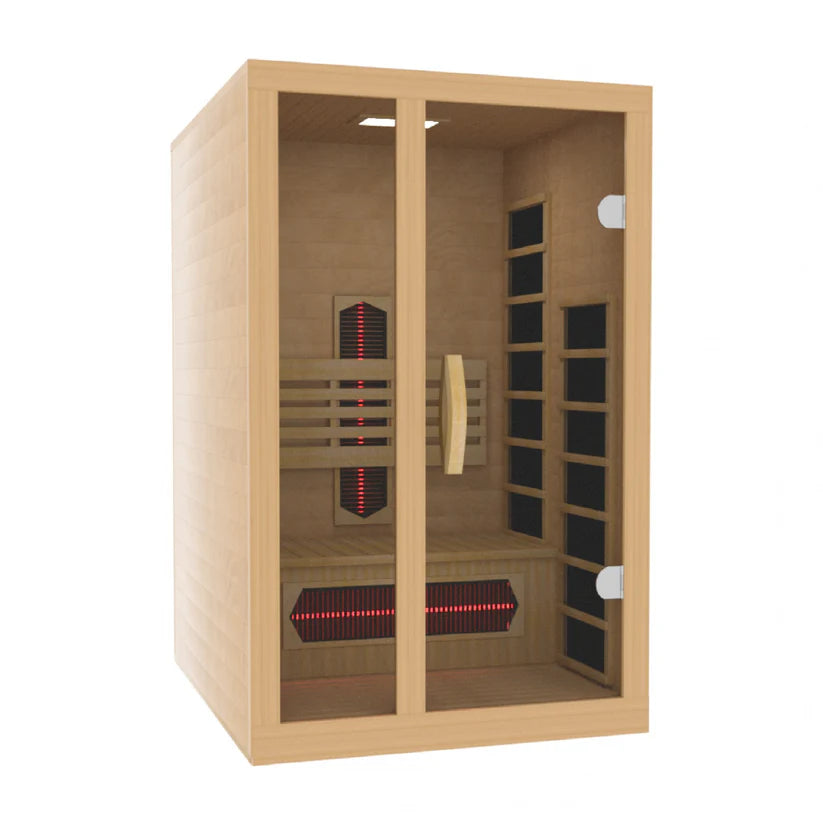
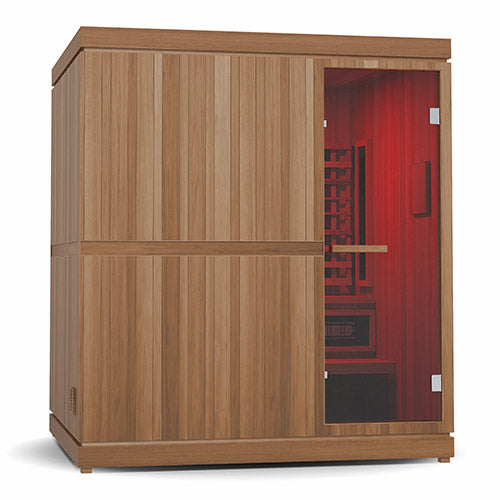
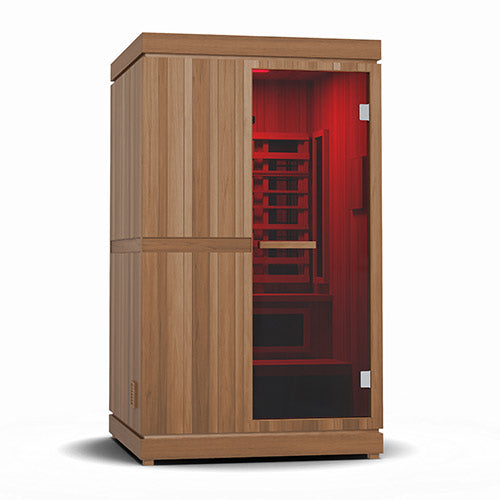
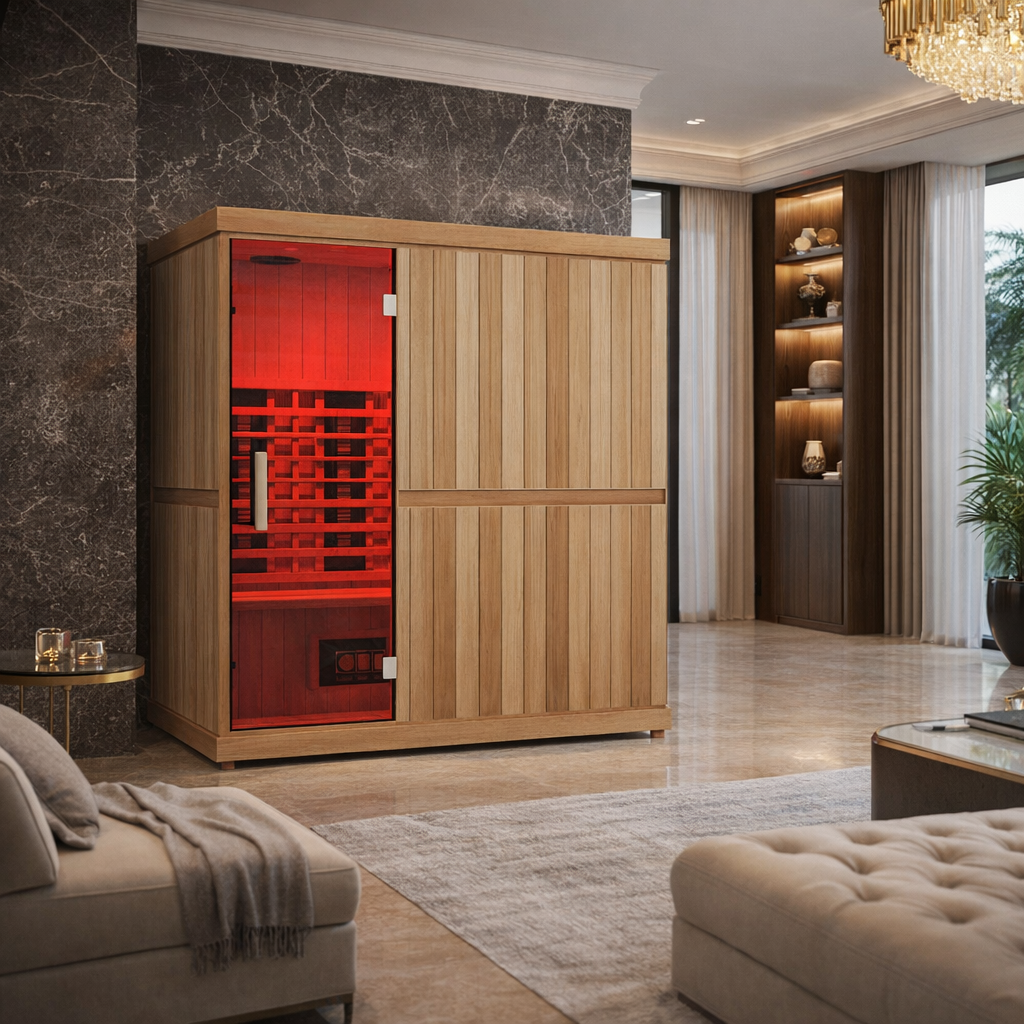
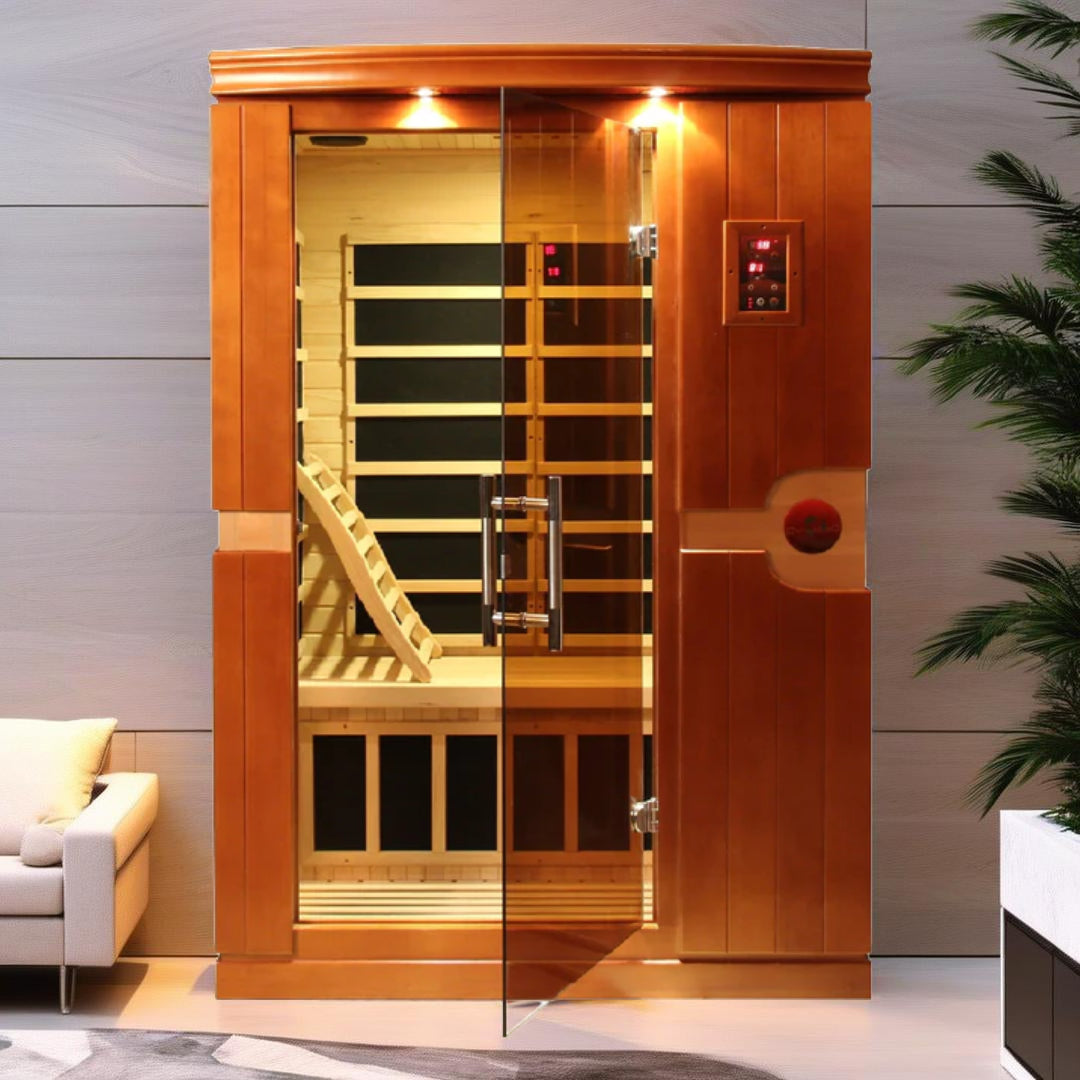
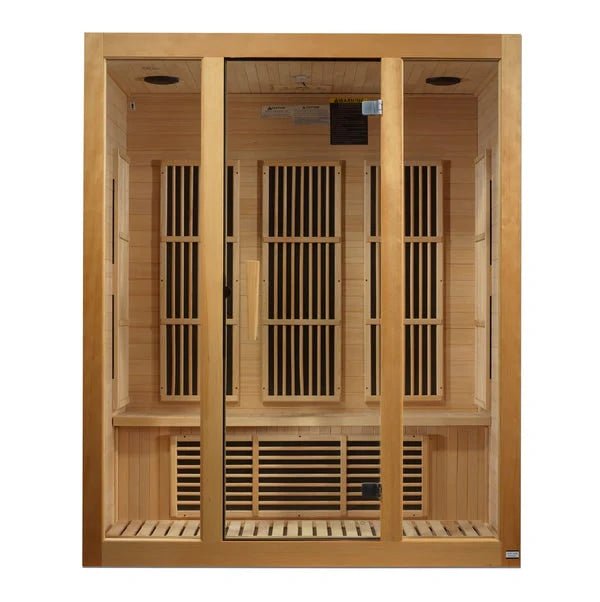
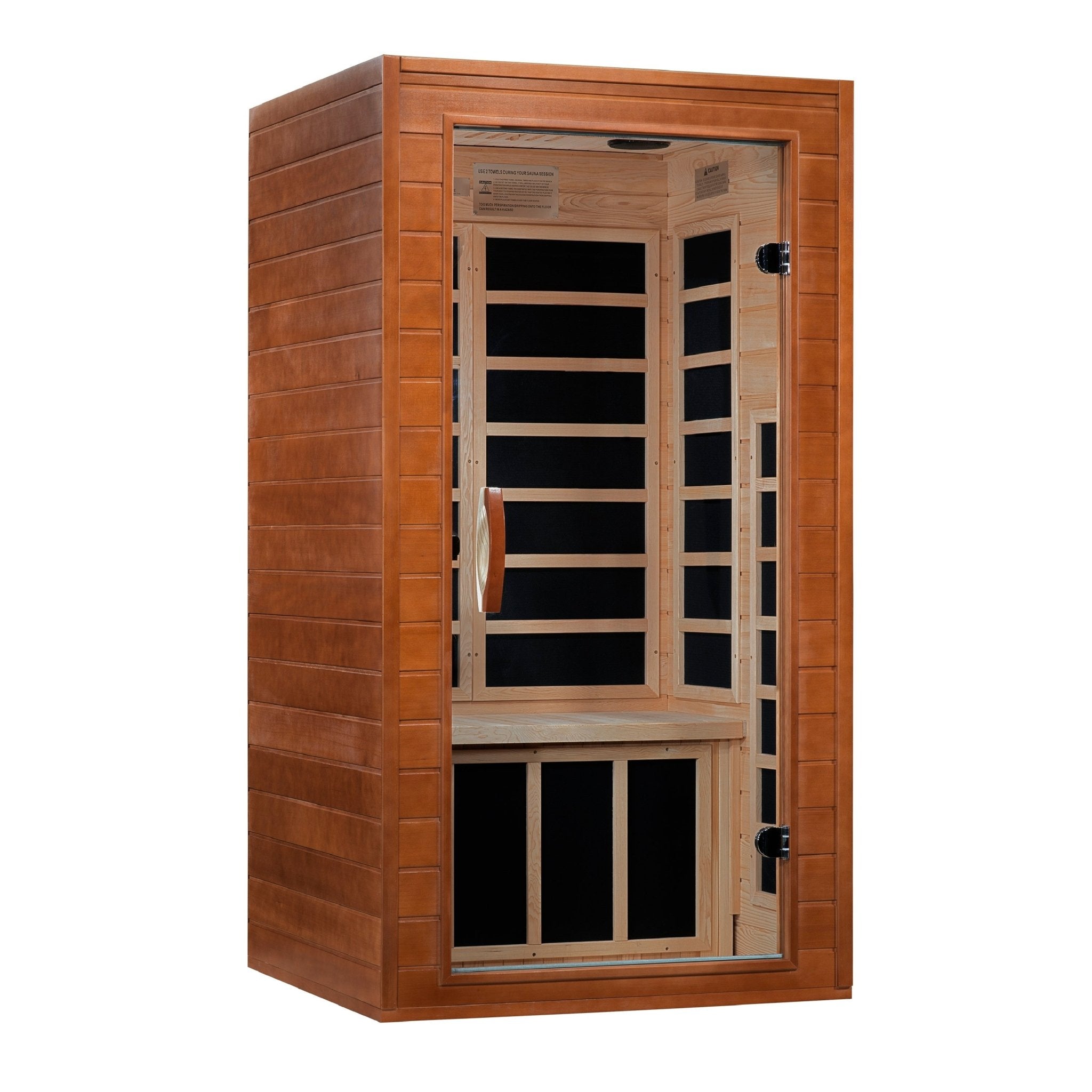
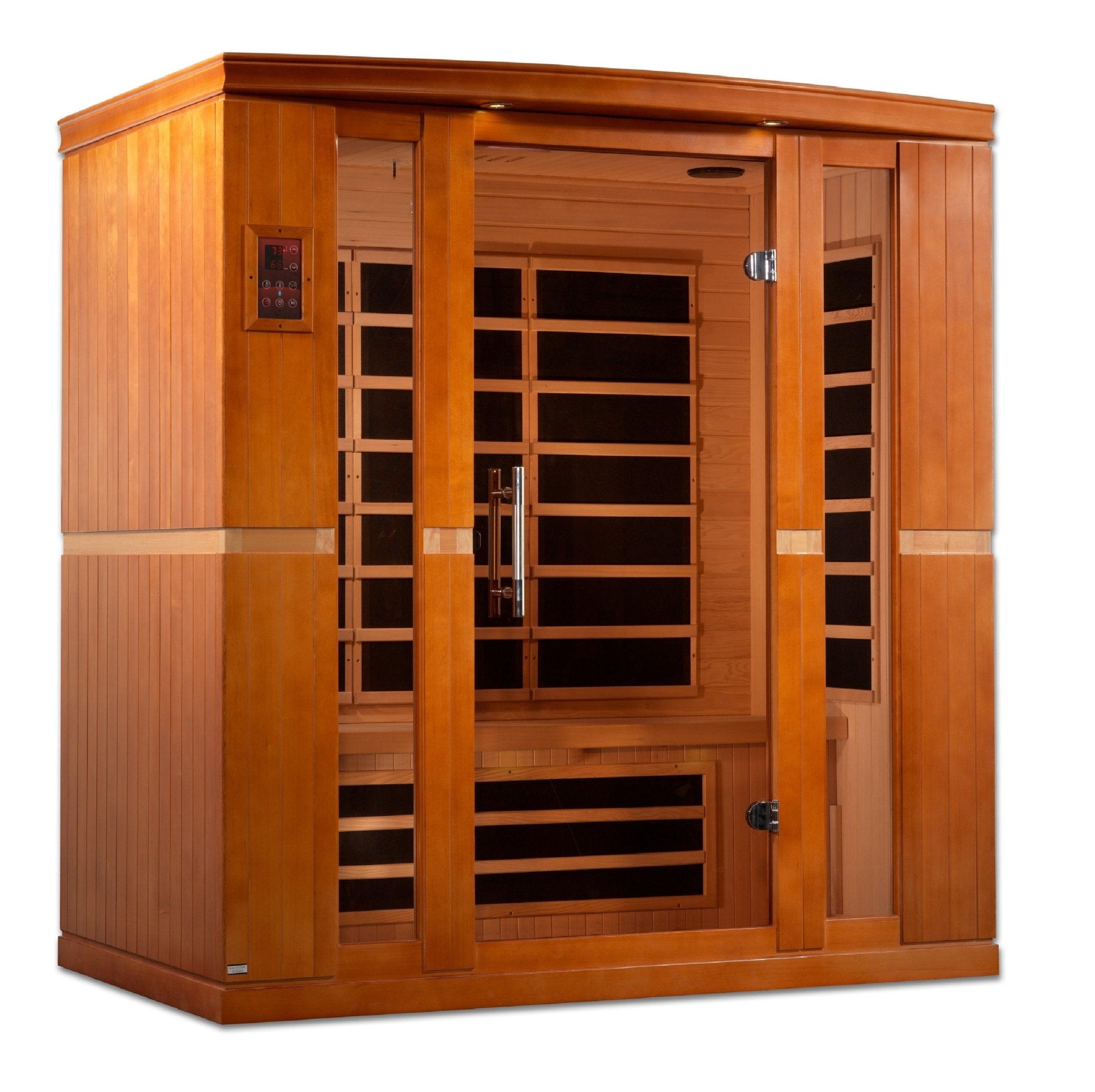
One- and two-person infrared cabins designed for 120-volt, 15-amp dedicated circuits represent the closest experience to traditional saunas available to renters. These units ship as modular panels that assemble into freestanding enclosures, typically measuring 3-4 feet square with 6-7 feet of height. Manufacturers specify indoor, dry locations away from plumbing fixtures, positioning these as portable electric appliances rather than permanent bathroom installations.
Clinical research shows far-infrared sauna sessions produce cardiovascular responses similar to moderate-intensity exercise, including elevated heart rate and core temperature. Studies document blood pressure improvements in some patient groups, though results vary by population and protocol. The physiological heat load is real and measurable—this is not passive relaxation.
Performance threshold: Air temperatures typically reach 120-140°F inside infrared cabins, comparable to lower-temperature traditional saunas and sufficient to induce sweating and cardiovascular stress.
Path B: Infrared Sauna Blanket (Removability Priority)
Infrared blankets and portable domes fold into closet-sized storage and weigh 15-25 pounds. They run on standard household outlets without dedicated circuit requirements, making them appropriate for renters who cannot verify electrical capacity or face landlords wary of large appliances.
Recent experimental research found that infrared blanket sessions elevated heart rate and cardiovascular responses similarly to moderate exercise, suggesting meaningful physiological effects despite the compact format. The evidence base for blankets remains smaller than for cabin saunas, but early data supports their heat-stress capability.
Experience note: Blankets feel more like heated sleeping bags than walk-in saunas. Ambient air stays near room temperature while your body core heats. Many users report surprise at how much they sweat despite the lower-key format.
The table below compares both paths on constraints that matter most to renters:
| Option | Power Requirement | Moisture Impact | Removability | Peak Temperature | Typical Use Case | Key Limitation |
|---|---|---|---|---|---|---|
| Plug-in infrared cabin | 120V / 15A dedicated circuit | Dry heat, minimal humidity | Moderate—panels disassemble but bulky | 120-140°F air temp | Renters with space and verified circuit | Circuit sharing causes breaker trips |
| Infrared blanket/dome | Standard household outlet | Dry, localized to blanket interior | Excellent—folds to closet size | Body-surface heat, lower air temp | Small apartments, strict policies | Lower ambient heat, cocoon format |
| Steam tent (indoor) | Standard outlet for generator | High—releases bulk moisture | Poor—moisture impact persists | Variable, humid | ❌ Not appropriate for rentals | Mold, condensation, material quality |
Option 1: The 110V Plug-In Infrared Cabin (Best Performance)
Plug-in infrared cabins work for renters when electrical and space conditions align—but those conditions are non-negotiable.
Electrical Load & Outlet Checklist
Manufacturer manuals for one- and two-person infrared saunas consistently specify "120 VAC 15 AMP Dedicated Circuit Required." This phrasing carries specific meaning: the sauna should be the only substantial load on that branch circuit. Sharing the outlet with space heaters, microwaves, hair dryers, or other high-draw appliances risks overloading the circuit.
The National Electrical Code allows up to roughly ten receptacles on a typical 15-amp general-purpose circuit based on planning calculations. That means the presence of available outlets tells you nothing about whether the circuit can handle a 1,500-watt continuous load. An electrician can identify which breaker controls a given outlet and whether other loads share that circuit.
Practical verification steps:
- Locate the sauna's nameplate or manual specification for voltage (120V) and current draw (typically 12-15 amps)
- Identify the breaker controlling your intended outlet
- Test whether toggling that breaker off affects other rooms or receptacles
- If it does, that circuit is shared—proceed with caution or choose a different location
- When uncertain, hire a licensed electrician to verify circuit capacity before purchasing
Extension cords and power strips are explicitly prohibited in infrared sauna manuals. The continuous high current can overheat undersized cords, and voltage drop degrades both performance and safety. If you cannot plug directly into a suitable wall receptacle, that location is not appropriate.
Ground-fault circuit interrupter (GFCI) outlets may be required in specific locations—bathrooms, basements, and garages commonly mandate them by code. Some infrared saunas can cause nuisance tripping on certain GFCI or arc-fault (AFCI) breakers. If your only available circuit has these protections, verify compatibility with the manufacturer or consult an electrician.
Space & Placement Requirements
Sauna panels are heavy and dimensionally rigid. A two-person unit typically ships as multiple panels ranging from 20-40 pounds each, requiring doorway clearances of at least 32-36 inches. Upper-story apartments create moving challenges even though the sauna is technically disassemblable.
Manuals specify dry, level surfaces away from plumbing fixtures. The prohibition on bathrooms reflects moisture concerns—water intrusion near electrical components increases shock risk and accelerates corrosion. A spare bedroom, home office, or walk-in closet with sufficient ceiling height (usually 7+ feet) and floor space (3x4 feet minimum) represents the typical installation location.
Some manufacturers recommend minimum clearances from walls or combustibles, often 3-6 inches for cord access and air circulation. Check your specific model's documentation for these requirements.
Who Should Avoid This Option Medically
Sauna use produces cardiovascular stress comparable to submaximal exercise. For most healthy adults, this stress is well-tolerated and may offer benefits. Specific cardiac conditions, however, make unsupervised home sauna use inappropriate.
Absolute contraindications (do not use without specialist supervision):
- Unstable angina
- Recent myocardial infarction (heart attack)
- Severe aortic stenosis
- Pregnancy (any trimester)
Studies show that individuals with stable, well-managed heart disease may tolerate sauna sessions and potentially see blood pressure improvements, but these findings come from medically supervised settings. If you have chronic cardiovascular conditions, controlled hypertension, or any heat-intolerance concerns, discuss sauna use with your physician before purchasing home equipment.
For renters considering this performance-focused path, understanding how infrared heat works clarifies why body-heating mechanisms differ from ambient air warming in traditional saunas.
Option 2: The Infrared Sauna Blanket (Best Removability/Space)
Infrared blankets solve the portability and landlord-approval problems that make cabins impractical for some renters.
How Hot Do Blankets Actually Get vs Cabins?
Blankets heat your body surface directly without significantly warming the surrounding air. Users typically lie wrapped in the blanket for 20-40 minute sessions, with the interior reaching temperatures sufficient to induce sweating and cardiovascular responses.
Recent physiological research measured heart rate elevations and blood pressure changes during infrared blanket sessions that resembled moderate-intensity exercise responses. This suggests meaningful heat stress despite ambient room temperature remaining normal. The experience differs markedly from sitting in a hot air environment—your core and skin heat while your face and breathing stay comfortable.
Cabin saunas produce higher ambient air temperatures (120-140°F) that surround your entire body, more closely mimicking traditional sauna bathing. Blankets sacrifice some of this environmental heat for dramatic gains in portability and space efficiency.
Storage & Maintenance Reality
Blankets fold to roughly suitcase dimensions and weigh 15-25 pounds—manageable for closet storage or moving between apartments. After each session, sweat accumulates inside. Users who skip wiping down and drying the interior report odor buildup and material degradation within weeks.
Maintenance checklist:
- Wipe interior surfaces with a damp cloth after each use
- Allow the blanket to air-dry fully before folding and storing
- Use a towel barrier between your skin and the blanket to reduce direct sweat contact
- Check manufacturer instructions for any surface-safe cleaning products
The low-maintenance promise depends on actually maintaining it. Neglected blankets become unpleasant quickly.
Who Should Avoid This Option Medically
The same cardiovascular contraindications apply: pregnancy, unstable angina, recent myocardial infarction, and severe aortic stenosis make blanket use inappropriate without medical supervision.
Additional considerations for blankets include:
- Skin sensitivity: Direct contact with heated surfaces can irritate sensitive skin or aggravate certain dermatological conditions
- Claustrophobia: The enclosed, wrapped format bothers some users
- Heat intolerance: People with conditions affecting temperature regulation (certain neurological disorders, some medications) should consult clinicians before use
Dehydration and overheating remain primary risks. Sessions longer than 30 minutes without breaks increase these dangers. Stop immediately if you feel dizzy, nauseated, or unwell.
CRITICAL WARNING: The Electrical Constraint (110V/15A)
Electrical failures cause the majority of preventable rental sauna problems—breaker trips at best, fires at worst.
Why "Standard Outlet" Doesn't Mean "Any Outlet"
A 120-volt, 15-amp household circuit can theoretically supply 1,800 watts (120V × 15A). The National Electrical Code recommends loading circuits to no more than 80% of capacity for continuous loads, suggesting a practical ceiling around 1,440 watts. Many two-person infrared saunas draw 1,500-1,800 watts.
When that circuit already serves three bedroom outlets, a closet light, and a bathroom exhaust fan—all common configurations—adding a 1,500-watt continuous load pushes total demand beyond safe thresholds. The circuit hasn't changed; your assumption that "available outlet" equals "available capacity" was wrong.
Real-world failure pattern: Renter plugs sauna into bedroom outlet. Twenty minutes into the first session, the breaker trips. Investigation reveals the same circuit powers the hallway outlets where a space heater occasionally runs. The two devices never run simultaneously by design, but code calculations assume diversity—multiple loads sharing capacity. A sauna operates continuously at high wattage, violating that assumption.
Dedicated Circuit Requirements
When a sauna manual states "Dedicated Circuit Required," it means that 15-amp or 20-amp branch should serve the sauna receptacle and nothing else of significance. No other high-draw appliances, no other rooms' lighting, no shared bathroom circuits.
Older apartments commonly have fewer circuits with more receptacles per circuit. Newer construction often includes more circuits with better load segregation. Age alone doesn't determine suitability—you must verify your specific wiring.
GFCI, AFCI, and Code Basics for Renters
Modern electrical codes mandate GFCI protection in bathrooms, kitchens, basements, garages, and outdoor areas—anywhere moisture increases shock risk. AFCI (arc-fault circuit interrupter) protection is increasingly required in bedrooms and living areas to detect dangerous electrical arcing.
Some infrared saunas produce electrical signatures that cause nuisance tripping on GFCI or AFCI breakers, even when operating safely. If your only suitable circuit has these protections, contact the sauna manufacturer to verify compatibility before purchasing. Some units are designed to work with these breakers; others require standard breakers.
Absolute prohibitions:
- Never use extension cords or power strips with saunas
- Never modify the plug or attempt to adapt 120V equipment for 240V outlets
- Never "test" an unknown circuit by plugging in and hoping for the best
If you cannot identify a suitable circuit through breaker mapping or testing, hire an electrician for a consultation before buying sauna equipment. That $150-300 assessment prevents a $2,000 equipment purchase you cannot safely use.
The Landlord Liability Problem: How to Get Approval Without Asking for a "Sauna"
Landlords hear "sauna" and imagine plumbing, moisture damage, and unauthorized electrical work. Reframe the conversation around the actual appliance you're installing.
The Freestanding Appliance Approach
A UL-listed plug-in infrared cabin is, functionally, a space heater in a wooden box. It plugs into an existing outlet, requires no plumbing or ventilation work, produces dry heat, and disassembles into transportable panels. Position it this way:
What to say:
"I'd like your approval to use a UL-listed portable infrared heater enclosure in the spare bedroom. It's a freestanding appliance rated for standard 120-volt outlets and produces dry heat with no moisture or steam. There's no installation required—it plugs directly into the wall like any other appliance and can be fully disassembled when I move. I can provide the manufacturer's manual showing the UL certification and electrical specifications."
What not to say:
"Can I install a sauna?" or "I want to put a sauna in the bathroom."
Documentation Package
Prepare three documents before requesting approval:
-
Manufacturer's manual showing:
- UL or ETL listing to UL 60335-2-53
- Electrical requirements (120VAC, 15A dedicated circuit)
- Statement of "no plumbing required" and "indoor dry location only"
- Assembly/disassembly instructions proving removability
-
Placement plan including:
- Room location (spare bedroom, office—not bathroom)
- Circuit verification (breaker number, other loads on that circuit)
- Floor protection plan if required (heat-resistant mat)
-
Insurance compatibility statement (if available from manufacturer):
- Some sauna makers provide documents addressing common insurer concerns
- UL listing itself serves this function in many cases
When Landlords Say No Anyway
Some landlords prohibit space heaters above certain wattages or ban all "supplemental heating" as blanket policy. Others simply refuse any appliance they perceive as high-risk, regardless of documentation. These refusals often stem from insurance requirements or past incidents in other properties.
If written policy explicitly prohibits your proposed setup, infrared blankets become the fallback. At 500-1,200 watts, they fall below many wattage-based heater restrictions and store invisibly when not in use.
Attempting to install without disclosure violates most leases and creates liability if electrical or fire issues arise. The short-term convenience isn't worth eviction risk or denied insurance claims.
For practical examples of units that fit renter-appropriate specifications, reviewing 120-volt plug-in infrared cabin options and compact infrared sauna for apartments models clarifies what manufacturers design specifically for residential use.
What Doesn't Work: Why Traditional and Cheap Steam Tents Are Excluded
Some options appear renter-friendly at first glance but fail on deeper inspection.
Traditional Electric & Wood-Burning Saunas
Traditional electric saunas heat air to 160-200°F using powerful heating elements that typically require 240-volt, 30-50 amp dedicated circuits. These circuits don't exist in most apartments, and installing them requires electrical panel work far beyond renter authority. Even if your apartment has a 240-volt dryer outlet, adapting it for sauna use without professional installation and explicit landlord approval violates both electrical codes and lease terms.
Wood-burning saunas introduce combustion—a non-starter for indoor use. These units belong outdoors with proper clearances, fire-safe surfaces, and ventilation. Standards like UL 60335-2-53 govern electric heaters, but wood stoves fall under entirely different codes designed for fixed installations. Attempting indoor wood-burning sauna use in a rental creates carbon monoxide risk, fire hazards, and certain lease violations.
Cheap Steam Tents & Off-Gassing Concerns
Low-cost portable steam tents proliferate on large online marketplaces, often priced $100-300 with collapsible fabric enclosures and small steam generators. Two problems make these inappropriate for most renters.
Moisture loading: Steam tents release significant humidity into your living space. That moisture condenses on cooler surfaces—walls, windows, ceilings—where ASHRAE's guidance links persistent dampness with mold growth. Most rental units lack ventilation systems designed to handle regular steam sessions. What feels like harmless wellness quickly becomes visible condensation, musty odors, and potential structural damage.
Material quality: Users report concerning odors and plastic smells from heated vinyl components in cheap tents. These observations suggest potential off-gassing of volatile organic compounds (VOCs) from materials not designed for sustained high temperatures. Better-made steam units exist, but they still face the fundamental moisture problem in small rental spaces.
The Outdoor Tent Exception
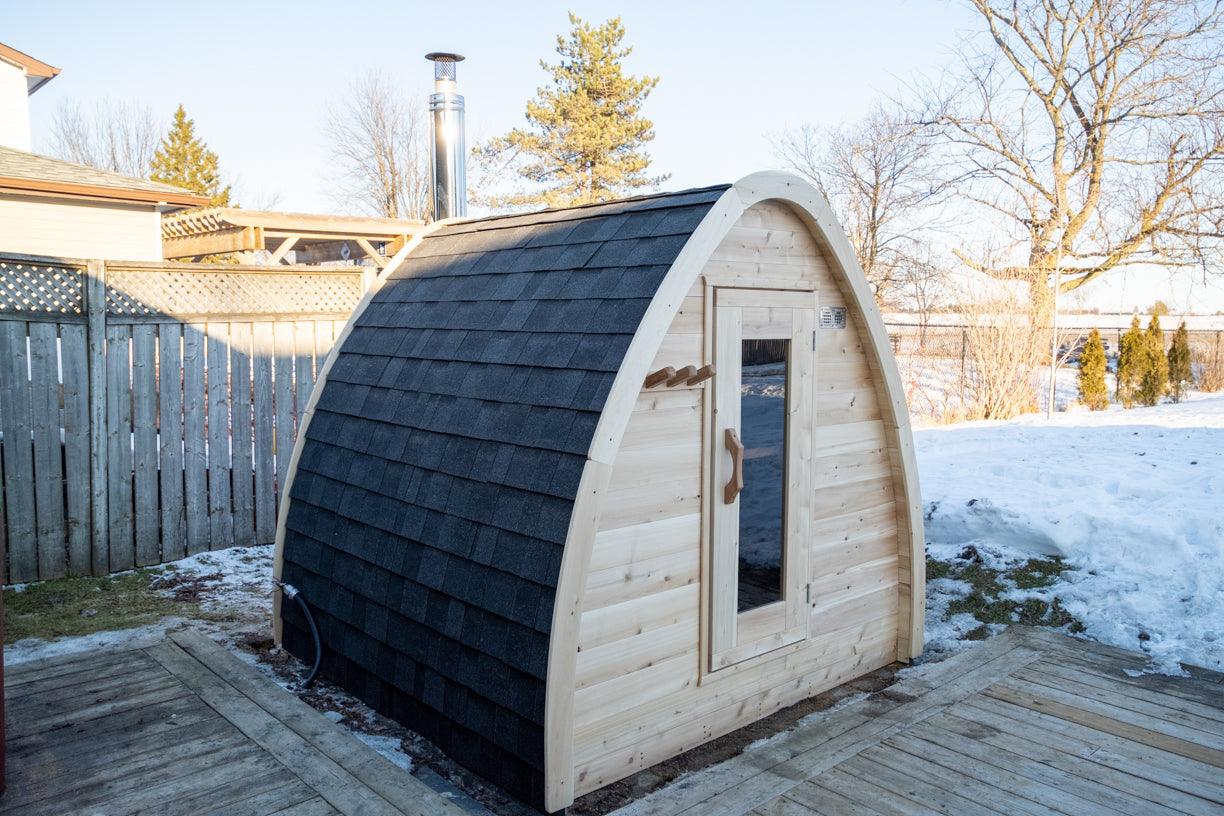
Some wood-fired sauna tents are explicitly designed for outdoor use on private property with proper clearances. These can work for renters with yards and landlord permission, but they require:
- Fire-safe ground surfaces
- Clearances from structures and vegetation
- Proper wood stove venting
- Compliance with local fire codes and burn restrictions
Apartment balconies, shared courtyards, and multifamily properties rarely accommodate these requirements. Smoke, embers, and combustion liability make outdoor sauna use impractical for most renters.

Rental Sauna Feasibility Checklist (Before You Buy)
Use this gate-check before purchasing any sauna equipment for a rental property.
Electrical Verification
- Sauna nameplate or manual confirms 120V operation (not 240V)
- Current draw is 15A or less (or matches available circuit capacity)
- You have identified the specific breaker controlling your intended outlet
- That breaker serves few or no other significant loads (confirmed by testing)
- The outlet location allows direct plug-in with no extension cords
- GFCI/AFCI compatibility is verified if those protections are present
Red flags:
Multiple rooms go dark when you toggle the breaker. The only accessible outlet is across the room from where the sauna must sit. The circuit already powers a window AC unit or space heater.
Space & Location
- Floor space meets minimum footprint (typically 3×4 feet for cabins)
- Ceiling height meets manufacturer minimum (usually 7+ feet)
- Location is a dry, indoor room (not bathroom, laundry, or basement)
- No plumbing fixtures within manufacturer-specified clearance
- Doorways and hallways accommodate panel dimensions for move-in
- Egress routes remain unobstructed when unit is in place
Red flags:
You're measuring a bathroom because it's the only private space. Panels won't fit around a hallway corner. The room has a history of moisture or musty smells.
Safety & Listing
- Product carries UL or ETL listing mark
- Standard cited (UL 60335-2-53 for electric sauna heaters) is verifiable
- Manual includes specific safety instructions and warnings
- Manufacturer is established with available customer support
- Product reviews mention quality construction, not frequent failures
Red flags:
Listing is from an unknown marketplace seller with no brand presence. No certifications are visible. The price is dramatically lower than comparable units with established brands.
Health Screening
- You are not currently pregnant
- You do not have unstable angina, recent MI, or severe aortic stenosis
- You do not have conditions affecting heat tolerance (certain neurological disorders, medications)
- You can tolerate moderate heat stress without dizziness or discomfort
- You understand session length limits (15-20 minutes) and hydration needs
Red flags:
You have any cardiovascular conditions without medical clearance. You've experienced heat-related illness before. You're considering this during pregnancy for "relaxation."
Landlord & Lease
- Your lease does not explicitly prohibit space heaters above the sauna's wattage
- You have disclosed your plan and received written approval (or determined disclosure is required)
- Documentation package is prepared (manual, UL listing, placement plan)
- Floor protection plan addresses any lease requirements about surface damage
- You understand removal and restoration obligations when moving
Red flags:
The lease has blanket prohibitions on "heating appliances" or "supplemental heat sources" without defined thresholds. Your landlord has historically denied modification requests. You're planning to install without disclosure "because it's removable."
Financial & Practical
- Purchase price fits your budget including potential electrical consultation costs
- You've calculated approximate electricity costs (1.5 kW × hours used × local rate)
- Return policy covers your situation if circuit verification fails post-purchase
- You have storage plans if you must disassemble when moving
- Moving logistics account for panel weight and dimensions
Red flags:
You're stretching budget with no contingency for electrician consults. You haven't considered electricity costs. You have no plan for moving the unit to your next rental.
If you pass all sections: Cabin saunas are feasible with appropriate models and proper installation.
If you fail on electrical or space: Blankets may be more appropriate.
If you fail on health or landlord sections: Reconsider home sauna use entirely.
FAQ
1. Can I use a portable sauna in my apartment without landlord permission?
Lease terms vary, but most prohibit installing high-wattage appliances or making modifications that affect electrical or structural systems without approval. Using a plug-in sauna that draws 1,500 watts could violate "no space heater" clauses or restrictions on supplemental heating equipment. Getting written permission protects you from lease violations and liability if electrical or fire issues arise. Presenting the unit as a UL-listed portable appliance with no plumbing or installation requirements makes approval more likely than asking to "install a sauna."
2. Will a 110V infrared sauna get hot enough to work?
Plug-in infrared cabins designed for 120V circuits typically reach 120-140°F internal air temperatures, which is sufficient to induce sweating and cardiovascular responses similar to moderate exercise. Traditional saunas often operate at 160-200°F, but infrared units heat your body directly rather than primarily warming the air around you. Clinical research shows far-infrared sessions at lower air temperatures still produce meaningful physiological effects including elevated heart rate and core temperature. For context, understanding what the evidence says about sauna benefits clarifies that therapeutic effects depend more on sustained heat exposure than peak ambient temperature alone.
3. How do I prevent mold and moisture damage when using a home sauna as a renter?
Choose dry-heat infrared options—either cabins or blankets—rather than steam units. Infrared saunas operate at low humidity and add minimal moisture to your living space. Avoid portable steam tents indoors entirely, as they release bulk water vapor that condenses on walls, windows, and ceilings where ASHRAE guidance links persistent dampness with increased mold growth. If you do generate any excess humidity, ventilate the room by opening windows or running exhaust fans after sessions. Keep the sauna in rooms that naturally stay dry—bedrooms and offices rather than basements or bathrooms.
4. What is the safest type of portable sauna for renters?
UL-listed plug-in infrared cabins rated for 120V, 15A dedicated circuits represent the safest combination of performance and removability when properly installed. These units meet safety standard UL 60335-2-53 covering electric sauna heaters and infrared emitters, addressing construction quality, electrical safety, and fire risk. Infrared blankets offer excellent safety profiles when used according to manufacturer instructions, particularly for renters who cannot verify circuit capacity or get landlord approval for larger units. Avoid non-listed products from unknown sellers and any steam tents with questionable material quality or no certification markings.
5. How much clearance do I need from walls and ceiling for a plug-in sauna?
Manufacturer manuals typically specify minimum clearances, commonly 3-6 inches from walls for cord access and air circulation. Some units require greater clearances from combustible materials. Ceiling height requirements usually start around 7 feet to accommodate the unit and allow for heat stratification. Check your specific model's installation manual for exact clearances—these vary by design. Insufficient clearance can create fire hazards, overheat surrounding materials, or void warranty coverage if damage occurs.
6. Can I plug an infrared sauna into a regular wall outlet?
Only if that outlet is on a dedicated circuit appropriate for the sauna's power draw. Many infrared sauna manuals state "120VAC 15 AMP Dedicated Circuit Required," meaning the receptacle should serve only the sauna with no other significant loads sharing that breaker. Standard household outlets often connect to circuits serving multiple rooms and receptacles. Plugging a 1,500-watt sauna into a circuit already powering bedroom lights, phone chargers, a television, and occasional space heater use risks overloading the circuit and tripping breakers or creating fire hazards. Verify circuit capacity before assuming any available outlet is suitable.
7. What is the fire risk of using a portable infrared sauna in an apartment?
Fire risk remains low when you use UL-listed units on appropriate circuits, avoid extension cords, and follow placement guidelines. The primary electrical fire mechanisms are circuit overloading from shared loads and heat buildup from undersized cords or poor connections. Using a dedicated circuit eliminates overload risk. Plugging directly into wall receptacles avoids cord heating. Maintaining manufacturer-specified clearances from combustibles prevents ignition of nearby materials. Non-listed products from questionable sources increase risk because they lack independent safety verification. Insurance coverage may be denied if fire or damage results from non-compliant installations.
8. How long does it take to assemble and disassemble a plug-in infrared cabin?
Assembly typically takes 1-3 hours with basic tools, as most units ship as modular panels that bolt or clip together. One or two people can complete the job without specialized skills. Disassembly reverses the process and takes similar time. The challenge for upper-floor renters is moving the heavy, rigid panels through doorways and stairwells rather than assembly complexity. A two-person infrared sauna might ship as 6-10 panels ranging from 20-50 pounds each. Plan moving logistics before purchasing if you anticipate relocating frequently.
9. Are there medical conditions that make home sauna use inappropriate for renters?
Yes. Sauna sessions produce cardiovascular stress comparable to submaximal exercise, making them inappropriate for people with unstable angina, recent myocardial infarction, or severe aortic stenosis without specialist supervision. Pregnancy is an absolute contraindication across all trimesters due to hyperthermia and dehydration risks to the fetus. People with conditions affecting temperature regulation—certain neurological disorders, some medications—should consult physicians before sauna use. Even if you have stable, managed cardiovascular disease, discuss home sauna plans with your doctor since most safety data comes from medically supervised settings rather than unsupervised home use.
10. Do I need special electrical work or a dedicated outlet for an infrared sauna blanket?
No. Infrared blankets typically draw 500-1,200 watts and operate safely on standard household outlets without dedicated circuit requirements. This makes them appropriate for renters who cannot verify circuit capacity or who face landlord restrictions on high-wattage appliances. You still should not use extension cords or power strips, but the lower power draw compared to cabin saunas (1,500-1,800 watts) reduces circuit-loading concerns. Blankets represent the lowest-barrier entry point for rental sauna use while still providing meaningful heat stress.
11. Will using a home sauna significantly increase my electricity bill as a renter?
A 1,500-watt infrared cabin running for 30 minutes consumes 0.75 kWh per session. At typical US residential rates around $0.13-0.16 per kWh, that's roughly $0.10-0.12 per session. Four sessions weekly add $1.60-1.90 monthly. Blankets drawing 600-1,000 watts cost proportionally less. The impact is modest compared to running window air conditioners or electric space heaters but will be noticeable on your bill if you use the sauna daily. Calculate your local electricity rate times the unit's wattage times hours of use per month for accurate projections.
12. Can I put a plug-in infrared sauna in a walk-in closet?
Possibly, if the closet meets all manufacturer requirements for space, clearance, ventilation, and circuit access. Most manuals specify dry locations with adequate clearances from walls and stored items. Walk-in closets with 3×4 feet of clear floor space, 7+ feet of ceiling height, and a dedicated circuit outlet can accommodate compact one-person units. Ensure stored clothing and other combustibles maintain required clearances from heating elements. Closet installations work best when the sauna becomes the closet's primary use rather than trying to maintain storage around it. Verify your specific model's installation guidelines before committing to closet placement.
13. What should I do if my circuit breaker keeps tripping when I use my sauna?
Stop using the sauna immediately on that circuit—repeated tripping indicates overloading or a fault condition. Identify what else draws power from that circuit by toggling the breaker and noting which rooms or outlets lose power. If multiple loads share the circuit, they're collectively exceeding safe capacity. Options include finding a circuit with fewer loads, having an electrician install a dedicated circuit (requires landlord approval), or switching to a lower-wattage option like an infrared blanket. Never "solve" tripping by installing a larger breaker without professional consultation—this can create fire hazards by allowing wire overheating that the breaker should prevent.
14. Are infrared sauna blankets as effective as cabin saunas for health benefits?
The evidence base for blankets is newer and smaller than for cabin saunas, but early research is promising. One recent experimental study found infrared blanket sessions produced cardiovascular responses—elevated heart rate and blood pressure changes—similar to moderate-intensity exercise, suggesting meaningful physiological effects. Most long-term sauna research used traditional or cabin-style infrared saunas at higher ambient temperatures. Blankets appear to create sufficient heat stress to matter physiologically, but whether they produce identical long-term benefits remains uncertain. Both formats require similar safety precautions around hydration, session length, and medical contraindications.
15. How do I clean and maintain a portable sauna in a rental to avoid damage?
For infrared cabins, wipe interior wood surfaces with a barely damp cloth after each session to remove sweat residue, then allow the unit to air-dry with the door open. Avoid harsh chemicals that can damage wood finishes or heating elements. For blankets, wipe the interior surface after every use and hang or lay flat to dry completely before folding and storing—trapped moisture causes odor and material breakdown quickly. Place a towel between your body and the blanket interior to reduce direct sweat contact. Check manufacturer guidelines for approved cleaning products. Proper maintenance prevents odor, preserves materials, and protects your security deposit from claims about damaged or malodorous equipment.
16. Can I use a sauna if I'm renting a room in a shared house?
You need permission from whoever controls the lease—typically the primary tenant or landlord—and must verify electrical capacity and placement appropriateness just as in any rental situation. Shared housing complicates approval because other tenants may object to shared electrical loads, noise from the unit's fans or heating elements, or reduced access to common spaces if the sauna occupies shared rooms. If you have a private bedroom with an appropriate circuit, a compact infrared cabin or blanket becomes more feasible. Document all approvals in writing to avoid disputes when housemates change or lease terms evolve.
17. What's the difference between UL and ETL certification for sauna safety?
Both UL (Underwriters Laboratories) and ETL (Intertek) are Nationally Recognized Testing Laboratories that certify products to the same safety standards, including UL 60335-2-53 for electric sauna heaters. Either listing indicates the product underwent independent safety testing and met requirements for construction quality, electrical safety, and fire risk. The difference is which laboratory performed the testing, not the safety threshold. Landlords and insurers generally accept either certification equally. Products with neither listing lack independent verification of safety claims and pose higher risk of electrical or fire problems.
18. How hot should a renter's home sauna session be, and how long should sessions last?
Most guidance recommends limiting sessions to 15-20 minutes and exiting immediately if you feel dizzy, nauseated, or unwell. Infrared cabins typically operate at 120-140°F, which is sufficient to induce sweating and cardiovascular stress. Some users tolerate longer sessions or higher temperatures, but shorter durations reduce risks of dehydration, overheating, and heat-related illness. Home settings lack the medical supervision present in clinical sauna studies, making conservative session lengths prudent. Hydrate before and after sessions. Start with shorter sessions (10-15 minutes) to assess your tolerance before extending duration.
19. Will my landlord's insurance cover damage from a portable sauna?
That depends entirely on policy terms and whether your installation complied with lease requirements and manufacturer instructions. Many landlord policies exclude damage from tenant-owned appliances or unauthorized modifications. If you install a non-listed sauna, use it on an inappropriate circuit, or fail to get required approvals, insurers may deny coverage entirely and pursue you for damages. This is why getting written landlord approval, using UL/ETL-listed products, following all manufacturer guidelines, and documenting proper installation matters—it protects both you and your landlord from denied claims if something goes wrong.
20. Can I take my plug-in infrared sauna with me when I move to a new rental?
Yes—removability is the primary advantage of plug-in units for renters. Disassemble the panels, pack them carefully to prevent damage during transport, and reassemble at your next location. Verify the new rental has appropriate electrical capacity and space before moving the unit. Some renters find the weight and bulk of cabin panels makes moving them less appealing than expected, especially for upper-floor apartments without elevator access. Resale value holds reasonably well for well-maintained, name-brand units if you decide not to move the sauna. Blankets move trivially and fit in standard moving boxes or luggage.
21. Are there any building codes or HOA rules that could prohibit my rental sauna?
Building codes typically don't prohibit portable plug-in appliances that meet UL standards, but HOA rules, condo association bylaws, and multifamily building policies can restrict high-wattage devices, supplemental heating equipment, or anything perceived as increasing fire risk. Some buildings have blanket prohibitions on "space heaters" that may technically include infrared saunas depending on wattage thresholds and policy wording. Review your lease, HOA covenants, and building policies for any appliance restrictions. When in doubt, request explicit written permission rather than assuming silence means approval. Policy violations can trigger fines, forced removal, or lease termination.
22. What's the real difference between cheap portable saunas and premium models for renters?
Build quality, safety certifications, and electrical reliability separate premium and budget options. Cheap units often lack UL or ETL listings, use lower-grade materials that off-gas or degrade quickly, and have inconsistent heating performance. Users report actual temperatures far below advertised specs, frequent electrical issues, and customer service failures. Premium models from established brands include third-party safety certifications, more durable construction, better heat distribution, and warranty support. For renters specifically, the certification matters even more because non-listed products increase landlord and insurance liability. Spending $1,500-3,000 for a certified, well-built unit is often worth avoiding the $500-800 unit that fails or creates hazards.
23. Can I use a sauna tent with a separate steam generator indoors as a renter?
This is generally inappropriate for rental spaces due to moisture loading. Steam generators release significant water vapor that condenses on cooler surfaces—walls, windows, ceilings—where ASHRAE's position documents link persistent dampness with mold growth. Most apartments and rental homes lack ventilation systems robust enough to handle regular steam sessions. Even brief steam use can create enough condensation to cause visible moisture problems, musty odors, and potential structural damage that violates leases and threatens deposits. If you're determined to try steam, outdoor use on a patio or in a yard with explicit landlord permission and proper drainage is the only remotely appropriate approach for renters, and even that remains problematic in multifamily buildings.
24. Do I need to tell my renters insurance company about a home sauna?
Check your policy terms, but many renters insurance policies require disclosure of high-value personal property or equipment that creates elevated risk. A $2,000-3,000 infrared sauna might exceed the personal property threshold requiring itemization. More importantly, if fire or electrical damage results from sauna use and you didn't disclose it, insurers may deny your claim for failure to disclose material information. Calling your insurer to ask whether your sauna requires disclosure protects you from claim denials later. Most insurers will simply note the equipment on your policy with no premium change, especially for UL-listed plug-in units properly installed.
25. What are realistic expectations for how often I can use a home sauna as a renter?
From a safety perspective, many clinical studies use daily or near-daily sessions in supervised settings with good tolerance among healthy adults. From a practical rental perspective, frequency depends on your electrical costs, time availability, and how well you manage hydration and recovery. Using your sauna 3-5 times weekly is realistic for most people and aligns with research protocols showing potential benefits. More frequent use increases cumulative dehydration risk and electricity costs. Less frequent use (1-2 times weekly) still provides heat exposure but makes the equipment investment harder to justify. Start conservatively and increase frequency as you assess your tolerance and lifestyle fit.
Sources
The evidence in this guide draws from clinical research, safety standards, building science documents, and manufacturer specifications:
Clinical & Physiological Research
- NIH/PubMed: "Far-infrared saunas for treatment of cardiovascular risk factors" (2004) – Cardiovascular effects of far-infrared cabin use
- NIH/PubMed: "Beneficial effects of sauna bathing for heart failure patients" (2006) – Clinical outcomes in cardiac patients
- PubMed: "Benefits and risks of sauna bathing" (2001) – Comprehensive safety and contraindications review
- Science Direct: "The blood pressure and heart rate during sauna bath correspond to cardiac responses during submaximal dynamic exercise" (2019) – Physiological stress comparison
- St. Mary's University: "Acute Physiological Responses to an Infrared Sauna Blanket" (2025) – Experimental blanket research
Safety Standards & Building Science
- UL Standards: UL 60335-2-53 electric sauna heating appliances and infrared units (2025) – Household sauna safety standard
- ASHRAE: "Minimizing Indoor Mold Problems through Management of Moisture in Building Systems" (2004) – Moisture and mold prevention guidance
- ASHRAE: "Limiting indoor mold and dampness in buildings" (2022) – Updated moisture management position
Installation & Electrical Guidance
- Manufacturer manuals: Galaxy Home Recreation full spectrum sauna installation and user manual (2024); Zogics infrared sauna instruction manual models DYN-6202-03 / DYN-6206-01 (2022) – Specific electrical requirements and safety instructions
- Fine Homebuilding: Article on outlet counts per 15-amp circuit (2022) – Circuit loading calculations
- Haven of Heat: GFCI requirements for sauna heaters article (2025) – Code compliance guidance
- Fun Outdoor Living: Infrared sauna home installation guide (2025) – Residential installation practices
Medical & Safety Information
- Cleveland Clinic: "Get Your Sweat On: The Benefits of a Sauna" (2024) – Consumer health guidance
- Great Atlantic (citing Harvard Medical School): Sauna safety guidelines (2024) – Medical safety framework
- Haute Wellness & MediSpa: Infrared sauna blanket risks and contraindications (2024) – Blanket-specific safety
- Sun Home Saunas: Understanding the risks—safety considerations and precautions when using an infrared sauna blanket (2025) – Comprehensive blanket guidance
User Experience & Practical Considerations
- Reddit discussions (2020-2023): Apartment sauna feasibility, portable sauna experiences, safety concerns – Anecdotal real-world patterns
- Product reviews and manufacturer documentation: Practical performance and installation experiences
What We Still Don't Know
Several evidence gaps remain relevant to renters making sauna decisions:
Long-term outcomes for infrared blankets: Most sauna research used traditional or cabin-style formats. While recent experimental work shows blankets produce meaningful acute physiological effects, long-term health outcomes—cardiovascular benefits, symptom improvements, disease modification—lack the same depth of evidence. Early data is promising but limited.
Optimal frequency and duration for home use: Clinical trials often use controlled protocols in supervised settings. How those findings translate to unsupervised home use by renters with varying health status, hydration habits, and environmental conditions remains incompletely studied. Current guidance (15-20 minute sessions, 3-7 times weekly) extrapolates from supervised research to home contexts.
Electrical safety margin in real-world rental wiring: Safety standards and manufacturer specifications assume code-compliant installations with proper circuit sizing. How often older rental units have overloaded circuits, undersized wiring, or outdated components that pass basic safety inspections but operate near capacity limits is poorly documented. Individual circuit verification remains essential because aggregate statistics don't predict your specific apartment's wiring quality.
Moisture accumulation from infrared saunas in various climates: While infrared units produce minimal humidity compared to steam options, whether daily or near-daily use in poorly ventilated rentals accumulates enough moisture to matter—especially in humid climates or poorly insulated buildings—lacks systematic study. ASHRAE guidance covers general moisture principles, but sauna-specific data in rental contexts is sparse.
Landlord and insurer decision patterns: Why some landlords approve portable saunas while others refuse them with identical documentation and product specifications remains anecdotal. Insurance industry data on claims frequency from portable home saunas would clarify actual risk levels versus perceived risk, but this information isn't publicly accessible.
Comparative effectiveness across infrared technologies: Whether carbon, ceramic, or full-spectrum infrared heaters produce meaningfully different health outcomes or safety profiles in plug-in cabin formats remains debated. Manufacturers make competing claims, but independent comparative research is limited.
These gaps don't invalidate current guidance—they highlight where decisions rely on extrapolation, individual verification, and reasonable caution rather than definitive evidence.
Full Breaker Panel? Here's How to Choose a Sauna Without Major Electrical Work
Does Infrared Sauna Tighten Skin? Science, Safety, and Realistic Results
Related Posts

Are Infrared Saunas Safe? A Science-Based Guide to Benefits, Risks & Smart Use

The 8 Best 2 Person Saunas of 2026: A Buyer's Guide to Size, Type, and Cost

The Truth About Costco Saunas: Are They Worth the Price and Hassle?

Arcadia Barrel Sauna: The Complete Buyer's Guide & Assembly Blueprint

Low EMF vs Near-Zero EMF Infrared Saunas: What Actually Matters Before You Buy

Chromotherapy vs No Chromotherapy: Who Benefits From It (Practically)? The Buyer's Decision Guide

The Science of Heat: How Saunas Improve Circulation and Cardiovascular Health
