









Steam Shower vs. Compact Sauna: Which is Practical for My Small Bathroom?
Steam Shower vs. Compact Sauna for Small Spaces
For most small bathrooms with typical construction, a compact sauna is more practical than a steam shower. Steam showers demand full vapor-barrier assemblies, verified exterior-vented exhaust, and dedicated electrical circuits—essentially a remodel-grade rebuild. Compact saunas require dedicated circuits and footprint space but avoid the moisture-control complexity that makes steam high-risk in constrained environments.
Bottom line:
-
Steam shower works only when you're doing a full bathroom remodel with steam-rated materials, confirmed exterior ventilation, and appropriate electrical capacity.
-
Compact sauna works when you can allocate roughly 3×4 feet of floor space plus door clearance and confirm proper electrical capacity.
-
Both require dedicated circuits matched to equipment specifications—never assume existing outlets are adequate.
-
Steam adds sustained high humidity to your bathroom; if your fan already struggles to clear normal shower fog, steam magnifies the problem.
-
Budget reality: Steam involves multiple trades and materials; compact saunas are typically less invasive installations.
-
Maintenance difference: Steam demands weekly cleaning, squeegeeing, and periodic descaling; saunas need occasional wiping and heater checks.
Table of Contents
-
The Direct Answer: Steam Shower vs. Compact Sauna for Small Spaces
-
What "Steam Shower vs. Compact Sauna for a Small Bathroom" Actually Means
-
Decision Framework: Use Your Most Severe Constraint to Choose
What "Steam Shower vs. Compact Sauna for a Small Bathroom" Actually Means
A steam shower is a sealed shower enclosure connected to a steam generator that delivers saturated water vapor. It requires specialized construction: continuous low-permeability waterproofing membranes, steam-appropriate substrates, and careful detailing to prevent moisture migration into walls and ceilings.

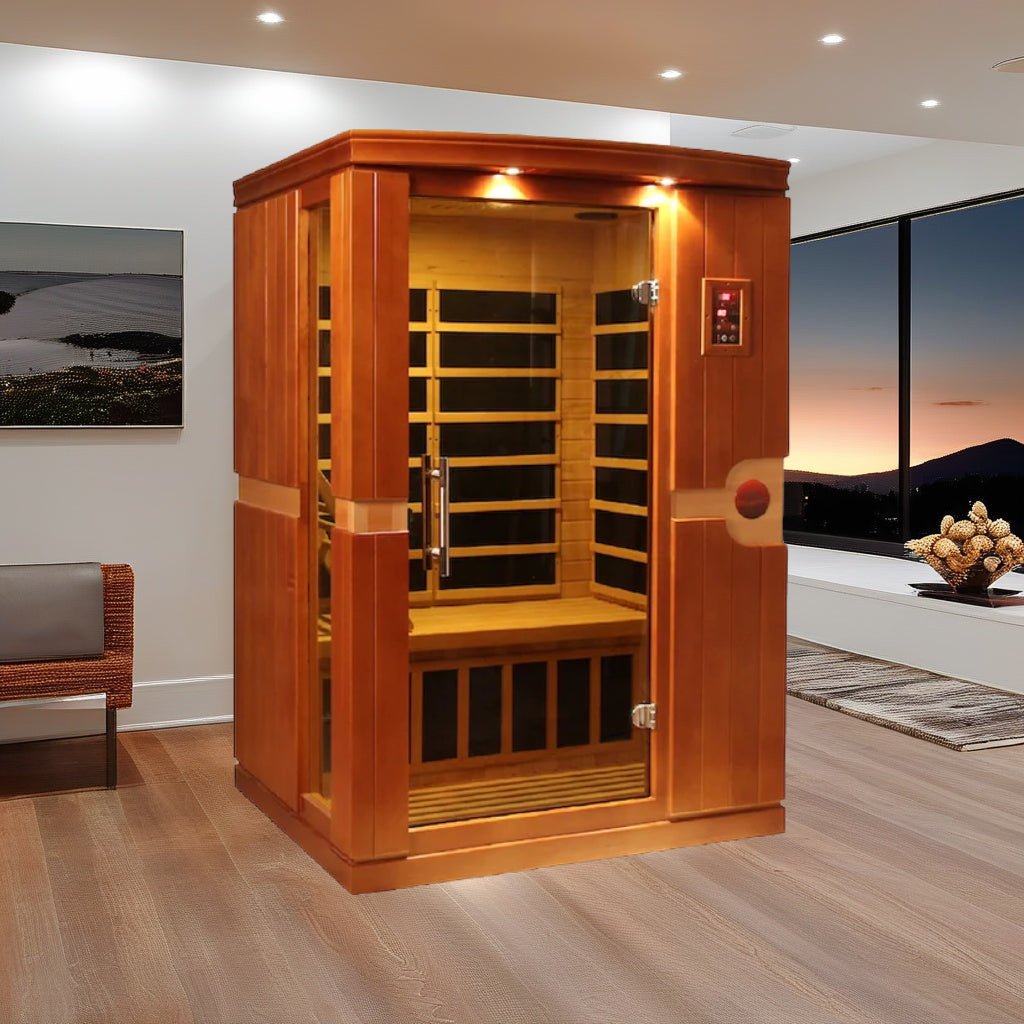
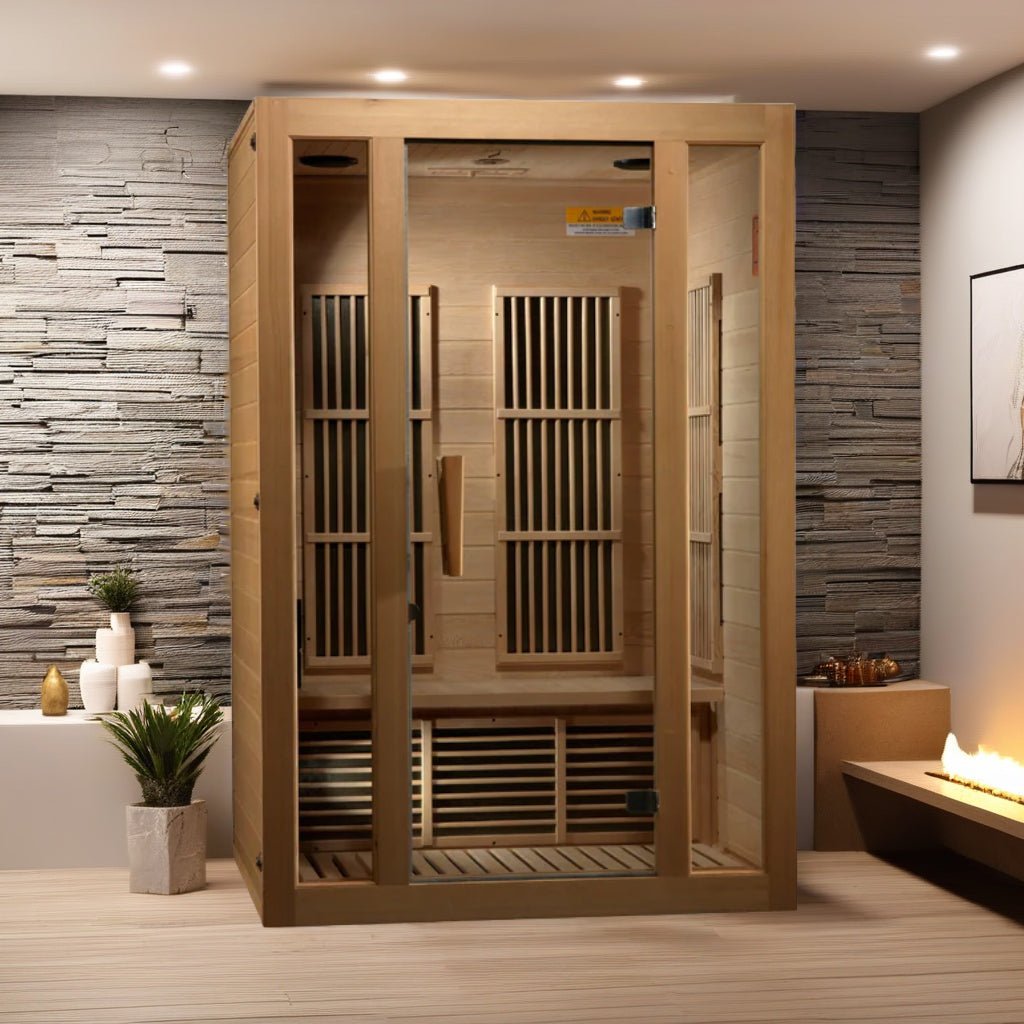
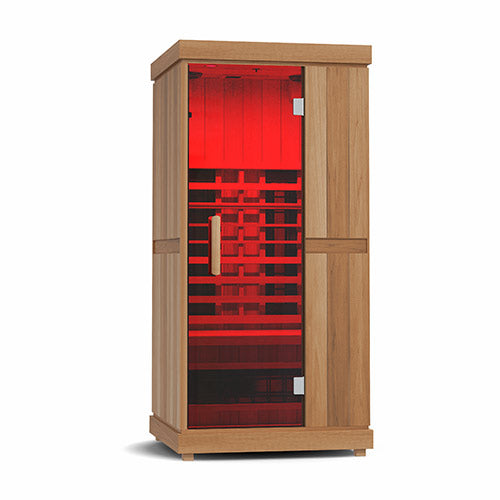
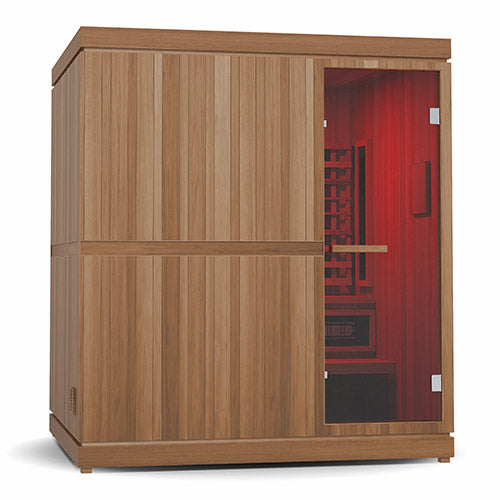
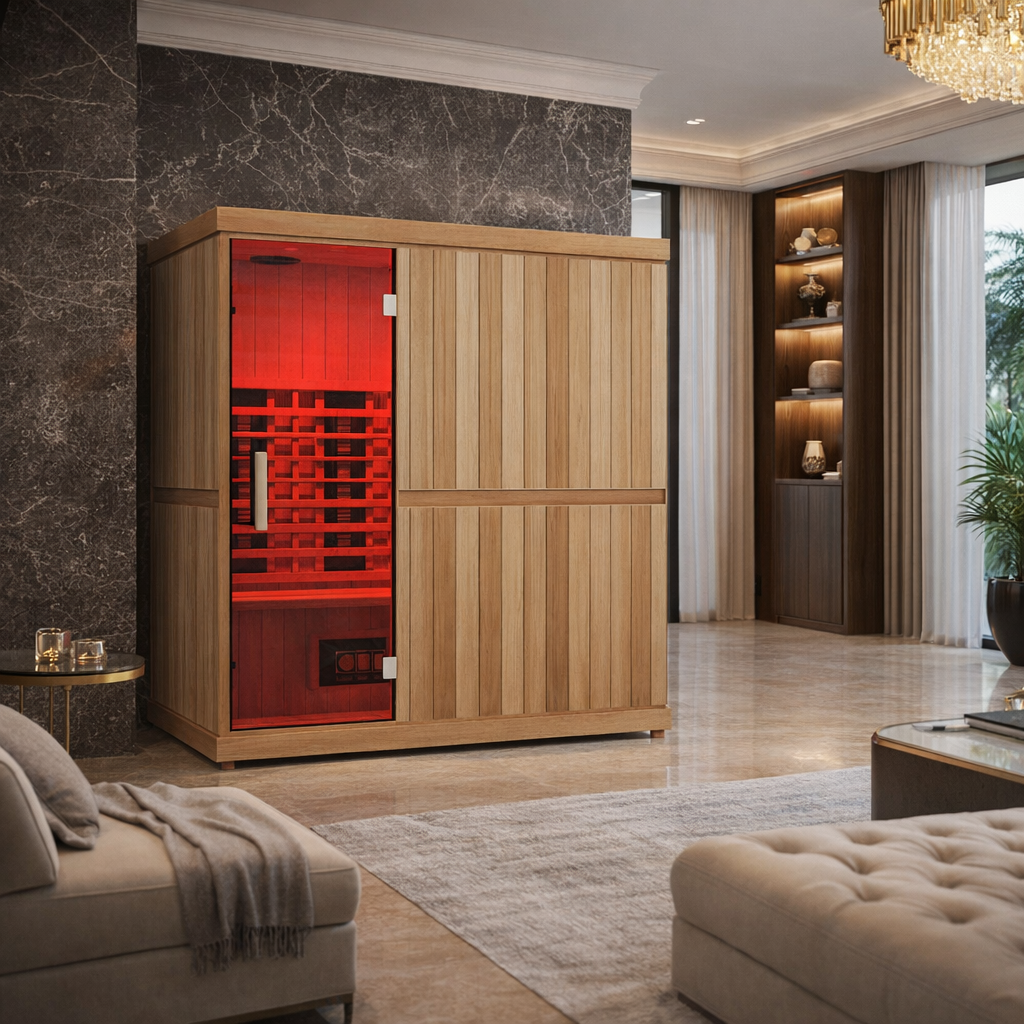
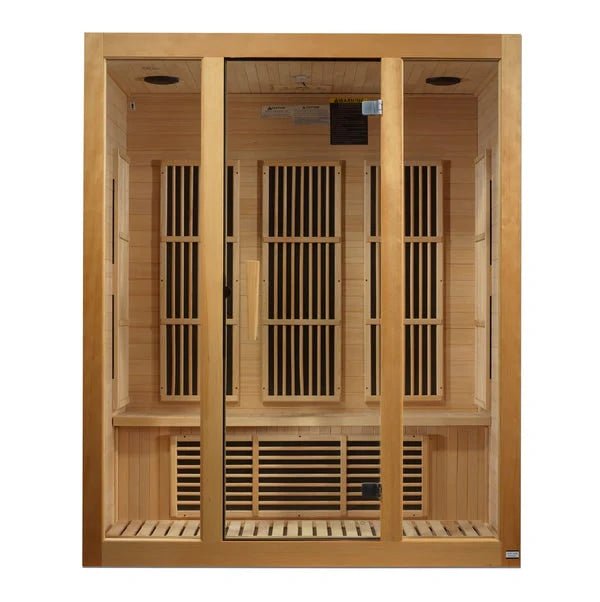
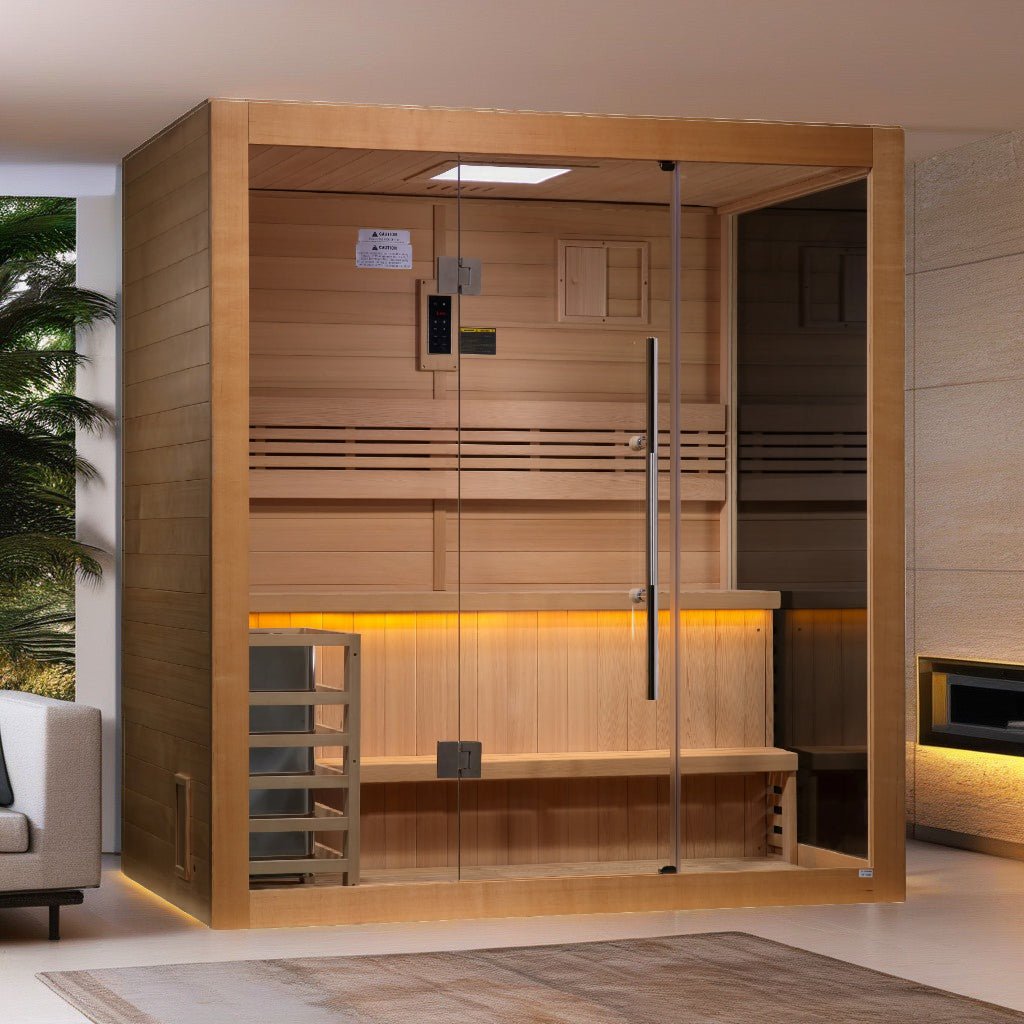
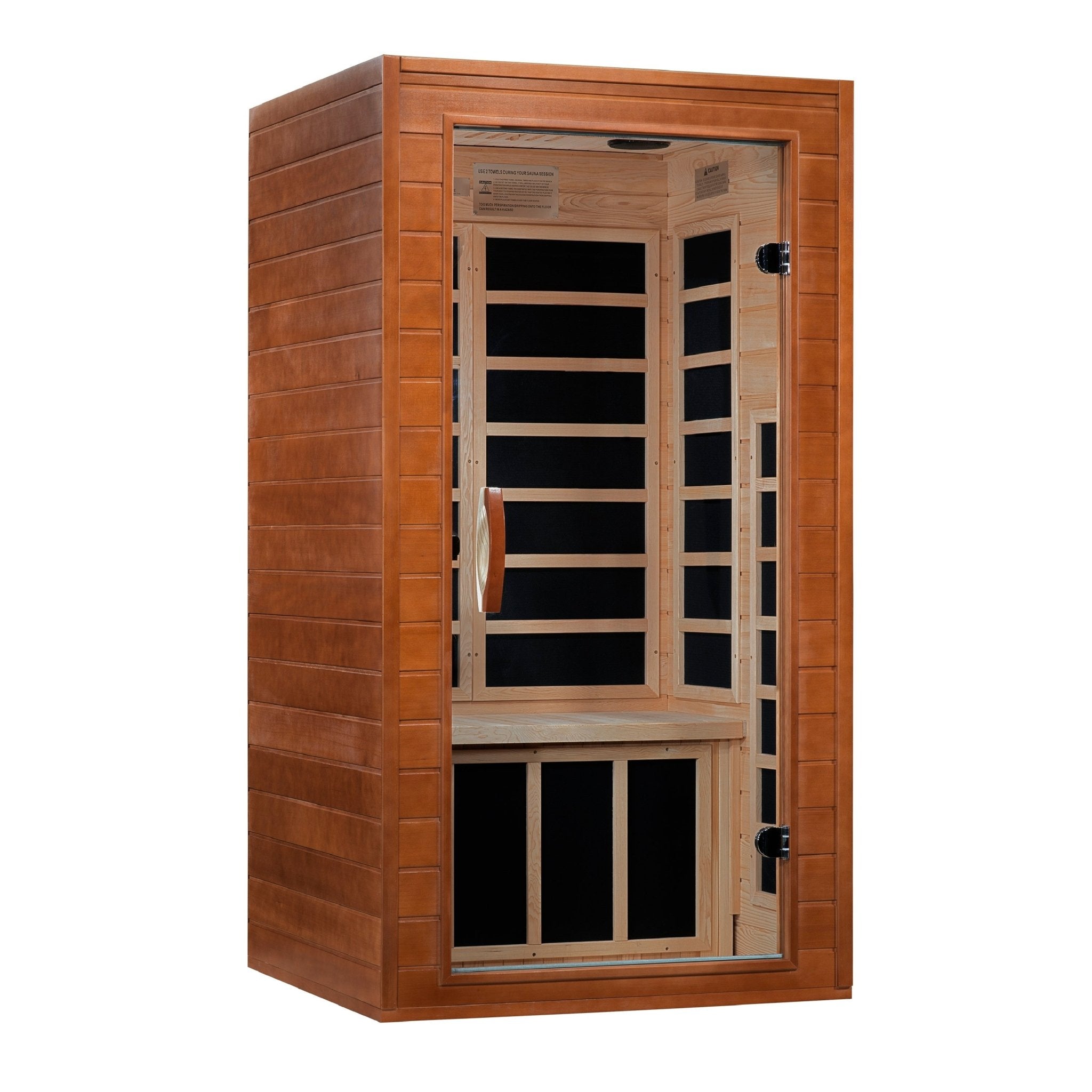
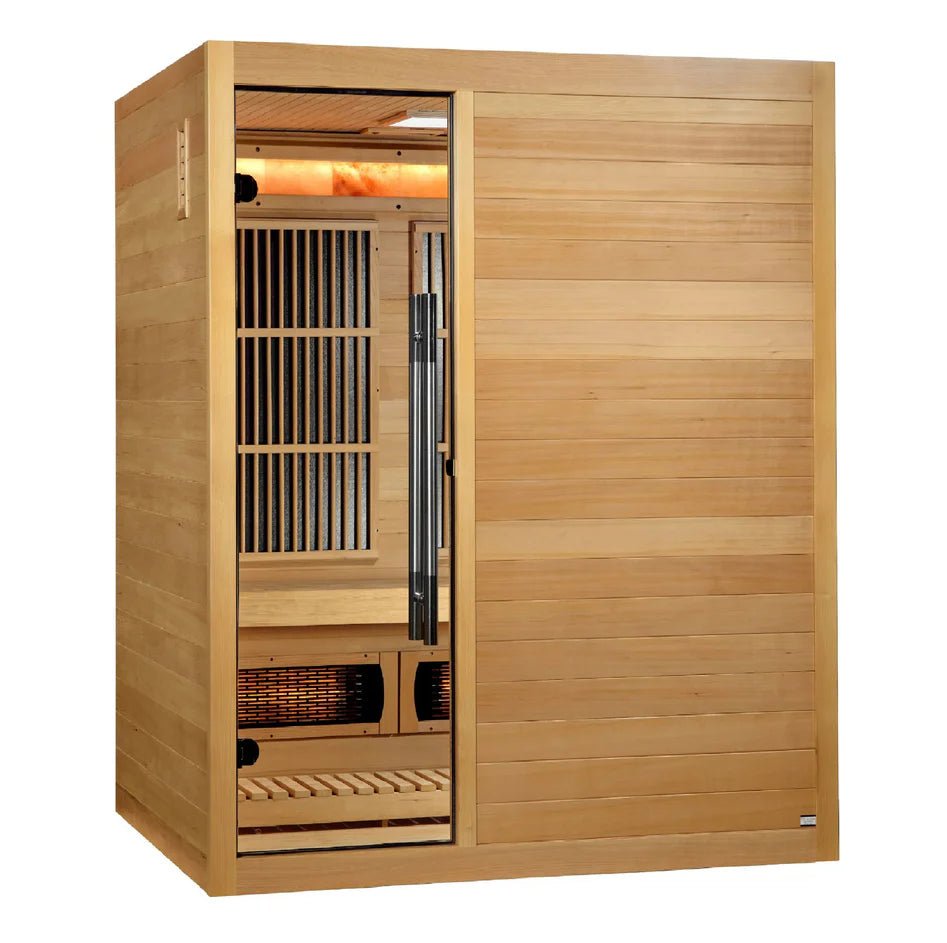
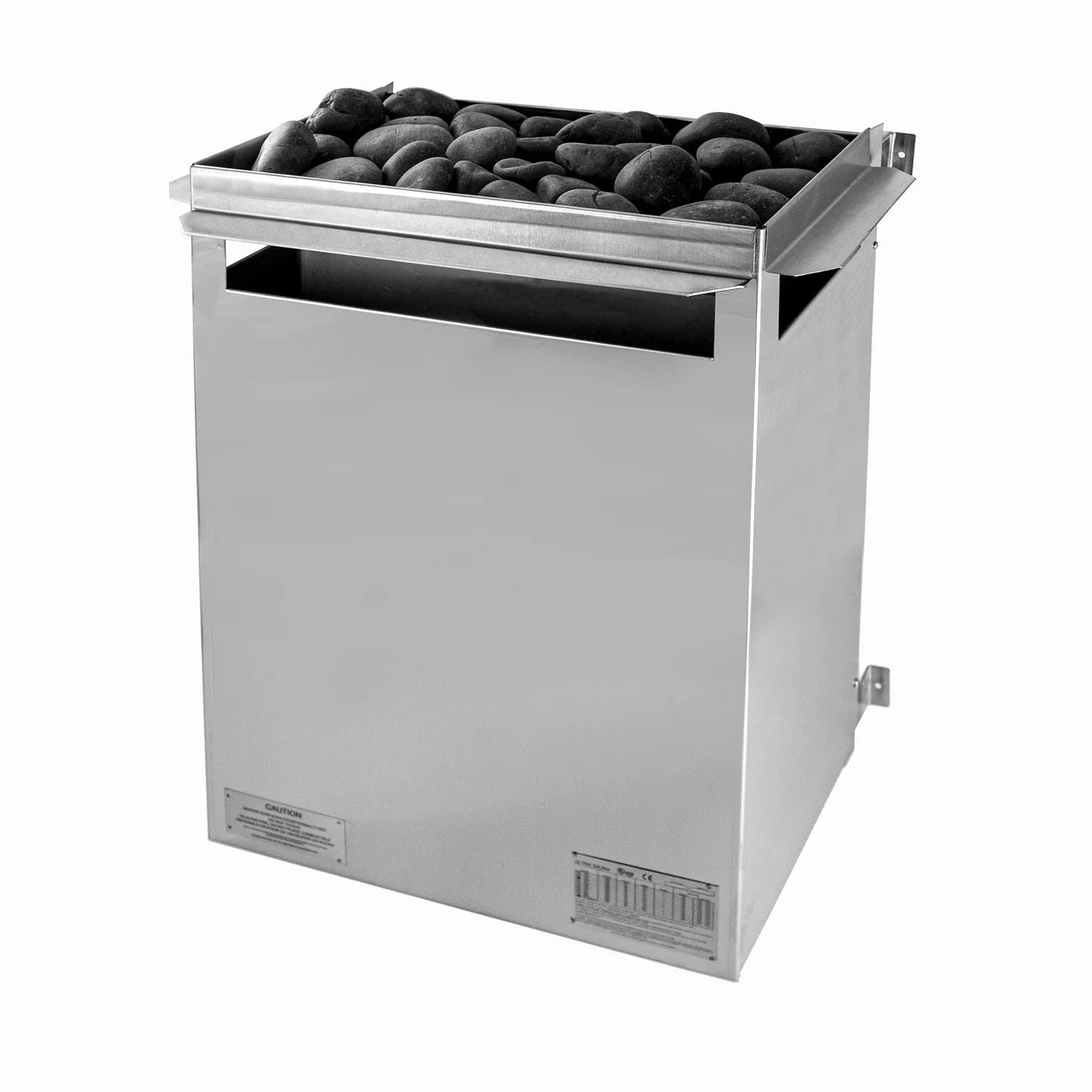
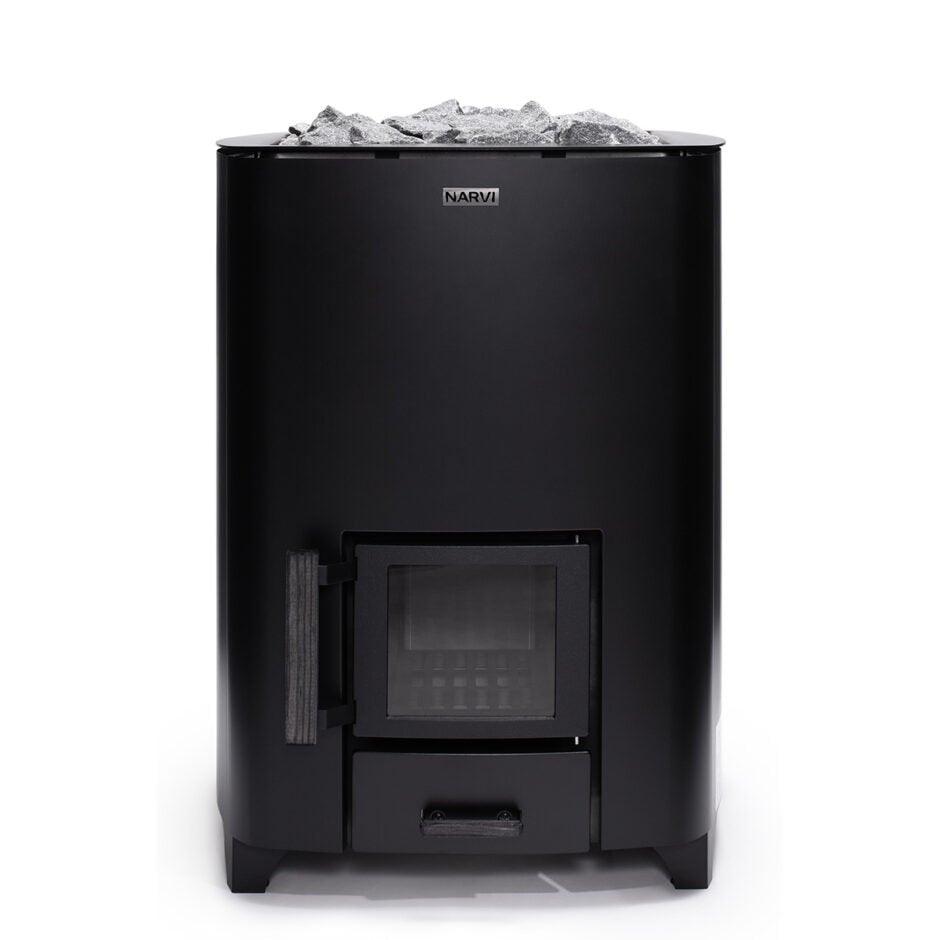
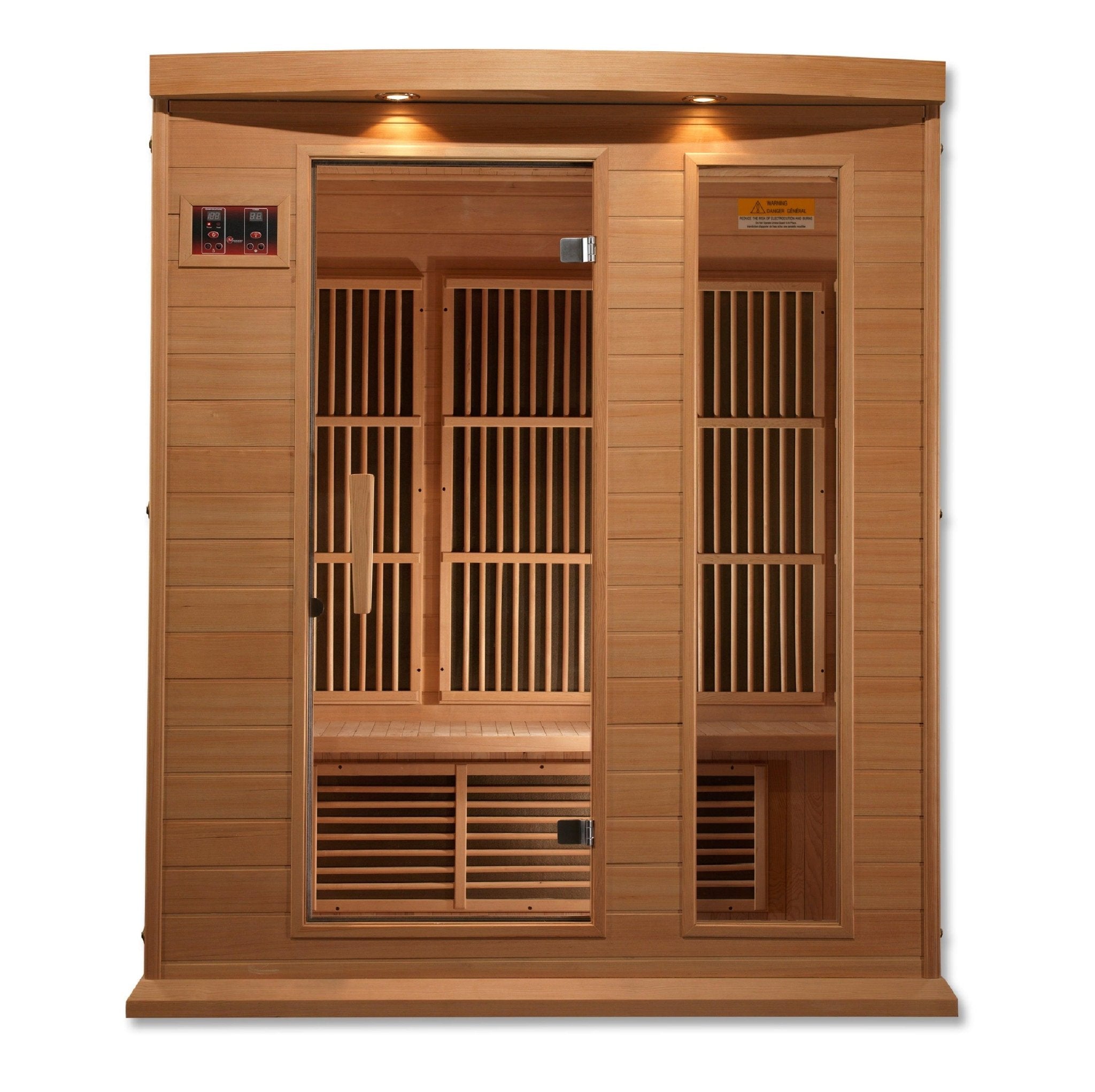
A compact sauna is a small prefabricated or custom-built cabin—typically 3×4 to 4×5 feet—equipped with either infrared emitters or a traditional electric heater. These provide dry heat in a self-contained volume that doesn't require plumbing but does need correctly specified electrical capacity.
Key differences that matter in small bathrooms:
-
Moisture impact: Steam generates intense, sustained humidity throughout sessions; saunas produce localized heat with minimal vapor release.
-
Construction scope: Steam requires waterproofing systems behind tile; saunas are typically assembled units that sit on existing floors.
-
Electrical requirements: Both need dedicated circuits, but steam generators often require 240V configurations while many infrared saunas can use properly sized 120V circuits.
-
Maintenance cadence: Steam demands frequent cleaning and descaling to prevent mold and mineral buildup; saunas need basic surface maintenance.
Constraint 1: Minimum Space and Clearance Requirements
Space isn't just about whether something "fits"—it's about whether it functions without creating daily friction.
Compact Sauna Footprint Reality
Modular sauna kits designed for small spaces typically show interior dimensions around 3×4×6'4" (approximately 76 cubic feet), with external footprints closer to 3'8"×4'8" once wall thickness is included. This represents a real physical presence in your bathroom.
Critical clearances beyond the footprint:
-
Door swing path must not conflict with toilet, vanity, or primary bathroom door
-
Heater clearances to combustibles per manufacturer specifications
-
Access for electrical connections and future maintenance
-
User circulation space for entering and exiting safely
Many homeowners report that saunas meeting published dimensions still feel cramped in practice, particularly for users over 6 feet tall or with broad shoulders. Bench depth and shoulder room become comfort-limiting factors even when the rectangular footprint theoretically fits.
Steam Shower Enclosure Requirements
Steam showers reuse existing shower footprints but demand full-height enclosure detailing. A typical residential steam shower works best with ceiling heights at or below 8 feet—taller spaces require larger, more expensive generators to heat the increased volume effectively.
The enclosure must be completely sealed and vapor-tight, which often means:
-
Full tile coverage from floor to ceiling
-
Sloped ceiling (commonly 1–2 inches per foot) to direct condensation toward walls rather than dripping on occupants, though some manufacturers consider this optional for shorter residential sessions
-
Vapor-tight door with proper seals
-
All fixtures rated for steam environments
Space decision threshold: If your existing shower is comfortably sized and already fully tiled with appropriate substrates, converting to steam may not change the footprint—but adds vertical and sealing requirements. If you have an alcove or former tub space measuring roughly 3.5×5 feet, this can potentially house a compact sauna while preserving a separate, simpler shower.
Micro-Footprint Reality Check
Planning for the absolute minimum space works on paper but often fails in practice:
-
Saunas smaller than 3×3 feet interior become ergonomically challenging for most adults
-
Steam showers in very compact footprints can feel claustrophobic and may not justify the installation complexity
-
Door placement and circulation matter more than raw square footage
Before committing to either option, physically mark the footprint with tape on your bathroom floor and simulate entry, seating, and movement patterns. What fits dimensionally may not work functionally.
If you're considering portable infrared sauna reviews for small spaces, note that even "portable" units have minimum footprint and clearance requirements that must be verified against your actual bathroom layout.
Constraint 2: Electrical Power and Installation Complexity
Electrical capacity often becomes the decisive constraint in small bathrooms, particularly in older homes.
Understanding Circuit Requirements
Many compact infrared saunas are designed for 120V operation, but this doesn't mean they work with any existing outlet. Manufacturers typically specify:
-
Dedicated circuit: The sauna must be the only device on that breaker
-
Amperage matching: A 15A or 20A circuit as specified, not shared with bathroom outlets used for hairdryers or other devices
-
GFCI protection: Often required by code for bathroom installations
Traditional electric sauna heaters and most residential steam generators require higher power:
-
240V circuits are standard for heaters above approximately 4.5 kW
-
Dedicated breaker sized to manufacturer specifications
-
Professional installation to meet electrical codes and safety disconnects
The "Standard Outlet" Trap
The most common electrical mistake is assuming that because a plug physically fits a receptacle, the installation is appropriate. Plugging a sauna heater or steam generator into a shared bathroom circuit intended for general use creates:
-
Nuisance breaker tripping during operation
-
Potential overheating of undersized wiring
-
Fire risk from sustained high loads on circuits not designed for them
-
Voided equipment warranties
Electrical decision threshold: If your bathroom panel has no spare breaker capacity and adding circuits would require a service upgrade, this immediately affects your options. Small infrared saunas rated for properly sized 120V circuits become viable; steam generators and traditional heaters typically move out of practical range unless electrical work is feasible.
120V-Only vs. 240V-Available: What's Realistically on the Table
If 120V is your only realistic option:
-
Focus on infrared sauna models explicitly rated for 120V operation
-
Verify the manufacturer's minimum circuit requirements
-
Accept that heat-up times and peak temperatures may be lower than 240V alternatives
-
Confirm with an electrician that a dedicated circuit can be added
If 240V capacity exists or can be added:
-
Both traditional sauna heaters and steam generators become options
-
Installation complexity and cost increase but performance improves
-
Professional electrical work becomes non-negotiable
-
All GFCI and disconnect requirements must be followed per code
Steam generators often fall into the 6–12 kW range for small residential installations, which translates to dedicated 240V circuits in the 30–50A range. This is not trivial electrical work in most homes.
For detailed guidance on matching heaters to electrical capacity, see sauna heater electrical requirements and sizing basics.
Constraint 3: Moisture, Ventilation, and Mold Risk
Moisture management separates viable steam installations from future remediation projects.
Steam-Room Construction Requirements
Steam showers are not simply "showers with steam added." They require assembly systems designed to resist sustained vapor exposure:
Critical components:
-
Low-permeability membrane: Materials rated at 0.5 perms or less to prevent vapor migration into wall and ceiling cavities
-
No gypsum board: Standard drywall is prohibited within steam enclosures due to vapor drive and mold susceptibility
-
Appropriate substrate: Cement board, foam boards, or other steam-rated backing systems
-
Continuous barrier: No gaps or penetrations that allow vapor to reach structural framing
Industry guidance consistently specifies these requirements, and municipal building codes often reference them. A steam shower built over standard bathroom drywall or within a non-rated fiberglass enclosure creates conditions for hidden moisture accumulation and eventual mold growth.
Ventilation: The Make-or-Break Variable
Steam showers generate dramatically more humidity than standard showers. If your bathroom currently shows:
-
Condensation lingering on mirrors and walls after normal showers
-
Ceiling surfaces that remain damp or show water droplets
-
Mildew appearing around fixtures despite cleaning
Then your ventilation is already inadequate, and adding steam will magnify these problems.
Ventilation verification checklist:
-
Confirm your exhaust fan ducts directly to building exterior (not to attic, soffit, or recirculating)
-
Check that ducting is properly sized, insulated, and unobstructed
-
Test performance: bathroom surfaces should dry within 30 minutes of a standard shower
-
Consider whether fan CFM rating is appropriate for room volume plus steam load
Homeowners frequently discover during remodels that bathroom fans installed decades ago vent into attic spaces or use inadequate ductwork, creating hidden moisture problems even before steam is considered.
Existing Bathroom Condition Triage
Before making any decision, assess your current bathroom envelope:
Green light for potential steam (still requires proper construction):
-
Shower area already uses tile over cement board or equivalent
-
Bathroom fan verified ducted to exterior with good performance
-
No existing moisture issues, staining, or mildew problems
-
Ceiling can accommodate sloped construction or condensate management
Red light—steam not appropriate without major work:
-
Drywall visible in shower area or above planned steam enclosure
-
Fan performance questionable or ducting unknown
-
Existing condensation problems after normal showers
-
History of mold or mildew requiring repeated treatment
-
Exterior-wall-dominated bathroom in cold climate (condensation risk)
Saunas present far less moisture risk to surrounding bathroom spaces because:
-
Heat is dry; humidity comes only from occupant perspiration
-
Enclosed cabin limits vapor escape during sessions
-
No plumbing connections introduce water into the system
-
Standard bathroom fans typically handle sauna-related humidity adequately
Ceiling Slope and Condensate Management
Steam-shower ceiling design guidance varies across sources, creating confusion:
-
Many industry resources recommend 1–2 inches per foot slope to direct condensation runoff
-
Some manufacturers note that slope may be unnecessary for shorter residential sessions
-
Building codes in some jurisdictions specify slope requirements
Conservative approach: Follow slope recommendations unless manufacturer guidance explicitly states otherwise for your specific generator and usage pattern. Condensation dripping onto occupants during 30-minute sessions is a recurring complaint in installations without proper slope or management.
The Cost Constraint: Installation vs. Long-Term Maintenance
Budget discussions must separate purchase price from total ownership cost.
Steam Shower: High-Complexity Installation
A steam shower project in a small bathroom typically involves:
Materials and equipment:
-
Steam generator sized for room volume (commonly $1,500–$4,000+ for residential units)
-
Low-permeability waterproofing membrane system
-
Full tile installation (floor to ceiling)
-
Vapor-tight door and fixtures rated for steam
-
Controls and sensors
-
Drainage plumbing for generator discharge
Labor requirements:
-
Demolition of existing shower if not already stripped to studs
-
Membrane installation by experienced installer
-
Tile setting with attention to steam-specific detailing
-
Plumber for generator connections and drainage
-
Electrician for dedicated circuit and controls
-
Potentially HVAC work for ventilation upgrades
Contractor articles on steam shower problems consistently cite improper installation as the primary cause of leaks, mold, and premature failure. The consequences of cutting corners—using wrong substrates, inadequate vapor barriers, or skipping proper drainage—often surface months or years later as expensive remediation projects.
Compact Sauna: Modular Installation Approach
Compact sauna kits bundle most components:
Typical kit includes:
-
Precut wood panels (often cedar or hemlock)
-
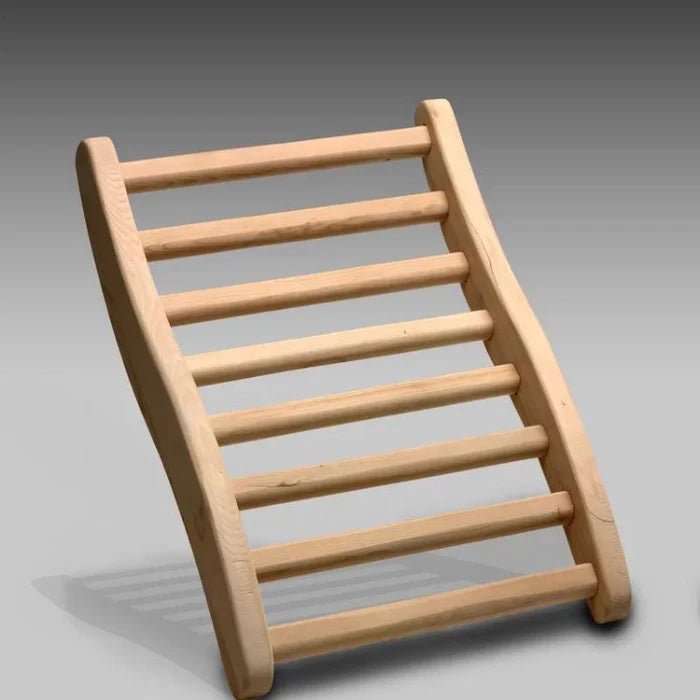
Benches and backrests
-
Electric heater sized for cabin volume (infrared panels or traditional heater)
-
Controls and safety sensors
-
Assembly instructions for above-floor installation
Labor typically involves:
-
Electrician to run dedicated circuit to sauna location
-
Floor preparation (heat shield or spacing as specified)
-
Assembly of kit per manufacturer instructions (often possible as capable DIY)
-
Final electrical connections and testing
The modular approach reduces trade coordination and limits invasive construction. Most compact saunas sit on existing bathroom floors rather than requiring structural demolition.
Hidden Line Items That Decide Practicality
For steam showers:
-
Upgraded exhaust fan and proper ducting if current system inadequate
-
Extended tile work to achieve full enclosure
-
Multiple inspections (plumbing, electrical, building)
-
Waterproofing materials that meet vapor-barrier thresholds
-
Generator descaling supplies and maintenance service intervals
For compact saunas:
-
Dedicated circuit installation if not present
-
Potential panel upgrade if service capacity insufficient
-
Floor protection materials
-
Occasional heater element replacement (traditional saunas)
Maintenance Ownership Burden
Steam showers require consistent upkeep to prevent problems:
-
Weekly cleaning and squeegeeing of all surfaces to limit mold
-
Periodic descaling of steam generator (frequency depends on water hardness)
-
Drain maintenance to prevent odors and clogs
-
Inspection of seals and fixtures for degradation
-
Immediate attention to any leaks or performance issues
Contractor reports and homeowner accounts indicate that steam showers become problem installations when maintenance is deferred. Mineral deposits, mold, and equipment failures are common themes.
Compact saunas need:
-
Occasional wiping of bench surfaces
-
Periodic inspection of heater elements and connections
-
Cleaning of infrared emitters if applicable
-
Monitoring of wood condition in high-humidity bathrooms
The maintenance difference is meaningful for homeowners with limited time or tolerance for regular upkeep tasks.
If you're mapping this decision into an overall home wellness plan, see how to plan a home wellness setup around your space and budget for broader context.
Decision Framework: Use Your Most Severe Constraint to Choose
Your most limiting factor determines which option is practical, regardless of preferences.
Step 1: Steam Feasibility Screen
Answer these questions honestly:
Construction envelope:
-
Can the shower/steam area be rebuilt with approved steam-rated materials (no gypsum in enclosure)?
-
Will installation include continuous vapor barrier rated ≤0.5 perms?
Ventilation:
-
Is bathroom fan verified ducted to building exterior (not attic/soffit)?
-
Does bathroom currently dry quickly after normal showers without lingering condensation?
Electrical:
-
Can electrical panel support generator requirements (often dedicated 240V circuit)?
-
Is professional electrical work feasible within budget?
Budget and scope:
-
Does budget accommodate full tile, membranes, generator, controls, drainage, and multiple trade coordination?
-
Is this part of a planned bathroom remodel anyway?
If any answer is "no" or "uncertain," steam shower is not practical. Proceed to sauna pathway.
Step 2: Sauna Selection Path
If 120V-only (limited electrical capacity):
-
Focus on infrared sauna models explicitly rated for 120V operation
-
Verify manufacturer specifications and minimum circuit requirements
-
Confirm electrician can add properly sized dedicated circuit
-
Accept trade-offs: lower peak temperatures, slower heat-up compared to 240V alternatives
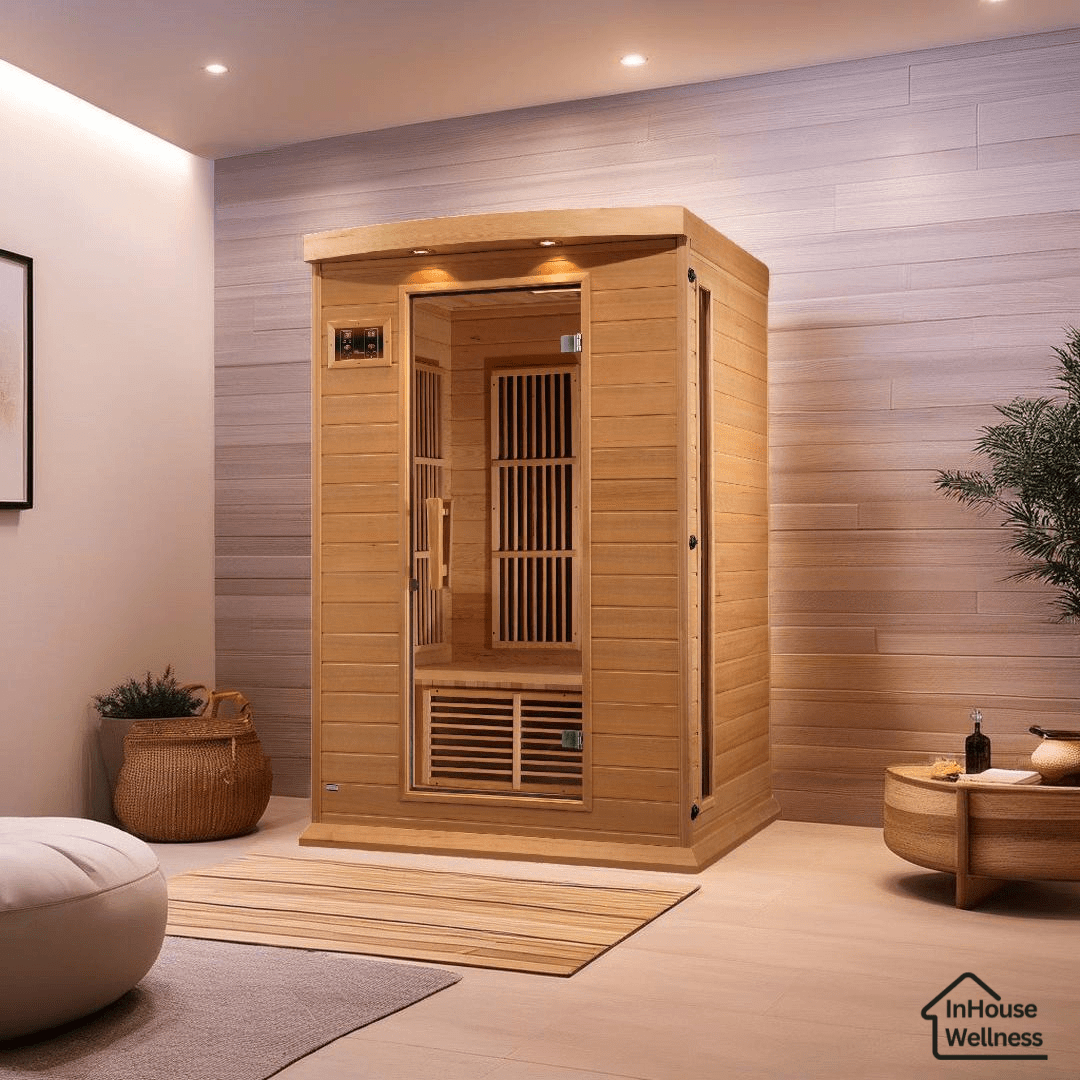
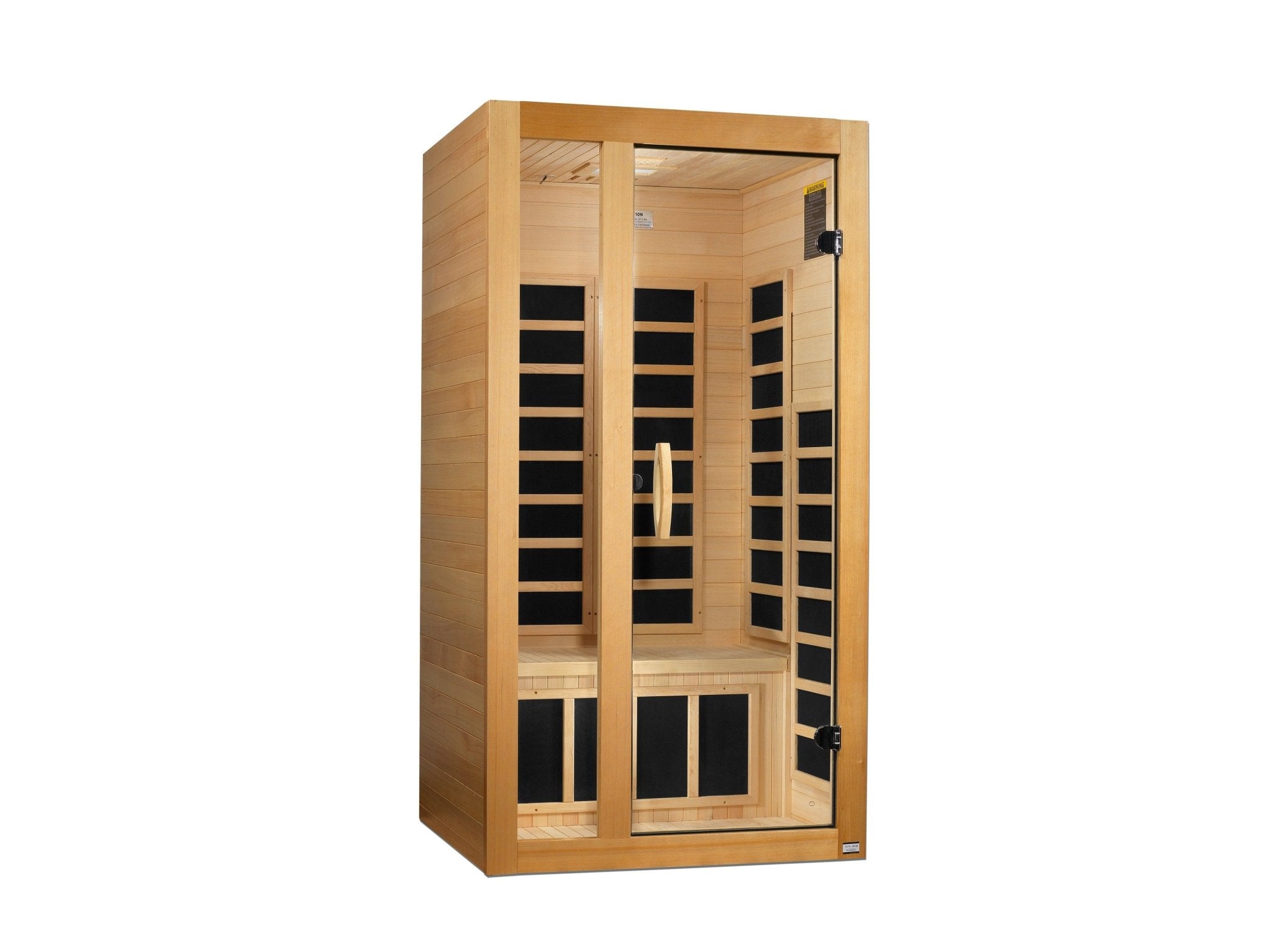
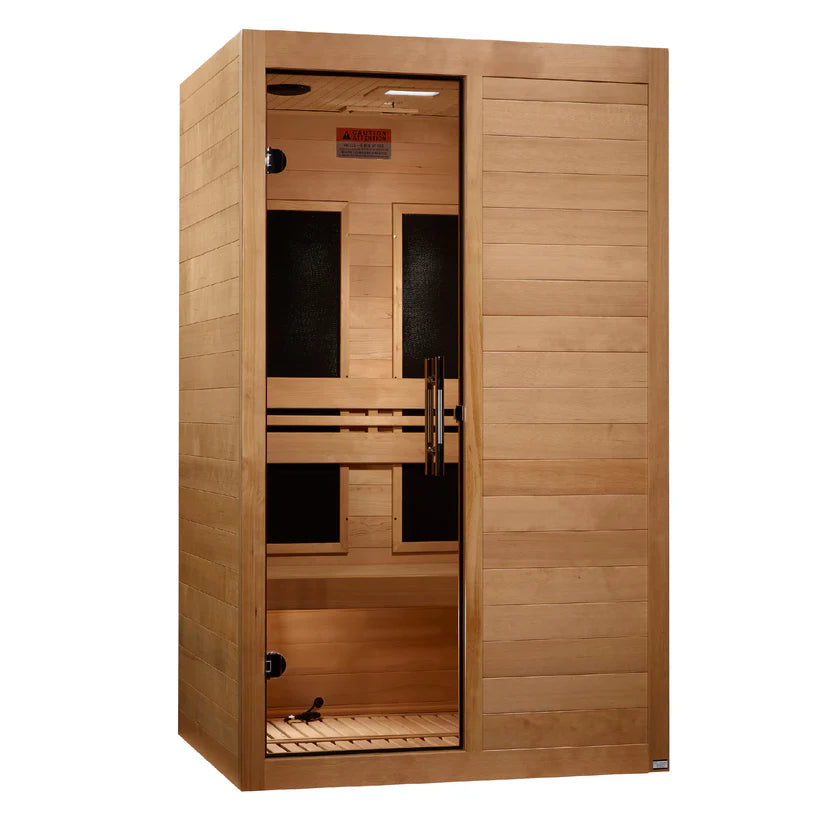
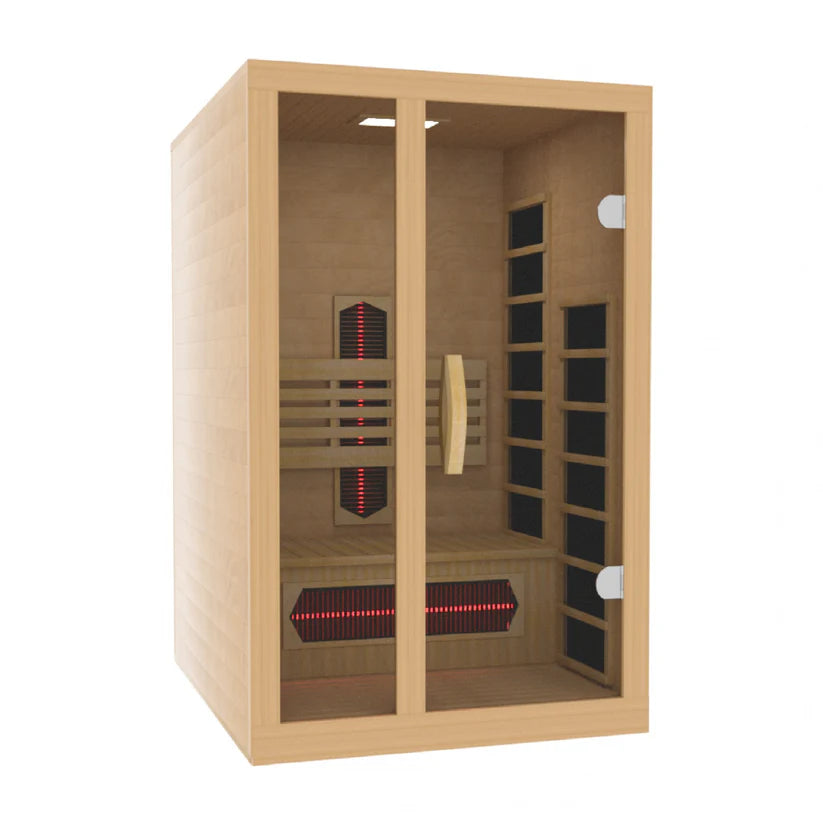
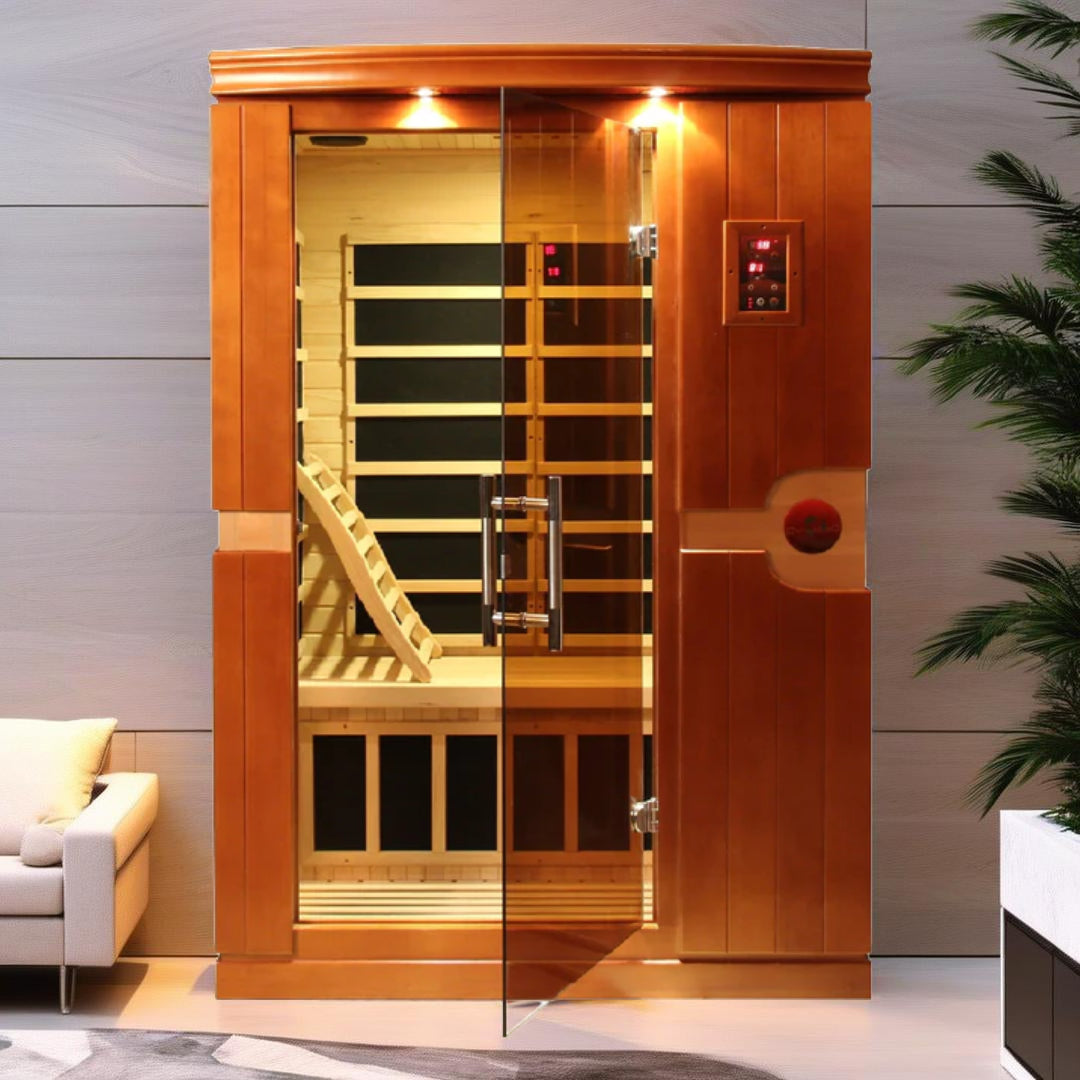
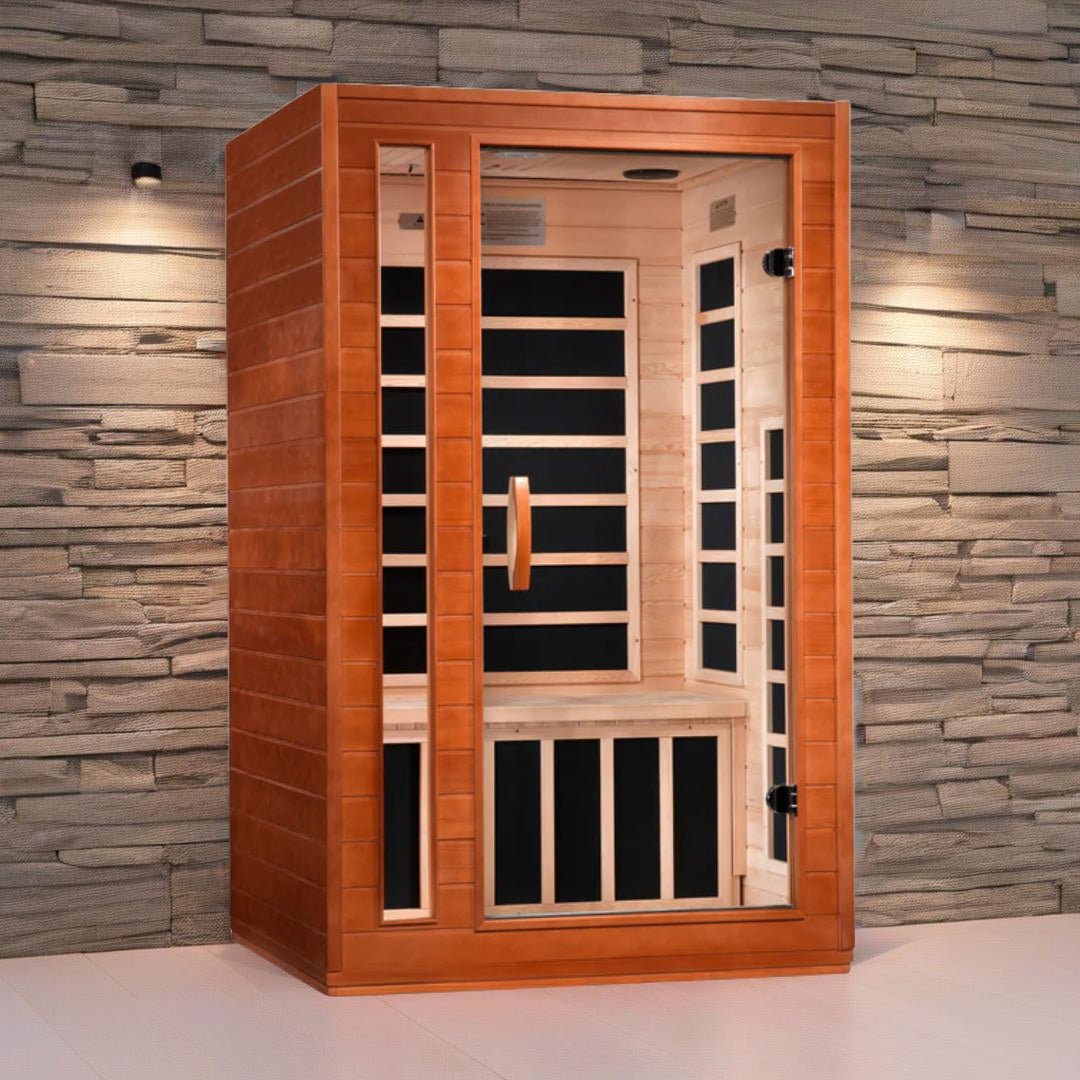
Recommended: Maxxus Seattle 2-person infrared sauna (compact footprint) represents typical specs for this category.
If 240V available or feasible:
-
Traditional electric sauna heaters become viable option
-
Higher peak temperatures and faster heat-up achievable
-
Professional electrical work required but performance gains significant
If neither 120V nor 240V dedicated circuits are feasible:
-
Explore portable saunas for tight footprints designed for specific outlet configurations
-
Verify any model's exact electrical requirements before purchase
Step 3: Steam Becomes Viable
Only proceed with steam if:
-
All Step 1 questions answered "yes"
-
Full bathroom remodel is planned or underway
-
Budget accommodates steam-specific construction premium
-
Maintenance commitment is realistic for household
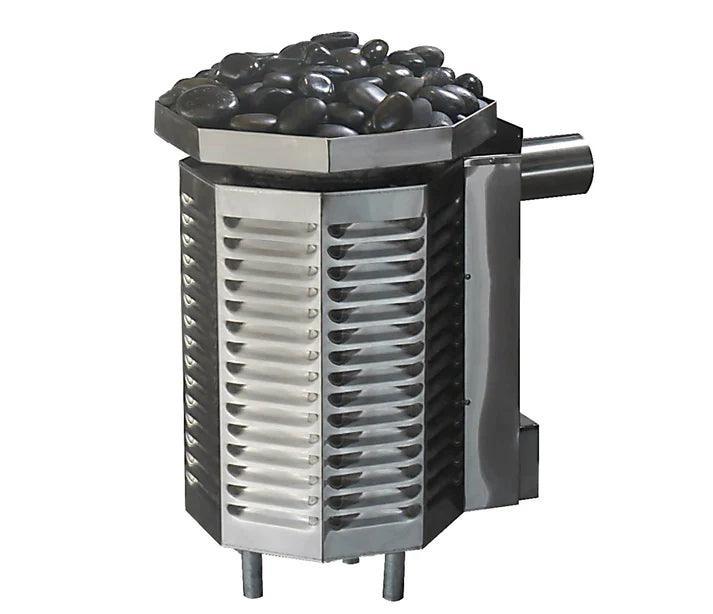
Product reference: Mr. Steam xDream steam shower generator shows typical residential specifications—note the electrical and plumbing requirements.
Decision Matrix Summary
|
Your Constraint Reality |
Practical Choice |
Why |
|
Small bath, standard construction, 120V-only accessible |
Compact infrared sauna |
Avoids moisture complexity; feasible electrical path |
|
Small bath, existing moisture/ventilation concerns |
Compact sauna (any type) |
Adding steam to struggling ventilation amplifies problems |
|
Small bath, planned full remodel, all systems upgraded |
Steam shower viable |
Only scenario where steam construction feasible |
|
Small bath, 240V available, no remodel planned |
Traditional compact sauna |
Better heat than IR; avoids steam construction scope |
|
Small bath, rental or resale concern |
Compact sauna |
Removable; less risk of moisture damage affecting value |
Edge Cases: When Steam is the Only Option (and Vice Versa)
Most small bathrooms follow one of the standard paths, but legitimate exceptions exist.
When Steam Makes Sense Despite Constraints
Scenario 1: Integrated shower-steam in planned gut remodel
If your bathroom is already being demolished to studs for unrelated reasons and:
-
Contractor is experienced in steam-room construction
-
All systems (waterproofing, ventilation, electrical) being upgraded anyway
-
Budget already accounts for premium tile and materials
-
You want combined daily shower and occasional steam in single footprint
Then steam integration becomes practical because the baseline construction work is happening regardless.
Scenario 2: Pre-existing steam-appropriate assemblies
Rare situations where:
-
Previous owner installed steam-rated substrate and vapor barrier but never added generator
-
Tile and enclosure meet steam specifications
-
Only generator and controls need addition
This dramatically reduces construction scope and risk.
When Compact Sauna is the Clear Winner
Scenario 1: Windowless bathroom with ventilation limitations
Small interior bathrooms where:
-
Existing fan performance marginal even for normal showers
-
Upgrading ductwork impractical due to building structure
-
Adding humidity load unacceptable risk
Dry sauna heat becomes safer default even if user prefers steam conceptually.
Scenario 2: Rental property or planned home sale
When:
-
Installation permanence is concern
-
Future owner preferences unknown
-
Moisture damage would harm resale value
-
Removable improvements preferable
Compact sauna can be relocated or removed with modest bathroom repairs; poorly executed steam shower can actively harm property value.
Scenario 3: Extreme user height or comfort needs
For very tall users (over 6'2"):
-
Ultra-compact steam showers feel claustrophobic
-
Standard 6'4" sauna cabin height may be limiting
-
Custom sauna with 7-foot ceiling can be built within larger footprint
Conversely, for users who find heat therapy sessions challenging, having a separate sauna that can be exited easily may be preferable to being enclosed in steamy shower space.
Can You Use an Existing Shower Alcove for a Sauna?
Forum discussions show homeowners successfully building small saunas into former tub or shower bays, but success depends on:
-
Removing all drywall and replacing with appropriate materials (cement board or similar)
-
Respecting heater clearances to combustibles per manufacturer specifications
-
Providing adequate bench space despite constrained dimensions
-
Managing expectations about comfort in very compact builds
This approach works when the alcove offers roughly 3.5×5 feet and ceiling height sufficient for seated use. Users report that shoulder width and legroom become the practical limits even when heater and benches fit on paper.
Quick Answers: FAQ for Small Bathroom Wellness
1. Can I install a compact sauna if my bathroom only has a standard 120V outlet?
Only if you choose a sauna specifically rated for 120V operation and can dedicate that circuit. Many infrared models specify 120V but still require dedicated circuits—the sauna must be the only device on that breaker. Never share the circuit with hairdryers or other bathroom outlets. Traditional electric heaters and steam generators typically require 240V. Consult an electrician before purchasing any equipment.
2. Can a steam shower be added to my existing fiberglass shower stall?
Generally no, unless the manufacturer specifically rates that unit for steam environments. Steam enclosures require low-permeability waterproofing over appropriate substrates—gypsum board and many plastic assemblies are not approved. Most fiberglass-to-steam conversions require complete demolition and rebuild with steam-rated materials. Manufacturer instructions and local building codes take priority.
3. What's the minimum size for a usable compact sauna in a bathroom?
Many one- to two-person kits show interior dimensions around 3×4 feet (approximately 76 cubic feet) with slightly larger external footprints once wall thickness is added. Going significantly smaller often compromises comfort. Bench widths around 18–20 inches are common. Very narrow cabins feel cramped for larger users, particularly those with broad shoulders. Always confirm the manufacturer's minimum volume matches their heater specifications.
4. Is a steam shower safe in a small, windowless bathroom?
Only if ventilation and waterproofing are upgraded to steam-room standards. This requires an exhaust fan verified ducted to building exterior (not attic or soffit) and sized for high humidity loads, plus full vapor barrier and waterproof membrane throughout the enclosure. Small windowless bathrooms with marginal ventilation are high-risk environments for steam without comprehensive upgrades. Professional design review is strongly recommended.
5. Which is easier to maintain: steam shower or compact sauna?
A compact sauna generally requires less frequent and less intensive maintenance. Steam showers need weekly cleaning and squeegeeing of all surfaces to prevent mold, periodic descaling of the generator (frequency depends on water hardness), and drain maintenance. Saunas mostly need occasional bench wiping and heater inspection. The reduced moisture exposure limits mold opportunities and ongoing upkeep demands.
6. How much ceiling height do I need for a steam shower?
Target 7–8 feet. Steam generators are sized for room volume; ceilings above 8 feet require larger, more expensive generators to heat the increased space effectively. Design guidance often recommends avoiding unnecessarily high ceilings to limit volume. Some jurisdictions set bathroom minimum heights at 6'8" by code. Taller spaces must be carefully sized per manufacturer specifications to avoid poor performance.
7. Do I have to slope the ceiling in a steam shower?
Slope is commonly recommended at 1–2 inches per foot to prevent condensation from dripping onto occupants, though guidance varies. Many industry resources and building standards specify slope requirements. Some manufacturers note sloping may be unnecessary for short residential sessions. Conservative approach: follow slope recommendations unless your specific generator manufacturer explicitly states otherwise for your usage pattern. Discuss detailing requirements with your designer and verify local code requirements.
8. Will a compact sauna make my small bathroom too humid?
Saunas add some humidity but typically much less than steam showers. Heat is dry; moisture primarily comes from occupant perspiration and occasional water use on rocks (traditional saunas). Well-sealed cabin doors and walls limit vapor escape during sessions. Standard bathroom fans usually handle sauna-related humidity better than steam loads. Keep normal fan use after sessions and allow brief door-open periods to clear any accumulated moisture.
9. Is a steam shower more expensive to install than a compact sauna?
In most cases, yes. Steam showers require extensive construction: tile, waterproofing membranes, vapor barriers, generator, controls, drainage, and often structural modifications. Multiple trades must coordinate work, and improper installation leads to costly failures. Compact sauna kits largely assemble above existing floors with electrical work being the primary trade requirement. Plumbing costs are usually zero for saunas. Total project cost depends on scope, but steam construction complexity typically exceeds sauna installation.
10. Can I put a small sauna inside my existing shower enclosure?
Only with significant modifications. Strip all drywall and unsuitable finishes; sauna environments require appropriate backing materials. Respect heater clearances to combustibles per manufacturer specifications. Existing shower drains can potentially be reused, but bench layout must support safe seated use. Most off-the-shelf shower enclosures are not designed as sauna shells. Verify local codes regarding mixed-use enclosures and ensure all materials meet safety requirements.
11. Which option is better if I worry about resale or future buyers?
A properly built steam shower can appeal to some buyers, but poorly executed installations with moisture damage actively hurt resale value. Compact saunas can often be removed or relocated with modest bathroom repairs if future owners are uninterested. Quality and documentation of installation matter significantly. Buyer preferences vary by local market—luxury markets may value steam; practical buyers may prefer lower-risk improvements.
12. Does a steam shower need its own drain or special plumbing?
Yes. Steam generators discharge water during operation and cleaning cycles, requiring proper drainage. Installations typically specify trap requirements and sometimes air gaps to prevent backflow or odors. Design errors in drainage can cause leaks or smell issues. Plumbing codes and manufacturer manuals specify these requirements—follow them exactly. Compact saunas avoid these plumbing complexities entirely.
13. If my budget is under $5,000, which is more realistic?
While exact costs vary by region and scope, compact saunas are generally more achievable under tight budgets than full steam-shower conversions. Steam requires demolition, tile, membranes, generator, controls, and coordination of multiple trades. Compact sauna kits bundle materials and reduce labor scope significantly. Electrical work is often simpler, especially for infrared models on 120V circuits. Hidden repair risks from improper steam installation can exceed initial budgets.
14. If I want quick daily sessions, which is more practical in a small bathroom?
A compact sauna is usually more plug-and-play for short daily use. Infrared saunas heat relatively quickly (15–30 minutes to operating temperature). Steam showers require generator warm-up and post-session drying of the entire enclosure. Managing moisture after each steam session adds time and effort. Saunas create less moisture impact on the rest of the bathroom, reducing daily maintenance burden.
15. What should I check first before choosing between steam and sauna?
Start with electrical capacity, ventilation performance, and wall/ceiling construction—these determine what's safe before considering preferences. Verify available circuits and whether 240V work is feasible. Confirm bathroom fan ducting routes to building exterior and test current performance (bathroom should dry within 30 minutes after normal shower). Identify whether your shower area uses appropriate substrates or includes drywall/gypsum. Only after establishing these baseline safety factors should you weigh space, budget, and wellness goals.
16. How long does a steam shower generator typically last?
Generator lifespan varies with water quality, usage frequency, and maintenance adherence. Hard water accelerates mineral buildup and reduces longevity. Manufacturers often estimate 10–15 years with proper maintenance, but neglected units can fail much sooner. Regular descaling per manufacturer schedule is critical. Replacement costs for generators range from $1,500–$4,000+ depending on capacity, making maintenance compliance financially important.
17. Can I convert between options later if I change my mind?
Converting steam shower to sauna requires removing steam equipment and potentially modifying the tiled enclosure to accommodate sauna footprint—feasible but not simple. Converting sauna location to steam shower requires full steam-rated construction from scratch in that space. Practically, treat either choice as a long-term commitment. If uncertain, the lower-risk option (compact sauna in most scenarios) provides more flexibility.
18. Do building codes require permits for these installations?
Requirements vary by jurisdiction. Most localities require permits for:
-
Electrical work (dedicated circuits, panel modifications)
-
Plumbing work (steam generator connections, drainage)
-
Structural modifications (if demolition extends beyond finishes)
Steam shower installations typically trigger more comprehensive permit requirements due to their complexity. Sauna electrical work usually requires permits even if the kit assembly does not. Consult your local building department early in planning. Operating without required permits can create liability issues and complicate future home sales.
19. What happens if I don't maintain a steam shower properly?
Neglected steam showers develop predictable problems:
-
Mineral deposits clog generator and spray heads, reducing performance
-
Mold and mildew colonize surfaces and seals despite initial waterproofing
-
Drainage issues create standing water and odors
-
Generator components fail prematurely
-
Tile and grout deteriorate faster under sustained moisture
Remediation often requires full teardown and rebuild if moisture has penetrated wall cavities. Prevention through consistent maintenance is dramatically cheaper than fixing deferred-maintenance failures.
20. Are there health conditions where steam or sauna is preferred?
Consult healthcare providers for individual circumstances. Generally:
-
Moist heat (steam) may feel more comfortable for some respiratory conditions, though clinical evidence for home installations is limited
-
Dry heat (sauna) may be preferable for users sensitive to humidity or with certain skin conditions
-
Both require caution for cardiovascular conditions, pregnancy, or medication interactions
Health benefits should not override safety and feasibility constraints when deciding what's practical for your small bathroom. Choose the option your space can support safely, then use it appropriately for your health status.
21. Can I use my steam shower or sauna every day?
Frequency depends on personal tolerance and medical clearance. Many users safely enjoy daily sessions. Practical considerations for daily use in small bathrooms:
-
Steam: Daily sessions mean daily post-use drying and more frequent generator descaling
-
Sauna: Daily use has minimal impact on maintenance schedule beyond normal cleaning
-
Both: Ensure hydration and monitor for any adverse responses
Daily use intensifies the maintenance burden for steam significantly more than for saunas.
22. What if my bathroom is in a basement or lower level?
Basement bathrooms present additional moisture challenges:
-
Below-grade locations already prone to humidity
-
Exterior ventilation routing may be more complex
-
Cold concrete walls can create condensation on steam-shower exterior surfaces
-
Adequate drainage critical (generator discharge, floor drains)
Steam showers in basements require especially careful ventilation design and dehumidification strategy. Saunas face fewer moisture issues but still need proper electrical and adequate ventilation for the overall basement space.
23. Should I worry about wood rot in saunas in humid bathrooms?
Quality sauna wood (cedar, hemlock) has natural moisture resistance, but prolonged exposure to bathroom humidity outside of sauna sessions can accelerate wear. Mitigation strategies:
-
Ensure bathroom ventilation works well overall
-
Avoid installing sauna against exterior walls where condensation likely
-
Consider saunas with factory-finished surfaces for added protection
-
Inspect regularly for any signs of deterioration
Saunas generate far less humidity than steam showers and typically handle bathroom environments well with basic care.
24. How do energy costs compare between steam and sauna?
Both options consume several kilowatts during operation. Typical usage:
-
Steam generators: 6–12 kW depending on room size
-
Traditional sauna heaters: 4.5–9 kW depending on cabin size
-
Infrared saunas: Often 1.5–3 kW (lower power but longer warm-up)
Actual costs depend on:
-
Local electricity rates
-
Session frequency and duration
-
Insulation quality and heat loss
-
Equipment efficiency
For typical home use (3–5 sessions per week, 20–40 minutes each), monthly costs usually range $20–$60 regardless of technology. Up-front construction costs and failure risk are more significant practical considerations than operating costs.
Understanding the differences between traditional and infrared saunas can help you make better energy and performance trade-offs when choosing equipment.
25. What about noise—will either option disturb household members?
Steam showers:
-
Generator hum during operation (usually located remotely from shower)
-
Hissing sound as steam enters enclosure
-
Fan noise if exhaust runs during session
Saunas:
-
Traditional heaters are silent except for occasional thermal expansion sounds
-
Infrared panels are completely silent
-
Portable fans (if used) create minor noise
Neither option creates significant household noise concerns when properly installed. Generator location can be chosen to minimize sound transmission.
For homeowners considering upgrading their bathroom into a wellness sanctuary, exploring luxury home sauna options can provide inspiration for what's possible beyond basic installations.
Real-World Constraints & Numbers That Matter
Steam Shower Critical Thresholds
-
Ceiling height target: ≤8 feet for optimal generator efficiency
-
Membrane perm rating: ≤0.5 for effective vapor barrier
-
Ceiling slope (when specified): 1–2 inches per foot for condensation management
-
Minimum bathroom ceiling height: 6'8" in many jurisdictions (code-dependent)
-
Typical generator power: 6–12 kW for small residential installations
-
Electrical requirement: Usually dedicated 240V circuits, 30–50A depending on generator
-
Maintenance frequency: Weekly cleaning recommended; monthly to quarterly descaling depending on water hardness
Compact Sauna Critical Thresholds
-
Minimum interior footprint: ~3×4 feet for marginal single-person use; 4×4 feet more comfortable
-
External footprint (typical kit): ~3'8"×4'8" for 3×4 interior dimensions
-
Standard cabin height: 6'4" to 7 feet
-
Typical IR sauna power: 1.5–3 kW for compact models
-
Typical traditional heater power: 4.5–6 kW for small cabins
-
Electrical requirement: Dedicated circuits sized to equipment; many IR units on 120V, traditional often 240V
-
Bench width minimum: ~18–20 inches for seated comfort
-
Heater clearances: Per manufacturer specifications, typically 3–6 inches to combustibles
Ventilation Performance Indicators
A properly functioning bathroom ventilation system should:
-
Clear visible mirror fog within 5–10 minutes after shower
-
Eliminate surface condensation within 30 minutes
-
Prevent persistent damp feeling in bathroom
-
Route directly to building exterior through insulated ductwork
If your bathroom doesn't meet these basic thresholds for normal shower use, it cannot safely support steam without upgrades.
Myths & Misconceptions
Myth 1: Any existing shower can be converted to steam by adding a generator
Reality: Steam requires full vapor-barrier systems, steam-appropriate substrates, and proper ceiling detailing. Standard showers with gypsum board backing, non-rated enclosures, or inadequate vapor control cannot simply add steam equipment. Attempting this creates conditions for hidden moisture damage and mold growth behind finishes. Steam-room construction follows different standards than regular shower construction.
Why it persists: Marketing materials and generator product pages show simple-looking installations without emphasizing the underlying construction requirements.
Myth 2: If my regular shower doesn't cause mold, steam won't either
Reality: Steam's dramatically higher humidity levels and session duration greatly increase vapor pressure driving moisture into wall and ceiling assemblies. Systems that adequately handle 10-minute showers can fail under 20–40-minute steam sessions. Marginal assemblies that survive typical shower conditions often develop problems when exposed to sustained steam.
Why it persists: Users extrapolate from limited shower experience without understanding the magnitude of humidity difference.
Myth 3: All bathroom fans are adequate for steam
Reality: Many bathroom fans are undersized, poorly ducted, or not vented to building exterior. Some route to attic spaces or soffit vents rather than true exterior discharge. Fans that struggle to clear normal shower fog cannot handle steam loads. Upgrading ventilation is often a prerequisite for safe steam installation.
Why it persists: Fans are hidden systems that homeowners rarely inspect or evaluate until problems appear.
Myth 4: Compact saunas that fit dimensionally will feel comfortable for anyone
Reality: Bench depth, shoulder clearance, and leg room become limiting factors in very compact builds regardless of whether the rectangular footprint technically accommodates the heater. Users over 6 feet tall or with broad shoulders frequently report cramped conditions in minimum-size cabins even when dimensions meet published specifications.
Why it persists: Buyers focus on external measurements and advertised capacity without considering ergonomics or testing the space.
Myth 5: Plug-in infrared saunas work with any standard outlet
Reality: Many infrared models require dedicated circuits even when rated for 120V operation. Sharing circuits with other bathroom devices (hairdryers, outlets) creates overload risk and tripped breakers. "Standard outlet" marketing can obscure the requirement for dedicated, properly sized circuits and professional electrical verification.
Why it persists: Visual compatibility (plug fits outlet) suggests functional compatibility, which may not be true.
Myth 6: Ceiling slope in steam showers is irrelevant or purely cosmetic
Reality: Industry guidance commonly recommends 1–2 inches per foot slope to prevent condensation from dripping onto occupants during longer sessions. While some manufacturers note slope may be unnecessary for brief use, condensation management remains a practical concern. Different sources provide mixed guidance, but treating slope as optional has led to user complaints in some installations.
Why it persists: Manufacturers balance construction complexity against typical residential usage patterns, creating inconsistent recommendations.
Myth 7: Fiberglass or acrylic shower enclosures are acceptable for steam
Reality: Many plastic enclosures lack the sealed joints, vapor resistance, and material ratings required for steam environments. Steam-shower guidelines typically specify tile over appropriate substrates with continuous vapor barriers. Using non-rated enclosures risks manufacturer warranty voidance and creates moisture infiltration pathways.
Why it persists: Visual similarity between enclosed showers and steam rooms suggests functional equivalence that doesn't exist.
Myth 8: Steam showers always increase home resale value
Reality: Well-executed steam showers may appeal to some buyers, but poorly constructed installations with moisture damage actively harm resale value. Quality and condition matter more than presence of steam capability. Buyer preferences vary significantly by market and demographic. A removable sauna may be lower risk if future ownership is uncertain.
Why it persists: Association of steam with luxury spa amenities without accounting for execution quality and maintenance state.
Myth 9: Steam showers don't need more maintenance than regular showers
Reality: Steam showers require more frequent cleaning to prevent mold, consistent squeegeeing after sessions, periodic generator descaling, and careful drainage maintenance. The sustained high humidity and mineral accumulation create maintenance demands beyond standard shower upkeep. Neglect accelerates problems and equipment failures.
Why it persists: Underestimation of ongoing ownership responsibilities when making purchase decisions.
Myth 10: All saunas are energy hogs compared to steam
Reality: Both technologies consume several kilowatts during operation. Actual operating costs depend on session duration, frequency, and equipment efficiency rather than technology type. While traditional sauna heaters may draw more instantaneous power than some infrared units, total energy consumption is driven by usage patterns, not just equipment specifications.
Why it persists: Generalization from commercial spa equipment to residential installations without accounting for usage differences.
Experience Layer: What Homeowners Actually Encounter
Common Steam Shower Challenges in Small Bathrooms
Homeowners with steam installations in small bathrooms frequently report heavy ceiling and wall condensation even with fans running. Moisture lingers long after sessions end, and some describe "raining ceilings" where condensation drips persistently. These problems intensify when exhaust fans are undersized or run times are too brief.
Older homes present particular challenges when homeowners discover bathroom fans that recirculate air or vent into attics rather than directly outdoors. This creates hidden moisture accumulation in building cavities that only becomes apparent when finishes fail or inspection reveals dampened insulation.
Steam shower owners report maintenance demands exceeding initial expectations. Rusted fan housings, corroded light fixtures, and mineral buildup in generators and spray heads appear when cleaning and descaling routines are inconsistent. The consequence of deferred maintenance is expensive remediation rather than simple catch-up cleaning.
Several contractors note that steam shower projects frequently reveal construction shortcuts in failed installations: drywall used where cement board was required, missing or inadequate vapor barriers, and improper ceiling slope leading to uncomfortable dripping. These errors often surface months or years after installation when moisture damage forces teardown and rebuild.
Compact Sauna Planning Experiences
DIYers planning small saunas in bathroom spaces emphasize maximizing ceiling height and carefully evaluating bench layouts before finalizing designs. Forum discussions consistently highlight the need to remove drywall entirely and verify appropriate backing materials even when space seems structurally adequate.
Prospective buyers of very compact saunas worry about cramped conditions, and user reviews often validate these concerns. Shoulder width and leg room matter more than expected; saunas that fit dimensionally can feel uncomfortably tight for larger adults. Several users note they would have chosen slightly larger footprints if space had allowed.
Some homeowners report rarely using steam showers due to the burden of drying the enclosure and managing residual humidity throughout the bathroom. They describe choosing saunas in subsequent homes specifically because dry heat creates less ongoing maintenance friction. Simple saunas see more consistent use when the barrier to starting a session is lower.
Successful small-sauna projects in bathroom alcoves emphasize reusing former tub or shower locations where footprint space exists without conflicting with other fixtures. These builders stress that getting heater clearances correct and managing user expectations about "cozy versus cramped" dimensions are critical to satisfaction.
Electrical issues appear frequently in sauna installation experiences. Homeowners assume existing outlets are adequate only to experience tripped breakers or discover during professional inspection that circuits are shared and undersized. This forces unexpected electrical upgrades mid-project.
Failure Patterns Across Both Options
The most common failure modes involve mismatches between system requirements and existing bathroom conditions:
-
Bathroom fans assumed adequate prove poorly ducted or underpowered
-
Electrical circuits thought sufficient cannot handle sustained equipment loads
-
Construction assemblies believed waterproof contain gypsum or inadequate vapor control
-
Compact layouts that "fit" mathematically create daily usability frustration
Contractors emphasize that steam shower construction demands specialization. General tile setters without steam-specific training often miss critical detailing around penetrations, slope requirements, and membrane continuity. The results become expensive remediation projects.
Budget-driven shortcuts consistently appear as problem sources in steam installations. Attempts to add steam capability to existing non-compliant enclosures, skip proper membrane layers, or avoid ventilation upgrades create conditions for hidden damage. The cost of correcting these shortcuts exceeds doing the work properly initially.
Sources
The evidence supporting this decision guide comes from multiple categories of sources:
Building codes and municipal guidance:
-
Woodside, CA "Residential Bathrooms Requirements" (municipal building code guidance on steam-shower construction, ceiling heights, vapor barriers, waterproofing, GFCI requirements)
Industry standards and manufacturer guidance:
-
Louisville Tile, "Steam Shower Installation" (2024)
-
wedi Corp., "Introduction to Steam Rooms and Steam Showers" (2022)
-
Delta Faucet, "How to Build a Steam Shower" (2025)
-
SpecialtyHardware.net, "Best Practices Installation of a Steam Shower" citing MrSteam guidance (2024)
-
Decorative Materials, "Steam Shower Tile Considerations" (2023)
-
ArtofSteamCo, "Construction Guidelines for a Steam Shower" (2024)
Product manufacturers:
-
Cedarbrook Sauna, "Custom 3x4 Indoor Home Sauna Kit / Freestanding Pre-Fab Modular" (2025)
-
Nordica Sauna, "3 Person Infrared Saunas" (2023)
Contractor risk analyses:
-
Phoenix Home Remodeling, "What Are Common Problems With Steam Showers?" (2025)
-
Houston Remodeling Contractors, "Common Problems with Home Steam Showers" (2025)
User experience forums (anecdotal patterns):
-
Houzz, "Steam showers and mold" discussion (2013)
-
Reddit r/HomeImprovement and r/Homebuilding threads on steam shower condensation and ventilation issues (2017–2025)
-
Reddit r/Sauna threads on compact sauna planning and small indoor installations (2024–2025)
Source quality notes:
No peer-reviewed clinical trials directly comparing home steam showers versus compact saunas under small-bathroom building constraints were located. Evidence base consists primarily of building-science and construction guidance, manufacturer specifications, contractor problem analyses, and anecdotal user experiences. Forum discussions provide pattern recognition for common failures but should not be treated as controlled data.
Building code references are jurisdiction-specific; homeowners must verify requirements with local building departments.
What We Still Don't Know
Evidence Gaps That Affect Decision Confidence
Ventilation specification uncertainty:
Authoritative CFM recommendations specifically for residential steam showers in small bathrooms are inconsistent across sources. While mechanical code provides baseline bathroom ventilation rates, steam-specific guidance would improve installation decisions. Current practice relies on performance-based assessment (does the space dry quickly?) rather than definitive numerical targets.
Long-term satisfaction comparisons:
No controlled studies track homeowner satisfaction with steam versus sauna choices in small-bathroom contexts over multi-year periods. Anecdotal reports suggest maintenance burden drives satisfaction more than heat-type preference, but quantitative data is absent.
Resale value impact:
Market-specific data on how steam showers versus saunas affect home values in different price segments and regions is limited. Generalizations about "luxury appeal" versus "practical improvement" remain largely unsupported by transaction analysis.
Cost multiplier precision:
While steam shower construction clearly involves more trades and materials than compact sauna installation, published cost comparison data for small-bathroom scenarios specifically is sparse. Regional variation and project scope differences make national averages unreliable.
Health outcome differences:
Clinical evidence for home-use steam versus sauna effects on specific health conditions remains limited. Most research involves controlled spa or clinical settings with standardized exposure protocols that differ from typical home usage patterns.
Failure rate quantification:
While contractor reports and user forums identify common steam-shower problems, no systematic data exists on what percentage of installations in small bathrooms experience moisture damage or require remediation. This makes risk assessment imprecise.
Where Mixed Evidence Creates Uncertainty
Ceiling slope requirements:
Sources vary on whether slope is mandatory versus optional depending on usage patterns. Some manufacturer guidance emphasizes slope strongly; other sources note it may be unnecessary for brief residential sessions. No consensus standard exists.
Minimum sauna footprint comfort:
While 3×4 feet appears frequently in compact kit specifications, user comfort at this dimension varies significantly with body size. No standardized ergonomic guidelines exist for "minimum comfortable" versus "technically functional" sauna dimensions.
Electrical circuit sharing safety:
While dedicated circuits are consistently recommended, the actual failure rates or safety incidents from shared circuits for different equipment types are not publicly documented in ways that inform risk assessment precisely.
Practical Implications for Homeowners
Given these evidence gaps, conservative approaches become important:
-
Treat ventilation as performance-based rather than relying on specific CFM targets
-
Plan for steam-shower ceiling slope unless manufacturer explicitly confirms it's unnecessary for your specific generator and usage
-
Budget for full professional construction rather than assuming cost-savings from shortcuts
-
Test sauna dimensions physically before committing to ultra-compact builds
-
Verify all electrical work with licensed professionals rather than interpreting manufacturer specs independently
The decision framework provided emphasizes constraints and safety factors specifically because definitive outcome data is limited. When evidence is mixed or absent, the practical choice prioritizes options with lower failure consequences.
View More Articles
6 Simple Ways to Turbocharge Any Sauna Session (Without Staying Longer)
Red Light Therapy for Collagen: The Science-Backed Guide to Firmer Skin
Related Posts

Dynamic Santiago 2-Person Ultra Low EMF Sauna Review (Standard vs Elite): Is It Worth It?

Red Light Therapy for Collagen: The Science-Backed Guide to Firmer Skin

6 Simple Ways to Turbocharge Any Sauna Session (Without Staying Longer)

I Have Low Ceilings; What Sauna Styles and Heights Will Fit?

Sauna for Blood Pressure and Heart Health: The Complete Guide to Benefits, Safety, and Protocols

Low EMF vs Standard Infrared: What Actually Changes? The Buyer's Guide and Decision Framework
