



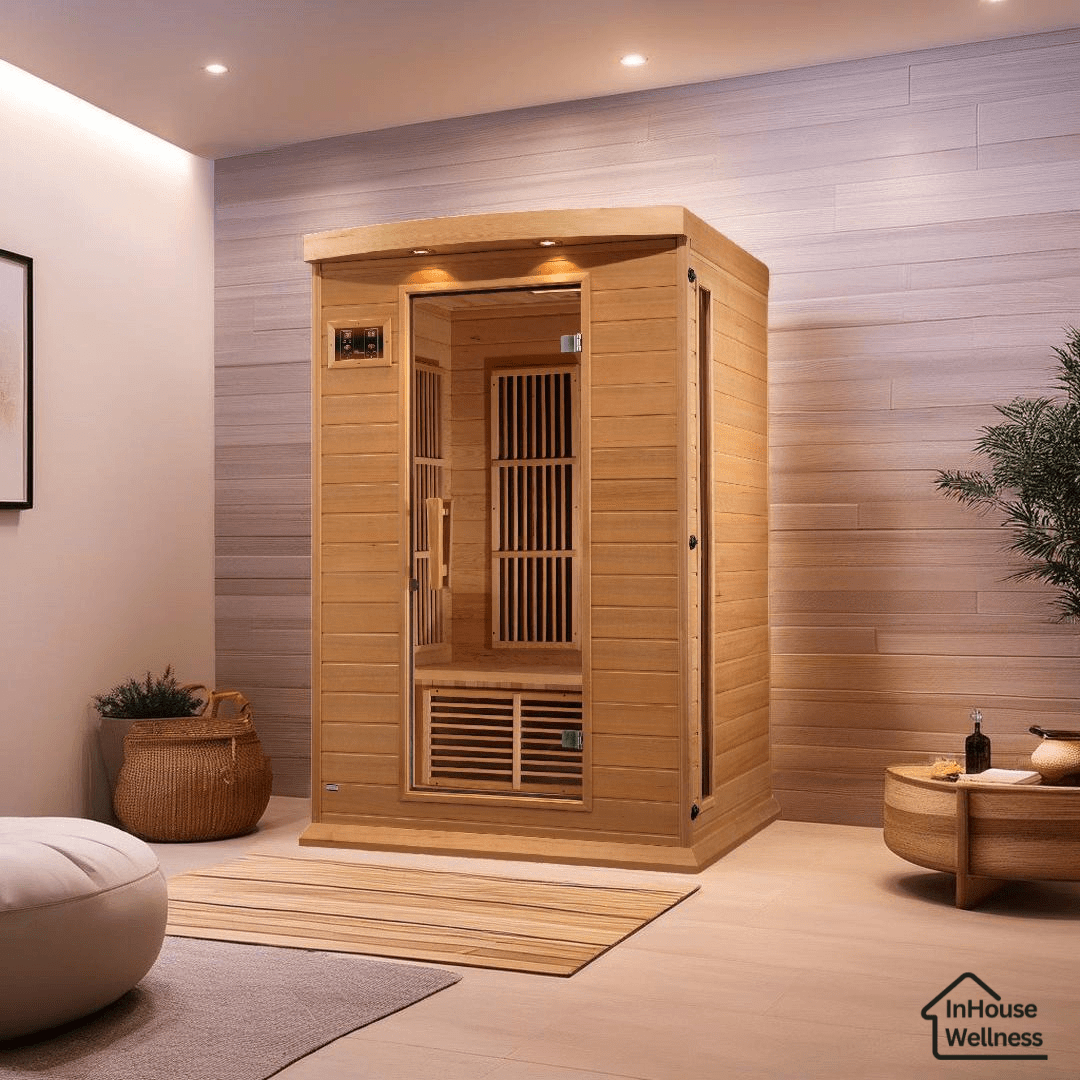
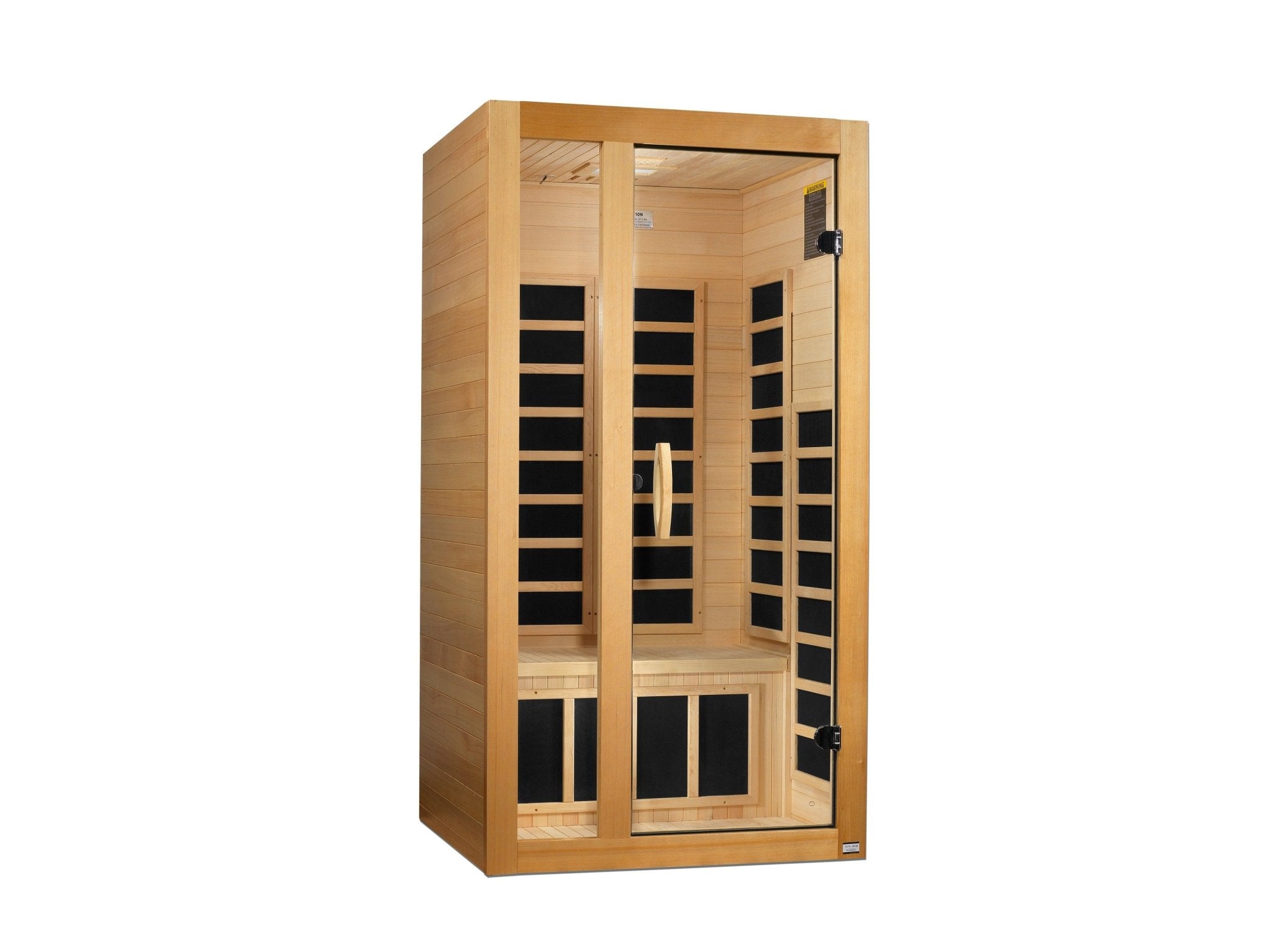

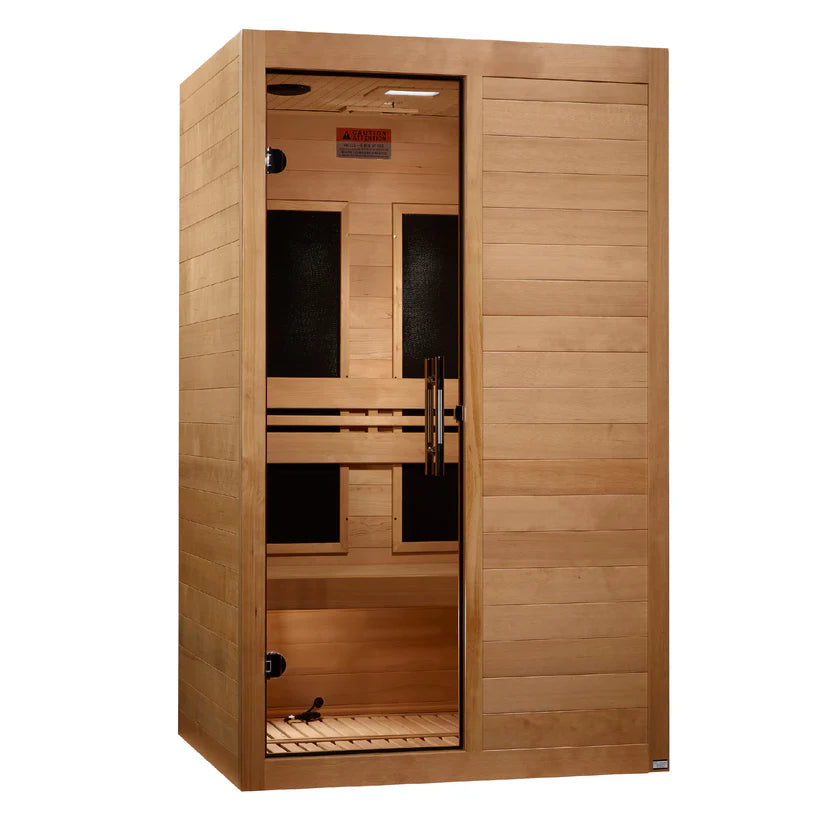
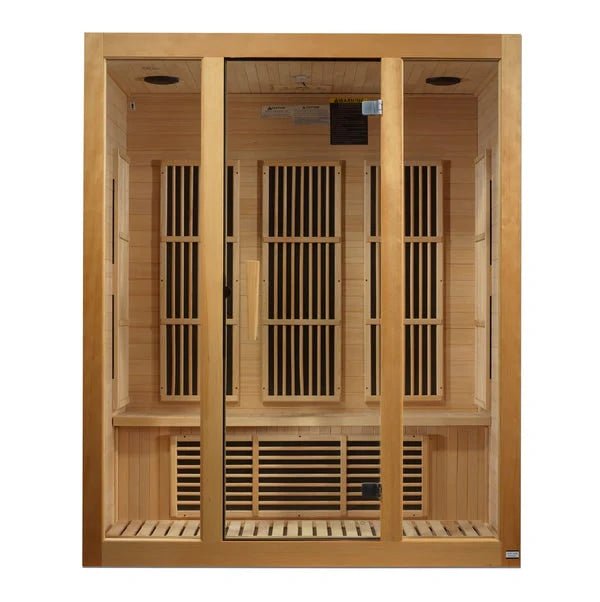
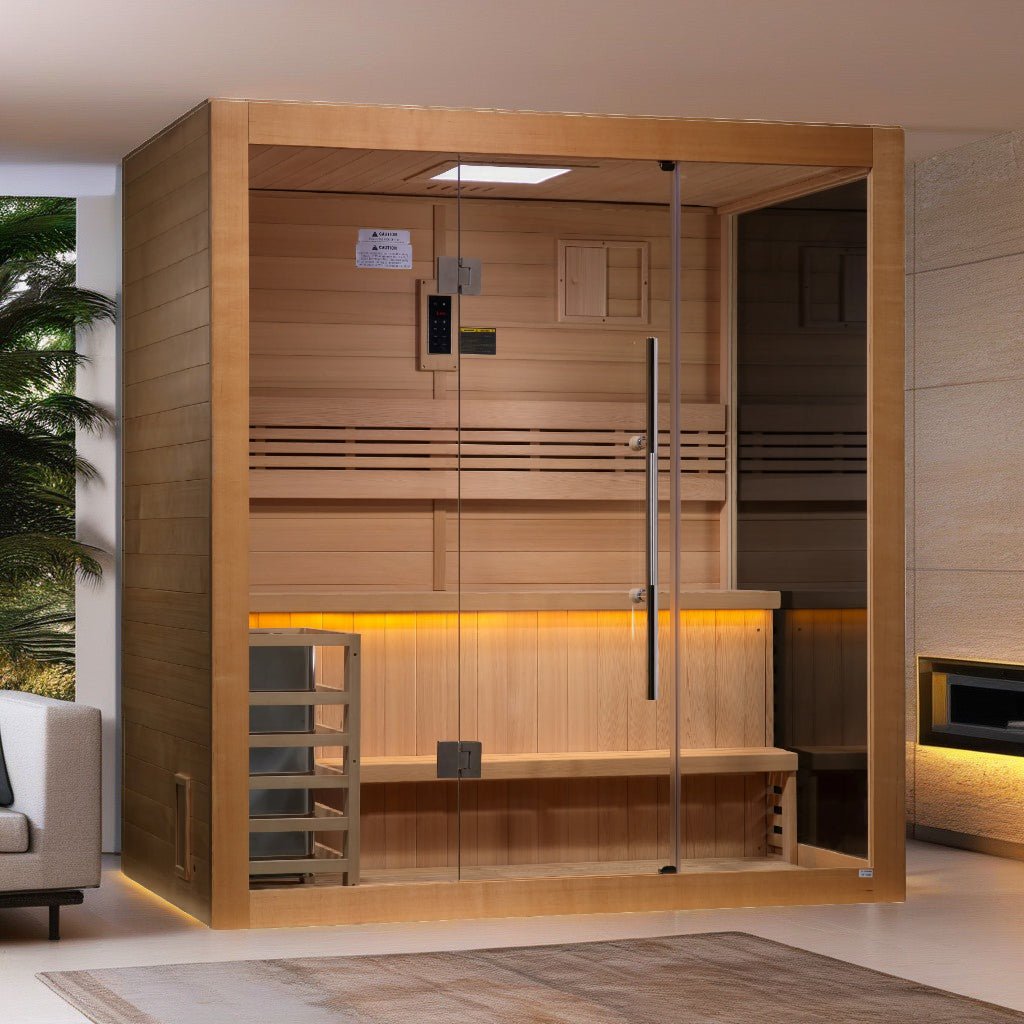
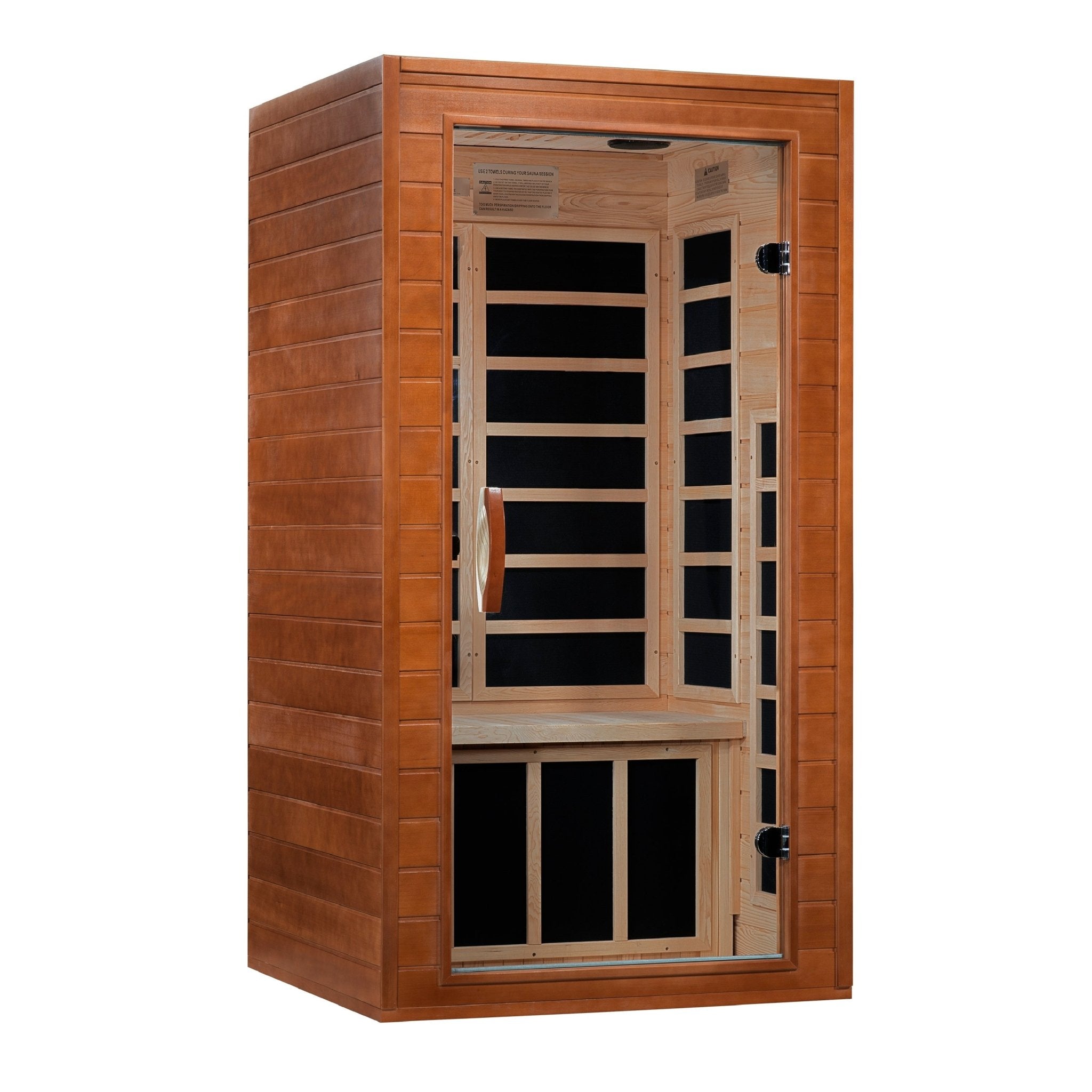
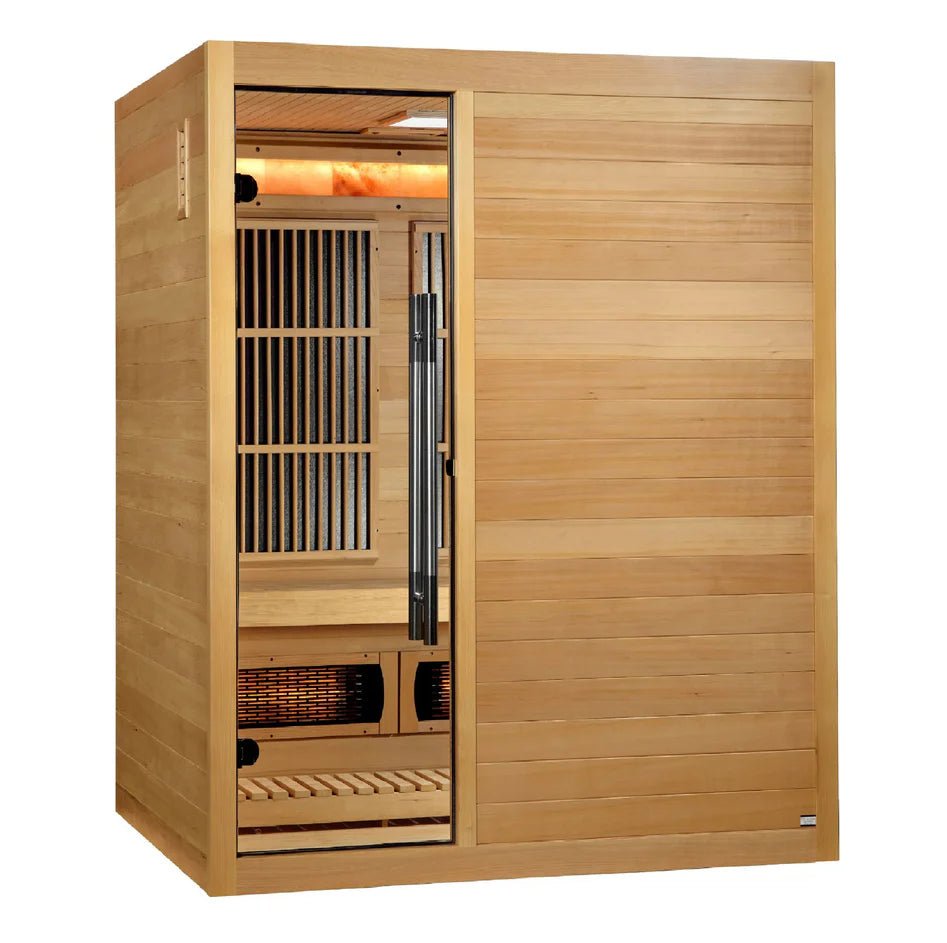



I Have Low Ceilings; What Sauna Styles and Heights Will Fit?
Your ceiling height determines which sauna paths are compliant and comfortable. The fastest way to choose is by height tier, heater manual requirements, and bench geometry—not guesswork or online anecdotes.
Minimum Heights by Sauna Type
Most home traditional saunas work best with 77–84 inch ceilings. If your finished height is 71–77 inches, only consider heaters explicitly listed for low ceilings (such as Saunum Air L at 71 inches minimum or Finnleo Himalaya SL2 from 75 inches). Below 71 inches, choose infrared or a different space.
Quick decision bullets:
-
77–84 inches (6'5"–7'0"): Standard traditional electric saunas are appropriate with conventional bench layouts.
-
71–77 inches (6'0"–6'5"): Only low-clearance-listed traditional systems or infrared; verify manual minimums and accept tight ergonomics.
-
Below 71 inches: Traditional saunas are generally inappropriate; compact infrared or relocation recommended.
-
Above 96 inches (8'0"): Reduce effective height with drop ceilings or raised floors to avoid stratification and inefficiency.
-
Basement installations: Require vapor barrier, insulation, and exhaust planning regardless of sauna type.
-
Always verify: Heater installation manuals are the hard authority for minimum ceiling heights and clearances—not forum builds or generic guides.
Table of Contents
-
What "Low Ceiling Sauna" Actually Means
-
Why the "Law of Löyly" Makes Low Ceilings Difficult
-
The Clearance Formula: How to Calculate If Your Room Will Work
-
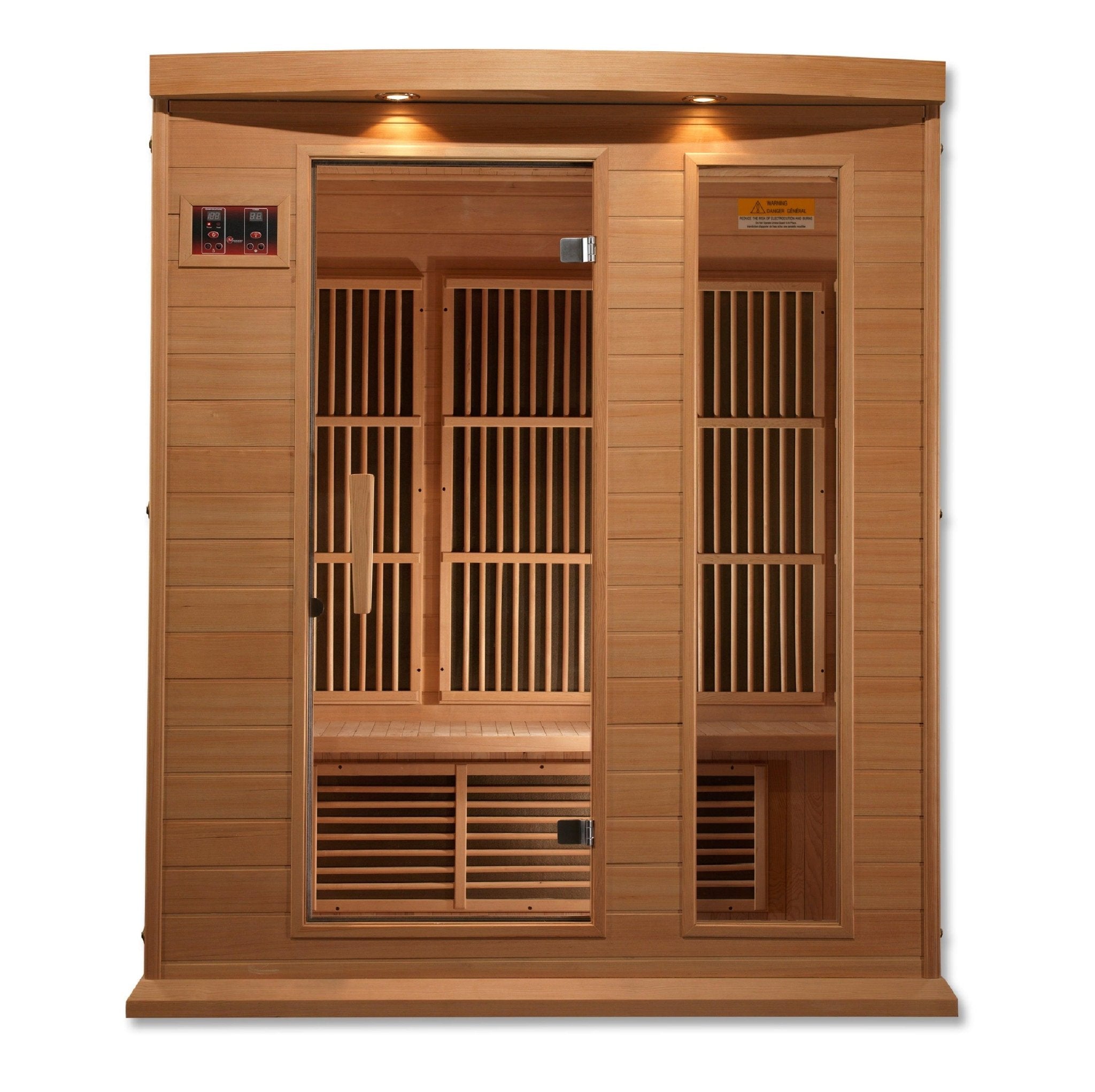
What Works: Traditional, Low-Profile, and Infrared Options
-
What Doesn't: Styles to Avoid Below 7 Feet
-
The Basement Risk: Moisture and Ventilation Requirements
-
Frequently Asked Questions
-
Sources
-
What We Still Don't Know
What "Low Ceiling Sauna" Actually Means

A low-ceiling sauna is any sauna room where the interior height falls below the typical 7-foot benchmark, often in basements or small conversions, where heater clearances and bench ergonomics become limiting factors rather than overall floor area.
Key terms you'll encounter:
-
Effective ceiling height: The interior measurement from finished sauna floor to finished ceiling. Drop ceilings or raised floors change this number, and it's what matters for compliance—not the structural height of the room.
-
Listed installation: A setup that follows the heater's tested and certified manual requirements for minimum ceiling height and clearances. These conditions are not optional; they're part of the safety certification.
-
Heater clearance: The minimum distances from the sauna heater to combustible materials and to the ceiling specified in installation manuals, often including approximately 44 inches of space above the heater for safe operation.
-
Stratification: The vertical temperature gradient in a sauna where hotter air accumulates near the ceiling and cooler air remains near the floor. This becomes more problematic in low rooms with poorly positioned benches.
Quick Height Tiers: Where You Stand
6'0–6'4" (72–76 inches):
Marginal for traditional even with specialty hardware. Infrared is more reliable. If pursuing traditional, only with systems explicitly listing 71–75 inch minimums (Saunum Air L starts at 71 inches; some tower heaters at 75 inches). Expect cramped ergonomics and potential cold-feet issues despite air mixing.
6'4"–6'8" (76–80 inches):
Low-clearance traditional becomes realistic with careful planning. Many low-profile heaters list minimums in this range. Bench-to-ceiling comfort requires attention. Infrared remains a strong, simpler alternative.
6'8"–7'0" (80–84 inches):
Standard traditional electric saunas are typically appropriate. This is the common "minimum permitted" range cited across North American suppliers and fits conventional bench formulas without special hardware.
7'0"+ (84+ inches):
Ideal range for traditional saunas. At 7 feet, benches can be positioned so feet are near rock level while leaving 3–4 feet to the ceiling. Above 96 inches, consider reducing effective height to avoid wasted energy and poor heat distribution.
Why the "Law of Löyly" Makes Low Ceilings Difficult
Low ceilings compress the heat layers; if benches can't place your body in the hotter zone, you'll often get cold legs and an overheated head—unless design or air-mixing devices mitigate it.
The "law of löyly" is a practical Finnish sauna guideline stating that a bather's feet should be at or above the level of the heater rocks so the whole body sits in the hotter air layer instead of leaving legs in cool air. This isn't a code requirement—it's a comfort heuristic that predicts experience quality.
Why it matters in low ceilings:
In a traditional sauna, hot air rises and cooler air settles near the floor. When ceiling height is limited, the vertical distance between the cool zone and the hot zone shrinks. If your benches must be positioned low to preserve headroom, your feet may remain in the cooler layer even when your head is uncomfortably hot.
Many homeowners with 6-foot to 6'6" ceilings report persistent cold feet despite long heat-up times and high thermostat settings. The issue isn't heater power—it's geometry. Turning up the temperature often just overheats the head without warming the legs effectively.
Mitigation strategies that help (but don't erase physics):
-
Tower or column heaters: Units like the Finnleo Himalaya SL2 stack rocks higher, which can help feet reach the warmer zone even when benches are lower than ideal.
-
Air-mixing climate devices: Systems such as the Saunum Air L use a fan to draw hot air from the ceiling and mix it with cooler floor air, smoothing temperature distribution. This can make low-ceiling layouts more comfortable but doesn't eliminate the need to meet listed clearances.
-
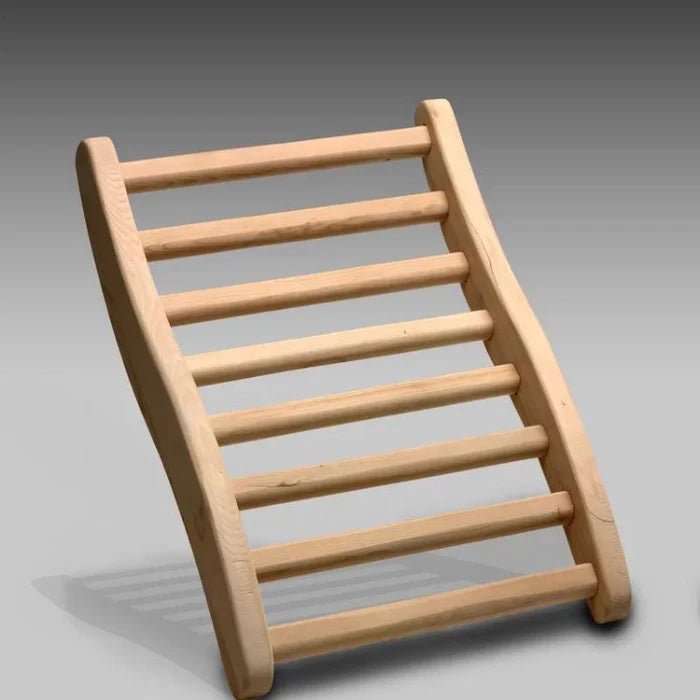
Footrests or raised platforms: Some builders add small foot platforms to lift legs above rock level when benches cannot be positioned high enough.
Setting realistic expectations:
If your ceiling forces benches so low that feet remain well below rocks, expect a compromised experience in a traditional sauna. Air mixing can reduce discomfort but won't transform a non-compliant or poorly proportioned room into an ideal sauna. Many people in this situation find infrared saunas sized for home installs more satisfying because radiant heating is less dependent on vertical air layering.
The Clearance Formula: How to Calculate If Your Room Will Work
If your measurements can't satisfy heater clearances and leave reasonable seated headroom (often framed as roughly 36–48 inches bench-to-ceiling), the room is the wrong candidate—choose a different path.
Step-by-step measurement process:
-
Measure finished ceiling height in multiple locations (floor to finished ceiling, not structural joists). Record the lowest measurement.
-
Obtain your heater's installation manual before purchasing. Identify the minimum ceiling height and the required clearance above the heater. For example, the Finnleo Himalaya SL2 specifies 75–96 inch ceiling range and requires approximately 44 inches clearance from heater top to ceiling.
-
Mark the heater clearance envelope. If your heater needs 44 inches above it, measure down 44 inches from your ceiling and mark that line. The heater top cannot rise above this line.
-
Plan bench heights. Builder guidance commonly targets maximum 4 feet (48 inches) between the upper bench and ceiling, with many preferring closer to 3 feet (36 inches) for comfort. Measure up from your planned bench seat surface to the ceiling—if this distance is less than 36 inches, taller users will feel cramped and may experience excessive head heat.
-
Check the math. Can you fit the heater below its clearance line AND position benches to give 36+ inches of seated headroom? If not, either the heater is wrong for the room or the room is wrong for a traditional sauna.
Worked Examples for Common Basement Heights
Example 1: 6'4" (76 inches) ceiling
-
Heater clearance requirement: 44 inches from top of heater to ceiling.
-
Maximum heater height: 76 – 44 = 32 inches to top of heater.
-
If top bench is 18 inches high (measured from floor), seated head position is roughly 18 + 44 = 62 inches off the floor.
-
Distance from bench to ceiling: 76 – 62 = 14 inches of clearance when seated.
-
Verdict: Extremely tight. Only feasible with a low-clearance system like Saunum Air L (minimum 71 inches) or an ultra-low height sauna designed for compact spaces. Traditional layout is marginal at best.
Example 2: 6'6" (78 inches) ceiling
-
Same 44-inch clearance: maximum heater top at 34 inches.
-
Top bench at 20 inches; seated head at roughly 64 inches.
-
Bench-to-ceiling: 78 – 64 = 14 inches.
-
Verdict: Still very tight but becomes workable with low-profile heaters explicitly rated for 75+ inch ceilings. Bench design must be carefully planned. Infrared remains simpler and more forgiving.
Example 3: 6'8" (80 inches) ceiling
-
44-inch clearance: heater top at 36 inches.
-
Top bench at 22 inches; seated head at approximately 66 inches.
-
Bench-to-ceiling: 80 – 66 = 14 inches.
-
Verdict: Low-clearance traditional is realistic with attention to bench spacing. Many installers would still prefer at least 77 inches for standard heaters, but this height opens more options. Review your sauna heater buying guide to match clearances and room volume correctly.
Critical reminder:
Do not "shave inches" off manufacturer clearances to make the numbers work. Clearances exist because they were tested as part of the heater's safety certification. Ignoring them voids the listing, may violate local code, and increases fire risk. If the math doesn't work, choose a different heater or a different room.
What Works: Traditional, Low-Profile, and Infrared Options
In low ceilings, your reliable options are: standard traditional (77–84 inches), listed low-ceiling traditional (71–77 inches), or infrared when height or geometry makes traditional unrealistic.
Standard Traditional Electric (77–84 inches)
Best for: Finished ceilings in the 6'5"–7'0" range who want a classic traditional experience without specialty hardware.
This is the most straightforward path. Many North American sauna guides cite 77 inches as the minimum permitted ceiling and 84 inches as typical or ideal. At 7 feet, conventional bench layouts work well, heaters have adequate clearance, and most users can sit comfortably with 3–4 feet between the bench and ceiling.
What you need:
-
Confirm your heater's installation manual permits your ceiling height (most standard electric heaters list 77–84 inch ranges as acceptable).
-
Plan bench positions so the top bench allows at least 36 inches to the ceiling when seated.
-
Size the heater correctly for room volume, accounting for material adjustments if you have glass doors or masonry walls.
Tradeoffs:
Even at 7 feet, poor bench design can still create stratification complaints. Follow the löyly principle where practical—position benches so feet are near or above rock level. If your ceiling is on the lower end of this range (closer to 77 inches), taller users may feel the space is tight.
Low-Clearance Traditional (71–77 inches)
Best for: Ceilings in the 6'0"–6'5" range who still want traditional but accept tighter tolerances and careful design.
This path requires heaters or systems explicitly engineered and listed for low-ceiling environments. Two well-documented examples:
-
Saunum Air L: Specified minimum ceiling height of 71 inches. This climate device integrates a fan and ducting to mix hot ceiling air with cooler floor air, reducing stratification. The unit itself is telescoping and adjustable from approximately 72 to 95 inches in height.
-
Finnleo Himalaya SL2: Listed for ceiling heights from 75 to 96 inches. This tower-style heater stacks rocks in a tall column and requires approximately 44 inches clearance from heater top to ceiling.
What you need:
-
Verify the specific model you're considering lists your ceiling height in its installation manual or specification sheet.
-
Confirm you can meet all clearance requirements (top, sides, and distance to benches).
-
Expect "tight" bench geometry—bench-to-ceiling spacing will be at the low end of comfort ranges.
Tradeoffs:
Even with air mixing or optimized heater design, very low ceilings compromise ergonomics for taller users. Some people in this height range report the experience as "good enough but compromised"—warm but with limited headroom or persistent cool spots at leg level. If comfort and traditional löyly are priorities, consider whether traditional vs infrared sauna better fits your constraints.
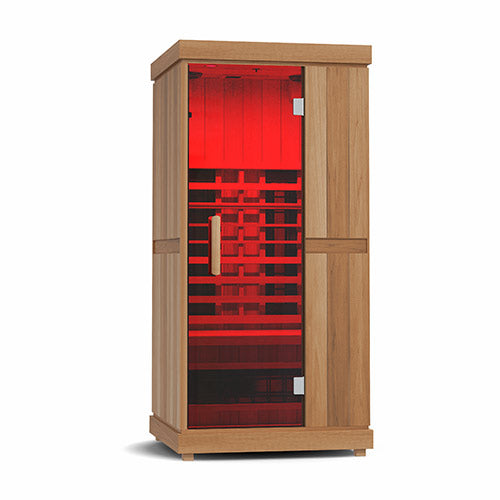
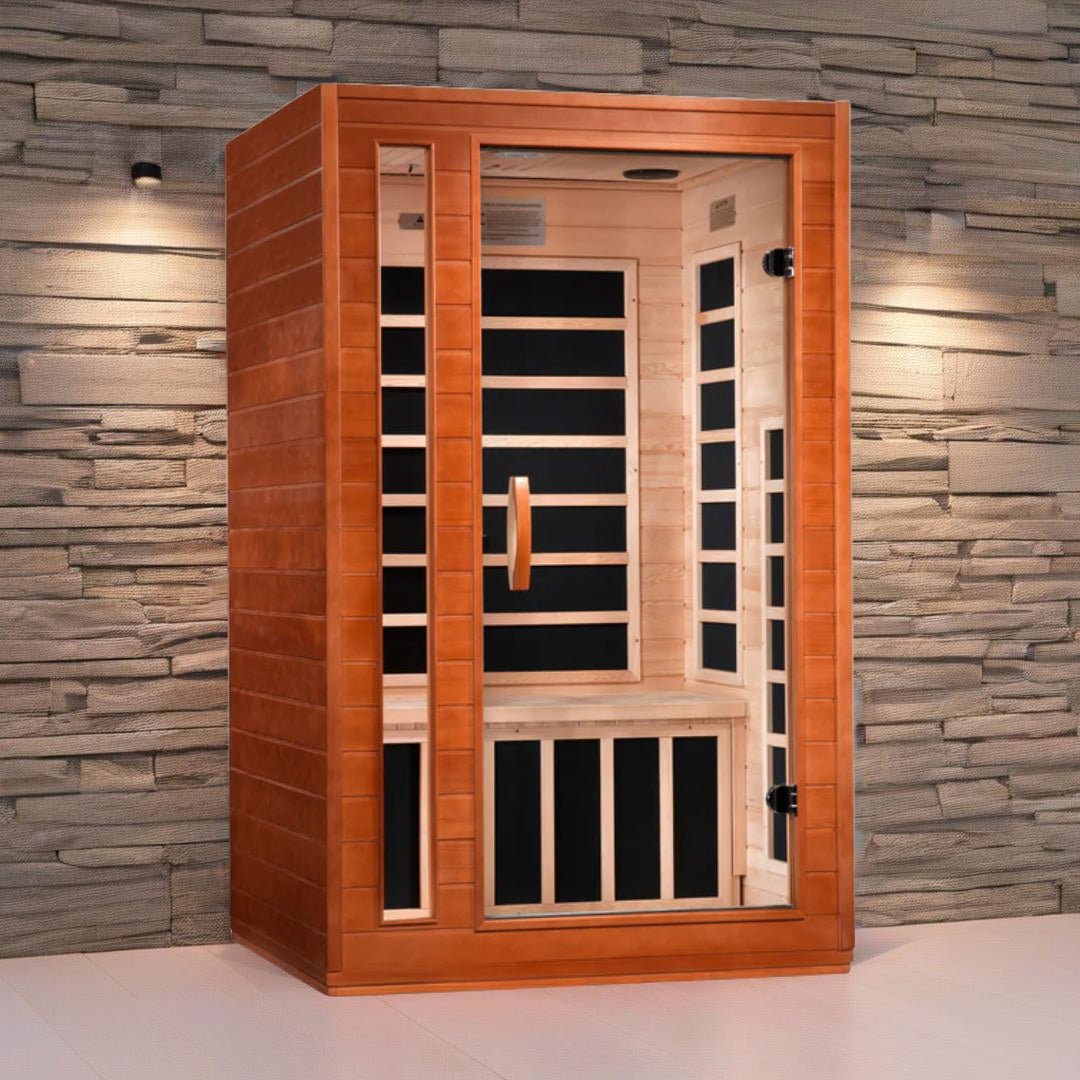
Infrared Saunas (Often 78+ inches, Sometimes Lower)
Best for: Ceilings below 77 inches where traditional geometry becomes impractical, or anyone prioritizing "it fits and it works" over classic convective heat dynamics.
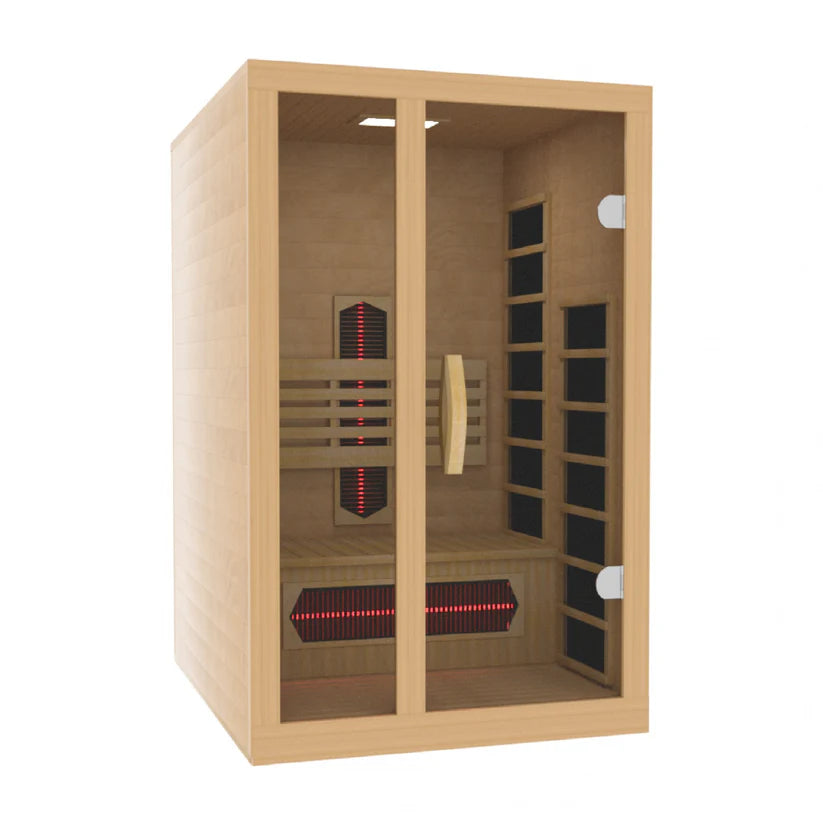
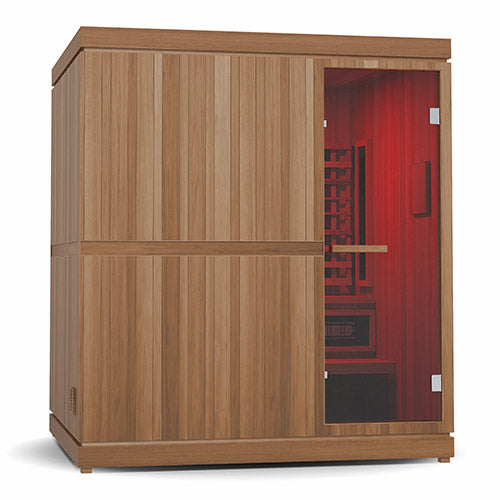
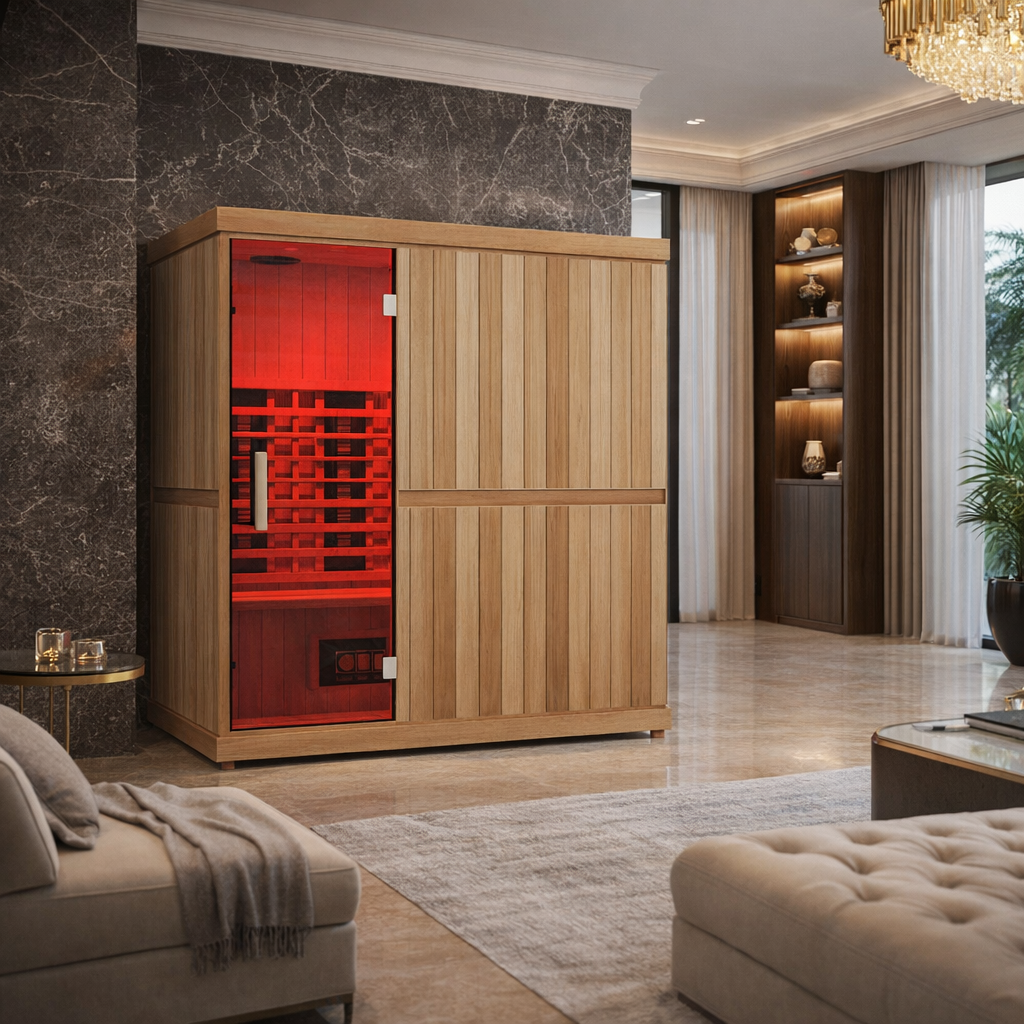
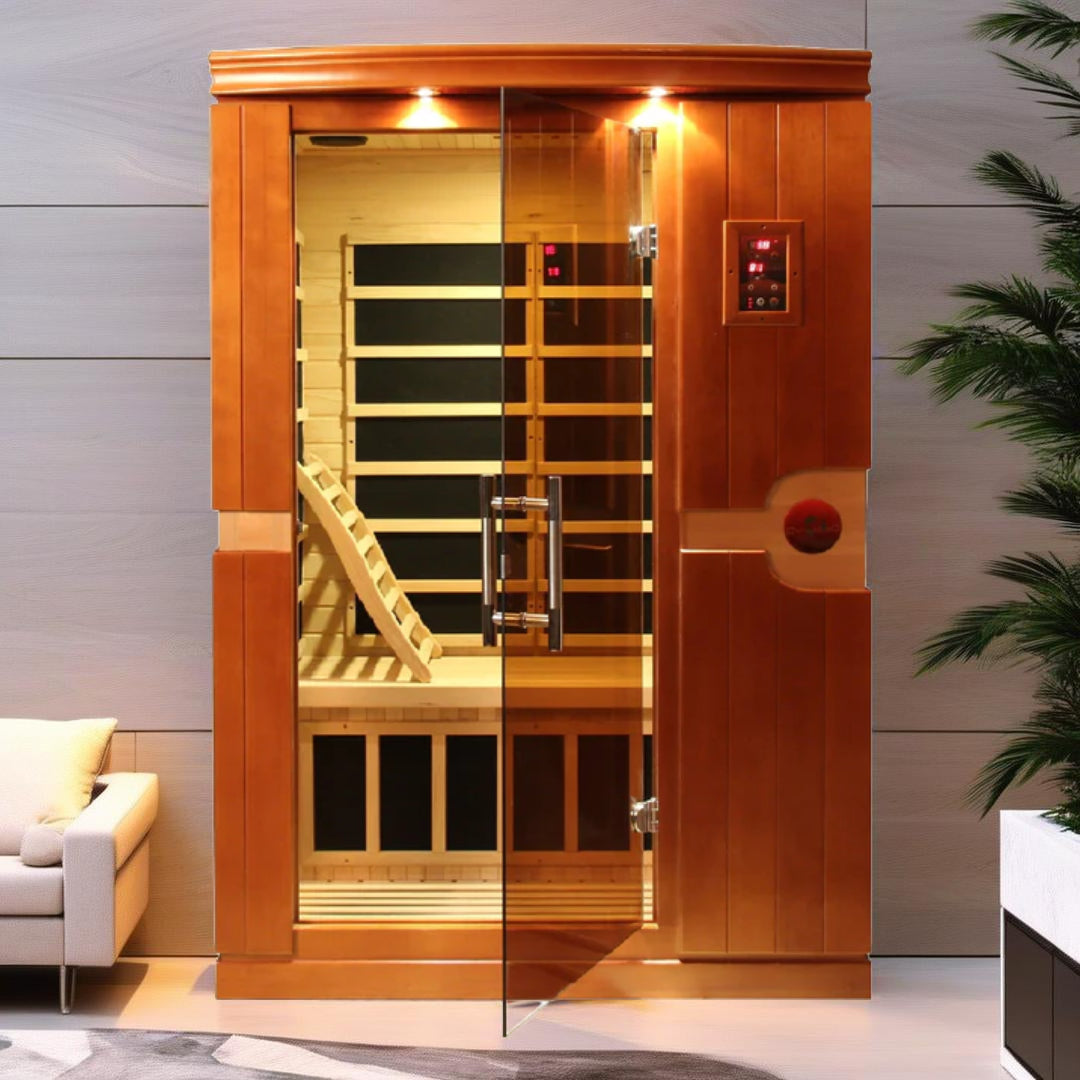
Infrared saunas use radiant-emitting panels to heat the body directly rather than primarily heating the air. Because they rely less on convective layering, they are more forgiving of lower ceilings. Trade guidance describes infrared as workable in 6.5–8 foot ranges, and some compact units can function in even tighter spaces.
What you need:
-
Confirm the specific cabin's assembled height and installation requirements.
-
Basements still need moisture and ventilation planning even though infrared feels "drier" than traditional steam-heavy use.
-
Understand that infrared delivers a different experience—lower ambient temperatures, direct radiant warmth—so set expectations accordingly.
Tradeoffs:
Infrared is not the same as a rock-based traditional sauna. The heat feels different, and the ritual of throwing water on rocks (löyly) is absent. This isn't a downgrade—it's a different modality. Many people prefer infrared for its simplicity and space efficiency. Options like the saunas for low-ceiling rooms are designed specifically for compact installations.
Very low ceilings can still feel cramped in any sauna type, so measure carefully and consider user height when evaluating comfort.
Infrared vs Traditional in Low Ceilings: What Changes
The key difference in low-ceiling contexts is sensitivity to vertical space:
-
Traditional saunas depend on convective heat rising from rocks, creating a vertical temperature gradient. Benches must be positioned to take advantage of this gradient. In low rooms, if benches are forced too low, users sit in cooler air.
-
Infrared saunas emit radiant heat that warms surfaces (including your body) directly without relying as heavily on hot air rising. This makes them less sensitive to ceiling height and more predictable in tight spaces.
Both types still benefit from reasonable headroom for user comfort, but infrared tolerates lower ceilings with fewer performance compromises.
What Doesn't: Sauna Styles to Avoid Below 7 Feet
If your layout forces you to violate manual clearances, or if the ceiling is so low that benches must be unreasonably low, a traditional sauna is more likely to be non-compliant and disappointing—choose infrared or a different location.
Heaters Not Listed for Your Ceiling Height
Installing any heater below its manual-specified minimum ceiling height or without required clearance above and around it is inappropriate. This isn't a "recommendation"—it's a condition of the heater's tested safety certification. Deviating from these conditions voids the listing and may violate local electrical and building codes.
Why this matters:
Clearances are set based on testing that measures how hot surrounding materials get during operation. Reducing clearances can cause combustible ceiling panels or framing to overheat, creating fire risk. Community reports include scorched or discolored ceiling panels when clearances were ignored.
Examples to avoid:
-
Standard electric heaters that list 77-inch minimum ceilings should not be installed in 6'6" rooms.
-
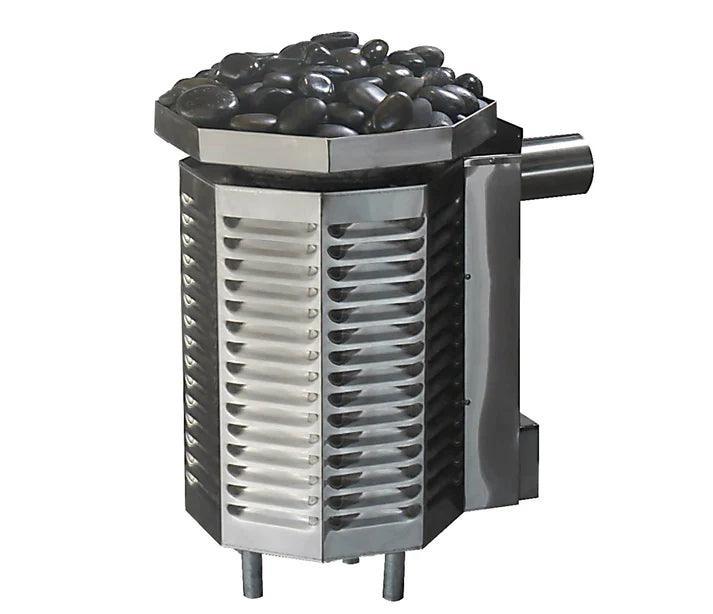
Wood-burning stoves typically require even larger clearances and complex venting—impractical in low-ceiling basements based on the evidence available.
Traditional Layouts That Can't Meet Bench-to-Ceiling Comfort
If your ceiling height forces bench-to-ceiling spacing below roughly 36 inches, users will likely find the space uncomfortably hot at head level. This is a comfort and safety issue, not just an aesthetic one.
Red flags:
-
Seated head position is within 24 inches of the ceiling.
-
Tall users cannot sit upright on the upper bench without ducking.
-
The only way to "fit" the sauna is to place benches so low that feet remain well below rock level.
In these cases, either the heater is wrong, the room is wrong, or the sauna type (traditional vs infrared) is wrong.
Wood-Burning Stoves in Low-Ceiling Basements
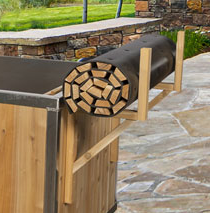
Wood-burning sauna stoves require substantial clearances to combustibles and complex venting paths (chimneys, roof or wall penetrations). In the evidence reviewed, these systems are described as impractical in low-ceiling, indoor basement contexts due to clearance and venting complexity. If you're committed to wood heat, an outdoor barrel or cabin sauna is more realistic.
Anecdotal "It Worked for Me" Builds
Online forums often feature DIY builds in 6-foot to 6'4" spaces that claim success. These anecdotes ignore critical questions:
-
Does the installation meet the heater's listed conditions?
-
Did the builder obtain permits and pass inspections?
-
Are users actually satisfied long-term, or are they tolerating cold feet and cramped posture?
Anecdotes are not templates. Many "success stories" involve non-compliant installations that create liability, resale issues, or disappointing experiences once the novelty wears off. Base your decision on manufacturer manuals and local code requirements, not forum builds.
The Basement Risk: Moisture and Ventilation Requirements
A basement sauna is feasible only when you have a moisture-control plan (vapor barrier, insulation approach, ventilation/exhaust path); otherwise, don't install yet.
Basements are inherently prone to humidity. Sauna use adds high heat and water vapor, requiring robust moisture management to prevent mold, condensation, and structural damage.
Vapor Barrier and Insulation
Building-code-oriented resources emphasize continuous vapor barriers and adequate insulation in sauna construction. A vapor barrier is a continuous layer—often foil or plastic—installed behind sauna interior cladding to prevent hot, moist air from entering wall and ceiling cavities.
Minimum guidance from trade sources:
-
At least R-12 insulation in walls.
-
At least R-16 insulation in ceilings.
-
Continuous vapor barrier with sealed seams and penetrations.
In low-ceiling basements, you may have a shorter path to floor joists and other vulnerable structural members. Proper vapor barrier installation is even more important when clearance to cold surfaces is tight.
Ventilation and Exhaust Paths
Sauna exhaust air must go somewhere. Venting directly outdoors is the safest approach and reduces moisture accumulation in the building. If outdoor venting is not feasible, exhaust can be directed into an adjacent conditioned space only if that space has mechanical exhaust (such as a bathroom fan or dehumidifier) adequate for the moisture load.
What doesn't work:
Venting sauna exhaust into a closed basement room with no dehumidification or exhaust path. Multiple sources warn about lingering humidity and mold concerns when exhaust has no exit. Even though sauna air feels "dry" during use, high-temperature air can carry large amounts of water vapor that will condense on cooler basement surfaces.
Heater manuals often specify vent opening sizing. For example, Finnleo Himalaya guidance recommends at least 0.3 square inches of vent opening per square foot of floor area, with a minimum of 9.3 square inches for very small rooms. Follow your specific heater's requirements.
Basement Code, Permits, and Venting Nuance
Local building codes vary. Some jurisdictions require permits for sauna installations, especially if electrical work or structural modifications are involved. Before installation:
-
Consult your local building department about permit requirements.
-
Verify that your planned vapor barrier, insulation, and ventilation approach meets code.
-
Hire a licensed electrician for heater wiring (typically 240V circuits with specific amperage and wire gauge requirements).
-
If making structural changes (such as lowering floors or modifying joists), consult a structural engineer.
Venting-to-room vs venting-outside nuance:
Outdoor venting is preferred but not always practical in basement retrofits. If venting into an adjacent room, ensure:
-
The receiving room has active mechanical exhaust or dehumidification.
-
Room surfaces can tolerate elevated humidity without damage.
-
The vent path is planned and sized according to the heater manual, not guesswork.
If moisture control cannot be addressed adequately, do not proceed with installation. Uncontrolled moisture can lead to mold, rot, and deterioration of framing and finishes—creating health risks and expensive repairs.
Frequently Asked Questions
Can I build a traditional sauna with a 6'4" ceiling?
It is only marginally feasible and then only with low-clearance-rated heaters and careful layout; many experts recommend infrared or a different space instead. At 6'4" (76 inches), you are below the commonly cited 77-inch minimum for traditional saunas. Some specialty systems (such as Saunum Air L with a 71-inch minimum or tower heaters with 75-inch minimums) can theoretically work, but benches often cannot be positioned high enough to keep feet warm without sacrificing headroom. Most builders and users find this height range better suited to portable infrared sauna options for small spaces.
What is the minimum ceiling height for a traditional electric sauna?
For most homeowners, plan on at least 77 inches unless using a specific low-clearance system that allows 71–75 inches. Trade sources commonly cite 77 inches as minimum permitted ceiling and 84 inches as typical or average. The Finnleo Himalaya SL2 is listed for 75–96 inch ceilings. Saunum Air L climate devices list 71 inches minimum. Going below a heater's listed minimum voids its tested safety conditions and may violate code.
Is a 6'0" ceiling ever acceptable for a sauna?
A 6'0" (72 inches) ceiling is generally too low for traditional saunas but may work for very compact infrared units if comfort and ventilation are addressed. Infrared guidance describes 6.5 feet as the lowest recommended height, with 6 feet "tight but doable" in small setups. Community reports at 6 feet note persistent cold feet and overheated heads in traditional configurations. Most traditional heater manuals do not list ceilings as low as 6 feet. Consider alternative spaces or outdoor units.
Why do experts recommend 7 feet as the ideal sauna ceiling?
A 7-foot (84 inches) ceiling balances comfortable headroom with efficient heat distribution and clearances for most traditional heaters. Multiple guides describe 7 feet as the "ideal" or "average" home sauna height. At this height, benches can be positioned so feet are near rock level while leaving 3–4 feet to the ceiling, heater clearances are easier to satisfy, and heat distribution is predictable. Taller ceilings often waste energy and require more power to achieve target temperatures.
What is the "law of löyly" and how does it affect low ceilings?
It is a comfort rule suggesting your feet should be at or above rock level, which is harder to achieve in low-ceiling rooms. Sources describe raising benches or using footrests so feet sit above the heater stones for better heat distribution. In low ceilings, benches may have to be positioned too low to meet this guideline without creating inadequate seated headroom. Air-mixing devices can partly reduce the impact but don't eliminate geometry constraints.
Are tower heaters better for low ceilings?
Tower heaters can help by stacking rocks higher and often having tighter clearances, but they still require listed minimum ceiling heights. Finnleo Himalaya SL2 tower heaters permit ceilings from 75 to 96 inches. Their tall rock columns can help with lower benches and feet warmth. Clearances above the heater (such as 44 inches) remain mandatory. They are not a solution for ceilings below their specified minimums.
When should I choose infrared instead of traditional for a low ceiling?
Infrared is preferable when your finished ceiling is below about 77 inches and you want to avoid complex low-clearance traditional layouts. Infrared saunas operate well at 6.5–8 foot ranges and are less dependent on convective layering. Traditional heaters usually require at least 75–77 inch ceilings. Infrared cabins often come in compact, modular designs suited to tight spaces. Basement moisture control is still needed even with infrared.
Does a low ceiling make my sauna cheaper to run?
Not automatically; if the geometry causes severe stratification, your heater may work harder to keep benches warm. Shorter height reduces air volume, which can cut heating load, but cold-feet configurations force higher setpoints to achieve comfort. Proper design and air mixing are key for efficiency. Oversizing heaters increases electrical demand and cost.
How do I know if a heater is safe for my low-ceiling basement?
Check the installation manual for minimum ceiling height and clearances, then measure your space to confirm you can meet them without modification. Manuals list minimum ceiling heights and required distances above the heater. Generic builder guides cannot override these manufacturer instructions. If your ceiling is lower than listed, that heater is not appropriate. A qualified electrician or installer can verify compliance on-site.
Do I need a vapor barrier for a basement sauna with low ceilings?
Yes, a continuous vapor barrier is strongly recommended to prevent moisture migration into walls and ceilings. Building-code-oriented resources emphasize vapor barriers and insulation in saunas. Basement-focused guides warn of mold and structural damage without moisture control. Low ceilings often mean a shorter path to floor joists and other vulnerable members. Proper barrier installation is even more important when clearance to cold surfaces is tight.
Can I vent my sauna into the basement rather than outside?
It is risky unless the receiving space has strong mechanical exhaust and dehumidification; direct outdoor venting is safer. Moisture from sauna use can significantly raise basement humidity. Building-code explainers highlight moisture control as a core requirement. Forum discussions warn about mold when venting only into small interior rooms. Direct exhaust to outdoors or well-managed spaces is preferred.
Is a pre-fab sauna cabin a good solution for low ceilings?
Pre-fab cabins simplify interior construction, but they still require ceiling height compatible with their heater's listing. Suppliers note minimum ceiling heights of 77 inches for many pre-fab units. Internal cabin height may differ from room height; you still need structural clearance. Moisture can still impact the surrounding basement unless vented properly. Check both cabin and heater manuals before purchase.
How does a Saunum or similar climate device change low-ceiling design?
It can make the experience more comfortable in lower ceilings by mixing hot and cool air, but it does not eliminate minimum height and clearance requirements. Saunum Air L devices are rated for minimum 71-inch ceilings. They reduce stratification by circulating air from ceiling to floor. Clearance above the device and to combustibles is still required. They are not approved for ceilings below their listed minimum.
Do low ceilings increase fire risk in a sauna?
Low ceilings increase risk if they prevent maintaining required clearances above heaters and around hot surfaces. Manuals specify minimum distances to ceilings and combustibles for fire safety. Low ceilings can push heaters too close to combustible surfaces if not carefully designed. Thermal damage has been reported when clearances are ignored. Choosing a heater with low listed clearances mitigates but does not eliminate risk.
How should I plan benches in a low-ceiling sauna?
Start from your ceiling height and heater clearance, then position the top bench so you have 3–4 feet of headroom and aim to keep feet near rock level. Bench-to-ceiling spacing around 3–4 feet is widely recommended. Many builds set the upper bench about 44 inches below the ceiling. Heater manuals may dictate minimum distance from benches to heater. In very low ceilings, footrests or modified layouts are often needed to avoid cold feet.
Can I use a wood-burning stove in a low-ceiling basement?
Wood-burning stoves typically require larger clearances and complex venting (chimneys, roof or wall penetrations) that make them impractical in low-ceiling basements based on available guidance. If you're committed to wood heat, an outdoor barrel or cabin sauna is more realistic.
What if my basement has irregular ceiling heights (slopes, beams)?
Measure the lowest finished height in the area where you plan to place the heater and benches. That lowest point determines your compliance. Irregular ceilings add complexity—you may need custom framing to create a consistent interior height. Consult a contractor experienced in sauna installations.
Do I need permits to install a sauna in my basement?
Requirements vary by jurisdiction. Many areas require permits for electrical work (especially 240V circuits), structural modifications, or any alteration that affects building systems. Contact your local building department before starting. Unpermitted work can create resale issues and liability.
Can I lower my basement floor to gain ceiling height?
Technically possible but expensive and complex. This requires excavation, new concrete, potential foundation underpinning, and waterproofing. Consult a structural engineer and contractor. In most cases, choosing a sauna type suited to your existing ceiling (such as infrared) is more practical and cost-effective.
What if I'm taller than average—does that change ceiling requirements?
Yes. If you're over 6 feet tall, add several inches to comfort recommendations. A 77-inch ceiling may meet code but feel cramped if you're 6'2" or taller. Test seated posture in the planned layout before committing. Some taller users find infrared cabins more comfortable because they can sit in a more relaxed position without worrying about stratification.
Can I install a sauna under stairs or in a closet?
Under-stair spaces and closets present irregular geometry, limited headroom, and hard-to-seal envelopes. These spaces often demand extensive custom work and may still result in drafts, leaks, or uncomfortable proportions. Unless the space has consistent, adequate height and can be properly insulated and vented, choose a different location.
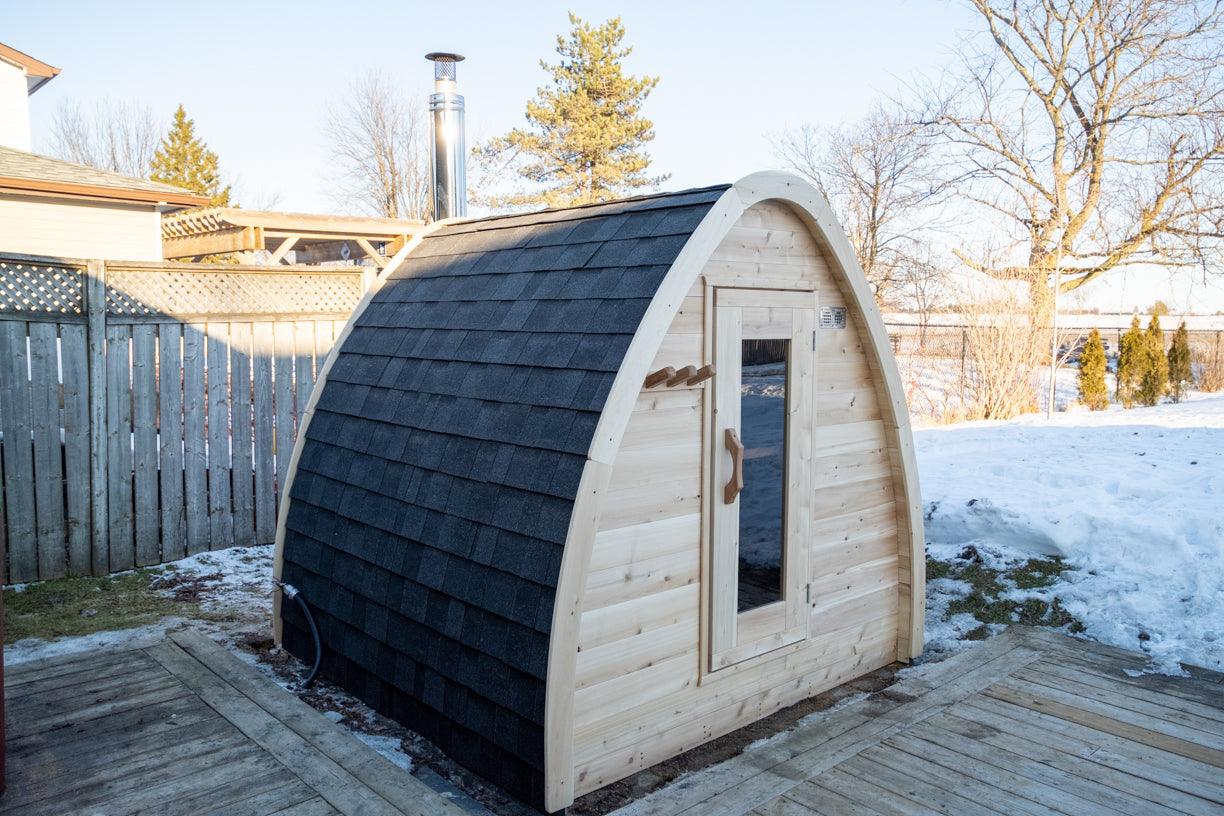
When should I abandon the room and choose an outdoor or barrel sauna instead?
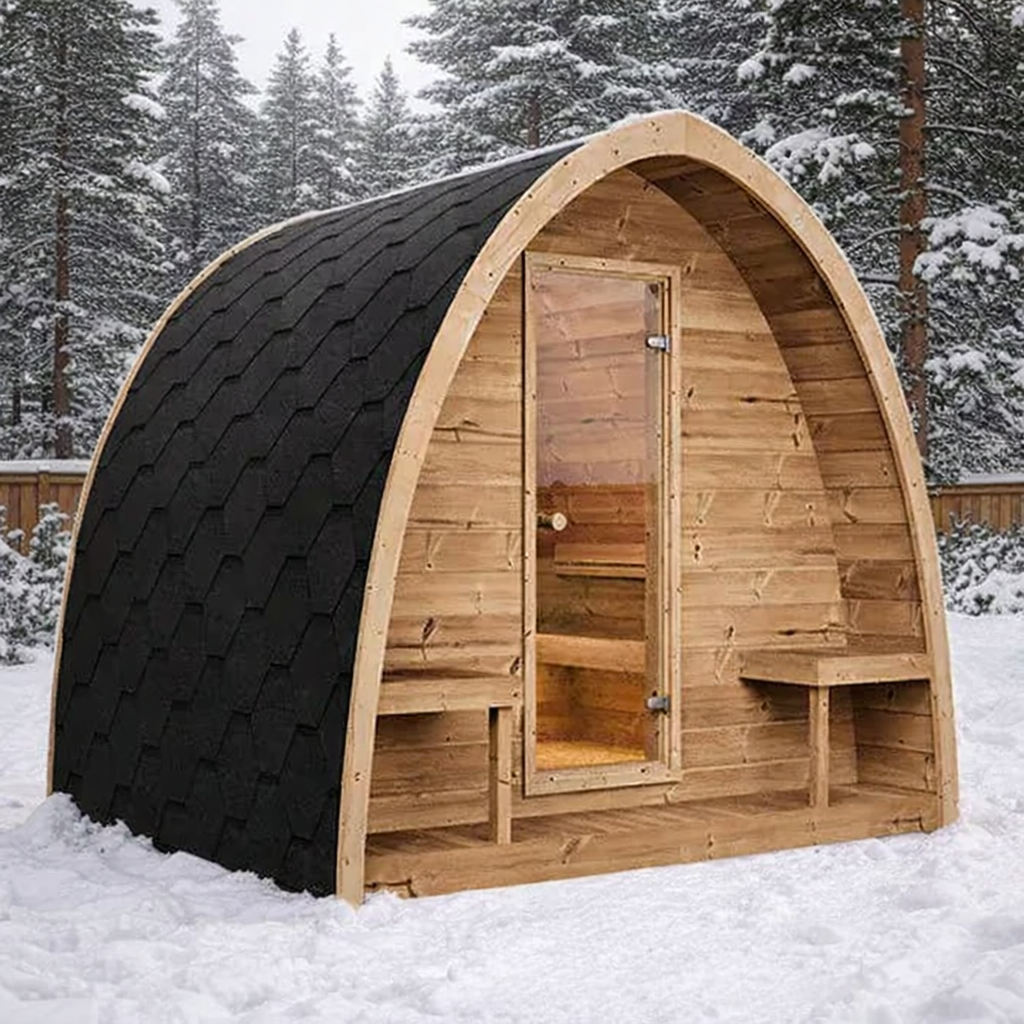
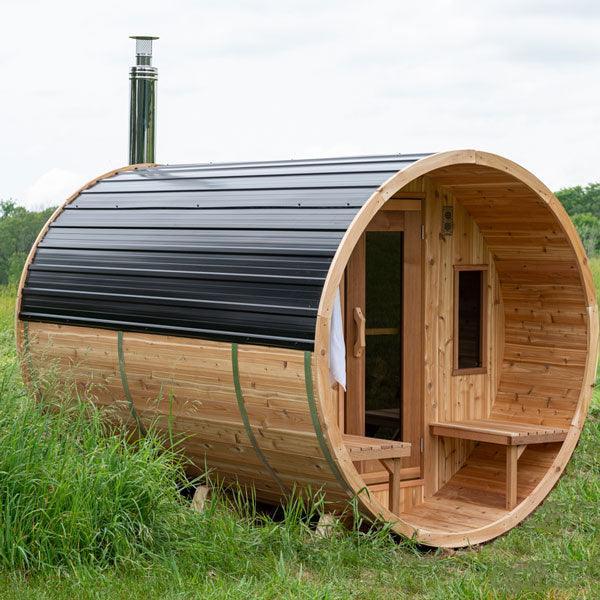
If your ceiling height is below 71 inches, if you cannot meet heater clearances, or if moisture and ventilation cannot be addressed adequately, an outdoor or barrel sauna may be the better choice. Barrel saunas have curved roofs; effective interior height over benches can differ from nominal dimensions, so verify seated headroom before purchasing. Outdoor units eliminate basement moisture concerns but introduce other considerations (weatherproofing, electrical runs, local zoning).
How long does it take a low-ceiling sauna to heat up?
Heating time depends on heater size, room volume, insulation quality, and target temperature—not just ceiling height. Smaller volumes heat faster in theory, but poor insulation or excessive glass can offset this. Most residential saunas heat in 30–45 minutes. Infrared cabins often heat in 10–20 minutes because they warm surfaces rather than air.
What ceiling height works best for a two-tier bench layout?
Two-tier benches typically require at least 77–80 inches of ceiling height to provide comfortable seated and reclining positions without excessive head-to-ceiling proximity. In lower ceilings, single-tier benches with optional footrests often work better.
Can I add a drop ceiling to reduce effective sauna height?
Yes, drop ceilings or false ceilings are commonly used when structural height is too tall (above 96 inches) to reduce effective sauna height and improve heat distribution. Ensure drop ceiling materials are rated for sauna temperatures and maintain required clearances to the heater.
Should I consult a doctor before using a sauna if I have health conditions?
Yes. Individuals with cardiovascular disease, uncontrolled hypertension, pregnancy, or other chronic health conditions should consult healthcare providers before using high-heat environments. Sauna bathing affects heart rate, blood pressure, and thermoregulation; some conditions require medical supervision.
Sources
This article synthesizes evidence from trade guides, manufacturer specifications, building-code resources, and practitioner/user experience patterns:
Manufacturer specifications and manuals:
-
Finnleo Himalaya SL2 Heater Installation Manual (2020–2022)
-
Saunum Air L specifications (Nativesauna, SaunaPlace, SaunaMarketplace, 2022–2025)
Trade and builder guidance:
-
Sauna builders guide from installation to ventilation – Saunarevival (2023)
-
What's The Right Sauna Ceiling Height For Homes? – Steam and Sauna Experts (2025)
-
Home Sauna Dimensions – Mainely Tubs (2025)
-
Sauna Construction – Pacific Coast Sauna and Spa (2015)
-
How Tall Should My Sauna Be? – SaunaSupplyCo (2023)
-
A simple guide to installing your sauna heater the right way – Finnish Sauna Builders (2025)
-
Sauna Ceiling Height – SaunaTimes (2024)
Building code and construction guidance:
-
Building Codes for Saunas – Saunaburg (2024)
-
Sauna in Basement, Is It a Good Idea? – Norsesteam (2024)
-
Can You Build a Sauna in Your Basement? – Select Saunas (2023)
-
Home Sauna Kits basement guidance (2023–2025)
User experience and community discussions:
-
Reddit r/Sauna discussions on low ceiling constraints, minimum height, and cold-feet patterns (2021–2025)
Medical guidance on sauna safety for vulnerable populations should be obtained from peer-reviewed clinical sources (PubMed, NIH, Mayo Clinic, Cleveland Clinic) or directly from qualified healthcare providers.
What We Still Don't Know
While manufacturer specifications and trade guidance provide clear boundaries for compliance and safety, several areas remain uncertain or vary by individual context:
Comfort thresholds are user-specific. The evidence describes general ranges (such as 36–48 inches bench-to-ceiling), but tall users, shorter users, and those with different heat tolerance may experience the same layout very differently. "Comfortable" is subjective.
Long-term satisfaction in marginal installations is mixed. Forum reports suggest some people tolerate 6'2"–6'6" traditional saunas, while others regret the compromise. Without longitudinal studies, it's unclear what percentage of users remain satisfied after the novelty period.
Air-mixing device effectiveness varies by room geometry. Saunum and similar climate devices are described as reducing stratification, but the degree of improvement likely depends on room shape, insulation quality, and user expectations. Controlled comparative data are limited.
Optimal ventilation and exhaust sizing for basements lacks standardization. While manuals provide vent opening minimums and building codes emphasize moisture control, specific dehumidifier capacity or exhaust CFM targets for different sauna sizes and use patterns are not uniformly defined across sources.
Resale value impact of non-standard installations is uncertain. Low-ceiling saunas that meet code may still raise questions from future buyers or appraisers, but the financial impact is not quantified in available guidance.
Regional code variation is significant. Permit requirements, vapor barrier standards, and electrical code interpretations differ by jurisdiction. This guide provides general principles, but local authorities have final say.
If you encounter conflicting guidance or edge-case situations not covered here, consult manufacturer technical support, a licensed contractor with sauna experience, and your local building department before proceeding.
View More ArticlesSauna for Blood Pressure and Heart Health: The Complete Guide to Benefits, Safety, and Protocols
6 Simple Ways to Turbocharge Any Sauna Session (Without Staying Longer)
Related Posts

Dynamic Santiago 2-Person Ultra Low EMF Sauna Review (Standard vs Elite): Is It Worth It?

Red Light Therapy for Collagen: The Science-Backed Guide to Firmer Skin

Steam Shower vs. Compact Sauna: Which is Practical for My Small Bathroom?

6 Simple Ways to Turbocharge Any Sauna Session (Without Staying Longer)

Sauna for Blood Pressure and Heart Health: The Complete Guide to Benefits, Safety, and Protocols

Low EMF vs Standard Infrared: What Actually Changes? The Buyer's Guide and Decision Framework
