






HUUM Sauna Heater Review: The Definitive Guide to Models, Performance, and Reliability
What You Need to Know About HUUM Sauna Heaters
A HUUM sauna heater is a premium Estonian electric sauna heater known for its open-rock design, exceptionally large stone capacity, and soft, humid steam (löyly), offering standout aesthetics and smart UKU controls—but requiring careful sizing, professional installation, and realistic expectations around maintenance and long-term ownership.
Key Takeaways:
- HUUM excels in design and steam experience via massive stone mass (up to 250 kg in HIVE models) that produces softer, more humid löyly compared to compact competitors (HUUM, 2025; Saksby, 2024)
- Temperature advantage: UKU WiFi/Glass controllers allow settings up to ~230°F, versus ~194–195°F caps on many UL-listed US heaters (Topture, 2025; Sauna Heater Supply, 2024)
- Trade-offs include: premium pricing, more demanding installation requirements, recurring anecdotal element failures (particularly DROP models), and mixed customer support experiences (Reddit r/Sauna, 2023–2025)
- Best for buyers who prioritize aesthetics and traditional Finnish steam quality and accept higher upfront costs plus potentially more involved maintenance schedules
- Operating costs are similar to other electric heaters: a properly sized 6 kW unit uses 7–9 kWh per 2-hour session (~$1–1.50 USD at average US rates) (Harvia, 2025)
Table of Contents
- What HUUM Sauna Heaters Are
- The HUUM Lineup: Which Model is Right for You?
- Performance Deep Dive: Temperature, Steam, and Speed
- HUUM vs. Harvia: A Head-to-Head Comparison
- Sizing Your HUUM Heater: The Essential Calculation
- The UKU Smart Controller: Features and Functionality
- Reliability & Maintenance: Addressing Common Concerns
- Total Cost of Ownership (TCO) Breakdown
- Installation and Electrical Requirements
- Real-World Numbers That Matter
- Myths and Misconceptions
- Experience Layer: Testing Plan
- FAQ
- Sources
- What We Still Don't Know
What HUUM Sauna Heaters Are

HUUM is an Estonian sauna heater brand recognized for minimalist, open-rock designs and exceptionally large stone capacities aimed at producing soft, humid steam that emphasizes traditional Finnish löyly (HUUM, 2025).
The brand earned international recognition with its DROP model winning a Red Dot design award, positioning HUUM as a design-forward alternative to traditional Finnish brands like Harvia, Narvi, and Helo (Haven of Heat, 2024).
Core US Electric Lineup
HUUM's primary residential models include:
- DROP: Wall-mounted, compact design holding up to ~130 lb of stones, suited for small to medium saunas (HUUM, 2023)
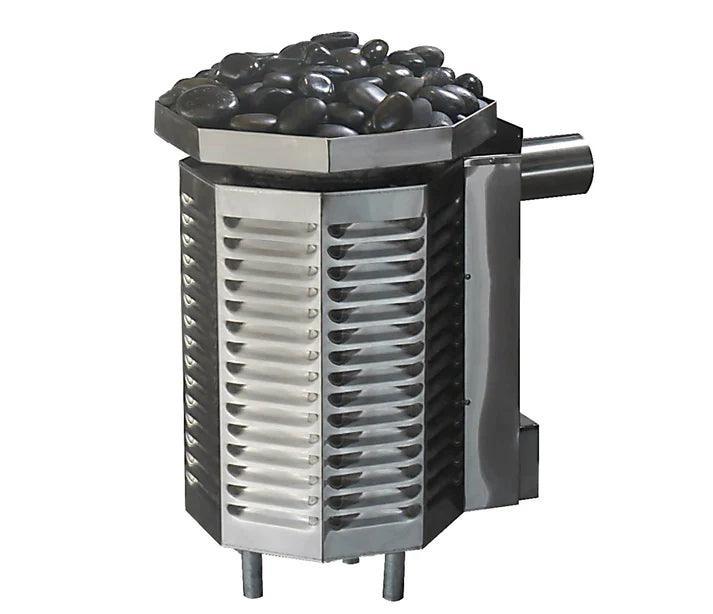
- HIVE: Floor-standing with massive 250 kg (~551 lb) stone capacity, targeted at large residential saunas, spas, or gyms (HUUM, 2025)
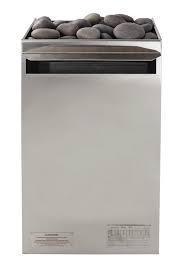
- CLIFF: Slim column heater with 60–75 kg stone capacity and outputs from ~3.5–10.5 kW, ideal where floor space is limited (Manuals.plus, 2024)
- STEEL: Tall, narrow pillar-style heater with significant stone volume but less publicly available technical documentation (Haven of Heat, 2024)
All models typically pair with UKU controllers (Local, WiFi, or Glass variants) that manage temperature, timers, and safety features (The Sauna Heater, 2025).
What Löyly Actually Means
Löyly (pronounced "loy-loo") is the Finnish term for the steam and heat sensation created when water is thrown on hot sauna stones (HUUM, 2025).
It describes both the physical steam and the quality of that steam—whether it feels harsh and dry or soft and enveloping. HUUM's emphasis on large stone mass aims to produce the latter: water penetrates deeper into multiple stone layers, evaporating gradually rather than flashing instantly off hot metal surfaces (Saksby, 2024).
This is why stone capacity matters beyond just aesthetics—it fundamentally shapes the sauna experience.
The HUUM Lineup: Which Model is Right for You?
DROP vs CLIFF vs HIVE vs STEEL: Use-Case Snapshot
| Model | Mounting | Stone Capacity | Ideal Room Volume | Best For |
|---|---|---|---|---|
| DROP | Wall-mounted | Up to ~130 lb | Small–medium (varies by kW) | Compact spaces, design focus, residential |
| CLIFF | Floor (column) | 60–75 kg (132–165 lb) | 124–600 ft³ (3.5–17 m³) | Tight floor space, modern aesthetic |
| STEEL | Floor (pillar) | Significant (specs limited) | Medium–large | Space-limited, column look desired |
| HIVE | Floor (large) | 250 kg (551 lb) | 318–989 ft³ (9–28 m³) | Large saunas, spas, gyms |
(Data: HUUM, 2023–2025; Manuals.plus, 2024)
Model Selection Guidelines
Choose DROP if:
- You have limited floor space and can mount to a wall
- You want the iconic "floating rock cage" aesthetic
- Your sauna is small to medium-sized
- You're comfortable with more intensive stone maintenance
Choose CLIFF if:
- Floor space is very tight but wall mounting isn't preferred
- You want a slim, modern column design
- You need flexible kW options (3.5–10.5 kW range available)
- Mini versions are suitable for very small saunas (124–212 ft³)
Choose STEEL if:
- You want a narrow pillar aesthetic
- Your sauna is medium to large
- You prefer floor-standing over wall-mounted
- Limited public documentation is acceptable
Choose HIVE if:
- You're building a large residential sauna or commercial space
- Maximum stone capacity and steam volume are priorities
- Floor load capacity can support 250+ kg of stones
- Slower heat-up time is acceptable for superior heat retention

Stone Type & Packing Basics
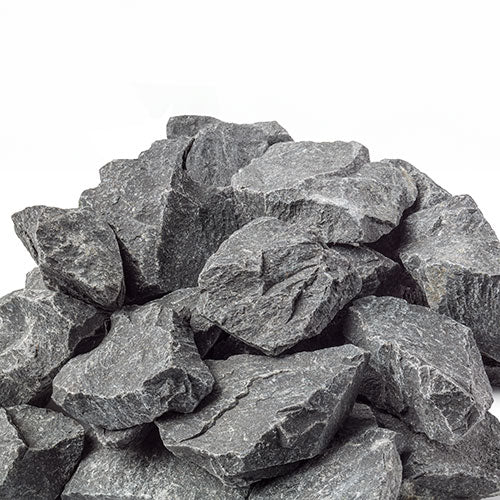
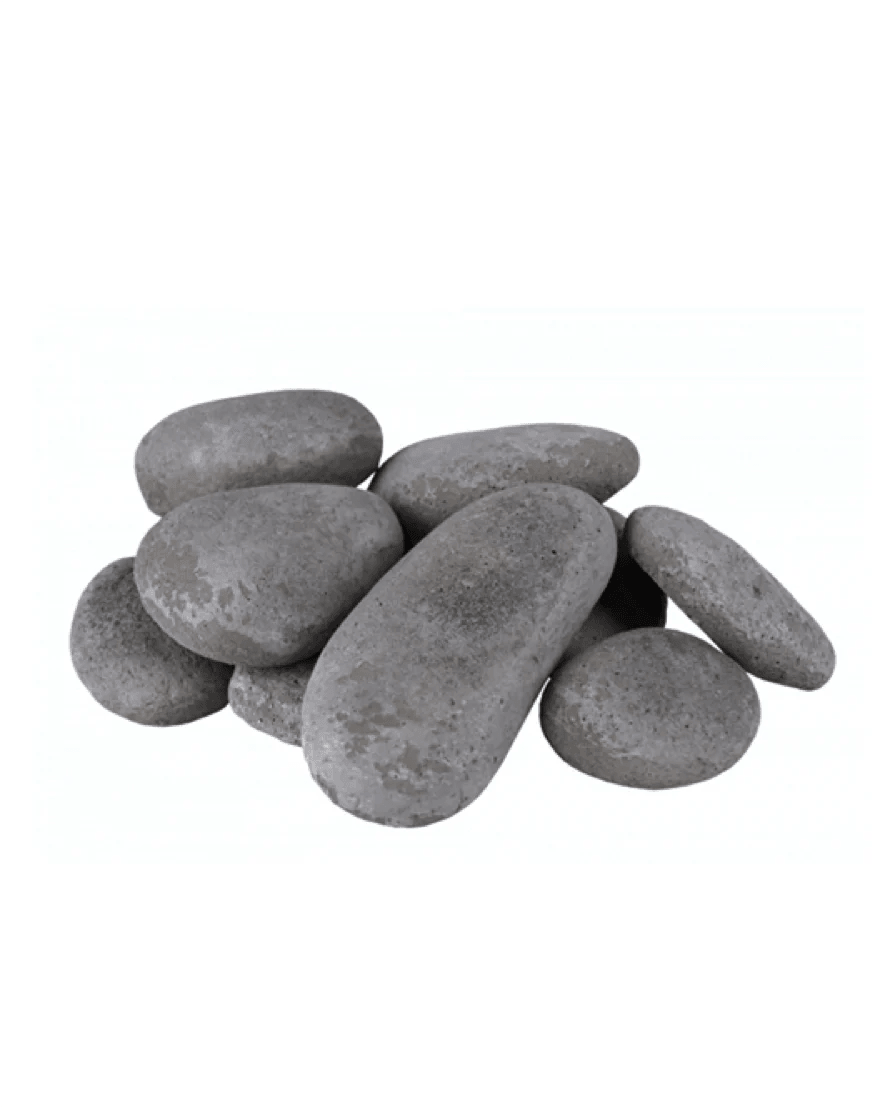
HUUM recommends rounded olivine diabase stones in mixed sizes (3–5 cm and 5–10 cm diameters) for all models (HUUM, 2025; Select Saunas, 2024).
Why rounded stones matter:
- Better water penetration: Water reaches deeper layers instead of running off angular surfaces
- Improved airflow: Round stones pack with natural gaps that allow heat circulation
- Reduced element stress: Proper spacing prevents hot spots that can damage heating elements
- Longer stone life: Rounded edges resist fracturing better than sharp corners
HUUM's troubleshooting guides explicitly link improper stone stacking (too tight or too sparse) to heating element failures (HUUM, 2022). This isn't just an aesthetic preference—it's a functional requirement tied to heater longevity.
Stone quantities by model:
- CLIFF: 60 kg (Mini) to 75 kg (standard models)
- HIVE: 250 kg across power ratings
- DROP: Up to ~60 kg (varies by specific model)
(HUUM, 2023–2025; Manuals.plus, 2024)
Performance Deep Dive: Temperature, Steam, and Speed

Maximum Temperature: The SGS vs UL Context
HUUM heaters paired with UKU Glass or WiFi controllers can be set up to approximately 230°F (110°C), significantly above the ~194–195°F cap typical of many UL-listed electric sauna heaters sold in the US (Topture, 2025; Sauna Heater Supply, 2024).
This difference stems from certification standards, not safety superiority:
- UL-listed heaters often have controller limits around 194–195°F based on US safety testing protocols
- HUUM's SGS certification allows higher set-points under European testing standards
- Both temperature ranges are sufficient for traditional sauna experiences (176–194°F is typical)
Important context: Higher maximum temperature does not equal better health outcomes. Medical guidance on sauna use focuses on safe exposure time, cardiovascular stress management, and hydration rather than peak temperature differences of 30–40°F (general sauna safety literature).
For most users, the quality of steam (löyly) and comfort matter more than the thermostat number.
Steam Quality: Why Stone Mass Matters
HUUM's emphasis on large stone capacity directly impacts steam feel:
Large stone mass (e.g., 250 kg in HIVE):
- Water penetrates multiple layers, evaporating gradually
- Produces softer, more humid steam that feels enveloping
- Stores more thermal energy for stable temperatures
- Better mimics traditional Finnish wood-fired sauna steam
Small stone mass (e.g., 25–40 lb in some compact heaters):
- Water contacts primarily hot metal and surface stones
- Creates sharper, drier radiant heat
- Temperature may fluctuate more as heater cycles
- Less traditional "löyly" character
Comparative dealer analyses consistently note HUUM's stone capacity advantage: DROP holds up to ~130 lb versus Harvia Spirit's 25–40 lb (Saksby, 2024).
Heat-Up Time vs Heat Retention
Larger stone masses take longer to heat initially but stabilize better:
- A 6 kW electric heater typically runs at full power for 30–40 minutes during heat-up, then cycles around 50% output to maintain temperature (Harvia, 2025)
- HUUM models with 200+ kg of stones may require 45–60+ minutes to reach full bathing temperature
- Once hot, massive stone capacity provides more stable temperatures and longer cool-down periods
This is a trade-off, not a flaw: you exchange faster pre-heat for superior in-session stability and steam quality.
Energy Use: The Real Numbers
A properly sized 6 kW electric sauna heater uses approximately 7–9 kWh over a typical 2-hour heat-up plus session:
- First hour (heat-up): 4–5 kWh
- Second hour (maintenance): 3–4 kWh
- At $0.17 per kWh (US average), this costs roughly $1.00–1.50 per session
Larger heaters scale proportionally:
- 9 kW unit: ~9–13 kWh per 2-hour session
- 12 kW unit: ~12–17 kWh per 2-hour session
(Harvia, 2025; Epic Hot Tubs, 2025)
Key insight: Operating cost depends primarily on heater power (kW) and usage duration, not brand. A HUUM and Harvia of identical kW ratings used similarly will have comparable electricity costs.
HUUM vs. Harvia: A Head-to-Head Comparison
| Feature | HUUM (Electric) | Harvia (Typical US Electric) | Evidence Strength |
|---|---|---|---|
| Max Set Temperature | Up to ~230°F (UKU Glass/WiFi) | Often capped ~194–195°F (UL limits) | Moderate (dealer specs) |
| Stone Capacity | Very high (HIVE 250 kg; DROP ~130 lb) | Generally lower (Spirit 25–40 lb) | Moderate (dealer comparisons) |
| Steam Feel | Soft, humid, stone-driven löyly | Hotter radiant, less stone mass | Limited (experiential) |
| Design Aesthetic | Minimalist, open rock cages, "sculptural" | More traditional boxes/pillars | Strong (visual evidence) |
| Durability Reputation | Mixed anecdotal reports, recurring element failures | Often praised for long-term reliability | Limited (UGC/dealer opinion) |
| Energy Efficiency | Similar per kW (efficient stone thermal mass) | Similar per kW (explicit efficiency messaging) | Strong (manufacturer data) |
| Price Positioning | Premium, especially with UKU Glass + stone fills | Mid-premium range with budget to high-end options | Moderate (dealer pricing) |
| Best For | Design focus + traditional löyly enthusiasts | Durability-first buyers, proven track record | Opinion-based |
(Haven of Heat, 2024; Topture, 2025; Saksby, 2024; Harvia, 2025)
Temperature Limits in Context
While HUUM's higher maximum set-point is marketed as an advantage, both brands reach temperatures sufficient for traditional sauna bathing (176–195°F is the typical range for health and comfort).
The 230°F capability may appeal to extreme heat enthusiasts, but it doesn't meaningfully change health outcomes for most users.
Durability: The Community Perspective
Harvia is frequently described as "more proven" with longer field history and fewer reported element issues in online sauna communities (Reddit r/Sauna, 2021–2025).
HUUM earns praise for design and steam quality but faces recurring anecdotal reports of heating element failures, particularly in DROP models, sometimes within 1–2 years of use (Reddit r/Sauna, 2023, 2025).
Important caveats:
- These are self-selected online reports, not controlled failure rate data
- Many "silent" long-lasting HUUM installations are never discussed publicly
- Installation quality, stone stacking, and sizing choices affect longevity across all brands
Operating Cost: Nearly Identical
At comparable kW ratings, HUUM and Harvia have similar electricity consumption. A 6 kW heater from either brand uses roughly 7–9 kWh per 2-hour session, costing $1.00–1.50 at average US electricity rates (Harvia, 2025; Epic Hot Tubs, 2025).
The real cost difference lies in upfront purchase price, stone quantities, and potential element replacement frequency—not session-by-session operating expenses.
If you're interested in understanding the broader health benefits that make premium sauna investment worthwhile, see our guide on 10 Biggest Benefits of Using a Sauna for Your Health and Wellness.
Sizing Your HUUM Heater: The Essential Calculation
Improper sizing is the single most common buyer mistake and a frequently cited factor in element failures and heating issues (HUUM, 2022; Reddit r/Sauna, 2023).
Step 1: Calculate Base Room Volume
Formula: Length (ft) × Width (ft) × Height (ft) = Base Cubic Feet
Example: 6 ft × 6 ft × 7 ft = 252 ft³
Step 2: Adjust for "Cold Surfaces"
Add volume for heat-absorbing materials:
- Glass doors/windows: Add ~15–20% to total volume for each square foot of glass
- Tile walls: Add ~10–15% to total volume
- Concrete/masonry: Add ~10–15% to total volume
- Log/uninsulated wood walls: Add ~5–10% to total volume
Example: 252 ft³ base + 20% glass penalty = ~302 ft³ adjusted volume
(Manuals.plus, 2024; HUUM, 2023; dealer guidance)
Step 3: Match to HUUM's Official Volume Tables
CLIFF model examples (Manuals.plus, 2024):
- CLIFF Mini 4 (3.5 kW): 124–212 ft³ (3.5–6 m³)
- CLIFF 6 (6 kW): 212–353 ft³ (6–10 m³)
- CLIFF 9 (9 kW): 353–530 ft³ (10–15 m³)
- CLIFF 10.5 (10.5 kW): 459–600 ft³ (13–17 m³)
HIVE model examples (HUUM, 2025):
- HIVE 9 kW: 318–495 ft³ (9–14 m³)
- HIVE 12 kW: 424–636 ft³ (12–18 m³)
- HIVE 15 kW: 530–777 ft³ (15–22 m³)
- HIVE 18 kW: 636–989 ft³ (18–28 m³)
DROP models: Consult specific manual for your kW rating, as volume ranges vary by power output (HUUM, 2023).
Why Undersizing Is Dangerous
Undersized heaters lead to:
- Extended high-power operation (running at full output for prolonged periods)
- Increased stress on heating elements
- Potential premature element failure
- Long heat-up times (60+ minutes)
- Difficulty reaching target temperature on cold days
HUUM's troubleshooting documentation explicitly raises improper sizing as a cause of heating and element issues (HUUM, 2022). User reports echo that undersized units running constantly at high output may fail sooner (Reddit r/Sauna, 2023, 2025).
Sizing Decision Tree
If your adjusted volume is:
- At the low end of a kW range: Choose that kW rating (e.g., 250 ft³ → 6 kW CLIFF)
- In the middle of a range: Choose that kW rating (e.g., 280 ft³ → 6 kW CLIFF)
- At the high end of a range: Consider stepping up one kW level for glass-heavy saunas or outdoor installations (e.g., 340 ft³ with large glass door → 9 kW CLIFF instead of 6 kW)
- Between two ranges: Always choose the larger kW rating
Never undersize to save money. The installation and stone costs are already committed—an extra $300–500 for the next kW level is cheap insurance against element stress and poor performance.
The UKU Smart Controller: Features and Functionality
UKU is HUUM's proprietary digital control system that manages heater temperature, timers, safety features, and (in WiFi/Glass versions) remote smartphone control (The Sauna Heater, 2025; HUUM, 2022).
Controller Variants
| Model | Features | Temperature Range | Remote Control | Best For |
|---|---|---|---|---|
| UKU Local | Basic digital control, timers, safety features | 104–230°F | No | Cost-conscious, no smart features needed |
| UKU WiFi | App control, remote start, scheduling | 104–230°F | Yes (via HUUM app) | Tech users, pre-heating convenience |
| UKU Glass | WiFi features + magnetic glass interface panel | 104–230°F | Yes (via HUUM app) | Premium aesthetic, full smart control |
(Sauna Heater Supply, 2024; HUUM, 2022)
Key Features Across All UKU Models
Safety features:
- Child lock function
- Overheat protection
- Maximum temperature limits (user-adjustable up to 230°F)
- Optional door sensor integration
- Automatic shutoff timers
Programmability:
- Multiple temperature presets
- Weekly schedules (WiFi/Glass)
- Delayed start timers
- Session duration limits
Monitoring:
- Current temperature display
- Target temperature
- Time remaining
- Error code diagnostics
Remote Control: Convenience with Caveats
UKU WiFi and Glass controllers allow:
- Pre-heating sauna before arriving home
- Starting sauna from bed on cold mornings
- Temperature adjustments without entering sauna room
- Session monitoring via smartphone app
Important safety considerations:
- Remote start should only be used when you're certain nothing flammable is near the heater
- Some local building codes or insurance policies may restrict unattended heating appliance operation
- Always verify your sauna is clear and properly ventilated before remote starting
- Stable internet connection required for reliable remote control
(HUUM, 2022; general electrical code awareness)
Extension Box Requirement
For heaters above 9–11 kW (up to 18 kW), UKU controllers require an additional extension box to handle the electrical load (Sauna Heater Supply, 2024; HUUM, 2023).
This adds cost and complexity to installation but is mandatory for proper operation and safety compliance.
Reliability & Maintenance: Addressing Common Concerns
The Element Failure Reality
Multiple user reports describe heating element failures in HUUM heaters, particularly DROP models, sometimes within 1–2 years of use (Reddit r/Sauna, 2023, 2025).
Documented issues include:
- Elements that no longer glow red when powered
- Bent or "cooked" elements visible after stone removal
- Heaters that reach temperature slowly or inconsistently
- Complete heating failure requiring element replacement
Important context:
- These are anecdotal, self-selected reports
- True population failure rates are unknown
- Many successful long-term HUUM installations are never discussed online
- Installation factors and user practices affect longevity
Common Contributing Factors
HUUM troubleshooting guidance and user reports identify:
-
Incorrect stone stacking (too tight or too sparse):
- Blocks airflow around elements
- Creates hot spots
- Increases element temperature beyond design limits
- Mentioned explicitly in HUUM support articles (HUUM, 2022)
-
Undersized heater for room volume:
- Forces extended high-power operation
- Elements run near maximum temperature for prolonged periods
- Accelerates thermal stress and degradation
-
Improper installation:
- Incorrect wiring or inadequate breaker sizing
- Poor sensor placement
- Insufficient clearances affecting ventilation
-
Stone maintenance neglect:
- Fractured stones not removed
- Stones not periodically re-stacked
- Foreign objects (like metal hardware) mixed with stones
HUUM's Official Troubleshooting Protocol
When a heater does not heat properly, HUUM instructs users to:
- Turn off and disconnect power completely
- Remove enough stones to expose heating elements
- Restore power and observe elements
- Replace any element that does not glow red within 2–3 minutes
- Inspect and restack stones before resuming use
(HUUM, 2022)
This guidance confirms: Elements are serviceable wear parts that may need replacement during the heater's lifetime, not "install once and forget" components.
Warranty & Support Expectations
User experiences with HUUM customer support are mixed:
- Some report slow email response times (multi-day delays)
- Recurring theme of support attributing failures to installation errors or stone stacking
- Frustrations with warranty claim processes
- Geographic distance (Estonia-based company) complicating direct support
(Reddit r/Sauna, 2024)
Counterpoint: Many warranty issues across all appliance brands involve legitimate installation or usage problems. HUUM manuals emphasize that improper installation and failure to follow stone layout or sizing guidelines can void warranty coverage (HUUM, 2022, 2023).
Maintenance Schedule Recommendations
Every 25–30 sessions (or quarterly for heavy users):
- Inspect stones for cracks or fractures
- Remove any broken stones
- Re-stack remaining stones, ensuring proper spacing
- Verify elements are not exposed or bent
- Check for any debris or foreign objects
Annually:
- Full stone removal and cage cleaning
- Visual element inspection (look for discoloration, warping, or damage)
- Terminal and wiring connection inspection (power off first!)
- Test full heating cycle before replacing stones
Every 2–3 years:
- Consider partial or full stone replacement (depends on usage intensity)
- Professional electrical inspection if any wiring concerns
(Based on HUUM troubleshooting guidance and general electric sauna heater practice)
Total Cost of Ownership (TCO) Breakdown
Upfront Investment
HUUM heaters are positioned as premium products:
| Component | Typical Cost Range | Notes |
|---|---|---|
| Heater unit | $1,200–3,500+ | Varies by model and kW rating |
| UKU controller | $400–800 | Local < WiFi < Glass |
| Initial stone fill | $150–400 | Depends on model capacity (60–250 kg) |
| Extension box (if needed) | $200–400 | Required for heaters >9–11 kW |
| Professional installation | $800–2,000+ | Electrical + mounting labor |
| Total initial investment | $2,750–7,100+ | Varies widely by model and region |
(Estimated from dealer pricing, 2024–2025)
Recurring Consumable Costs
Stones:
- HUUM sells olivine diabase stones in 15 kg (33 lb) boxes
- Pricing varies by retailer (~$50–80 per box)
- A HIVE (250 kg capacity) requires ~17 boxes for full replacement ($850–1,360)
- Expected replacement frequency: Every 3–5 years with moderate use (no formal guidance available)
Heating Elements:
- Replacement elements are available from HUUM and authorized dealers
- Cost per element: $50–150 (varies by model)
- Most heaters have 3–6 elements
- Full element replacement: $300–900 depending on model
- Expected lifespan: Highly variable (manufacturer does not specify); anecdotal reports range from 1–2 years (problematic installations) to 5+ years (optimal conditions)
Electricity:
- 6 kW heater, 2 sessions/week: ~750 kWh/year → ~$127/year at $0.17/kWh
- 9 kW heater, 3 sessions/week: ~1,400 kWh/year → ~$238/year at $0.17/kWh
- 12 kW heater, 4 sessions/week: ~2,400 kWh/year → ~$408/year at $0.17/kWh
(Based on Harvia, 2025; Epic Hot Tubs, 2025)
5-Year TCO Comparison: HUUM vs Harvia (Example Scenario)
Assumptions:
- Medium sauna (~300 ft³)
- 2 sessions per week
- $0.17/kWh electricity rate
- One stone refresh at year 3
- No element replacement (best case) vs one element replacement (realistic case)
| Cost Category | HUUM DROP 9kW | Harvia Spirit 9kW | Notes |
|---|---|---|---|
| Heater + controller | $2,200 | $1,600 | HUUM premium for UKU Glass |
| Initial stones | $250 (130 lb) | $80 (40 lb) | HUUM requires more |
| Installation | $1,200 | $1,000 | Similar complexity |
| Electricity (5 years) | $1,190 | $1,190 | Same kW = same cost |
| Stone refresh (year 3) | $250 | $80 | Proportional to capacity |
| Element replacement (conservative) | $400 | $200 | Based on anecdotal failure rates |
| 5-Year Total | $5,490 | $4,150 | ~$1,340 difference |
Key insights:
- HUUM's premium is ~25–30% over comparable Harvia in this scenario
- Electricity costs are identical for same kW rating
- Stone and element costs scale with capacity and potential reliability differences
- Real-world TCO depends heavily on element lifespan, which varies dramatically based on installation and usage
Is the Premium Worth It?
HUUM makes financial sense if:
- Design and aesthetic integration with your home are high priorities
- You value soft, humid löyly over raw heating efficiency
- You're willing to perform regular maintenance
- You accept higher upfront and potential long-term costs for the experience
Traditional brands may be better if:
- Budget is a primary concern
- You prioritize proven durability and simpler maintenance
- You prefer conservative, well-established brands
- Design is secondary to function and longevity
Installation and Electrical Requirements
Electrical Specifications by Model
CLIFF models (example from manual):
- CLIFF Mini 4 (3.5 kW): 16A fuse, 3 × 2.5 mm² cable
- CLIFF 6 (6 kW): 32A fuse, 3 × 6 mm² cable
- CLIFF 9 (9 kW): 40A fuse, 3 × 10 mm² cable
HIVE models:
- Similar amperage and cable requirements scaled to power rating
- Larger models require correspondingly larger breakers and heavier gauge wire
(Manuals.plus, 2024; HUUM, 2023)
Installation Clearances and Positioning
HUUM manuals specify:
- Minimum distance from walls (varies by model, typically 2–6 inches)
- Minimum distance from benches (to prevent contact burns)
- Maximum ceiling height considerations (for wall-mounted DROP)
- Ventilation requirements (fresh air intake and exhaust)
- Floor load capacity verification (especially for HIVE with 250+ kg stones)
Failure to respect clearances can:
- Create fire hazards with combustible materials
- Cause premature heater failure due to inadequate ventilation
- Void warranty coverage
- Violate local building codes
(HUUM, 2014, 2023)
When You MUST Use a Licensed Electrician
HUUM installation requires professional electrical work in most jurisdictions:
- High-amperage circuits (32–40A+) demand correct wire sizing, breaker selection, and conduit routing
- Wet location wiring rules apply to saunas due to humidity and steam exposure
- Local electrical codes vary by municipality and state
- Insurance requirements may mandate professional installation for liability coverage
- Warranty protection often requires proof of professional installation
Do NOT attempt DIY installation unless:
- You are a licensed electrician
- You have verified all local code requirements
- Your insurance carrier permits owner-installed high-current appliances
- You are willing to accept warranty risk
UKU Controller Wiring Considerations
Controller installation requires:
- Correct sensor placement (temperature probe and optional door sensor)
- Proper wiring between controller, heater, and power supply
Gangnam Sauna: Evidence-Based Guide to Korean Jjimjilbang Health Benefits
Does a Sauna Help You Lose Weight? The Complete Evidence-Based Guide
Related Posts

Are Infrared Saunas Safe? A Science-Based Guide to Benefits, Risks & Smart Use

The 8 Best 2 Person Saunas of 2026: A Buyer's Guide to Size, Type, and Cost

The Truth About Costco Saunas: Are They Worth the Price and Hassle?

Arcadia Barrel Sauna: The Complete Buyer's Guide & Assembly Blueprint

Low EMF vs Near-Zero EMF Infrared Saunas: What Actually Matters Before You Buy

Chromotherapy vs No Chromotherapy: Who Benefits From It (Practically)? The Buyer's Decision Guide

The Science of Heat: How Saunas Improve Circulation and Cardiovascular Health
