










How to Choose a Cold Plunge Tub: The Complete Buyer's Guide
To choose a cold plunge tub, start with your space, filled weight, drainage, and power access — then compare tub material, usable interior dimensions, cooling method, chiller capacity, filtration, noise, warranty, and long-term operating cost. For frequent use or warm climates, a chiller-based tub is usually more convenient than an ice-only setup, but it costs more upfront and adds electrical and maintenance considerations.
TL;DR before you buy:
-
Placement first. Confirm floor or deck load, drainage, humidity control, and a protected power source before you shortlist any product. Large filled tubs can weigh thousands of pounds.
-
Match the tub to your body, not the marketing. Usable interior dimensions and posture (seated vs. reclined) matter more than exterior footprint or gallons.
-
Ice-only vs. chiller is the core fork. Ice is cheaper and simpler; a chiller gives consistent temperature with less daily labor.
-
Judge chillers by cooling capacity, not horsepower alone. BTU/h, water volume, insulation, and your climate drive real performance.
-
Treat water care as a must-have. Filtration, circulation, and sanitation are core ownership factors, not optional add-ons (Public Health Ontario).
-
Cold isn't automatically better, and it isn't for everyone. Measure the temperature, start conservatively, and talk to a clinician first if you have heart, circulation, or cold-sensitivity concerns (Cleveland Clinic, 2026).
Table of Contents
-
What "Choosing a Cold Plunge Tub" Actually Means
-
What the Evidence Says About Cold Plunging
-
Why Your Setup Matters: Ice Baths vs. Automated Cold Plunges
-
Step 1: Assess Your Space and Location
-
Step 2: Select the Right Tub Material and Shape
-
Step 3: Demystifying Chillers and Cooling Power
-
Step 4: Water Maintenance, Filtration, and Sanitation
-
Step 5: Understanding the True Cost of Ownership
-
How to Choose and Use One Safely
-
The Decision Framework
-
Top Cold Plunge Picks by Category
-
Myths and Misconceptions
-
The Experience Layer: Test Before You Commit
-
Frequently Asked Questions
-
Sources
-
What We Still Don't Know
What "Choosing a Cold Plunge Tub" Actually Means
Choosing a cold plunge tub is a logistics-and-tradeoffs decision, not a product-ranking exercise. The "best" tub is the one that fits your space, climate, budget, maintenance tolerance, and how you actually plan to use it. Before you compare brands, it helps to speak the language.
Key terms:
-
Cold-water immersion (CWI): Partial or full submersion in cold water for a short period, commonly used for exercise recovery and cold-exposure routines (BJSM, 2011).
-
Cold plunge chiller: A cooling unit that circulates and chills water to hold a consistent temperature without adding ice.
-
BTU/h: A cooling-capacity metric describing how much heat a chiller removes per hour. Buyers use it to match machine size to tub volume.
-
Insulation: The shell and wall design that slows heat gain and reduces how hard the chiller has to work.
-
Filtration and sanitation: Mechanical removal of particulates plus microbial control (ozone, UV), usually paired with circulation.
-
Filled weight and footprint: The total weight when full and the floor space the tub occupies — both decisive for placement.
-
True cost of ownership: The full cost of buying, running, cleaning, and maintaining the plunge over time, not just the sticker price.
Temperature ranges worth anchoring on:
-
50°F (10°C) or colder is a practical cold-plunge threshold cited by Mayo Clinic Health System (2024).
-
10–15°C (50–59°F) is a conservative starting and safety range often recommended in facility-oriented guidance, especially for newer users (Spa Life, 2024).
Colder is not automatically better — risk climbs as temperature drops, so the number is a tool, not a target.
New to cold exposure entirely? Our beginner's guide to cold plunge tubs covers the fundamentals before you start comparing hardware.
What the Evidence Says About Cold Plunging
Bottom line: the strongest evidence supports cold-water immersion for post-exercise soreness and short-term recovery, while broader wellness claims remain less settled. Buying decisions should be grounded in what's actually established, not marketing.
Claim: Cold-water immersion can aid post-exercise recovery, especially muscle soreness. A review of 28 studies found CWI outperformed several other recovery methods for muscle soreness, with comparable results for power and flexibility outcomes (PubMed, 2023). Evidence strength: Strong (for soreness in physically active adults). Caveat: Benefits vary by exercise type and timing; not every performance metric improves.
Claim: The optimal protocol (exact temperature, duration, frequency) is not settled. Reviews describe heterogeneous methods and limited agreement on ideal dosing (BJSM, 2011). Evidence strength: Mixed. Caveat: Evidence differs by sport, water temperature, and session length.
Claim: CWI can impair some short-term performance measures. A review of 68 studies found CWI improved short-term endurance recovery but could impair sprint and jump performance at certain time windows after immersion (PubMed, 2022). Evidence strength: Moderate. Caveat: If you train for power, timing your plunge matters — recovery gains can trade off against explosive output soon after exercise.
Claim: Temperature should be measured, not guessed, and safety screening matters. Guidance recommends checking temperature and screening for health conditions before regular use (Mayo Clinic Health System, 2024; Spa Life, 2024). Evidence strength: Strong. Caveat: This is a caution, not a universal prohibition — but it's a real one.
The practical takeaway for buyers: you don't need a tub that hits punishing temperatures. You need one that reliably holds a measured, moderate temperature you can use consistently and safely.
Why Your Setup Matters: Ice Baths vs. Automated Cold Plunges
The first real decision is how the water gets cold: manual ice or an automated chiller. Everything downstream — cost, effort, placement, and how often you'll actually use it — flows from this fork.
Quick comparison: ice-only vs. chiller-based
-
Ice-only tubs cost the least upfront and are simple to set up, but they require recurring ice, manual cooling, and tolerate more temperature swing.
-
Chiller-based tubs cost more upfront and add power and maintenance needs, but they deliver consistent temperature and far less daily labor (Spa Life, 2024).
-
Frequent users, warm-climate users, and buyers who want a low-friction routine usually get more value from automated cooling. Occasional users on a budget may be fine with ice.
A chiller's real advantage is consistency: because you can hold a measured, repeatable temperature, you remove the guesswork that makes ice setups inconsistent (Mayo Clinic Health System, 2024).
A safety note before you shortlist anything
Cold plunging is not automatically safe for everyone. People with cardiovascular disease risk, uncontrolled blood pressure, arrhythmias, circulation disorders, pregnancy, Raynaud's, cold urticaria, a fainting history, or heightened cold sensitivity should seek medical guidance before starting (Cleveland Clinic, 2026; NIH/PMC, 2022).
Sudden cold exposure can trigger a cold shock response — rapid breathing and cardiovascular stress — which is why easy entry/exit, conservative sessions, and measured temperatures matter from day one (PMC, 2012). Choose equipment that makes safe use easy, not equipment that pushes you toward extremes.
Step 1: Assess Your Space and Location (Indoor vs. Outdoor)
Rule in or rule out a location before you compare products — placement decides more than any spec sheet. The most common (and expensive) mistakes happen here.
Apartment vs. house feasibility checklist
Work through these before you fall in love with a specific tub:
-
Filled weight and floor/deck load. Water is heavy. Larger multi-person tubs can exceed 5,000 pounds when filled, before anyone gets in (industry sizing guides). Upper floors, decks, and balconies may need structural verification.
-
Drainage. How will you empty it, and where does the water go? Indoor installs especially need a real drainage plan.
-
Access path. Measure doorways, hallways, corners, and stairs. Confirm the tub can physically reach its spot.
-
Power location. Chillers need appropriate, protected electrical access near the tub.
-
Humidity and spills (indoor). Interior installs add moisture, spill risk, and the need for service clearance.
-
Weather and winterization (outdoor). Outdoor tubs need insulation, weather protection, and a cold-weather plan.
Public health guidance treats site operation, drainage, and sanitation as genuine safety issues — not just convenience details (Public Health Ontario). If you rent, or you're placing a tub anywhere above ground level, verify load capacity with a professional before buying.
Noise and placement
Chiller noise is easy to overlook and hard to unhear in a garage, basement, or near a bedroom. Decibel ratings are often underreported on spec sheets, so check owner reviews and the manual's placement requirements. Leave service clearance around the unit, and site it away from living and sleeping areas where you can.
Step 2: Select the Right Tub Material and Shape
Material and shape determine durability, comfort, insulation, portability, and how premium the tub feels for years. There's no single "best" material — only the best fit for your priorities.
Material comparison
|
Material |
Pros |
Cons |
Best for |
|
Inflatable |
Portable, lowest cost, renter-friendly |
Less durable, often less insulated, less premium |
Test-first buyers, seasonal or occasional use |
|
Acrylic / fiberglass |
Balanced durability and comfort, common in home builds |
Heavier, often pricier than inflatable |
Home users wanting a stable long-term setup |
|
Stainless steel |
Durable, premium look, strong longevity |
Higher cost, insulation quality still varies |
Buyers prioritizing durability and design |
|
Wood barrel |
Distinctive, traditional aesthetic |
More maintenance, weather exposure to manage |
Outdoor, aesthetics-driven buyers |
Comparison inputs reflect common material tradeoffs described across industry buyer guides.
Better insulation directly reduces how hard your chiller has to work, so don't judge a rigid shell on looks alone — ask about insulation quality. Avoid taking any durability or temperature-retention claim at face value without model-specific specs.
Vertical vs. horizontal (seated vs. reclined)
-
Vertical / seated tubs save floor space and suit compact installs.
-
Reclined / lay-down tubs can be more comfortable and allow fuller immersion, but they need more footprint.
-
Interior dimensions beat exterior footprint. Check that you actually fit in your intended posture — insulation and shell thickness eat into usable space, so a big-looking tub can be surprisingly tight inside.
Step 3: Demystifying Chillers and Cooling Power
A chiller is the most technical part of the decision — and where marketing language does the most damage. Getting this right builds a setup that actually holds temperature in your real environment.
BTU/h, horsepower, and why climate matters
-
BTU/h describes cooling capacity and is more useful than a vague "powerful chiller" label.
-
Horsepower alone is incomplete. It only means something alongside BTU/h, flow rate, water volume, ambient temperature, insulation, and your target temperature.
-
Your environment sets the requirement. A hot garage or outdoor summer install with a large tub demands far more cooling capacity than a cool basement with a compact tub. Undersized chillers struggle in heat; oversized ones waste money and power.
For a deeper technical breakdown of matching cooling power to your tub, see our cold plunge chiller guide.
Chiller sizing matrix (by situation, not formula)
There's no universal formula — sizing is product-specific. Use this to frame what to verify for your situation:
|
Your situation |
Climate stress on the chiller |
Buying priority |
Spec to verify |
|
Cool indoor basement, small tub |
Low |
Baseline capacity is usually enough |
BTU/h vs. water volume |
|
Garage install, moderate climate |
Medium |
Adequate BTU/h + insulation |
Ambient temp rating, insulation |
|
Hot-climate outdoor, larger tub |
High |
Higher cooling capacity |
BTU/h at high ambient temps |
|
Frequent athlete, daily use |
Medium–High |
Fast recovery to target temp |
Pull-down time, flow rate |
|
Large multi-person tub |
High |
Substantially more capacity |
BTU/h, dedicated circuit needs |
Framework reflects buyer-guidance factors; confirm exact numbers against the specific product's specs.
Electrical requirements and serviceability
-
Check voltage, amperage, and protective grounding (GFCI) needs. Larger systems may require 220V service and dedicated circuits (industry install guides).
-
Confirm compatibility between the chiller and the tub's plumbing.
-
Ask about serviceability: access for repairs and availability of replacement parts materially affect long-term ownership. Installation details vary by unit, so follow the manufacturer's manual for electrical safety.
Step 4: Water Maintenance, Filtration, and Sanitation
Water care is a primary buying criterion, not an accessory decision. The tub that's easiest to keep clean is the one you'll keep using.
Filtration, circulation, ozone, and UV
-
Filtration removes particulates; circulation keeps water moving; sanitation (ozone, UV) helps manage microbial risk.
-
Ozone and UV are commonly compared, but neither is "maintenance-free." Real-world effectiveness depends on system design, flow rate, replacement schedules, and user behavior (Public Health Ontario).
-
Public health guidance treats sanitation and operational controls as genuine safety matters, which is exactly why this belongs in your purchase decision rather than an afterthought.
Keeping water cleaner with less hassle
-
Favor tubs with accessible filters, clear maintenance instructions, and easy drainage.
-
Shared use raises the stakes — more users means sanitation and water care matter more.
-
Clean-looking water is not automatically safe water. Schedule water changes based on system performance and hygiene, not appearance.
Step 5: Understanding the True Cost of Ownership
The sticker price is the beginning of the cost story, not the end. Buyers who compare only upfront price are often surprised by ongoing expenses.
Upfront vs. ongoing costs
-
Upfront: tub, chiller, installation, accessories, cover, delivery, and possible electrical work.
-
Ongoing: electricity, water, filters, sanitation supplies, cleaning time, ice (if manual), and replacement parts.
-
Bigger tubs generally cost more to cool and maintain. A larger water volume increases cooling load and likely energy use (industry buyer guides).
As a directional reference, personal cold plunge setups commonly range from roughly $500 to $2,000, with larger or commercial-grade systems often exceeding $5,000 (industry pricing guides; ranges vary widely by build and region). Treat these as ballpark figures, not quotes.
True cost of ownership checklist
|
Cost category |
What drives it |
Ask before buying |
|
Electricity |
Water volume, climate, insulation, runtime, local rates |
What's the chiller's power draw and duty cycle? |
|
Water |
Volume, change frequency |
How often are full water changes recommended? |
|
Filtration / sanitation |
Filter type, replacement schedule |
Cost and availability of replacement filters? |
|
Cleaning supplies |
Sanitation system, usage |
What consumables are required? |
|
Ice (if manual) |
Frequency of use |
Recurring ice cost for your routine? |
|
Repairs / parts |
Build quality, serviceability |
Are parts stocked? Who services it? |
|
Warranty |
Coverage terms |
Length, exclusions, freeze/weather clauses? |
Do not accept a fixed "monthly cost" figure — exact operating cost depends on your water volume, insulation, climate, runtime, and utility rates. Verify each input for your own setup.
A note on warranties: compare length, exclusions, chiller coverage, freeze or weather exclusions, filter availability, and the actual service process. Warranty fine print is where "premium" and "budget" often quietly diverge.
How to Choose and Use One Safely
Safe cold plunging starts with conservative settings and honest self-screening — the equipment only helps if you use it sensibly. This is general guidance, not medical advice.
A conservative starting protocol
-
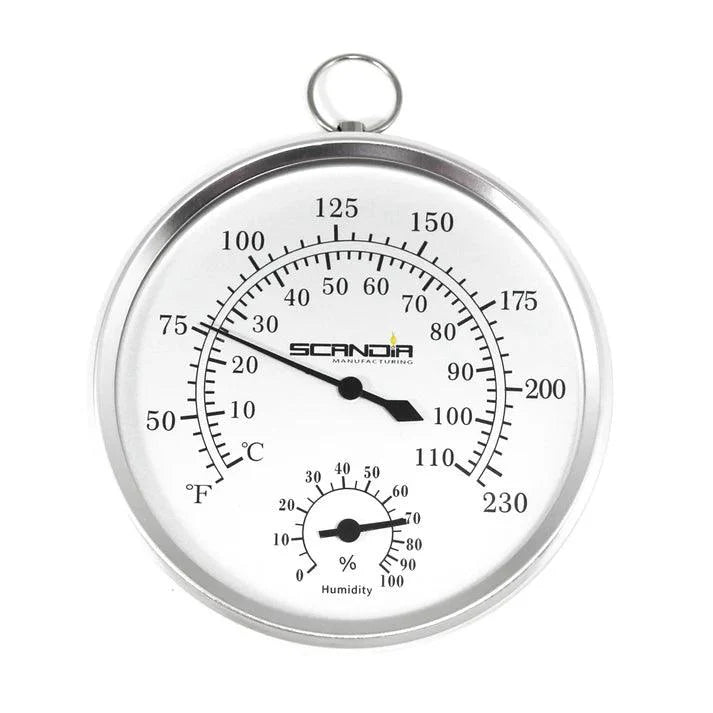
Measure the water temperature before every session. Don't assume a tub is "cold enough" by feel (Spa Life, 2024).
-
Start warmer and shorter than you think you need. Beginners commonly start at 30 seconds to 1 minute and build toward 5 to 10 minutes over time, based on tolerance and goal (Mayo Clinic Health System, 2024).
-
Keep a safe entry and exit plan. Easy in, easy out — and never plunge alone if you have any risk factors.
-
Progress gradually. Effective sessions can be tolerable; discomfort is not a measure of effectiveness.
Mistakes to avoid
-
Chasing the lowest possible temperature.
-
Sudden face immersion or breath-holding, which can amplify cold shock (PMC, 2012).
-
Skipping temperature measurement.
-
Ignoring how you feel — stop if you feel unwell.
Who should consult a clinician first
Talk to a doctor before starting if you have heart disease or cardiovascular risk factors, uncontrolled blood pressure, arrhythmias, a fainting history, pregnancy, Raynaud's, cold urticaria, autoimmune conditions, or any condition affecting circulation or cold tolerance (Cleveland Clinic, 2026; NIH/PMC, 2022). This is a caution, not a blanket prohibition — but it's the one worth taking seriously.
The Decision Framework
Use this six-step ruleset to narrow the field quickly and confidently.
-
Start with placement. No safe space, drainage, power, and floor support = no purchase yet.
-
Pick the cooling method. Occasional use or tight budget → ice-only may work. Frequent use, warm climate, or premium convenience → chiller-based.
-
Fit the tub to your body. Choose by usable interior dimensions and posture — vertical for compact spaces, reclined for comfort.
-
Fit the chiller to the environment. Bigger tub, hotter climate, outdoor placement, or frequent use → verify stronger cooling capacity.
-
Treat water care as a must-have. Look for filtration, circulation, sanitation, accessible filters, and easy drainage.
-
Compare total ownership cost. Electricity, water, filters, supplies, ice, parts, service, and warranty — not just the sticker.
Ice-only vs. chiller-based, at a glance
|
Buying factor |
Ice-only tub |
Chiller-based cold plunge |
Verify before buying |
|
Upfront cost |
Lower |
Higher |
Tub price, accessories, delivery |
|
Temperature consistency |
Lower |
Higher |
Thermometer, chiller temp range |
|
Daily effort |
Higher |
Lower |
Ice access, fill/drain process |
|
Best for |
Occasional, budget |
Frequent, warm climates, premium |
Use frequency and climate |
|
Maintenance |
Manual water care |
Filter/sanitation still required |
Filter access, water-change guidance |
|
Installation |
Usually simpler |
More electrical/plumbing |
Voltage, amperage, GFCI, drainage |
|
Long-term cost |
Ice adds up |
Electricity, filters, service |
Utility rates, filter schedule |
|
Noise |
Minimal |
Varies by chiller |
Decibel rating, owner reviews |
Table inputs synthesized from cited safety guidance and industry buyer guides.
Once you've run the framework, browse cold plunge tubs for home wellness with your must-haves in mind: footprint, cooling method, filtration, drainage, and service access.
Top Cold Plunge Picks by Category
The most useful recommendation isn't "best overall" — it's "best for your constraints." Match the category to your situation, then verify current specs on the product page before committing.
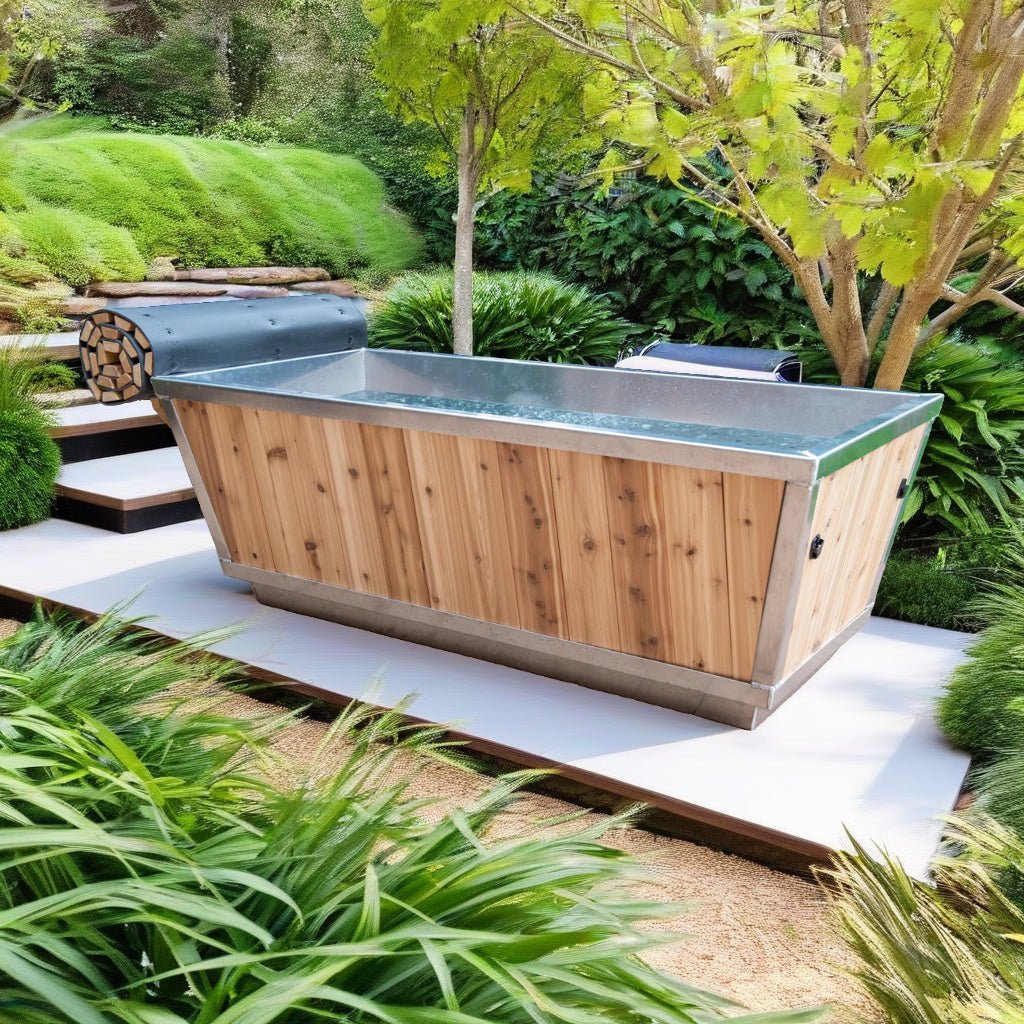
Best premium outdoor setup. For a design-forward backyard wellness space, a durable, well-built outdoor tub like the Dundalk LeisureCraft cold plunge fits homeowners prioritizing aesthetics and longevity. Confirm material, insulation, drainage, chiller compatibility, and delivery details before buying.
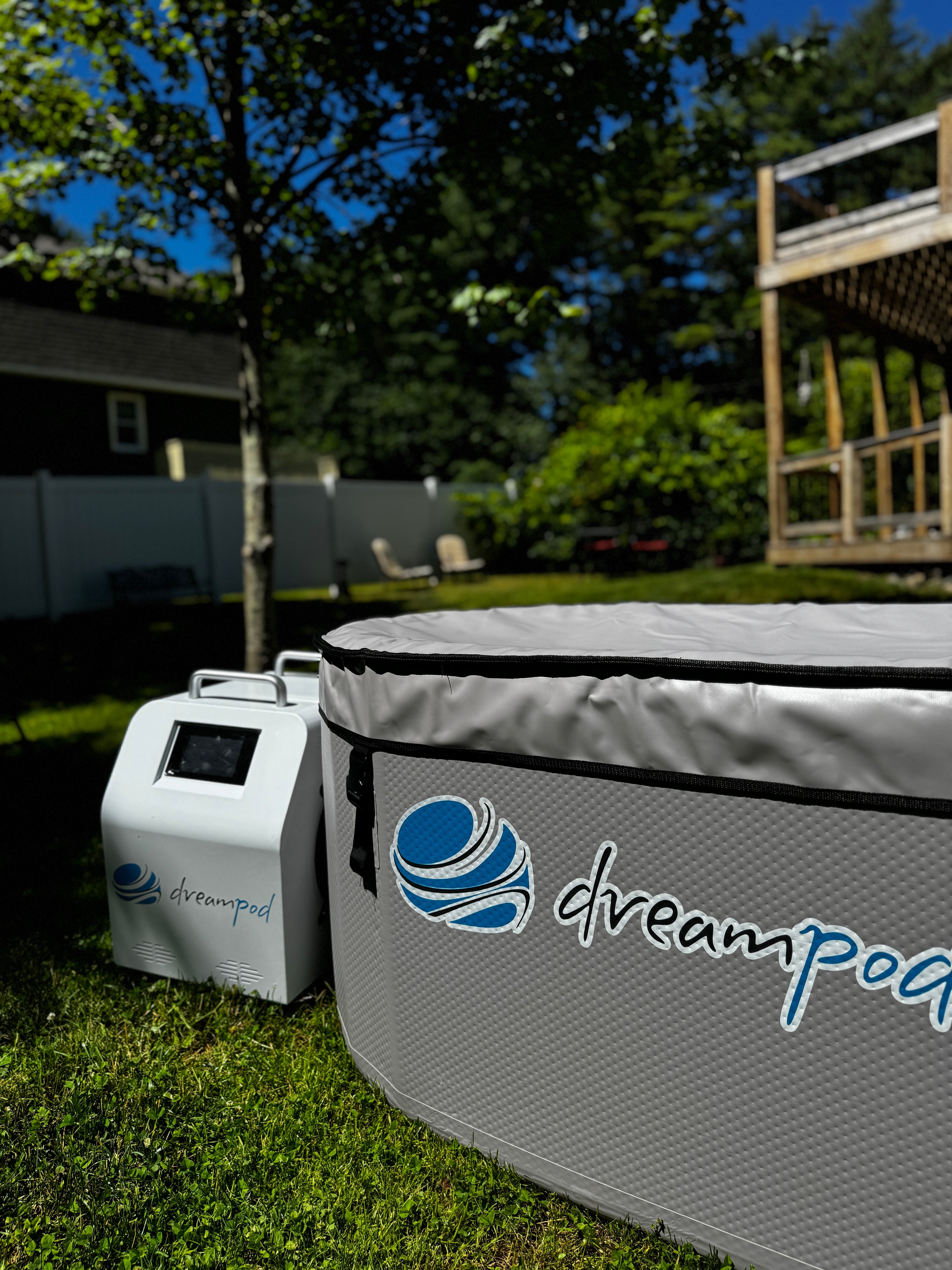
Best for chiller-based convenience. If you want consistent temperature with minimal ice handling, a chiller-integrated option like the Dreampod Ice Bath Flex with chiller suits frequent users. Verify chiller capacity, temperature range, power requirements, noise, and warranty.
Best entry point. Inflatable or portable tubs suit renters and test-first buyers who want to try cold exposure before investing in a rigid, chiller-based system — just scrutinize insulation, seams, and warranty terms.
Not sure which category you're in? Start with your space, schedule, and maintenance tolerance, then compare cold plunge tubs for home wellness that fit your routine. Selection criteria — size, insulation, chiller compatibility, serviceability, and installation complexity — matter more than any single "top pick."
Myths and Misconceptions
1. "Colder water is always better." There's no consensus that the coldest possible water gives the best results, and risk rises as temperature drops (Mayo Clinic Health System, 2024). Persists because "more extreme" feels more effective.
2. "You need a huge tub for a good plunge." The best size is the one that fits your body, posture, and space — not the biggest one (industry sizing guides). Persists because large tubs look more premium.
3. "Chiller horsepower tells the whole story." BTU/h, temperature range, flow, insulation, and climate all matter more together than horsepower alone. Persists because HP is easy to market.
4. "Cold plunges are universally safe." Cardiovascular and cold-sensitivity risks make screening important; they aren't safe for everyone (NIH/PMC, 2022). Persists because wellness marketing generalizes.
5. "You have to plunge every day." Recovery benefits appear without daily use in many protocols, and daily use isn't clearly superior (PubMed, 2022). Persists because frequency reads as discipline.
6. "Filtration is optional." Sanitation and circulation are core safety and maintenance factors, not upgrades (Public Health Ontario). Persists because clean-looking water can still be contaminated.
7. "Portable always means low quality." Some portable units are well-designed; the real test is insulation and build quality, which you should inspect (industry buyer guides). Persists because portability is associated with compromise.
8. "It has to be miserable to work." Effective sessions can be tolerable, especially when started gradually (Spa Life, 2024). Persists because pain gets mistaken for efficacy.
9. "Every recovery benefit is proven." Evidence is stronger for soreness than for every performance outcome, and mechanisms remain debated (PubMed, 2022). Persists because marketing simplifies the science.
10. "Indoor setups are always easier." Indoor units add humidity, drainage, noise, and electrical planning challenges (Public Health Ontario). Persists because indoor space feels more controlled.
The Experience Layer: Test Before You Commit
You can de-risk a major purchase with a weekend of low-cost testing — no tub required yet. The goal is to surface the constraints that spec sheets hide.
A safe pre-purchase test plan
-
Measure the real footprint. Tape out the tub's dimensions plus service clearance, and check door and access-path widths.
-
Pressure-test the location. Photograph the intended spot with a tape measure for scale, and note the nearest drain and power source.
-
Simulate the noise. Listen to compressor or fan noise (many models post sound clips or reviews) from where you'd actually stand or sit nearby.
-
Time the logistics. Fill, chill, and drain a similarly sized container to feel the real effort.
-
Log the upkeep. Track how long basic water care realistically takes over a week.
What you might notice (non-guaranteed)
Individual responses vary, but people often report that consistency of temperature matters more than raw coldness for whether they stick with a routine, and that drainage and noise end up shaping daily use more than they expected. None of this is guaranteed — it depends on your body, space, and setup.
A simple tracking template
|
Field |
Your notes |
|
Date |
|
|
Location |
|
|
Footprint / access clearance |
|
|
Nearest drain & power |
|
|
Fill time / drain time |
|
|
Time to target temp |
|
|
Target temp / actual temp |
|
|
Noise at seating distance |
|
|
Weekly cleaning time |
|
|
Seated vs. reclined comfort (1–10) |
|
|
Issues noticed |
Frequently Asked Questions
1. How cold should a cold plunge tub be? A practical home target is often around 50°F (10°C) or colder, but colder isn't automatically better. Many safety guidelines suggest starting in the 10–15°C range and adjusting gradually (Spa Life, 2024; Mayo Clinic Health System, 2024).
-
Measure the water before use.
-
Start warmer if you're new.
-
Don't chase the lowest possible number.
2. How long should I stay in a cold plunge? Beginners often start at 30 seconds to 1 minute and build toward 5 to 10 minutes, depending on tolerance and purpose (Mayo Clinic Health System, 2024).
-
Shorter is safer for beginners.
-
Match duration to your goal.
-
Stop if you feel unwell.
3. Do I need a chiller for a cold plunge tub? If you want consistent temperature and less ice handling, yes. Ice-only systems are cheaper upfront, but chillers add convenience and repeatability (Spa Life, 2024).
-
Chillers help in warm climates.
-
They cut manual labor.
-
They suit frequent use.
4. What size cold plunge tub do I need? Choose by interior fit, not exterior footprint. Single-person tubs commonly fall around 80–150 gallons, but the right choice depends on your height and posture (industry sizing guides).
-
Taller users need more depth or length.
-
Reclined tubs use more space.
-
Multi-person tubs need far more support.
5. Can a cold plunge tub go indoors? Yes, but indoor installs need drainage, humidity control, protected electrical setup, and noise awareness.
-
Plan for spills.
-
Use a protected power source.
-
Keep access for maintenance (Public Health Ontario).
6. Are inflatable cold plunge tubs durable? They can work for portable or lower-frequency use, but usually trade away durability and insulation versus rigid shells (industry buyer guides).
-
Best for temporary or seasonal setups.
-
Check seams and support.
-
Confirm warranty terms.
7. What is the best cold plunge tub material? There's no single best material. Stainless steel, acrylic/fiberglass, wood, and inflatable each trade off durability, insulation, price, and portability.
-
Premium buyers often prefer rigid shells.
-
Budget and portability favor inflatable.
-
Insulation strongly affects operating cost.
8. How often do I need to change the water? It depends on filtration, sanitation, and usage. Public health guidance treats sanitation as essential, so schedule changes based on system performance and hygiene, not appearance (Public Health Ontario).
-
Use filtration and sanitation.
-
Monitor clarity and smell.
-
Follow the manual.
9. Is cold plunging safe for everyone? No. People with heart disease risk, cold sensitivity, pregnancy, Raynaud's, or similar conditions should seek medical guidance first (NIH/PMC, 2022; Cleveland Clinic, 2026).
-
Sudden cold can stress the heart.
-
Screening is recommended.
-
Start conservatively if cleared.
10. Does cold plunging help recovery? It can help soreness and some recovery outcomes after exercise, though effects vary by workout type and timing (PubMed, 2023). For more context, see our cold plunge benefits and buying considerations.
-
Soreness often improves.
-
Some performance measures may not.
-
Protocols are still being refined.
11. Is a bigger cold plunge tub better? Not necessarily. Bigger tubs use more water, power, and floor space — the best size is the smallest one that fits your body and use case (industry sizing guides).
-
Large tubs can exceed floor limits.
-
They cost more to run.
-
Comfort still matters most.
12. What should I look for in a cold plunge chiller? Focus on cooling capacity (BTU/h), temperature range, noise, filtration compatibility, and electrical requirements — these matter more than marketing terms (Spa Life, 2024).
-
Check the manual.
-
Match it to water volume.
-
Factor in climate and frequency.
13. Can I put a cold plunge on a balcony? Sometimes — but only if the structure supports the filled weight and the site handles drainage and electrical safety. Large tubs can weigh thousands of pounds when full (industry sizing guides).
-
Verify load limits first.
-
Check access and drainage.
-
Consider a lighter system.
14. How noisy are cold plunge chillers? Noise varies by model and matters most indoors, in garages, and near neighbors. Check decibel ratings and owner feedback, since many spec sheets don't highlight sound clearly (industry buyer guides).
-
Look for insulated compressors or fans.
-
Read real owner comments.
-
Place the unit away from living areas.
15. What temperature range is generally considered safe? Safety guidance often points to 10–15°C for most people in supervised settings, while home and recovery-oriented advice mentions 50°F or colder with gradual progression (Spa Life, 2024).
-
Colder increases stress.
-
New users should start warmer.
-
Individual health status matters.
16. Ice bath vs. cold plunge — what's the difference? "Ice bath" usually refers to a tub cooled manually with ice, while "cold plunge" often implies a purpose-built tub, frequently with a chiller for consistent temperature. The cold-water immersion effect is similar; the difference is mostly convenience and temperature control (BJSM, 2011).
-
Ice baths cost less to start.
-
Cold plunges hold temperature better.
-
Both require safe, measured use.
17. How much electricity does a cold plunge use? There's no single answer — it depends on water volume, insulation, climate, runtime, and local rates, so treat any fixed monthly figure with skepticism (industry buyer guides).
-
Better insulation lowers cost.
-
Bigger tubs cost more to run.
-
Check the chiller's power draw before buying.
Sources
-
Mayo Clinic Health System — Cold-water plunging health benefits (2024). https://www.mayoclinichealthsystem.org/hometown-health/speaking-of-health/cold-plunge-after-workouts
-
Cleveland Clinic Health Essentials — Are 'Cold Plunge' Ice Baths Good for You? (2026). https://health.clevelandclinic.org/what-to-know-about-cold-plunges
-
Spa Life International — New guidelines for safe cold water immersion therapy (2024). https://www.spa-life.international/news/article/new-guidelines-for-safe-cold-water-immersion-therapy/
-
Public Health Ontario — Frequently Asked Questions: Cold Plunge Tanks and Pools. https://www.publichealthontario.ca/-/media/Documents/C/24/cold-plunge-tanks-pools.pdf
-
British Journal of Sports Medicine — Biochemical and physiological rationale for cold-water immersion in sports recovery: a systematic review (2011). https://bjsm.bmj.com/content/44/3/179
-
PubMed — Effects of Cold-Water Immersion Compared with Other Recovery Methods (2023). https://pubmed.ncbi.nlm.nih.gov/36527593/
-
PubMed — The effect of cold water immersion on recovery from strenuous exercise (2022). https://pubmed.ncbi.nlm.nih.gov/36862831/
-
NIH / PMC — Health effects of voluntary exposure to cold water (2022). https://pmc.ncbi.nlm.nih.gov/articles/PMC9518606/
-
PMC — Autonomic conflict during cold water immersion (2012). https://pmc.ncbi.nlm.nih.gov/articles/PMC3459038/
Sizing, weight, electrical, pricing, and material references reflect commonly cited industry buyer guides and are directional; verify specifics against the product you're considering.
What We Still Don't Know
Cold plunging is genuinely useful in some areas and genuinely unsettled in others — an honest buyer holds both at once.
-
The "optimal" protocol isn't fixed. Ideal temperature, duration, and frequency vary by goal, training status, and health context, and the research doesn't converge on one answer (BJSM, 2011; PubMed, 2022).
-
Broad wellness claims outrun the evidence. Benefits are best supported for post-exercise soreness and short-term recovery; claims about metabolism, longevity, inflammation, immunity, or sleep are less established and should be treated cautiously.
-
Performance tradeoffs are real. CWI may impair sprint and jump performance at some time points, so timing matters for power athletes (PubMed, 2022).
-
Product performance needs verification. Manufacturer and brand claims about energy savings, temperature retention, and noise are directional until confirmed by independent testing or the specific product's documented specs.
-
Exact operating costs are individual. Real monthly cost depends on your climate, insulation, runtime, and utility rates — no published figure substitutes for your own numbers.
Cold Plunge Before or After Workout? The Ultimate Guide to Timing for Optimal Results
Dreampod Ice Bath Flex Review: The Ultimate Portable Cold Plunge?
Related Posts

The Complete Guide to Cold Plunge Temperature: Benefits, Safety, and Optimal Ranges

Dreampod Ice Bath Flex Review: The Ultimate Portable Cold Plunge?

Cold Plunge Before or After Workout? The Ultimate Guide to Timing for Optimal Results

Polar Monkeys Cold Plunge Review: Is It Worth the Hype? (Reviewed & Compared)

The Best Outdoor Cold Plunge Tubs for Your Backyard Oasis

The Best Inflatable Cold Plunge Tubs: A 2026 Buying & Comparison Guide
