








Dundalk LeisureCraft Hot Tubs: Your Guide to Off-Grid Wood-Fired Soaking
TRANSPARENCY NOTICE We sell the products discussed here, including the Dundalk LeisureCraft Starlight wood-burning hot tub. Because we have a commercial interest, we hold this article to a deliberately strict standard. We use a proprietary, AI-assisted editorial process we developed in-house to keep the writing honest: every factual claim is tied to a cited source — manufacturer documentation, the CDC, Mayo Clinic, or peer-reviewed research — and any statement we can't support is flagged and removed rather than smoothed over. We don't inflate benefits, and we don't bury trade-offs. Where the evidence is mixed, we say so. Where a specification can't be confirmed, we tell you to verify it. Nothing favorable gets exaggerated; nothing unfavorable gets hidden.
Dundalk LeisureCraft Hot Tub: Off-Grid Buyer's Guide
A Dundalk LeisureCraft hot tub is a cedar-built, wood-fired soaking tub designed to run off-grid — heated by burning wood rather than an electric element — making it best for buyers who value ambiance and remote placement over push-button convenience. The trade-off is straightforward: less electrical infrastructure, more hands-on fire and water management.
TL;DR:
-
No electric heater required. The wood-fired models heat with an internal wood-burning stove and can operate off-grid (LeisureCraft).
-
Heat-up is model- and condition-dependent. Manufacturer pages describe roughly 2 to 4 hours under good conditions as a best case, not a guarantee (LeisureCraft).
-
"Off-grid" is not "maintenance-free." Filling, draining, sanitation, and fire management are still your job — cedar does not clean the water (CDC, 2024).
-
The Evolution is the flexible pick. It has an easy-clean HDPE liner and can be ordered without a heater for cold-plunge use (LeisureCraft).
-
Safety matters. Keep water at or below 104°F/40°C, maintain disinfectant and pH, and consult a clinician if you're pregnant or have a cardiovascular condition (CDC, 2024; Mayo Clinic, 2023).
Table of Contents
-
What a Dundalk LeisureCraft Hot Tub Is
-
The Allure of Wood-Fired Hot Tubs: Why Go Off-Grid?
-
Dundalk LeisureCraft: Craftsmanship and Collections
-
Choosing Your Perfect Soak: A Comparison of Models
-
Beyond the Tub: Off-Grid Setup and Maintenance
-
The Dual-Purpose Advantage: Hot Tub to Cold Plunge
-
Myths and Misconceptions
-
Try It Yourself: An Owner's Test Plan
-
Frequently Asked Questions
-
Maximizing Your Investment: Longevity and Care
-
Finding Your Dundalk LeisureCraft Dealer
-
Sources
-
What We Still Don't Know
What a Dundalk LeisureCraft Hot Tub Is
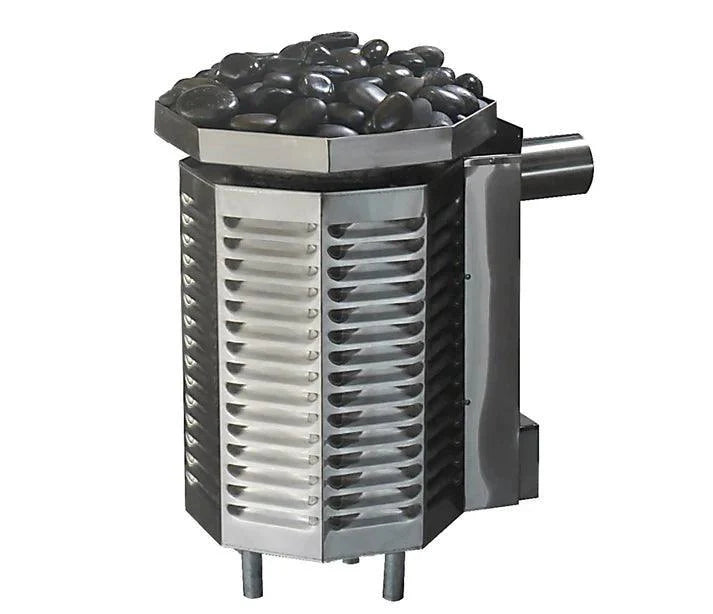
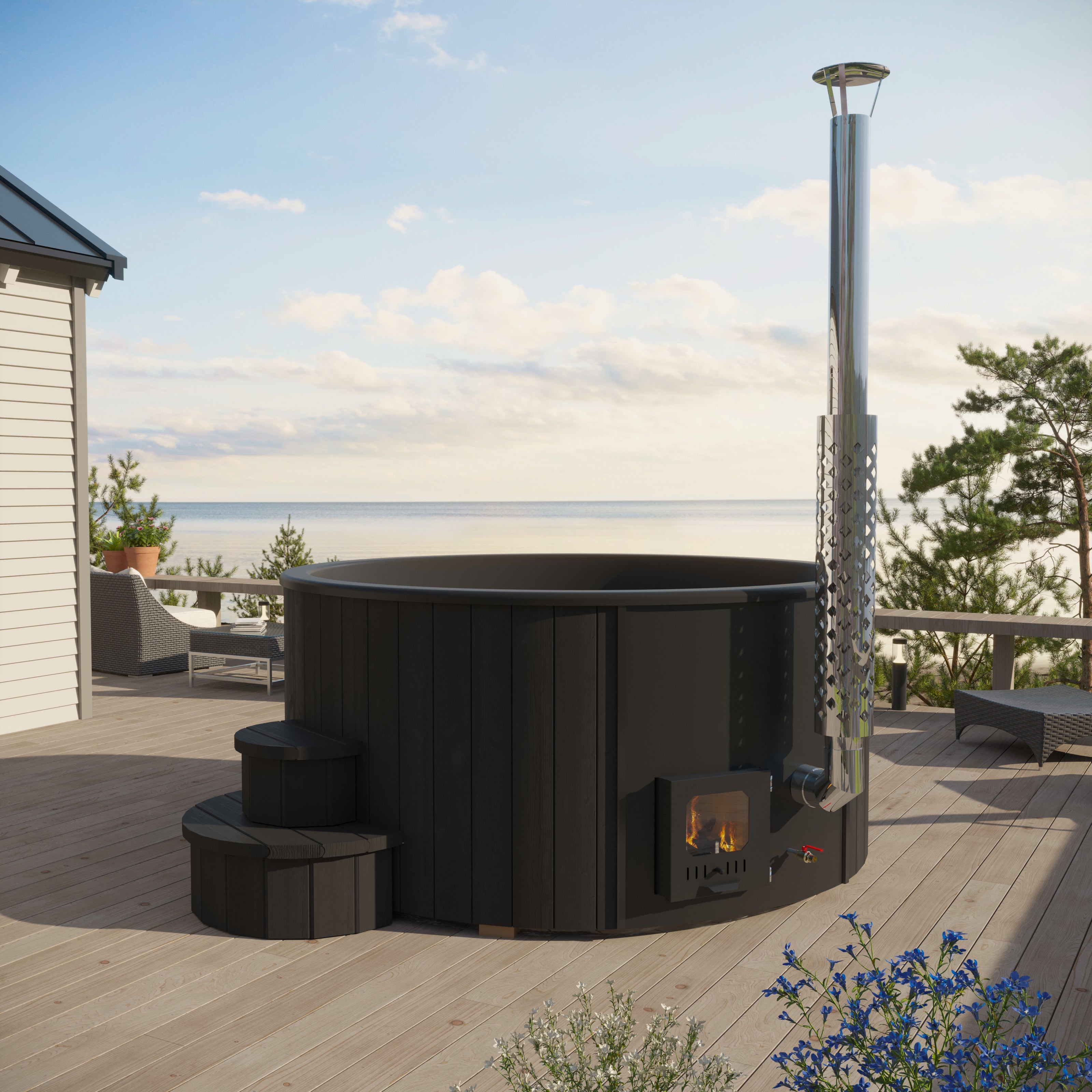
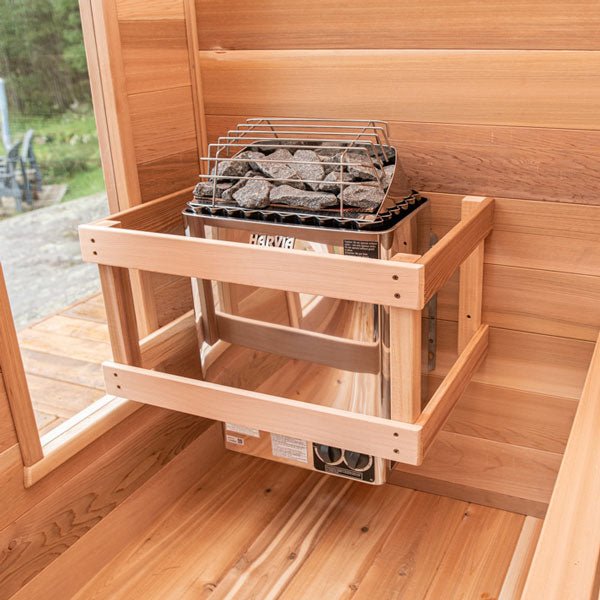
A wood-fired hot tub is a soaking tub heated by burning wood in an internal or external stove instead of an electric resistance heater. LeisureCraft's tubs use an internal wood-burning stove and are built to operate without grid electricity (LeisureCraft).
A few terms are worth defining up front:
-
Off-grid hot tub: A tub that heats without grid power. The label refers to the heating source — it does not remove the need for filling, draining, cleaning, sanitation, or fire safety (CDC, 2024).
-
HDPE liner: A high-density polyethylene shell that creates a smoother water-contact surface and can simplify cleaning compared with a fully wooden interior (LeisureCraft).
-
Western Red Cedar: A naturally decay-resistant softwood used for outdoor structures because of its durability and moisture resistance (USDA Forest Service).
The Allure of Wood-Fired Hot Tubs: Why Go Off-Grid?
The appeal is simple: a quieter, more elemental soak that doesn't depend on wiring, a heat pump, or a utility hookup. You light a fire, the water warms, and you soak — often in a rural or remote spot where running an electric spa would be impractical.
That experience comes with a clear trade-off. Instead of setting a thermostat, you manage a fire, fill and drain manually, and stay on top of water quality. For the right buyer — someone who values ambiance and deliberate preparation — that hands-on rhythm is part of the draw. For someone who wants to tap a phone app and step in, it isn't.
It's also worth separating experience from medicine. "Natural" heating does not make a wood-fired tub medically superior or maintenance-free. Hot-water immersion is being studied for physiological effects, but the strongest recent review found only acute changes in heart rate and blood pressure and described the broader cardiovascular evidence as inconclusive (PubMed, 2026). Treat the wellness angle as a possible bonus, not a health claim.
Still deciding which kind of heat experience fits your routine? Compare a sauna versus hot tub for stress relief before you commit your space.
What "off-grid" actually means
No electric heater is required to warm the water. Fire and water still have to be managed by hand, and optional accessories (such as a circulation pump, if you add one) may carry their own utility requirements (LeisureCraft).
Wood-fired versus electric: the practical trade-off
The honest comparison is about effort and control, not health outcomes:
-
Temperature control: Precise thermostat (electric) versus manual fire management (wood-fired).
-
Installation: Wiring and a heat source (electric) versus a level base and clearances for a fire (wood-fired).
-
Sanitation: Built-in filtration on many electric spas versus manual water care on most wood-fired tubs (CDC, 2024).
-
Operating effort: Lower day-to-day for electric; higher, and more ritualistic, for wood-fired.
We won't claim wood-fired ownership is cheaper. Firewood, water, and labor add up, and there is no verified total-cost comparison for these models — so anyone telling you one is definitively cheaper is guessing.
Dundalk LeisureCraft: Craftsmanship and Collections
Dundalk LeisureCraft is a Canadian maker of cedar-forward outdoor wellness products, organized into two main lines. The Dundalk Collection is the more premium, and the Canadian Timber Collection is the more rustic (LeisureCraft).
Current manufacturer material describes the Dundalk Collection using Western Red Cedar, an internal aluminum wood-burning heater, and a stainless steel shield (LeisureCraft). The Starlight sits in the Canadian Timber Collection and uses an aluminum-lined soaking structure with cedar elements (LeisureCraft).
Manufacturer documentation is authoritative for configuration — what a model is made of and how it's set up. It is not independent proof of longevity or health value, so we treat those claims separately.
Western Red Cedar, liners, and heater materials
It helps to separate the wood you see from the surfaces the water touches. Cedar gives the tub its look, aroma, and decay resistance (USDA Forest Service). But water-contact surfaces vary: the Evolution uses a white HDPE/plastic liner, while other designs keep a more traditional wooden interior (LeisureCraft). Cedar's natural durability does not sterilize the water — sanitation is still required regardless of material (CDC, 2024).
Choosing Your Perfect Soak: A Comparison of Dundalk LeisureCraft Models
Lead with fit, not spec sheets: choose the Evolution for easy-clean flexibility, the Starlight for a compact traditional cedar look, and a traditional cedar-interior model when the all-wood soak matters most. Confirm exact sizes, capacities, and heater layouts against the current product page for your specific SKU before ordering — these details vary by size and configuration.
|
Model |
Best for |
Water-contact construction |
Heater |
Published capacity |
Cold-plunge option |
|
Evolution Cedar Tub |
Easy-clean liner + hot/cold flexibility |
White HDPE/plastic liner |
Heater or heater-free |
Up to ~5 people (verify by size) |
Yes, when ordered without a heater |
|
Starlight |
Compact Canadian Timber styling |
Aluminum-lined tub with cedar elements |
Internal wood-burning |
~233 gallons (verify on spec sheet) |
Not established |
|
Cascade |
Space-conscious layout |
Confirm on current page |
Confirm on current page |
Confirm on current page |
Confirm |
|
Original Cedar |
Traditional all-wood soak |
Western Red Cedar interior |
Internal aluminum heater + stainless shield |
Verify by diameter |
Not established |
Sources: LeisureCraft product pages and spec material. We've left cells marked "verify" rather than filling them with assumptions — a visible check-the-page note is more useful than false precision.
Evolution Cedar Tub
The Evolution is the easiest-cleaning, most versatile option. Its white HDPE liner simplifies wiping down, it seats up to about five people, and it can be ordered without a heater for cold-plunge use (LeisureCraft). One caution: current manufacturer pages give different heat-up estimates for different Evolution sizes, so don't expect a single fixed number.
Starlight
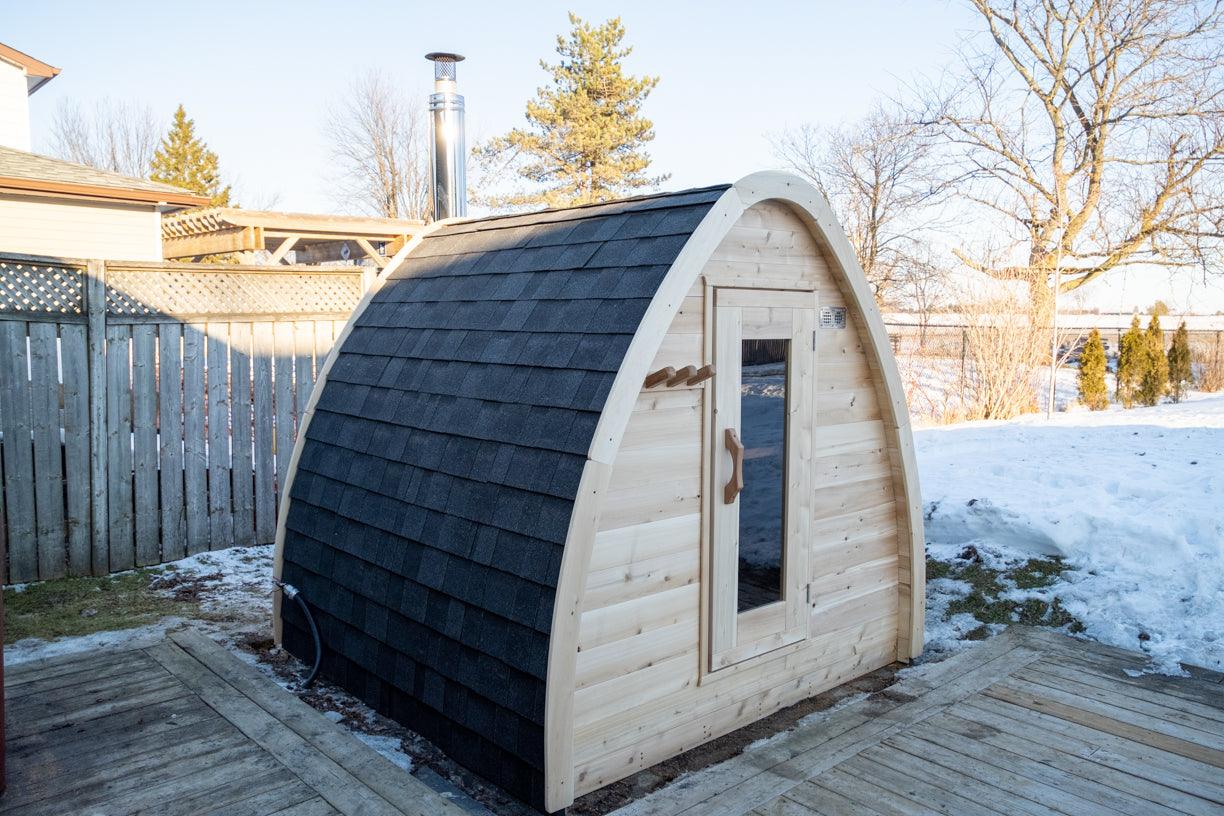
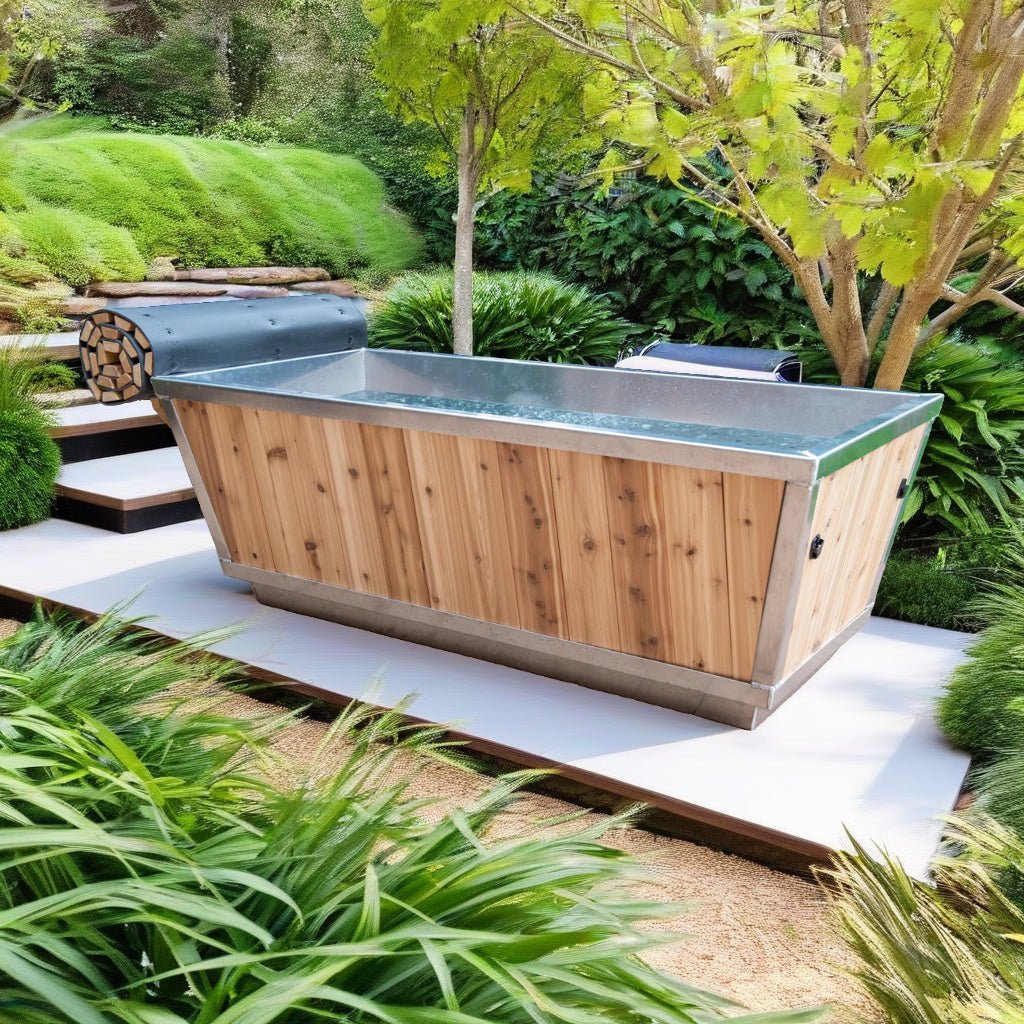
The Starlight is a compact, internally heated, aluminum-lined tub with a rectangular Canadian Timber look and a listed capacity around 233 gallons (LeisureCraft). It's a strong starting point for buyers who want a wood-fired LeisureCraft model without a large footprint. Confirm current capacity and dimensions on the live spec sheet before you buy.
Cascade and Original Cedar
For the Cascade and Original Cedar, use the current manufacturer page and manual for exact dimensions, capacity, heater layout, and intended use. The Original Cedar is the more traditional, all-wood direction; don't infer Cascade performance from its shape alone.
Which model should you choose?
-
Choose the Evolution for liner-based cleaning and cold-plunge flexibility.
-
Choose the Starlight for compact Canadian Timber styling and an internal heater.
-
Choose a traditional cedar interior when the all-wood soaking experience matters more than simplified liner care.
-
Before ordering any model, verify site dimensions, filled weight, delivery path, and local fire restrictions.
The Starlight is the clearest starting point for a compact, wood-fired LeisureCraft model — review the current configuration and dealer details on the Dundalk LeisureCraft Starlight wood-burning hot tub page.
Beyond the Tub: Essential Off-Grid Setup and Maintenance
This is where most of the real work lives — and where "off-grid" earns its reputation. A wood-fired tub needs a solid base, a fill-and-drain plan, careful fire handling, and disciplined water care.
A practical setup sequence:
-
Confirm a level, load-rated base. Gravel, a concrete pad, or a deck rated for the filled weight — not the empty crate.
-
Plan the delivery path before the crate arrives; these tubs are heavy and often need extra hands.
-
Identify your fill source and a legal, practical drainage route.
-
Never light the heater before the tub is filled according to the manual — this is an explicit safety instruction (LeisureCraft).
-
Burn dry, suitable firewood and maintain airflow for efficient heating.
-
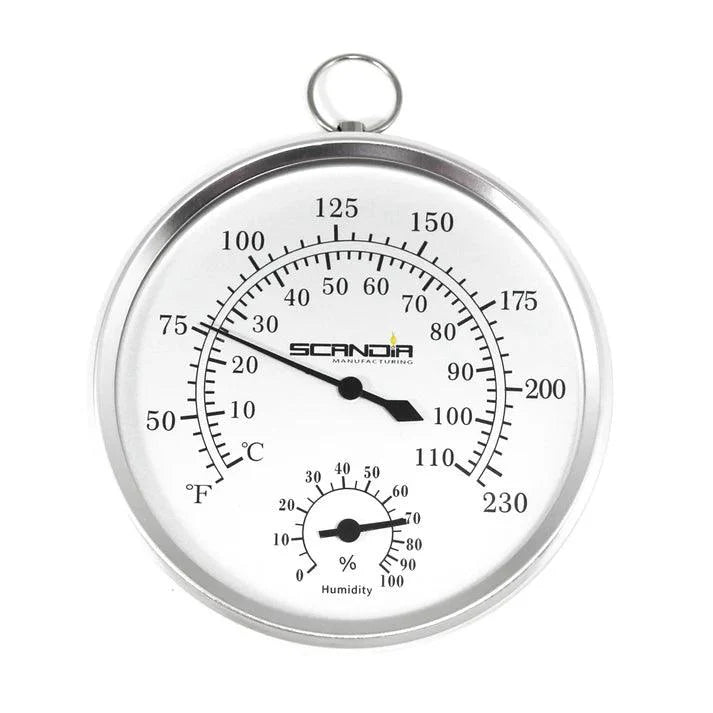
Monitor water temperature manually with a reliable thermometer.
-
Establish a written cleaning, disinfection, testing, and water-replacement routine.
-
Use a fitted cover to limit debris and heat loss.
Mistakes to avoid: lighting a dry heater, skipping sanitation because the wood "looks clean," assuming the base is level without checking, and ignoring local fire codes, setbacks, drainage rules, or deck-loading limits — all of which are location-specific and worth researching before purchase.
A tub is only one part of the setting. See how to design a backyard wellness retreat around access, privacy, and year-round use.
Water sanitation is not optional
Warm, still water can support microbial growth, and cedar construction does not replace disinfection. Poorly maintained hot tubs are a recognized source of Legionella, which can cause illness when contaminated mist is inhaled (CDC, 2024).
CDC consumer guidance for hot-tub water lists:
-
At least 3 ppm free chlorine (or at least 4 ppm bromine)
-
pH of 7.0–7.8
-
Water temperature at or below 104°F/40°C (CDC, 2024)
Always follow your tub's manufacturer instructions, your sanitation product's directions, and any applicable local requirements. A Dundalk LeisureCraft hot tub roll-up cover can make everyday care easier by limiting debris and heat loss between soaks.
What does ownership actually cost?
We won't publish a fabricated cost model. A realistic budget separates these line items:
-
Purchase price and dealer freight
-
Site preparation (base, drainage, access)
-
Firewood
-
Water, testing supplies, and sanitation products
-
Cover replacement over time
-
Maintenance labor (mostly your time)
The only reliable way to price this out is a written dealer quote for your chosen model plus a defined usage scenario for your climate.
The Dual-Purpose Advantage: Hot Tub to Cold Plunge
Some models — notably the Evolution — can double as a cold plunge, which is a genuine product feature, not a health guarantee. The Evolution can be ordered without a heater specifically for cold-water use (LeisureCraft).
Switching a single tub back and forth between hot and cold in practice means a realistic fill, drain, sanitation, and timing strategy — it isn't a flip of a switch. And the wellness case is still developing: recent reviews suggest cold-water immersion may affect stress, sleep, inflammation, or recovery in some contexts, but they're limited by small samples, few randomized trials, and protocol variation (PubMed, 2025). A 2024 meta-analysis found cold exposure can shift heart-rate-variability and parasympathetic markers, though effects depend on the person and cooling method (PubMed, 2024).
Evidence strength: Limited to Mixed. Present cold-plunge use as a flexible feature — not a promise of reduced inflammation, weight loss, improved immunity, or longevity.
Planning a complete contrast routine? Explore a sauna, cold plunge, and hot tub circuit before choosing equipment.
Myths and Misconceptions
-
"Off-grid means maintenance-free." It doesn't — water management, cleaning, and disinfection are still required (CDC, 2024). The myth persists because "off-grid" marketing emphasizes freedom from wiring.
-
"Cedar keeps the water clean on its own." Cedar resists rot; it does not sanitize water (CDC, 2024; USDA Forest Service). People assume a natural material must be self-cleaning.
-
"Every model heats in the same 2–3 hours." Manufacturer pages give different estimates for different configurations (LeisureCraft). A single memorable number is easier to repeat than "it depends."
-
"Wood-fired is always cheaper than electric." There's no verified total-cost comparison; firewood and labor add up (evidence insufficient). The upfront simplicity hides ongoing effort.
-
"You never need chemicals." Water sanitation is still required (CDC, 2024). The "natural" framing overshadows public-health basics.
-
"Hot tubs are harmless if the water feels fine." Overheating and infection risks exist regardless of comfort (Mayo Clinic, 2023; CDC, 2024). Comfort is mistaken for safety.
-
"Cold-plunge benefits are guaranteed." The best reviews call them possible but limited and protocol-dependent (PubMed, 2025). Enthusiast content outpaces the research.
-
"You can leave the water in indefinitely." Standing water raises contamination risk (CDC, 2024). Draining feels wasteful, so people delay it.
-
"Winter use is effortless." Cold weather lengthens heat-up and adds freeze-management and access demands (LeisureCraft). Marketing photos of snowy soaks skip the prep.
-
"A wood-fired tub lasts 10–20 years no matter what." Lifespan depends heavily on maintenance; there's no guaranteed figure (USDA Forest Service). Cedar's reputation for durability gets overstated.
Try It Yourself: An Owner's Test Plan
If you want to set realistic expectations after purchase, run a simple, safe evaluation over your first few soaks. This isn't a lab study — it's a way to learn your tub in your climate.
A safe test plan:
-
Log heat-up time across a couple of fires using dry hardwood versus a lower-quality load.
-
Track overnight temperature drop with and without the insulated cover.
-
Observe water clarity over several uses while following your sanitation routine.
What you might notice (non-guaranteed, and individual results vary): heat-up that runs longer than the best-case manufacturer estimate on cold or windy days, meaningfully better heat retention with a fitted cover, and faster clouding when sanitation slips.
A simple tracking template:
|
Date / weather |
Ambient temp |
Wood used |
Start water temp |
Time to target temp |
Retention (cover on/off) |
Notes |
Frequently Asked Questions
How long does a Dundalk LeisureCraft hot tub take to heat? Roughly 2 to 4 hours under good conditions, as a best case rather than a rule.
-
Manufacturer pages list different estimates by model and size (LeisureCraft).
-
Cold weather, larger volume, and low-quality wood all extend it.
-
A good fire, airflow, and a cover shorten it.
Do Dundalk LeisureCraft wood-fired hot tubs require electricity? No — the wood-fired heating system needs no electric heater and can run off-grid (LeisureCraft).
-
No wiring is required for heating.
-
Optional accessories you add yourself may have separate power needs.
How do you keep the water safe and clean? Test and manage disinfectant and pH, clean the tub, and replace water on a sensible schedule (CDC, 2024).
-
Aim for at least 3 ppm free chlorine or 4 ppm bromine, pH 7.0–7.8 (CDC, 2024).
-
Keep water at or below 104°F/40°C.
-
Never treat cedar as a sanitizer.
Can the Evolution be used as a cold plunge? Yes — it can be ordered without a heater specifically for cold-water use (LeisureCraft).
-
Confirm the heater-free configuration before ordering.
-
Plan for filling, draining, and water management.
Are Dundalk LeisureCraft tubs suitable for winter use? Winter operation is possible but more demanding (LeisureCraft).
-
Heat-up takes longer in the cold.
-
Freeze protection, draining, and access all require planning.
-
Consult the current model's winter-care guidance.
What wood should I burn? Dry, well-seasoned hardwood is generally preferred for efficient heating.
-
Moisture content and airflow strongly affect heat-up.
-
Follow your model's manual for the stove's fuel guidance.
What kind of base or foundation do I need? A level surface rated for the tub's filled weight — gravel, concrete, or a suitably rated deck.
-
Confirm filled weight on the current spec sheet.
-
Plan drainage and delivery access before installation.
How often should I change the water? Frequency depends on your sanitation method, usage, and the manufacturer's guidance — there's no single universal schedule.
-
Most models lack built-in filtration.
-
Follow CDC water-quality targets and your product instructions (CDC, 2024).
What's the difference between the Evolution and Starlight? The Evolution has an HDPE liner and an optional cold-plunge configuration; the Starlight is an aluminum-lined, internally heated tub with a compact traditional look (LeisureCraft).
-
Evolution: easy cleaning, hot/cold flexibility.
-
Starlight: Canadian Timber styling, ~233-gallon capacity (verify).
Is hot tub use safe during pregnancy or with heart conditions? Use caution and talk to a clinician first (Mayo Clinic, 2023).
-
Hot tubs raise core temperature, which matters in pregnancy, heart disease, low blood pressure, and dehydration.
-
Avoid alcohol while soaking and supervise children closely.
How much does a Dundalk LeisureCraft hot tub cost? Pricing varies by model, options, dealer, and freight, so request a written quote (LeisureCraft).
-
Ask for an itemized quote: model, heater, cover, delivery, assembly, taxes, and lead time.
-
The lowest sticker price is rarely the total installed cost.
Do wood-fired hot tubs have jets? Most are designed as quiet soaking tubs rather than jetted spas.
-
The appeal is a still, natural soak.
-
Confirm any circulation options on the model's page.
How long does a Dundalk LeisureCraft hot tub last? Longevity depends on maintenance; there's no guaranteed lifespan figure (USDA Forest Service).
-
Cedar has natural decay resistance but still needs care.
-
Covering, drying, and inspecting components all help.
Where can I buy one and find a dealer? Through LeisureCraft's authorized retailer network, which spans 100+ U.S. retailers (LeisureCraft).
-
Pricing and delivery support vary by dealer.
-
Request current stock, freight, and warranty details.
Are the health benefits real? Hot and cold immersion are being studied for physiological and wellbeing effects, but results are mixed and do not establish a hot tub as a medical treatment (PubMed, 2026; PubMed, 2025).
-
Expect relaxation and possible short-term effects.
-
Don't expect disease treatment or prevention.
Maximizing Your Investment: Longevity and Care
Good care protects the tub — but we won't promise a specific lifespan. Cedar's durability helps; consistent maintenance helps more (USDA Forest Service).
Practical habits that extend ownership:
-
Follow the model-specific cleaning and maintenance instructions.
-
Keep the tub covered when appropriate to limit debris and heat loss.
-
Prevent standing debris and unmanaged water.
-
Inspect the heater, shield, liner, drain, fittings, and visible wood regularly.
-
Let wood components dry as directed.
-
Address any leaks or warping early through your dealer.
-
Keep dated maintenance records and photos.
A simple seasonal rhythm: check before each use, do a fuller review monthly during the season, prepare before freezing weather, and store properly for the off-season — confirming the exact steps against your model's current care manual.
Finding Your Dundalk LeisureCraft Dealer
Dundalk LeisureCraft sells through an authorized retailer network of more than 100 U.S. retailers, so pricing and support are dealer-led rather than one standardized price (LeisureCraft).
Because freight, delivery assistance, installation support, stock, and warranty handling can all vary, ask your dealer for a written quote that itemizes the model, heater, cover, delivery, assembly, taxes, lead time, and warranty contact before you commit.
Ready to price a wood-fired model? View the Dundalk LeisureCraft Starlight wood-burning hot tub and request current delivery, option, and warranty details — or shop the complete hot tub collection to compare models by site fit, maintenance preference, and soaking experience.
Sources
-
CDC — Preventing Legionella From Hot Tubs (2024). https://www.cdc.gov/healthy-swimming/prevention/preventing-legionella-from-hot-tubs.html
-
CDC — Legionella Control Toolkit: Hot Tub Module (2024). https://www.cdc.gov/control-legionella/php/toolkit/hot-tub-module.html
-
Mayo Clinic — Hot tubs: How do they affect your health? (2023). https://www.mayoclinic.org/healthy-lifestyle/consumer-health/in-depth/hot-tubs/art-20044497
-
Hot-water immersion — systematic review and meta-analysis (2026). https://pubmed.ncbi.nlm.nih.gov/41603269/
-
Cold-water immersion and wellbeing — systematic review (2025). https://pubmed.ncbi.nlm.nih.gov/39879231/
-
Cold exposure and autonomic response — meta-analysis (2024). https://pubmed.ncbi.nlm.nih.gov/38663342/
-
USDA Forest Service — Wood durability and Western Red Cedar properties. https://www.fs.usda.gov/treesearch/pubs/
What We Still Don't Know
-
Exact, current specs for the Cascade and Original Cedar — dimensions, capacity, and heater layout should be confirmed on the live product pages before comparison.
-
A verified total-cost comparison between wood-fired and electric ownership — firewood, water, site work, and labor vary too much for a reliable published figure.
-
Model-specific lifespan — cedar durability supports a long life with care, but there's no documented guaranteed figure.
-
The strength of the wellness case — hot-water immersion shows acute physiological changes but inconclusive broader benefits (PubMed, 2026), and cold-water immersion evidence remains limited by small samples and few randomized trials (PubMed, 2025).
-
Universal winter procedures — freeze-management steps should come from the current model manual rather than a one-size-fits-all rule.
Related Posts

More Than Just Heat: 12 Benefits of Backyard Fire Pits Beyond Warmth

Benefits of Backyard Fire Pits Beyond Warmth: A Real Guide

BBQ Grilling for Nutrient Preservation: The Complete Guide

The 7 Best Fire Pits for Outdoor Meditation: A Guide to Mindful Flames

The Ultimate Guide to BBQ Grill Accessories for Health-Conscious Cooks
